
Cavapoo Care Guide
Low-Shedding Dogs: Cavapoos, Poodles, and Other Fluffy Companions
Oct
Dog allergies can make choosing a family pet more complicated, especially for people who love cuddly, fluffy companions but worry about loose hair and allergens around the home (low-shedding dogs). Fortunately, some dog breeds and individual dogs shed less than others, making them worth considering for families looking for a lower-shedding companion.
However, it is important to understand the difference between a dog that sheds less and a dog that is genuinely allergy-free. No dog breed, including the Poodle or Cavapoo, is guaranteed to be hypoallergenic. According to the American Kennel Club’s guide to hypoallergenic dogs, individual dogs can trigger different reactions, and shedding alone does not determine whether someone will experience allergies.
For prospective owners, understanding coat types, grooming needs, temperament, and everyday care is an important first step toward choosing the right puppy. This guide explores several popular low-shedding dog breeds and explains why the Cavapoo has become an appealing companion for many households.
What Makes a Dog a Low-Shedding Companion?
Dogs naturally lose hair as part of their normal coat cycle, but the amount varies between breeds and individual animals. Some dogs have coats that retain loose hair until brushing or grooming removes it, while others leave more visible hair on furniture, clothing, and floors.
Low-shedding dogs can be attractive to owners who prefer a home with less loose fur. Nevertheless, lower shedding does not eliminate the need for regular grooming, and it does not guarantee fewer allergy symptoms.
Dog allergens can be found in skin flakes, saliva, and other biological materials. The American College of Allergy, Asthma & Immunology explains that no dog can be considered completely allergy-free.
Before bringing a puppy home, people with known dog allergies should consider discussing their options with an allergy specialist and spending supervised time around the type of dog they are considering.
1. Bichon Frise
The Bichon Frise is a small companion breed known for its cheerful personality, rounded appearance, and soft, fluffy white coat. Its coat generally sheds relatively little compared with many breeds that have more noticeable seasonal shedding.
Bichons are affectionate, playful dogs that often enjoy spending time with their families. Their compact size can make them suitable for various living environments, provided they receive appropriate exercise, training, attention, and enrichment.
Their beautiful coats require consistent maintenance. Owners should brush regularly to help prevent tangles and mats and arrange professional grooming as needed. The frequency depends on coat condition, haircut, and the individual dog’s needs.
The Bichon Frise can be an option for people researching low-shedding companions, but prospective owners should remember that individual allergy reactions cannot be predicted from breed alone.
2. Teddy Bear Dogs
The term “teddy bear dog” describes a cute, fluffy appearance rather than one officially recognized breed. Dogs marketed under this name can come from different crosses, including combinations involving the Bichon Frise, Shih Tzu, Maltese, and Poodle.
These dogs may have soft coats, rounded faces, and affectionate personalities. However, adult size, coat texture, shedding, grooming requirements, and temperament can differ significantly depending on the parents and the individual puppy.
Families interested in a teddy bear-style dog should ask about the parent breeds, expected adult size, grooming needs, and the care the puppy will require throughout its life.
A fluffy appearance should never be treated as proof that a puppy will not shed or cause allergies.
3. Shih-Poo
The Shih-Poo is a cross between a Shih Tzu and a Poodle. This companion dog may inherit a wavy or curly coat, depending on its genetics.
Shih-Poos are often sought by people who appreciate small dogs with playful personalities and an affectionate nature. Their exercise needs are generally manageable for many households, although every dog requires daily activity, enrichment, and training.
Coat care is particularly important. Curly or wavy coats can become tangled without regular brushing, and many Shih-Poos benefit from professional grooming.
Because this is a crossbreed, coat characteristics and shedding can vary. Families should assess the individual puppy rather than relying on a blanket promise that all Shih-Poos are non-shedding or hypoallergenic.
4. Poodles
Poodles are widely known for their intelligence, trainability, and distinctive curly coats. Toy, Miniature, and Standard Poodles offer different size options for prospective owners.
Their coats typically shed relatively little visibly, but this does not mean they require little maintenance. Regular brushing, coat trimming, ear care, and general grooming are important parts of responsible ownership.
Poodles are also active, intelligent dogs that benefit from positive-reinforcement training, interactive play, and opportunities to use their minds. A prospective owner should consider these needs alongside coat type and size.
Poodles are frequently used in crossbreeding programs, including the development of Cavapoos. However, crossing a Poodle with another breed does not guarantee that every puppy will inherit the same coat or shedding characteristics.
5. Miniature Schnauzers
Miniature Schnauzers are recognizable by their expressive eyebrows, distinctive beard, and sturdy build. Their wiry double coats generally shed relatively little compared with those of many more heavily shedding breeds.
These dogs are alert, intelligent, and often energetic. They can make engaging companions for families prepared to provide regular exercise, socialization, and consistent training.
Their coats need brushing and periodic trimming or professional grooming to remain comfortable and manageable. Owners should also keep the beard and facial hair clean.
Although Miniature Schnauzers are commonly considered a lower-shedding breed, their coat does not make them allergy-proof. People with sensitivities should assess their own reactions before deciding to adopt.
6. Cavapoos: A Popular Poodle Cross
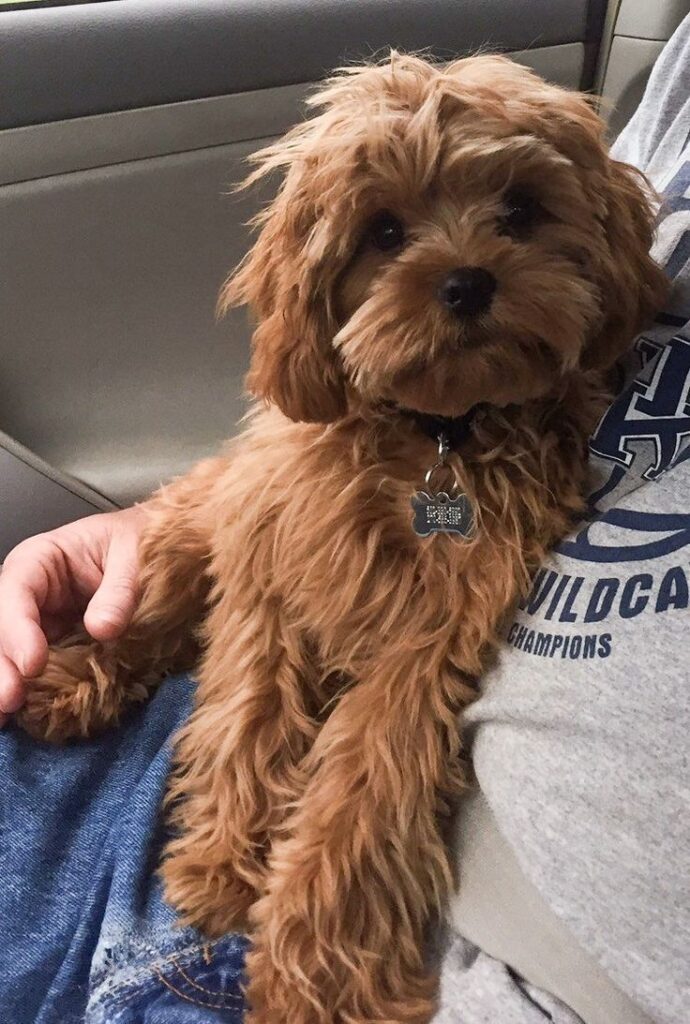
Cavapoos are a cross between a Cavalier King Charles Spaniel and a Poodle. They are popular with families looking for a companion dog with an affectionate temperament, an expressive face, and a soft, often wavy or curly coat.
Depending on the puppy’s inherited characteristics, a Cavapoo may shed relatively little or may shed more than expected. Coat texture and grooming requirements can vary even among puppies from the same litter.
Cavapoos also need more than coat maintenance. They benefit from early socialization, positive-reinforcement training, age-appropriate exercise, regular veterinary care, and companionship.
If you are researching Cavapoo puppies for sale, take time to understand the breed’s characteristics and the responsibilities involved in raising a puppy. Our Cavapoo Breed Guide and Cavapoo Care Guide offer additional information to help prospective owners make an informed decision.
Are Cavapoos Hypoallergenic?
Cavapoos are sometimes advertised as hypoallergenic because Poodles tend to have low-shedding coats. However, a Cavapoo is a mixed-breed dog, and its coat characteristics are not guaranteed.
A puppy with a curlier coat may shed less visibly than a puppy with a straighter coat, but appearance alone cannot reliably predict allergen exposure. Even dogs that shed very little can trigger symptoms in sensitive individuals.
If allergies are a concern, consider spending time with the individual dog before adoption and consulting a qualified medical professional. Choose a Cavapoo because its temperament, care requirements, and lifestyle needs suit your family—not because you have been promised an allergy-free experience.
Finding Cavapoo Puppies for Sale Near Me
People searching online for Cavapoo Puppies For Sale Near Me often want to find a puppy without overlooking important questions about care, documentation, and responsible placement.
Before choosing a puppy, ask about its age, daily routine, parent information, veterinary history, vaccination records, deworming history, and the written terms of the health guarantee. Request applicable documentation rather than relying solely on general claims about a puppy’s health or coat.
It is also useful to discuss the puppy’s expected grooming needs, temperament, and anticipated adult size. These details can help you determine whether a Cavapoo fits your household and lifestyle.
You can start by exploring Atlantic’s Available Cavapoo Puppies and reviewing the Cavapoo Adoption Process before making a decision.
Finding Cavapoo Puppies in Tennessee
Families researching Cavapoo Puppies For Sale In Tennessee should consider more than coat color or price. Ask how the puppy has been raised, what socialization it has received, what health information is available, and how the placement process works.
Tennessee buyers should also confirm any applicable requirements for bringing a puppy into the state, especially when the puppy will be transported from elsewhere.
Visit our Cavapoo Puppies in Tennessee page to learn more about finding a Cavapoo for your family.
Finding Cavapoo Puppies in Ohio
When searching for Cavapoo Puppies For Sale In Ohio, prospective owners should compare the information provided by breeders and ask clear questions about the individual puppy.
Find out whether the puppy’s vaccination and deworming information is available, whether veterinary care has been provided, and which documents will accompany the puppy. Discuss transportation arrangements and confirm any applicable Ohio animal-health or entry requirements before committing to a purchase.
Explore our Cavapoo Puppies in Ohio page for additional information.
Finding Cavapoo Puppies in Florida
Families looking for Cavapoo Puppies For Sale In Florida should consider the state’s warm climate when planning for their new companion.
Cavapoos need access to fresh water, shade, comfortable indoor temperatures, and appropriate exercise during cooler parts of the day. Their coats should be maintained carefully, but shaving a dog down to the skin is not automatically the best solution for warm weather. Grooming decisions should take the individual coat and the dog’s needs into account.
Before adoption, ask about veterinary records, feeding instructions, transportation arrangements, and the applicable health guarantee. You can learn more on our Cavapoo Puppies in Florida page.
How to Care for a Low-Shedding Dog’s Coat
Low-shedding does not mean maintenance-free. Dogs with curly, wavy, or continuously growing coats can develop tangles and mats if brushing is neglected.
Establish a grooming routine appropriate for the individual dog. This may include regular brushing, professional trimming, bathing when needed, nail care, and checking the ears and skin. Puppies should be introduced gradually and positively to brushing and grooming so they can become comfortable with handling.
Nutrition, veterinary care, and general well-being also matter. A healthy coat is supported by appropriate nutrition and routine care, not simply by choosing a particular breed.
For more practical advice, read our Cavapoo Care Guide.
Questions to Ask Before Choosing a Puppy
Before bringing home a low-shedding companion, ask the following questions:
- What are the puppy’s expected adult size and coat characteristics?
- What grooming routine will the dog need?
- What veterinary, vaccination, and deworming records are available?
- What information can be provided about the puppy’s parents?
- What written health guarantee and adoption terms apply?
- What socialization, feeding, and daily-care routines has the puppy experienced?
- What arrangements are available for pickup or delivery?
- If someone in the household has allergies, have they considered consulting an allergy specialist?
These questions help you evaluate the puppy as an individual rather than relying on breed labels or advertising promises.
Frequently Asked Questions
Which dogs shed the least?
Poodles, Bichon Frises, and Miniature Schnauzers are commonly considered lower-shedding breeds. Individual dogs vary, and low shedding does not guarantee fewer allergy symptoms.
Do Cavapoos shed?
Yes, some Cavapoos shed. The amount varies according to inherited coat characteristics, and no particular coat type guarantees that a Cavapoo will be non-shedding.
Are Cavapoos good for people with allergies?
Some people may tolerate an individual Cavapoo better than another dog, but no Cavapoo can be guaranteed allergy-free. Consult a medical professional if allergies are a concern.
Do low-shedding dogs need professional grooming?
Many do. Curly and wavy coats can become tangled or matted, so regular brushing and appropriate professional grooming may be necessary.
How can I find Cavapoo puppies in my state?
Start by reviewing reputable puppy-placement information, asking for available health documentation, and confirming the applicable state requirements. You can explore Atlantic’s pages for Tennessee, Ohio, and Florida.
Final Thoughts
Choosing a low-shedding dog involves more than finding a fluffy coat or a breed with a particular reputation. Consider temperament, grooming, exercise, veterinary care, and the needs of everyone in your household.
Cavapoos may be a wonderful fit for families looking for an affectionate companion, but every puppy is an individual. Take time to ask questions, review available records, and understand the responsibilities of dog ownership before making a commitment.
To learn more, explore Atlantic Cavapoo Puppies’ available puppies, breed guide, and adoption process as you prepare for life with a new companion.
