
Cavapoo Care Guide
Puppy-Proofing for Cavapoos: A Complete Home Safety Guide
Oct
Bringing a Cavapoo puppy home is an exciting milestone, but preparation should begin before your new companion walks through the door. Puppies explore the world with their noses and mouths. Everyday household items that seem harmless to people can become choking hazards, cause injuries, or expose a curious puppy to dangerous substances (Puppy-Proofing for Cavapoos).
Cavapoos are a cross between a Cavalier King Charles Spaniel and a Poodle. Individual puppies differ in size, temperament, curiosity, and activity level, so it is important to prepare your home for the puppy you bring home rather than assume its small size will keep it out of trouble.
Puppy-proofing does not mean removing every object from your home. It means identifying risks, restricting access to unsafe areas, providing appropriate toys, and supervising your puppy while it learns household rules.
Use this room-by-room guide to prepare for your Cavapoo and create a safer environment from the first day.
1. Start With a Whole-Home Safety Check
Before focusing on individual rooms, walk through your home at your puppy’s eye level. Look under furniture, behind doors, beside appliances, and along the edges of rooms. Small objects that adults barely notice may be easy for a puppy to reach, chew, or swallow.
Secure electrical cords, remove loose objects, and place medications, cleaning products, and other hazardous substances in closed storage that your puppy cannot access. Child-resistant packaging is not a substitute for secure storage because determined pets may still reach the contents.
Use sturdy pet gates to block stairs, utility rooms, or other areas that cannot be made safe. Check that gates and barriers are appropriate for your puppy’s size and cannot be pushed over or climbed. Keep exterior doors closed and teach everyone in the household to check where the puppy is before opening them.
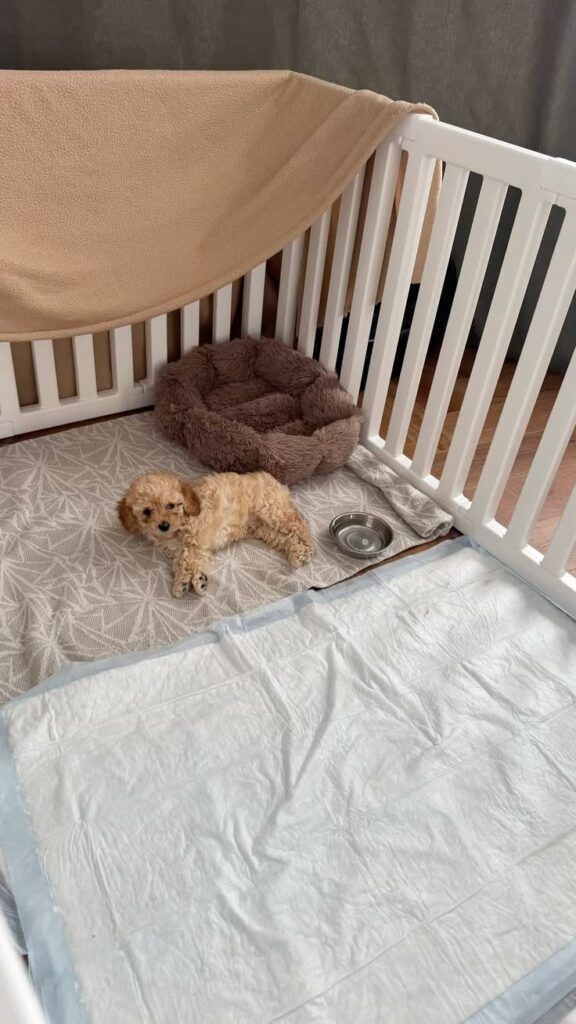
Prepare a designated puppy area with a comfortable bed, safe toys, water, and a crate or pen if you plan to use one. This space should allow the puppy to rest without constant access to household hazards.
Remember that supervision is essential. Puppy-proofing reduces risks, but it cannot make a home completely hazard-free.
2. Make the Bathroom Safe
Bathrooms contain numerous products that can harm a curious puppy. Store prescription and over-the-counter medications, vitamins, razors, dental floss, cotton swabs, cleaning products, and personal-care items in closed cabinets or drawers.
Keep shampoo, conditioner, soap, cosmetics, and other toiletries out of reach. A puppy may chew a container or swallow an item even if it does not seem appealing to you.
Keep the toilet lid down and the bathroom door closed when practical. Toilet water may contain cleaning chemicals, and an open toilet can create other risks for a small puppy. Never leave a puppy unattended around a filled bathtub or bucket of water.
Laundry baskets also deserve attention. Used towels, socks, underwear, and other fabrics may attract a puppy, but swallowing them can cause serious digestive problems. Store laundry in a secure hamper rather than leaving clothing on the floor.
If you use toilet-cleaning products, follow the product label carefully and keep your puppy away from the toilet or treated surfaces as directed. Store all chemicals securely after use.
A simple bathroom rule is helpful: if an item could be swallowed, chewed, spilled, or licked, keep it inaccessible to your puppy.
3. Puppy-Proof the Kitchen
The kitchen combines food, rubbish, appliances, sharp objects, and cleaning supplies, making it one of the most important rooms to secure.
Use closed cabinets or secure latches for detergents, disinfectants, dishwasher products, and other chemicals. Keep knives, scissors, skewers, and other sharp utensils in drawers or cupboards your puppy cannot open. Store plastic wrap, foil, and small packaging materials out of reach.
Choose a rubbish bin with a secure lid and place it somewhere the puppy cannot tip over. Food scraps may contain bones, spoiled food, packaging, or ingredients that are unsafe for dogs. Do not rely on a heavy object balanced on top of the bin; use a properly secured container or keep it behind a closed door.
Some common foods are dangerous to dogs, including chocolate, grapes and raisins, onions, garlic, products containing xylitol, and alcoholic beverages. Keep these items away from the edge of counters and store them securely. Do not leave food unattended on low tables or within reach of a jumping puppy.
Keep hot pans, boiling liquids, and electrical appliances away from the edge of counters. Use caution when opening the oven or dishwasher, and check that your puppy is not underfoot before moving hot food or heavy items.
Teach household members not to feed the puppy from the table without checking whether the food is suitable. A consistent approach helps prevent accidental ingestion and unwanted begging behavior.
4. Secure Living Rooms and Family Areas
Living rooms often become a puppy’s main play and relaxation space. Make the area comfortable while removing tempting hazards.
Move remote controls, batteries, small decorations, coins, jewelry, children’s toys, and other swallowable objects to secure storage. Keep shoes, cushions, blankets, and loose fabric out of reach if your puppy tries to chew them. Provide suitable dog toys instead, and inspect them regularly for damage.
Electrical cords can be especially tempting to teething puppies. Arrange cables behind furniture or use suitable cord protectors, ensuring that your puppy cannot pull the cords or chew through the protection. Unplug items that are not in use when practical, and keep power strips inaccessible.
Check houseplants before allowing your puppy near them. Some plants are toxic to dogs, and even non-toxic plant material can cause stomach upset if eaten in quantity. Move hazardous plants out of reach or remove them from the home.
Secure floor lamps and tall decorations that could fall if bumped. Use a fireplace screen where appropriate, and prevent access to heaters, candles, and other hot surfaces. Keep windows and balcony doors secure, especially if furniture could allow a puppy to climb.
Create a clear resting spot where your Cavapoo can relax without being disturbed. Children and visitors should understand that a resting puppy needs space and should not be chased, grabbed, or woken abruptly.
5. Organize Your Home Office
A home office can look orderly to an adult while presenting many small hazards to a puppy. Paper clips, staples, rubber bands, pens, pencils, batteries, and small electronic accessories should be stored in drawers or containers with secure lids.
Keep documents, envelopes, and loose paper off the floor. Chewing paper may seem harmless, but swallowing large pieces or other office materials can cause problems. Shredder openings should be inaccessible, and equipment should be switched off and secured when not in use.
Manage computer and charging cables so that they do not hang down where a puppy can grab them. Keep headphones, adapters, and removable electronic components out of reach. Do not allow a puppy to chew a power cord, even if the device appears to be switched off.
If you work from home, consider using a puppy pen or gate to separate your workspace when you cannot supervise directly. Offer a safe chew toy or a short enrichment activity, and schedule breaks for toilet trips, play, and interaction.
Avoid expecting a new puppy to settle quietly beside your desk for an entire workday without support. Young dogs need frequent attention, movement, and rest. Plan care around the puppy’s age and individual needs.
6. Prepare Bedrooms and Laundry Areas
Bedrooms often contain shoes, jewelry, hair accessories, medication, charging cables, and other small items that a puppy may investigate. Pick up loose objects and store them in drawers, closed cupboards, or containers your puppy cannot open.
Keep laundry hampers secure and close wardrobe doors when possible. Socks and underwear can be particularly tempting to chew, but swallowing fabric can lead to a dangerous intestinal obstruction.
If the puppy will sleep in your bedroom, decide in advance where it will rest. A suitable crate, puppy pen, or dog bed can provide a predictable sleeping space. Introduce any confinement gradually and positively rather than forcing the puppy into an unfamiliar space.
Keep bedside medications, creams, and supplements securely stored. Do not leave handbags open on the floor, because they may contain medicines, sugar-free gum, cosmetics, or other items that can be dangerous if swallowed.
If you have children, keep small toys and accessories in secure storage. Use a gate when necessary to prevent the puppy from entering a bedroom that has not been made safe.
Establishing these habits before the puppy arrives makes it easier to maintain a tidy, safer home.
7. Check the Garage, Utility Room, and Storage Areas
Garages and utility rooms may contain some of the most dangerous household substances. Keep antifreeze, fuel, motor oil, pesticides, rodent-control products, fertilizers, paint, solvents, and cleaning chemicals in secure storage that pets cannot access.
Antifreeze can cause life-threatening poisoning, and some formulations may attract animals because of their taste. Clean spills immediately according to product safety instructions, prevent your puppy from entering the area, and never leave open containers unattended.
Keep tools, nails, screws, batteries, and other small or sharp objects in closed boxes or cabinets. Secure heavy equipment and ensure that the puppy cannot become trapped behind stored items or appliances.
Washing machines and dryers should remain closed when not in use. Check inside before starting a cycle, and store detergent pods and laundry products securely. Utility areas may also contain cords, hot surfaces, or gaps behind machines where a small puppy could become stuck.
Make the garage or workshop off-limits unless you can supervise closely and have made the space safe. A closed door or properly installed gate is often more reliable than repeatedly trying to redirect a curious puppy.
8. Make the Yard and Outdoor Areas Puppy-Safe
If you have a yard, inspect it before allowing your Cavapoo to explore. Check fences for gaps, loose boards, and spaces beneath gates. A small puppy may fit through an opening that appears too narrow to be a concern. Never leave a puppy unattended outside simply because the yard is fenced.
Remove or securely store fertilizers, weed-control products, pesticides, compost, and garden chemicals. Follow label directions for any product used outdoors, including restrictions on when pets can return to a treated area.
Identify plants in your yard and around entrances. Some common ornamental plants are toxic to dogs, and mushrooms or other naturally growing material may also be dangerous. If you are unsure about a plant, prevent access until you have identified it reliably.
Keep tools, sharp garden equipment, cords, and rubbish out of reach. Cover or block access to ponds, pools, and other water hazards. Provide shade and fresh water, and bring your puppy inside when weather conditions are unsafe.
Even if you have a yard, your Cavapoo still needs supervision, training, appropriate walks, and opportunities to explore safely. Outdoor access does not replace companionship or structured activity.
9. Prepare Puppy Supplies Before Arrival
Having the right supplies ready can make the first few days easier. Your shopping list should focus on safety, comfort, feeding, grooming, and training rather than buying every available puppy product.
Useful essentials include:
- Food appropriate for your puppy’s age and nutritional needs.
- Food and water bowls that are easy to clean.
- A properly fitted collar or harness and a suitable leash.
- An identification tag and a plan for permanent identification where appropriate.
- A comfortable bed and a crate or puppy pen if you will use one.
- Safe chew toys and age-appropriate enrichment toys.
- A brush suitable for your puppy’s coat.
- Dog-safe cleaning products and waste bags.
- A pet first-aid kit for basic supplies, used with veterinary guidance.
- Contact details for your veterinarian and the nearest emergency veterinary service.
Ask the person or organization placing the puppy what food it currently eats and what routine it follows. If you need to change its diet, discuss a gradual transition with your veterinarian.
Before bringing the puppy home, arrange a veterinary appointment and ask about vaccinations, parasite prevention, feeding, grooming, and any health concerns specific to the puppy. Request the records that are actually available and keep them organized.
Do not give human medication or attempt home treatment for suspected poisoning without veterinary direction.
10. Know What to Do in an Emergency
Even careful owners cannot prevent every accident, so preparation matters. Save the phone number and address of your regular veterinarian and a nearby emergency veterinary hospital. Keep these details accessible to every adult in the household.
If you suspect your puppy has swallowed a medicine, chemical, toxic plant, or other hazardous item, contact a veterinarian or animal poison service immediately. Do not wait for symptoms to appear. Do not induce vomiting or give milk, food, oil, or other home remedies unless a veterinary professional specifically instructs you to do so.
If possible, identify the product involved and have its packaging or label available when you call. Be ready to explain what your puppy may have swallowed, approximately how much, and when it happened. Follow the professional’s instructions about whether and how to transport your puppy.
If your puppy is struggling to breathe, collapses, has seizures, or shows another severe symptom, seek emergency veterinary care immediately.
A safety plan is not meant to cause anxiety. It helps you respond promptly and make better decisions when time matters.
Finding the Right Cavapoo for Your Home
Preparing your home is one part of responsible puppy ownership; choosing a puppy carefully is another. If you are researching Cavapoo Puppies For Sale Near Me, look beyond photographs and advertised descriptions. Ask questions about the puppy’s care, observed temperament, available veterinary records, parent information where available, and the terms of placement.
The same care applies to regional searches such as Cavapoo Puppies For Sale In Tennessee, Cavapoo Puppies For Sale In Ohio, and Cavapoo Puppies For Sale In Florida. Confirm that your household is ready, review your housing rules, and understand any collection or delivery arrangements before committing.
Cavapoos vary in size, coat, energy level, and behavior. No puppy can be guaranteed to be completely non-shedding, perfectly calm, or naturally suited to every household. Choose based on realistic expectations and your ability to meet the dog’s needs throughout its life.
Before deciding, review the available puppy information and understand the adoption or placement process. Taking time to prepare helps you make a more informed choice and gives your new companion a safer start.
Frequently Asked Questions About Puppy-Proofing for Cavapoos
When should I puppy-proof my home?
Ideally, complete your main safety checks before the puppy arrives. This gives you time to secure hazards, install gates, organize supplies, and decide where the puppy will eat, sleep, play, and go to the toilet.
What household items are most dangerous to puppies?
Potential hazards include medications, cleaning chemicals, certain foods, batteries, electrical cords, small objects, swallowed fabrics, toxic plants, and automotive chemicals. Risk depends on the substance or object and the amount involved, so seek veterinary advice immediately if ingestion is suspected.
Do I need a crate for my Cavapoo?
A crate can provide a safe resting space and support supervision when introduced positively. It is not essential for every household, and it should never replace appropriate exercise, companionship, toilet breaks, or a suitable care plan.
Are Cavapoos safe around children?
A Cavapoo may be a good companion in a prepared family home, but every interaction between a puppy and a young child should be actively supervised. Teach children gentle handling and give the dog a quiet place to rest undisturbed.
Is a fenced yard enough to keep a puppy safe?
No. Fences can have gaps, outdoor chemicals and plants can be hazardous, and puppies can injure themselves or escape. Supervise outdoor time and check the area regularly.
What should I do if my Cavapoo eats something dangerous?
Contact a veterinarian or animal poison service immediately. Do not wait for symptoms or try to induce vomiting unless a veterinary professional specifically instructs you to do so.
Final Thoughts
Puppy-proofing your home is one of the most practical ways to prepare for life with a Cavapoo. Check every room, secure chemicals and medications, manage electrical cords, remove choking hazards, inspect outdoor areas, and provide a comfortable space for rest and play.
Remember that preparation works best alongside supervision, positive training, routine veterinary care, and realistic expectations. As your puppy grows, review your safety arrangements because new abilities—such as jumping, climbing, and reaching higher surfaces—can introduce new risks.
A safe home will not eliminate every hazard, but it can reduce preventable accidents and help your Cavapoo settle into family life with a more secure start.
Continue Learning About Cavapoos
- Available Cavapoo Puppies
- Cavapoo Breed Guide
- Cavapoo Care Guide
- Cavapoo Buying Guide
- Cavapoo Puppies by State
- How to Train a Cavapoo Puppy
- Puppy Buying Checklist
- Questions to Ask Before Buying a Cavapoo Puppy
- Health Guarantee
- Shipping & Delivery
- Adoption Process
- Frequently Asked Questions

Pingback: Raising Puppies in Apartments: 7 Tips for Success
Pingback: German Shepherd Breed Characteristics: Temperament and Care