
Cavapoo Buying Guide
Teacup Puppies: What to Know About Tiny Dogs & Cavapoos
Oct
Few things attract attention quite like an exceptionally small dog. Tiny puppies can look incredibly cute, and their small size can make them appealing to people living in apartments, smaller homes, or households looking for a compact companion.
But there is an important distinction prospective owners should understand before searching for a very small puppy: “teacup” is not an official dog breed or a universally recognized size category.
The term is generally used informally to describe dogs that are unusually small for their breed. Depending on the seller, advertisement, or breed being discussed, the word can mean different things.
That makes it important to look beyond labels.
If you are interested in small companion dogs and are researching Cavapoo Puppies For Sale Near Me, understanding size, genetics, health, and responsible breeding can help you make a much better decision than simply searching for the smallest puppy available.
What Are Teacup Puppies?
“Teacup puppy” is a marketing term commonly used for an exceptionally small dog.
There is no universal veterinary or major kennel-club definition that says a dog below a particular weight automatically becomes a teacup dog.
A Chihuahua, Pomeranian, Yorkshire Terrier, Maltese, Toy Poodle, or another small breed may be described as a “teacup” by some sellers, even though the term is not an official breed classification.
This distinction matters because the label can create unrealistic expectations.
A puppy’s adult size cannot be determined simply by placing it next to a teacup or comparing it with another puppy. Genetics, parental size, nutrition, health, and development all influence how a puppy grows.
Instead of asking only, “How tiny will this puppy be?” prospective owners should ask whether the puppy is healthy, appropriately developed, responsibly bred, and a good fit for their lifestyle.
Teacup Is Not the Same as Toy
The terms “toy” and “teacup” are sometimes used interchangeably, but they are not the same thing.
Some breeds have officially recognized toy varieties or size classifications. The Toy Poodle, for example, is a recognized variety of Poodle.
“Teacup,” however, is generally an informal description rather than a standardized breed classification.
This is especially important when evaluating puppy advertisements.
If a seller promises that a puppy will remain an extremely specific miniature size without explaining the genetic basis or providing appropriate information about the parents, be cautious.
A responsible puppy purchase should focus on the dog’s health and suitability rather than an attractive marketing label.
Why Are Extremely Small Dogs So Popular?
There are several reasons tiny dogs attract attention.
Their compact size can make them convenient for some households. They may be easier to carry, require less physical space, and can sometimes fit well into urban lifestyles.
Their appearance also contributes to their popularity. A very small dog can retain puppy-like physical characteristics into adulthood, which many people find appealing.
Social media and celebrity culture have also contributed to interest in unusually small dogs.
However, appearance should never be the only consideration when choosing a companion.
A dog is a long-term responsibility. Before bringing home any puppy, prospective owners should consider veterinary care, nutrition, grooming, exercise, training, temperament, household safety, and the dog’s expected adult needs.
Are Teacup Dogs a Separate Breed?
No.
There is no single “teacup dog” breed.
The term can be applied to unusually small individuals from several different breeds.
For example, someone may advertise a very small Poodle as a “teacup Poodle,” but that does not create a new breed.
Likewise, an exceptionally small Chihuahua remains a Chihuahua.
The same principle is important when discussing Cavapoos.
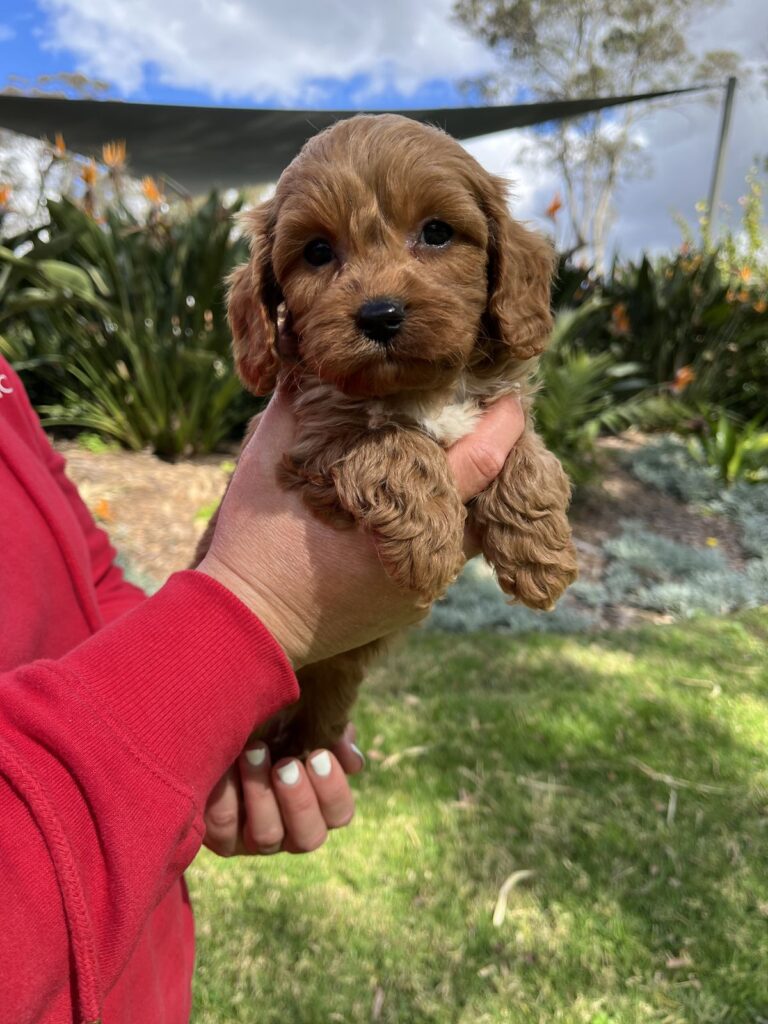
A Cavapoo is an intentional cross between a Cavalier King Charles Spaniel and a Poodle. The resulting puppies can vary in size and appearance depending on their genetics and the Poodle parent involved.
Calling an unusually small Cavapoo a “teacup Cavapoo” does not create an official Cavapoo size category.
Where Do Cavapoos Fit Into the Small-Dog Conversation?
Cavapoos are popular companion dogs because they combine characteristics from the Cavalier King Charles Spaniel and Poodle.
Their adult size can vary because Cavapoos are not a single standardized size category.
The size of the Poodle parent, the genetics inherited from both parents, and individual development all influence the eventual size of a Cavapoo.
That means two Cavapoo puppies from different parents can grow into noticeably different adult dogs.
This is one reason prospective owners should be careful with advertisements promising an exact adult weight before a puppy has finished growing.
If you are researching Cavapoo Puppies For Sale Near Me, ask about the parents and the expected size range rather than focusing exclusively on the smallest puppy.
Should You Choose the Smallest Puppy?
Not necessarily.
Size should be only one part of the decision.
A smaller puppy is not automatically healthier, easier to care for, or better suited to your household.
When choosing a puppy, consider temperament, development, health information, socialization, parent information, veterinary care, and how the puppy has been raised.
The smallest puppy in a litter should not automatically be marketed as a premium “teacup” puppy.
Likewise, a larger puppy is not automatically less desirable.
The goal should be to find a healthy, appropriately developing puppy whose characteristics fit your lifestyle.
Extremely Small Dogs May Require Extra Care
Very small dogs can have specific management considerations.
Because of their size, owners need to be particularly careful about accidental falls, being stepped on, rough handling, and interactions with larger dogs.
A very small puppy can also be vulnerable to environmental hazards that might be less dangerous for a larger adult dog.
This does not mean every small dog will experience health problems.
It simply means owners should understand that physical size affects how a dog interacts with its environment.
Children should be taught how to handle small puppies gently and appropriately, and interactions with other pets should be supervised.
Nutrition Matters for Small Puppies
Nutrition is one of the most important parts of puppy development.
A very small puppy should not simply be fed a generic “high-fiber” diet because an internet article recommends it.
Instead, puppies should receive a complete and balanced diet appropriate for their life stage, size, and individual needs.
Feeding amounts should be based on the specific food, the puppy’s growth, body condition, activity, and veterinary guidance.
Very small puppies can also have particular nutritional and metabolic considerations, which makes veterinary guidance especially valuable when a puppy is unusually small or has difficulty maintaining normal eating habits.
Do not assume that more food is always better, and do not deliberately restrict food to keep a dog unusually tiny.
Healthy development should come before appearance.
How Much Should a Small Puppy Sleep?
Puppies sleep a lot.
Young puppies may sleep for many hours throughout the day because sleep supports normal development and recovery from all the learning and activity taking place around them.
However, there is no single number of hours that every puppy must sleep every day.
Age, activity, individual temperament, health, and environment all matter.
Instead of trying to force your puppy to meet an exact number, provide a quiet, comfortable sleeping area and allow the puppy to rest when tired.
A sudden change in sleeping habits, especially when accompanied by weakness, poor appetite, vomiting, diarrhea, breathing problems, or unusual behavior, should be discussed with a veterinarian.
Small Dogs Still Need Exercise
One common misconception is that tiny dogs do not need exercise.
They do.
The amount and intensity should simply be appropriate for the individual dog.
Puppies benefit from age-appropriate play, exploration, training, and movement. Adult small dogs also need regular physical activity.
You do not need to turn a small companion dog into a long-distance athlete, but neither should you assume that carrying the dog everywhere is sufficient exercise.
Short walks, supervised play, scent exploration, training games, and indoor enrichment can all contribute to an active lifestyle.
Mental Stimulation Is Important Too
Small dogs can be intelligent and curious.
Mental enrichment can include basic training, food puzzles, scent games, interactive toys, and supervised exploration.
Training also helps establish household routines.
Teach your puppy appropriate behaviors using reward-based training and keep sessions short enough to maintain attention.
A tiny body does not mean a tiny need for learning.
Grooming Is Part of Small-Dog Care
Many popular small breeds require regular grooming.
For Cavapoos, grooming needs can vary because coat texture is influenced by genetics.
Regular brushing can help prevent tangles and mats and provides an opportunity to inspect the skin.
Professional grooming may also be appropriate depending on the coat and the owner’s ability to maintain it at home.
Introduce grooming gradually.
Touch your puppy’s paws, ears, face, and body gently and pair handling with positive experiences.
This can make future nail trimming, brushing, bathing, ear checks, and professional grooming much easier.
Dental Care Should Start Early
Small dogs can benefit from owners who establish good dental-care habits early.
Begin by getting your puppy comfortable with gentle mouth handling.
Once your veterinarian recommends an appropriate routine, brushing with toothpaste specifically formulated for dogs can help control plaque.
Never use human toothpaste for your dog because some products can contain ingredients that are unsafe for pets.
Regular veterinary examinations should also include assessment of your dog’s mouth and teeth.
Small Does Not Mean Fragile in Every Situation
It is important not to overprotect a small dog to the point that it cannot develop normal confidence.
Small dogs can participate in appropriate walks, training, socialization, and play.
The key is matching the activity to the individual dog’s age, health, size, confidence, and environment.
For example, a tiny puppy should not be placed in the middle of a chaotic dog park simply because its owner wants it to socialize.
Instead, provide controlled, positive experiences.
Our Puppy Socialization guide explains why quality of socialization matters more than simply exposing a puppy to as many experiences as possible.
What Health Questions Should You Ask Before Buying a Small Puppy?
If you are considering a very small puppy, ask more questions rather than fewer.
Find out about:
- The puppy’s veterinary care
- Vaccination history
- Deworming history
- Parents
- Parent health testing where applicable
- The puppy’s living environment
- Socialization
- Nutrition
- Health records
- Contract and policies
- What support is available after placement
Be especially cautious of sellers who focus heavily on words such as “micro,” “tiny,” or “teacup” while providing little meaningful information about health and care.
A small puppy should be valued for being a healthy dog—not simply for being unusually tiny.
What About Cavapoo Size?
Cavapoo size varies.
Because Cavapoos can be bred using different sizes of Poodle, adult size is not identical across every Cavapoo.
The Cavalier side also contributes genetics to the puppy’s eventual size and physical characteristics.
When evaluating a Cavapoo puppy, ask about the parents and discuss expected growth with the breeder and veterinarian.
Avoid assuming that a puppy’s current weight represents its final adult size.
Puppies grow at different rates, and early measurements should be interpreted in context.
Are Smaller Cavapoos Better for Apartments?
Not automatically.
Cavapoos can adapt well to different living environments when their needs are met, but apartment suitability involves more than physical size.
Consider exercise, barking, training, bathroom access, enrichment, grooming, time alone, and your building’s pet policies.
A slightly larger Cavapoo with a suitable temperament may be a better apartment companion than a very small dog with significant behavioral or health challenges.
Our Cavapoo Puppy Apartment Guide provides more information about preparing a smaller living space for a puppy.
Choosing Between a Cavapoo and Other Small Dogs
There are many small companion dogs available to prospective owners.
The right choice depends on what you want from a dog and what you can realistically provide.
Consider coat maintenance, activity needs, temperament, grooming requirements, training, health considerations, size, and your household.
Cavapoos appeal to many families because they can combine the affectionate companion characteristics associated with the Cavalier King Charles Spaniel with characteristics inherited from Poodles.
But no breed or cross is perfect for every household.
Research should come before purchase.
If You’re Searching for Cavapoo Puppies
If you are searching for Cavapoo Puppies For Sale In Tennessee, Cavapoo Puppies For Sale In Ohio, or Cavapoo Puppies For Sale In Florida, do not make your decision solely because a puppy is advertised as exceptionally small.
Instead, investigate the complete picture.
Look at the puppy’s health information, parent information, care history, socialization, living conditions, available documentation, and the seller’s transparency.
You can also explore Atlantic’s state-specific resources:
- Cavapoo Puppies For Sale In Tennessee
- Cavapoo Puppies For Sale In Ohio
- Cavapoo Puppies For Sale In Florida
Responsible Breeding Matters More Than Marketing Labels
A responsible approach to breeding should prioritize the health and welfare of the parents and puppies.
Health testing where appropriate, veterinary care, suitable nutrition, safe housing, proper socialization, and thoughtful puppy placement are much more meaningful indicators than labels such as “teacup” or “micro.”
Organizations such as the Orthopedic Foundation for Animals provide resources concerning canine health testing and health records.
The American Kennel Club also provides extensive educational information about dog breeds, puppy care, responsible ownership, and health.
For veterinary guidance, the American Veterinary Medical Association is another valuable source.
What Should You Look for Instead of a “Teacup” Promise?
Rather than asking a seller to guarantee that your puppy will remain extremely tiny, ask questions that provide meaningful information about the dog’s welfare.
Ask:
How are the puppies raised?
What veterinary care have they received?
What information is available about the parents?
What health testing has been performed where appropriate?
How are puppies socialized?
What records will accompany the puppy?
What happens if the puppy develops a health concern?
What does the written agreement say?
These questions can tell you much more than a marketing label.
The Appeal of a Tiny Dog Should Not Outweigh Its Welfare
It is easy to understand why exceptionally small puppies attract attention.
They can look adorable, fit comfortably into small spaces, and may be convenient for some lifestyles.
But responsible ownership means looking beyond appearance.
The healthiest decision is not necessarily the decision that produces the smallest possible dog.
Instead, look for an appropriately developed puppy from a responsible source, understand the puppy’s expected adult characteristics, and prepare to provide lifelong veterinary care, nutrition, exercise, grooming, training, enrichment, and affection.
That approach gives your future companion the best opportunity to thrive.
Frequently Asked Questions About Teacup Puppies and Cavapoos
Are teacup puppies a real breed?
No. “Teacup” is an informal term generally used to describe exceptionally small dogs. It is not a separate dog breed.
How small is a teacup puppy?
There is no universally accepted weight or height that defines a teacup puppy. Different sellers may use the term differently.
Are teacup dogs always healthy?
No. Extremely small size can be associated with additional health and management concerns in some dogs. Individual health depends on genetics, development, breeding, nutrition, veterinary care, and many other factors.
Is a teacup Cavapoo an official breed?
No. Cavapoo itself is an intentional cross between a Cavalier King Charles Spaniel and a Poodle. “Teacup Cavapoo” is an informal marketing description rather than a standardized breed category.
Can a Cavapoo be very small?
Some Cavapoos may mature smaller than others, depending on their genetics and the size of the Poodle parent. However, adult size varies and should not be guaranteed solely from a puppy’s current size.
Should I choose the smallest Cavapoo puppy?
Not necessarily. Health, development, temperament, parent information, socialization, and suitability for your household are more important than simply choosing the smallest puppy.
Are small dogs good for apartments?
Many small dogs can adapt well to apartment living, but size is only one factor. Exercise, training, barking, enrichment, grooming, and temperament also matter.
Do small dogs need exercise?
Yes. Small dogs still need appropriate physical activity and mental stimulation. Exercise should be adjusted for age, health, size, and individual ability.
Do Cavapoos need regular grooming?
Yes. Cavapoo grooming requirements vary depending on coat characteristics, but regular brushing and appropriate professional grooming can help maintain coat and skin health.
How often should I brush my Cavapoo?
The ideal frequency depends on coat type and length. Dogs with coats that tangle easily may need very frequent brushing to prevent mats.
Do small dogs need dental care?
Yes. Dental hygiene is an important part of responsible dog ownership regardless of size. Establish a veterinary-approved dental-care routine early.
Do puppies sleep a lot?
Yes. Young puppies need substantial rest as they grow and develop. Provide a comfortable, quiet sleeping area and allow your puppy adequate opportunities to sleep.
What should I feed a tiny puppy?
Feed a complete and balanced diet appropriate for the puppy’s life stage and individual needs. Ask your veterinarian for guidance if the puppy is unusually small or has feeding or growth concerns.
What questions should I ask when buying a small puppy?
Ask about veterinary care, vaccination and deworming records, parents, health testing where applicable, socialization, living conditions, nutrition, contracts, and post-placement support.
Is a cheap teacup puppy a good deal?
Price alone does not determine quality or health. Extremely low or high prices should not replace careful evaluation of the puppy’s care, documentation, breeding practices, and transparency.
Are Cavapoos good family dogs?
Many Cavapoos can make affectionate companion dogs, but individual temperament varies. Families should consider the dog’s age, temperament, socialization, training, and the ability of children to interact safely with a puppy.
Are Cavapoos hypoallergenic?
No dog can be guaranteed to be completely hypoallergenic. Cavapoos may have lower-shedding coats depending on their genetics, but individual dogs vary and people with allergies can still react.
Final Thoughts
The appeal of a tiny puppy is understandable, but the word “teacup” should never be more important than the health and welfare of the dog.
There is no official teacup breed, and exceptionally small size is not automatically a sign of quality.
If you are looking for a small companion, focus on responsible breeding, appropriate development, health information, temperament, socialization, and the long-term care requirements of the dog you are considering.
For people interested in Cavapoos, remember that individual puppies can vary in size and characteristics. Rather than searching only for the smallest possible puppy, look for a healthy, well-cared-for companion that fits your household and lifestyle.
A healthy Cavapoo that grows into the right companion for your family is far more valuable than a marketing label promising an unusually tiny dog.
Continue Learning About Cavapoos
If you are considering bringing home a Cavapoo, continue your research with these Atlantic resources:
- Available Cavapoo Puppies
- Cavapoo Breed Guide
- Cavapoo Care Guide
- Cavapoo Buying Guide
- Cavapoo Puppies by State
- Cavapoo Adoption Process
- Puppy Buying Checklist
- Questions to Ask Before Buying a Cavapoo Puppy
- Health Guarantee
- Shipping & Delivery
- Frequently Asked Questions
- How to Raise a Cavapoo Puppy
- Puppy Socialization
- Cavapoo Puppy Apartment Guide
- Cavapoo Dental Care
