Cavapoo Care Guide, Cavapoo Training Guide
Puppy Accidents and How to Clean Them: A Complete Potty-Training and Cleaning Guide
Aug
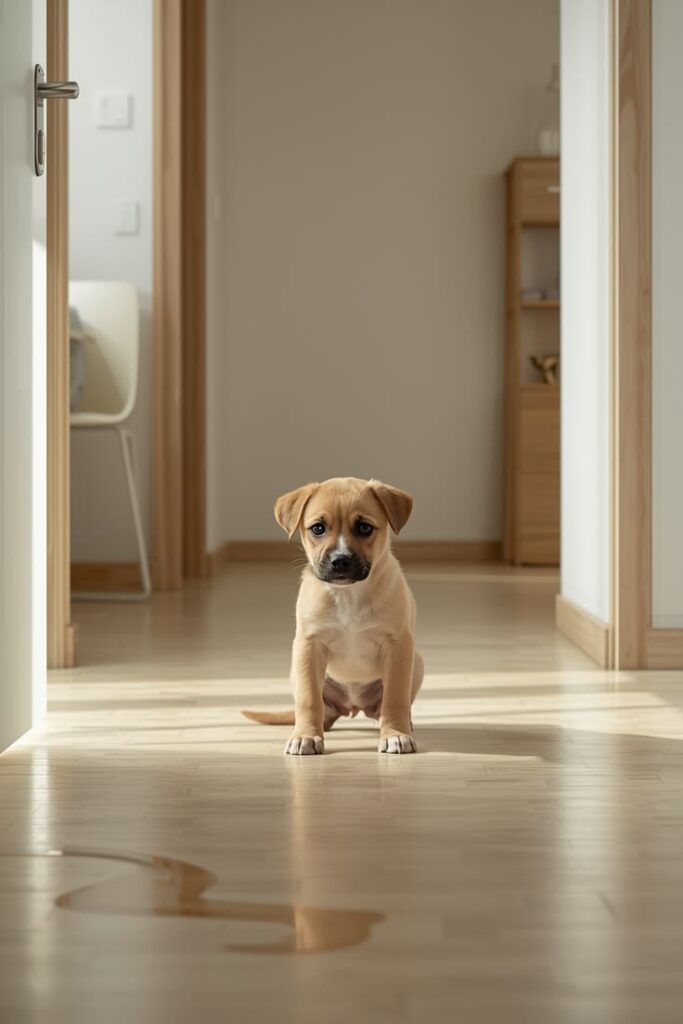
Puppy accidents are one of the most normal parts of bringing a young dog home. Even a puppy that seems to understand potty training can occasionally have an accident on the carpet, couch, bedding, or another unexpected place (puppy accidents and how to clean them).
The important thing is not to panic or punish your puppy.
Young puppies are still developing bladder and bowel control while learning where they are supposed to eliminate (puppy accidents). Successful house training depends on consistency, supervision, routine, and positive reinforcement. The American Veterinary Society of Animal Behavior recommends rewarding puppies immediately after they eliminate in the appropriate location and avoiding punishment for accidents.
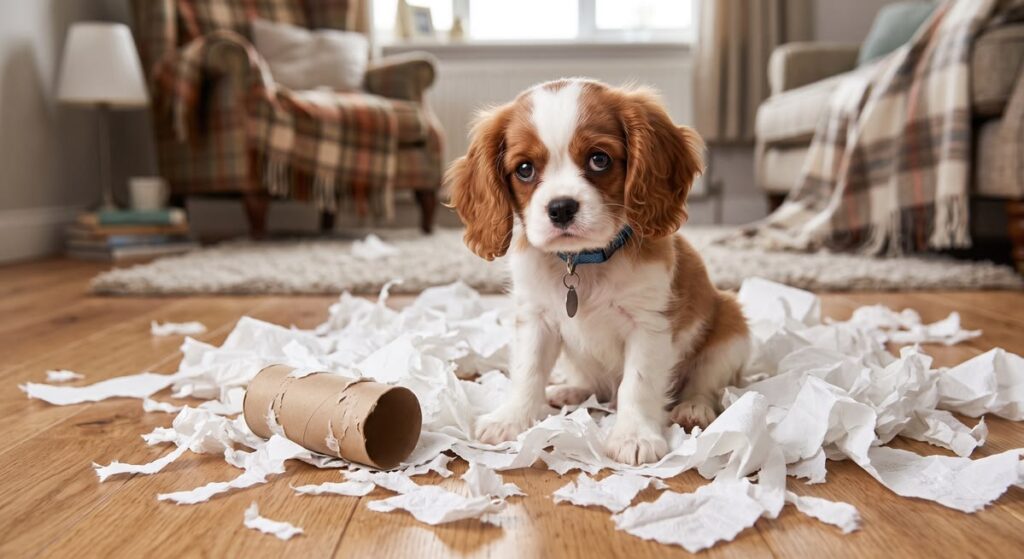
Cleaning the accident correctly is equally important. Dogs have an extremely sensitive sense of smell, and lingering urine or fecal odors can encourage them to return to the same location.
This guide explains how to prevent puppy accidents, what to do when one happens, and how to clean urine and other messes from common household surfaces.
Puppy Accidents and How to Clean Them: Why Do Puppies Have Accidents Indoors?
Puppies do not arrive knowing the rules of your house.
When a puppy first comes home, they have to learn that the yard, designated potty area, or another approved location is where they should eliminate.
Young puppies also have limited bladder control. Puppies around eight weeks old may need very frequent bathroom breaks, especially after waking, eating, drinking, playing, and sleeping. As they mature, their ability to hold their bladder gradually improves.
Accidents can happen because your puppy:
- Has not learned the potty routine yet.
- Has been given too much freedom inside.
- Was not taken outside soon enough.
- Became distracted while playing.
- Recently ate or drank.
- Just woke up from a nap.
- Is excited or stressed.
- Is still developing bladder control.
An accident does not mean your puppy is being stubborn or trying to upset you.
It means your puppy needs more guidance.
How to Prevent Puppy Accidents
The easiest accident to clean is the one that never happens.
A consistent potty-training routine can significantly reduce accidents because your puppy begins to understand what is expected.
Take Your Puppy Outside Frequently
Very young puppies need frequent opportunities to eliminate.
Take your puppy outside after waking up, after meals, after drinking, after playtime, and before bedtime. You should also watch for individual signals such as sniffing, circling, pacing, whining, or suddenly leaving the room.
The exact schedule will depend on your puppy’s age, size, routine, and individual bladder control.
Reward Successful Potty Trips Immediately
When your puppy eliminates in the correct location, reward the behavior immediately.
Give your puppy praise, a small training treat, or another reward they enjoy.
Timing matters. If you wait until you return inside before rewarding your puppy, they may not understand what behavior earned the reward. The American Veterinary Society of Animal Behavior specifically recommends immediate reinforcement after successful outdoor elimination.
Supervise Your Puppy Indoors
During the early stages of house training, keep your puppy close enough that you can observe their behavior.
If you notice your puppy sniffing the floor, circling, wandering away, or suddenly becoming restless, take them outside.
Giving a puppy unrestricted access to the entire house too early can make training harder.
Gradually increase your puppy’s freedom as they demonstrate reliable potty habits.
Use a Crate or Puppy-Safe Area Appropriately
A properly introduced crate can be useful during house training because many dogs prefer not to eliminate where they sleep.
However, a crate should never be used as punishment or as a place to leave a young puppy for excessive periods.
The American Veterinary Society of Animal Behavior recommends appropriate confinement and frequent potty opportunities while puppies are learning.
Your puppy should associate the crate with safety, rest, and positive experiences.
What Should You Do When Your Puppy Has an Accident?
The best response is calm and simple.
If you discover an accident after it has already happened, do not yell at your puppy, rub their nose in the mess, or attempt to punish them.
Your puppy cannot connect delayed punishment with an accident that happened minutes or hours earlier. Punishment can also make some puppies afraid to eliminate in front of their owners, which can make house training more difficult.
Instead:
- Stay calm.
- Move your puppy away from the mess.
- Take your puppy outside if they may still need to eliminate.
- Clean the area thoroughly.
- Continue your normal potty-training routine.
- Reward the puppy the next time they eliminate in the correct location.
If you catch your puppy in the middle of an accident, calmly interrupt them and take them to the appropriate potty location. If they finish there, reward them immediately.
Why You Need to Clean Puppy Urine Thoroughly
Simply wiping up visible urine is not always enough.
Your puppy may still be able to smell traces of urine that you cannot detect.
That lingering odor can become a scent marker that encourages your puppy to return to the same area.
The American Kennel Club recommends thoroughly cleaning accident areas with an odor-neutralizing product, and specifically recommends enzymatic cleaners designed for pet messes (how to clean puppy urine).
This is especially important with carpet, upholstery, mattresses, and other absorbent materials.
How to Clean Puppy Urine From Carpet
If you catch the accident while it is still wet, begin cleaning as soon as possible.
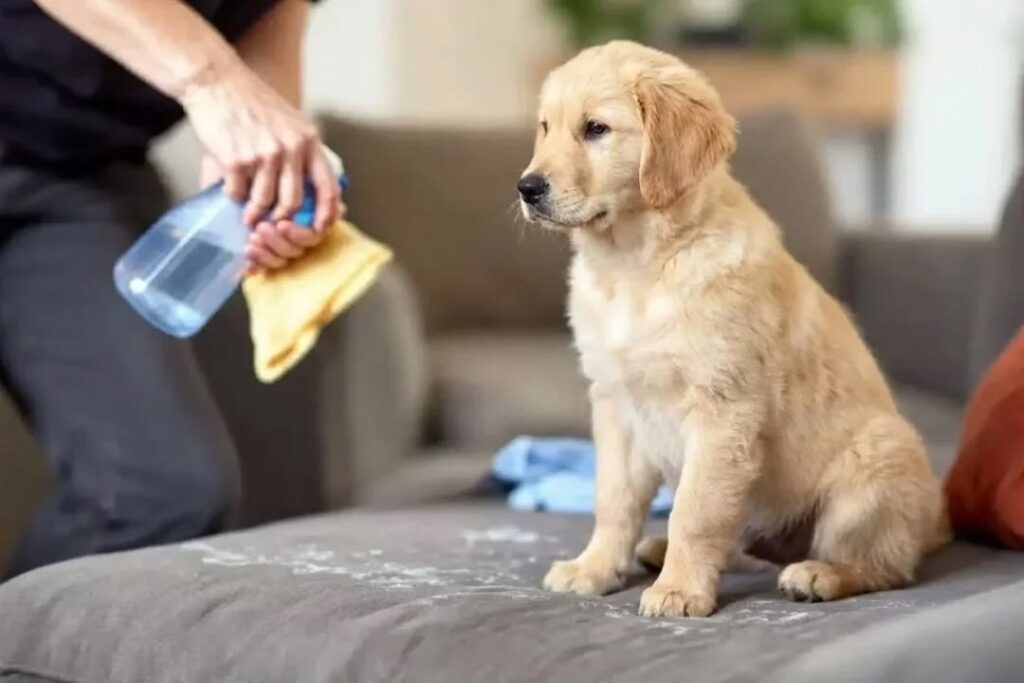
Step 1: Absorb the Excess Liquid
Use clean paper towels or an absorbent cloth to blot the area.
Avoid aggressively rubbing the urine deeper into the carpet.
Continue blotting until you have removed as much moisture as reasonably possible (how to clean dog pee from carpet).
Step 2: Use an Enzymatic Pet-Stain Cleaner
Choose a product specifically formulated for pet urine and follow the manufacturer’s instructions.
Enzymatic cleaners are designed to break down components of organic pet messes and help remove odors rather than simply covering them with fragrance (enzymatic cleaner for dog urine).
Veterinary guidance also recommends commercially available enzymatic products for previously soiled areas.
Step 3: Allow the Product to Work
Do not immediately remove the cleaning product if the manufacturer’s instructions require a specific contact time.
Different products work differently, so follow the label carefully.
Step 4: Let the Area Dry Completely
Keep your puppy away from the area while it is being treated.
Once the area is completely dry, check whether the odor remains.
If the smell persists, another treatment may be necessary.
How to Clean Puppy Urine From a Couch
Upholstered furniture can be more difficult because urine can travel beneath the surface.
First, blot as much moisture as possible.
Then use a pet-safe enzymatic cleaner that is appropriate for the upholstery material. Always follow the manufacturer’s instructions and test cleaning products on an inconspicuous area first (puppy potty training).
Avoid saturating furniture unnecessarily because excessive moisture can damage some upholstery or padding (puppy urine smell).
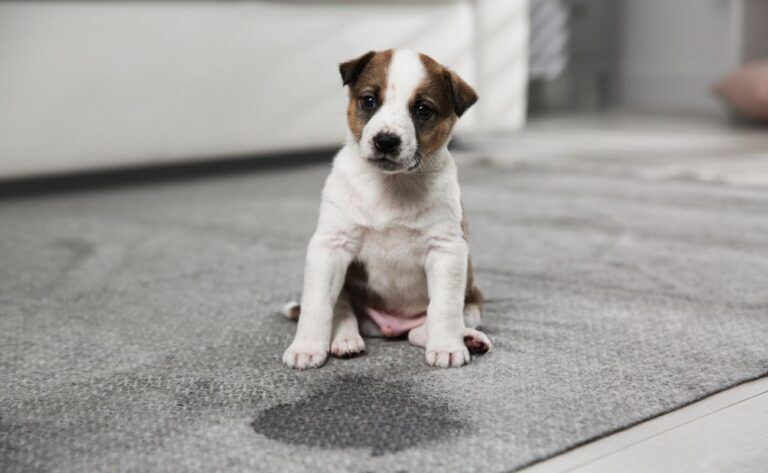
If urine has penetrated deeply into cushions or the underlying material, professional upholstery cleaning may be necessary (how to clean dog urine from couch).
Most importantly, prevent your puppy from accessing the area until it has been properly cleaned and dried.
How to Clean Puppy Urine From Bedding and Blankets
Remove contaminated bedding as soon as possible.
Wash washable items according to their care instructions and use a pet-appropriate odor-removing product when appropriate.
If the odor remains after washing, repeat the cleaning process rather than assuming that the smell is gone simply because you cannot detect it.
Dogs can detect odors at levels far below what humans can easily notice.
What About Hardwood Floors?
Hard surfaces are usually easier to clean than carpet, but urine can still reach cracks, seams, grout, or other porous areas.
Blot fresh urine first.
Then clean the surface with a product appropriate for that specific flooring material.
Do not assume that every household disinfectant or cleaning chemical is appropriate for every floor.
Always follow the manufacturer’s instructions and keep your puppy away from cleaning products while they are being used.
Should You Use Vinegar, Baking Soda, or Homemade Cleaners?
Homemade cleaning solutions are frequently recommended online for pet accidents.
However, when the objective is eliminating urine odor that could encourage repeat accidents, an enzymatic pet-stain cleaner specifically designed for animal urine is generally the better choice.
Veterinary and behavior resources specifically recommend enzymatic products for removing residual urine odors (puppy house training).
You should also avoid experimenting with combinations of household chemicals.
Some cleaning chemicals can create dangerous fumes when mixed together.
If you prefer a commercial cleaner, choose one clearly labeled for pet urine and follow its instructions carefully.
How to Clean Puppy Poop From Carpet
Pick up solid waste as quickly as possible.
Then blot any remaining moisture rather than rubbing it deeper into the carpet.
Use a pet-safe cleaning product designed for fecal stains and odors, following the label directions.
After cleaning, allow the area to dry completely before giving your puppy access to it again.
If the mess has penetrated deeply into carpet padding, repeated treatment or professional cleaning may be necessary.
Why Puppies Return to the Same Accident Spot
Have you ever completely cleaned an accident only to discover your puppy returning to that exact location?
There is a reason.
Dogs use scent to gather information about their surroundings.
If traces of urine remain, your puppy may continue recognizing that area as an appropriate elimination location (puppy potty training accidents).
That is why cleaning the visible stain is only part of the job.
The goal is to remove the odor that your puppy can detect, not simply make the carpet look clean to you.
Thorough enzymatic cleaning can help break this cycle.
Don’t Give Your Puppy Too Much Freedom Too Soon
One common potty-training mistake is assuming that a puppy is fully trained after several successful days.
Your puppy may understand the routine but still need supervision.
Instead of suddenly allowing access to every room, gradually expand the area your puppy can explore.
If accidents begin again, temporarily reduce their freedom and return to closer supervision.
The AKC recommends gradually increasing freedom rather than giving young puppies unrestricted access before their potty habits are reliable (how to stop puppy accidents).
Positive Reinforcement Works Better Than Punishment
Your puppy is learning.
Mistakes are part of the learning process.
Reward-based training gives your puppy a clear answer to an important question:
“What do you want me to do?”
When your puppy eliminates in the correct location, reward them.
When an accident occurs, clean it without creating fear.
The American Veterinary Society of Animal Behavior recommends reward-based training and states that aversive training methods should not be used.
A patient approach can also help strengthen the relationship between you and your puppy.
When Puppy Accidents Could Mean Something More
Occasional accidents are normal during puppyhood.
However, if a puppy that was previously reliable suddenly begins having frequent accidents, it is worth discussing the change with your veterinarian.
Medical problems can sometimes contribute to inappropriate urination or house-soiling behavior.
The same applies if your puppy is straining to urinate, urinating unusually frequently, showing discomfort, drinking dramatically more water, or displaying other unusual symptoms (puppy training tips).
Persistent house-soiling despite consistent training can warrant veterinary evaluation.
A Simple Puppy Accident Cleanup Routine
When an accident happens, remember this simple process:
Interrupt → Take Outside → Reward → Clean → Supervise → Repeat
If you catch the accident happening, calmly redirect your puppy outside.
If they finish in the correct location, reward them immediately.
Then return inside and clean the accident thoroughly with an appropriate pet stain and odor cleaner.
Finally, think about why the accident happened.
Was the puppy left alone too long?
Did they just wake up?
Did you miss their potty signal?
Were they given too much freedom?
Finding the reason helps you prevent the next accident.
Preparing Your Home for a New Puppy
Before bringing your puppy home, prepare a small, puppy-safe area where they can learn the household routine (dog urine odor removal).
Keep cleaning supplies specifically intended for pet accidents available.
You should also have:
- Paper towels or washable cleaning cloths.
- A pet-safe enzymatic cleaner.
- Puppy-safe bedding.
- A properly sized crate or puppy pen.
- Training treats.
- Waste bags.
- A leash and collar or harness.
- Baby gates if needed.
- Toys for appropriate chewing and mental stimulation.
Having these supplies ready means you can respond quickly instead of searching for cleaning products after an accident has already happened.
If you’re preparing for a new Cavapoo puppy, our Cavapoo Care Guide can help you understand the everyday responsibilities involved in raising a healthy and happy puppy.
Final Thoughts
Puppy accidents are frustrating, but they are also completely normal during the early stages of house training.
The goal is not to expect perfection immediately.
Your puppy needs repetition, supervision, patience, and clear rewards.
When accidents happen, clean them thoroughly so lingering odors do not encourage your puppy to return to the same location. Enzymatic pet cleaners are a particularly useful option for breaking down odors associated with urine and other organic messes.
Most importantly, avoid punishment.
Reward your puppy for getting it right, supervise them closely while they are learning, and gradually give them more freedom as their potty habits improve.
With consistency, most puppies gradually become reliable members of the household.
Continue Learning About Cavapoos
If you’re raising or preparing for a Cavapoo puppy, continue learning with our Cavapoo Breed Guide, Cavapoo Care Guide, How to Train a Cavapoo Puppy, and Puppy Buying Checklist.
You can also explore our Available Cavapoo Puppies, learn about the Adoption Process, or review our Health Guarantee before bringing your new puppy home.
For authoritative additional guidance, visit the American Kennel Club’s puppy potty-training guide and the American Veterinary Society of Animal Behavior’s housetraining guidance.
