
Full Grown Cavapoo Guide, Cavapoo Care Guide, Grooming Guide
Small, Medium, or Large Breed Dog? How to Choose the Right Size for Your Family

Aug
Choosing a dog is a major decision, and size is one of the first factors worth considering (How to Choose the Right Size puppy for Your Family).
A small dog may fit comfortably into an apartment, while a large dog may require more room, food, and equipment. However, size alone does not determine whether a dog will fit your lifestyle.
A small dog can be energetic and demanding. A large dog can be calm and happy spending much of the day relaxing at home.
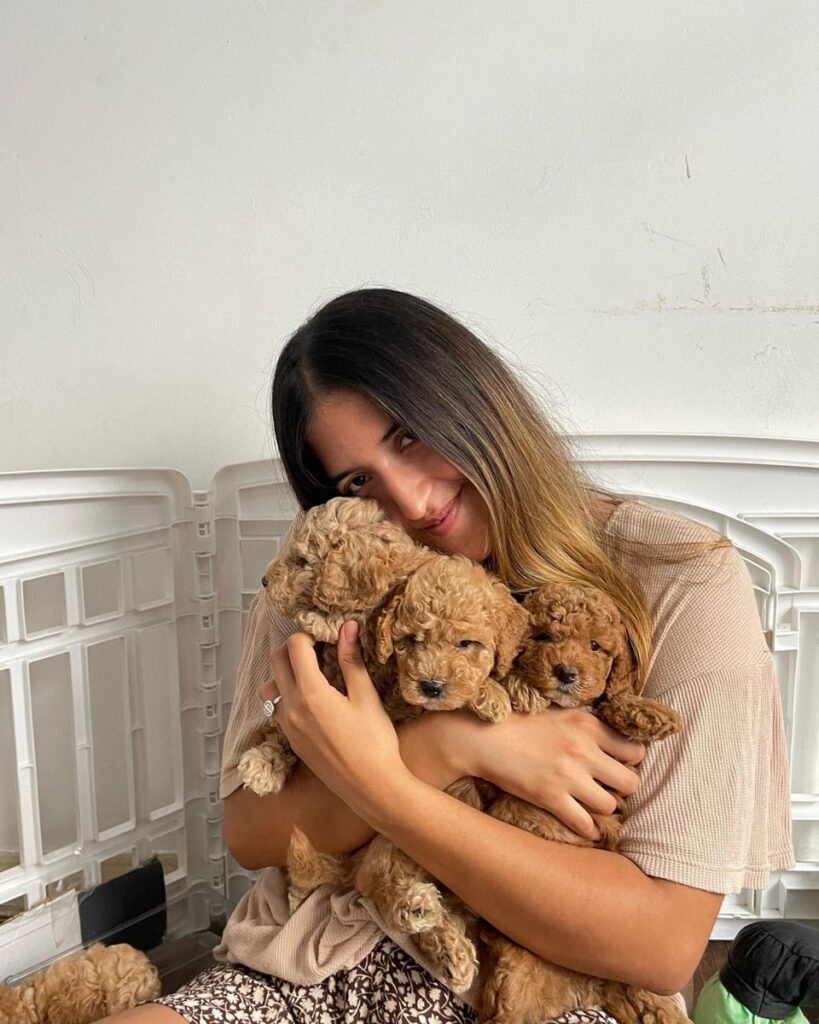
The right choice depends on your family, living situation, daily routine, activity level, and ability to provide long-term care.
If you are considering a Cavapoo puppy, understanding how small, medium, and large dogs differ can also help you decide whether this popular Poodle mix is right for you.
What Is Considered a Small, Medium, or Large Dog: How to Choose the Right Size puppy for Your Family
There is no single universal classification system for dog sizes. Different organizations and breeders may use slightly different weight and height ranges.
As a general guide:
Small Dogs
Small breeds commonly weigh less than about 25 pounds.
Examples include:
- Cavapoos
- Chihuahuas
- Dachshunds
- Papillons
- Maltese
- Yorkshire Terriers
Their compact size can make them easier to carry, transport, and accommodate in smaller homes.
However, small dogs still need daily exercise, training, socialization, grooming, and veterinary care.
Medium Dogs
Medium dogs generally fall somewhere between small and large breeds.
Examples include:
- Cocker Spaniels
- Border Collies
- Australian Shepherds
- Beagles
- Standard Schnauzers
Medium dogs can provide a balance between portability and physical size.
Many require considerably more exercise than their smaller counterparts, although individual energy levels vary greatly.
Large Dogs
Large breeds commonly weigh more than about 50 pounds, although classifications vary.
Examples include:
- Golden Retrievers
- Labrador Retrievers
- German Shepherds
- Rottweilers
- Great Danes
Large dogs can make wonderful companions, but their size affects many practical aspects of ownership.
Food consumption, transportation, equipment, housing requirements, and veterinary expenses can all increase.
Consider Your Family
Your household should play a major role in deciding which dog size makes sense.
If you have young children, think about the dog’s temperament, strength, energy level, and ability to interact safely with children.
A very small dog may be physically vulnerable around energetic young children.
Likewise, a large, powerful dog may accidentally knock over a small child while playing.
Rather than choosing a dog based only on size, look at the complete temperament and needs of the breed.
Teenagers and adults may be able to participate more actively in walking, training, grooming, and exercise.
The most important thing is matching the dog’s needs with the people who will actually care for them.
Think About Your Living Space
Your home is another important consideration.
A small dog can often adapt well to apartment living, provided that the owner meets its exercise and mental stimulation needs.
That does not mean large dogs automatically need enormous houses.
Some large dogs are surprisingly relaxed indoors.
On the other hand, some small dogs have extremely high energy levels and may require considerable daily activity.
The amount of available space matters, but the dog’s exercise requirements and temperament matter just as much.
Consider Your Lifestyle
Think honestly about how you spend your average day.
Do you enjoy long walks?
Do you hike regularly?
Do you prefer relaxing at home?
Do you travel frequently?
Do you work long hours?
Do you want an active companion or a dog that is content with moderate daily exercise?
Different breeds have different requirements.
A highly energetic dog may struggle in a household that cannot provide sufficient physical and mental stimulation.
Similarly, an active family may find a very low-energy dog less suitable for their lifestyle.
Think About Transportation
Dog size can also affect how easily you travel.
A small dog can generally be easier to lift and transport.
They may also require less space in a vehicle.
Larger dogs may need more room in the car and may require larger crates, harnesses, beds, and other equipment.
If you frequently travel with your dog, consider this before choosing a breed.
Consider the Cost of Feeding Your Dog
Food is another major long-term expense.
A large dog generally requires more food than a small dog.
This means your monthly food budget can vary significantly depending on the dog’s adult size.
Treats and supplements can also contribute to the overall cost.
When calculating your future puppy budget, consider the cost of feeding your dog throughout adulthood rather than focusing only on the cost of bringing the puppy home.
Veterinary Costs Can Vary
Healthcare expenses can also be influenced by the size of your dog.
Larger dogs may require larger medication doses and more food-based products, while certain veterinary procedures and treatments can vary according to body size.
However, veterinary costs depend on many factors beyond weight.
Breed, age, location, health status, preventive care, and unexpected medical conditions can all affect the total cost.
Pet insurance or an emergency savings fund may therefore be worth considering regardless of the dog’s size.
Grooming Requirements Matter Too
Dog size does not necessarily determine grooming difficulty.
A small dog with a long or curly coat can require significantly more grooming than a large dog with a short coat.
Cavapoos are a good example.
Their Poodle influence means many Cavapoos have wavy or curly coats that require regular brushing and professional grooming.
This helps prevent mats and keeps the coat comfortable.
If you are considering a Cavapoo, make sure grooming is included in your long-term ownership budget.
Don’t Assume Small Means Easy
One of the most common mistakes prospective owners make is assuming that a small dog requires little work.
Small dogs still need:
- Daily exercise
- Mental stimulation
- Obedience training
- Socialization
- Grooming
- Veterinary care
- Proper nutrition
- Companionship
Some small breeds are extremely energetic and vocal.
Others can be surprisingly independent.
Size is only one part of the equation.
Don’t Assume Large Means Difficult
The same principle applies to large breeds.
A large dog may look intimidating or require more physical resources, but some large breeds are calm, gentle, and relaxed.
A large dog with a moderate energy level may actually be easier for some families than a small dog with extremely high energy.
Research the individual breed rather than relying on assumptions about size.
What About Cavapoos?
Cavapoos are generally considered a small companion dog.
They are a cross between a Cavalier King Charles Spaniel and a Poodle, and their adult size can vary depending on their genetic background and the size of the Poodle parent.
Their relatively compact size is one reason Cavapoos are popular with families and individuals.
They can fit comfortably into many different home environments when their exercise, training, grooming, and companionship needs are met.
However, prospective owners should not choose a Cavapoo simply because it is small.
Cavapoos still need daily activity, mental stimulation, training, regular grooming, and plenty of human interaction.

Choose Temperament Alongside Size
Perhaps the most important lesson is that size does not determine personality.
A tiny dog can be bold, energetic, stubborn, or highly active.
A large dog can be gentle, quiet, affectionate, and relaxed.
When choosing your puppy, consider:
- Temperament
- Energy level
- Exercise needs
- Grooming requirements
- Trainability
- Socialization needs
- Adult size
- Compatibility with children
- Compatibility with other pets
- Your available time
- Your long-term budget
This gives you a much clearer picture than size alone.
How to Choose the Right Dog for Your Lifestyle
Before choosing your puppy, imagine your everyday life several years from now.
Ask yourself how much time you can dedicate to exercise, training, grooming, and companionship.
Consider your home and whether you expect your living situation to change.

Think about your ability to manage the dog physically.
Most importantly, make sure everyone in the household understands the responsibility involved.
A dog is not simply a new addition for the first few exciting months. It is a long-term commitment that can last well over a decade.
Final Thoughts
Small, medium, and large dogs can all make fantastic companions.
The best size is the one that fits your household, lifestyle, budget, and ability to meet the dog’s needs.
Do not choose a dog simply because of its appearance or size.
Research the breed, understand its temperament, learn about its exercise and grooming requirements, and consider the costs involved in caring for it throughout its life.
If you are looking for a small, affectionate companion, a Cavapoo puppy may be worth considering.
Take the time to understand the breed before making your decision, and choose a puppy based on long-term compatibility rather than appearance alone.
Continue Learning About Cavapoos
If you’re considering a Cavapoo, these resources can help you make a more informed decision:
- Available Cavapoo Puppies
- Cavapoo Breed Guide
- Cavapoo Care Guide
- Cavapoo Puppies by State
- How to Train a Cavapoo Puppy
- Puppy Buying Checklist
- Questions to Ask Before Buying a Cavapoo Puppy
- Adoption Process
- Health Guarantee
- Shipping & Delivery
- Frequently Asked Questions
Trusted External Resources
For additional information when researching dog breeds and responsible ownership:
- American Kennel Club – Dog Breeds
- American Veterinary Medical Association – Pet Owners
- American Animal Hospital Association – Pet Owner Resources
- Orthopedic Foundation for Animals – Health Testing
This article provides general educational information. Individual dogs can vary considerably in size, temperament, health, and exercise needs. Speak with your veterinarian and research the specific breed before making a long-term decision.
