Cavapoo Care Guide, Cavapoo Training Guide
Your Dog’s Amazing Nose: How Dogs Smell and Why Their Sense of Smell Is So Powerful
Aug
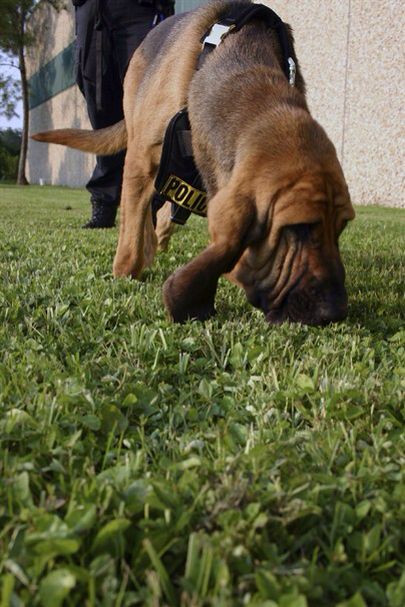
A dog’s nose is one of the most remarkable sensory tools in the animal world (dog’s sense of smell).
While humans rely heavily on their eyes to understand their surroundings, dogs experience much of the world through scent (dog nose). Your dog can use their nose to identify people, investigate other animals, locate food, follow scent trails, and explore unfamiliar environments.
This extraordinary ability has made dogs valuable companions for thousands of years. Today, specially trained dogs can assist with search and rescue, detection work, tracking, and other specialized tasks (dog’s amazing nose).
For everyday pet owners, understanding how a dog’s nose works also explains many behaviors that can otherwise seem strange (how dogs smell).
Why does your dog stop and sniff every few feet during a walk?
Why can your dog recognize someone who has been gone for hours?
Why does your dog seem fascinated by one particular patch of grass?
The answer is often the same: scent.
How Powerful Is a Dog’s Sense of Smell?
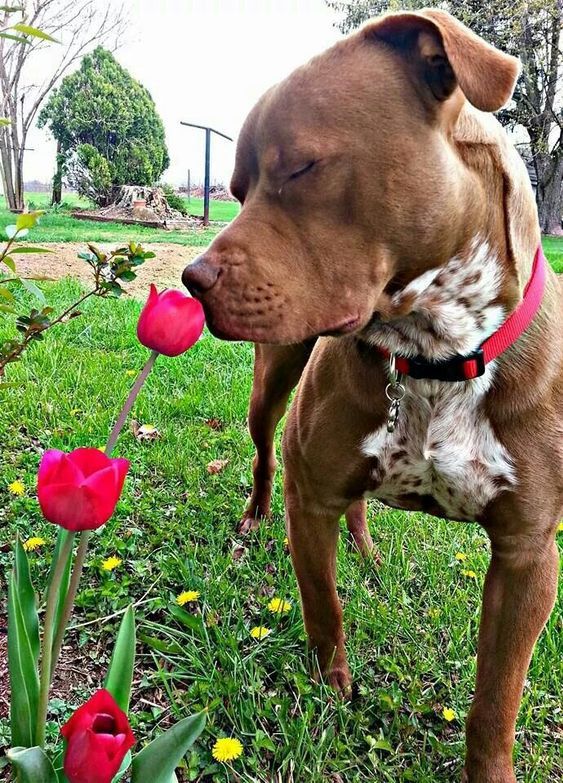
A dog’s sense of smell is dramatically more sensitive than a human’s.
Dogs have millions of olfactory receptors in their noses, and the part of the canine brain dedicated to processing smells is highly developed.
The exact number of receptors varies between dogs and breeds, so claims that every dog has a specific number should be treated cautiously (dog sense of smell).
What is clear is that dogs are extraordinarily capable scent detectors.
Their noses allow them to distinguish odors that would be completely undetectable to humans.
This ability helps explain why dogs are used for tasks such as tracking missing people, detecting certain substances, locating wildlife, and identifying particular scents (canine sense of smell).
How Does a Dog’s Nose Work?
A dog’s nose is designed for continuous scent processing.
When your dog sniffs, air moves through the nasal passages in a way that helps separate ordinary breathing from detailed odor analysis (how far can dogs smell).
The nasal passages contain specialized structures that increase the surface area available for detecting scent molecules (why do dogs sniff).
When odor molecules enter the nose, they interact with receptors associated with the olfactory system.
The information is then transmitted to the brain for interpretation.
This allows your dog to determine that one smell is different from another.
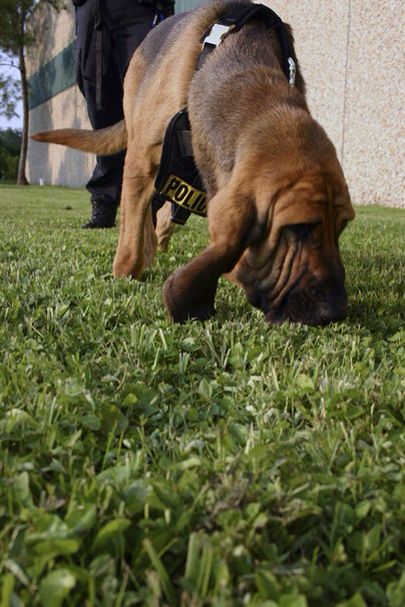
A simple patch of grass may contain an enormous amount of information that humans cannot detect.
Your dog may be able to identify traces left by another animal, determine whether another dog recently passed through the area, or recognize familiar scents (why are dogs noses wet).
Dogs Can Use Each Nostril Independently
One fascinating feature of canine scent detection is that the nostrils can collect information separately.
This can help a dog determine where an odor is coming from.
If the scent is slightly stronger through one nostril, the dog can use that difference to help orient itself toward the source.
This is one reason dogs often move their heads from side to side while investigating an interesting smell (dog scent tracking).
They are not simply sniffing randomly.
They are gathering information.
Why Do Dogs Sniff So Much?
Sniffing is much more than a way for dogs to investigate food.
For a dog, scent can provide information about the environment.
During a walk, your dog may encounter hundreds of different smells.
They can investigate:
- Other dogs.
- People.
- Wildlife.
- Food.
- Plants.
- Soil.
- Water.
- Household scents.
- New environments.
- Familiar objects.
Allowing your dog appropriate opportunities to sniff can therefore provide valuable mental stimulation.
A walk does not always need to be about covering the greatest possible distance.
Sometimes a slower “sniff walk” can give your dog an opportunity to investigate their environment and use their natural abilities (scent hound breeds).
Why Is a Dog’s Nose Wet?
A dog’s nose may naturally appear wet because of mucus and secretions around the nasal passages.
Moisture can help odor molecules interact with the nasal surface.
Dogs may also lick their noses, which can contribute to the familiar wet appearance.
However, a healthy dog does not necessarily need to have a constantly wet nose.
Nose moisture can naturally change throughout the day.
A dry nose by itself does not automatically mean that your dog is sick.
If you notice unusual discharge, bleeding, significant crusting, swelling, persistent irritation, or other changes accompanied by illness, contact your veterinarian (dogs detecting diseases).
Can Dogs Smell Things From Miles Away?
Dogs can detect scents from surprisingly long distances under the right environmental conditions.
However, there is no single distance that applies to every dog or every scent.
Wind direction, humidity, terrain, temperature, the concentration of the odor, and the dog’s individual abilities all affect how far a scent can travel and remain detectable.
This is why dramatic claims about every dog being able to smell a particular object from a specific number of miles should be treated carefully (dog scent games).
The important point is that dogs can detect concentrations of odors far below what humans can perceive.
Can Dogs Smell in 3D?
In a sense, yes.
Dogs can use information collected through their two nostrils to help determine the direction of an odor.
As they move around, they can also compare changes in scent intensity and use environmental information to locate the source.
This allows dogs to navigate scent trails in ways that seem almost impossible to humans.
When a dog follows a scent trail, they are effectively building an understanding of where that odor is coming from and where it has traveled (Cavapoo sense of smell).
Which Dog Breeds Have the Best Sense of Smell?
All healthy dogs have an impressive sense of smell, but some breeds have been selectively bred for scent-related work.
Scent hounds are particularly well known for their tracking abilities.
Examples include:
Bloodhound
Bloodhounds are famous for their tracking abilities.
Their long history as scent-tracking dogs has made them one of the breeds most strongly associated with following scent trails.
Beagle
Beagles have an excellent sense of smell and were developed for hunting and tracking.
Their compact size and strong scenting ability make them particularly effective at following trails.
Basset Hound
Basset Hounds have an exceptional sense of smell and a body structure suited to tracking scents close to the ground.
Their long ears may also help move scent toward their noses as they investigate trails.
Coonhounds
Several coonhound breeds were developed for tracking game.
Their scenting ability, endurance, and determination make them effective working dogs.
German Shepherd
German Shepherds are not specialized scent hounds, but their intelligence, trainability, and strong working abilities make them valuable detection and tracking dogs.
They are commonly seen in search, rescue, detection, and law-enforcement roles.
Does Breed Affect a Dog’s Sense of Smell?
Breed can influence a dog’s scenting ability, but individual differences also matter.
Selective breeding has produced dogs with specialized abilities for tracking, hunting, detection, and other forms of scent work (puppy scent games).
However, you do not need a Bloodhound to enjoy scent activities.
Almost any healthy dog can benefit from simple scent games.
This includes companion breeds such as Cavapoos.
Can Cavapoos Use Their Sense of Smell?
Absolutely.
Cavapoos may be small companion dogs, but they still have a highly developed canine sense of smell.
You can turn this natural ability into a fun enrichment activity.
Try hiding a few treats around a safe room and encouraging your Cavapoo to search for them.
Start with easy hiding places.
As your puppy becomes more confident, gradually make the game more challenging.
You can also use puzzle toys, scent-based games, and supervised outdoor exploration to provide mental stimulation (dog nose facts).
This can be especially helpful for puppies that become bored with repetitive physical exercise.
Our Cavapoo Care Guide provides additional information about keeping your Cavapoo mentally and physically engaged.
Scent Games for Dogs
You can make scent enrichment very simple.
Hide-and-Seek With Treats
Place a small number of treats in easy-to-find locations.
Let your dog watch you hide the first few.
Then encourage them to search.
Snuffle Mats
A snuffle mat allows your dog to search through fabric sections for hidden pieces of food.
This encourages natural sniffing and foraging behavior.
Find the Toy
Hide your dog’s favorite toy somewhere accessible and encourage them to locate it.
Start with simple hiding places before increasing the difficulty.
Outdoor Sniffing
During walks, give your dog appropriate time to investigate smells.
There is no need to rush past every interesting scent.
Supervised sniffing can provide mental enrichment while allowing your dog to explore naturally.
Can Dogs Detect Human Diseases?
Researchers have investigated whether trained dogs can identify certain disease-associated odors.
Some studies have found that specially trained dogs can distinguish samples associated with certain diseases.
However, this does not mean that an ordinary household dog can reliably diagnose a medical condition.
Dogs should never replace professional medical testing.
Research into canine disease detection remains an interesting scientific field, but medical diagnosis should always be handled by qualified healthcare professionals and appropriate diagnostic tests (dog’s sense of smell).
Why Do Dogs Smell Other Dogs?
When dogs meet, they often investigate each other through scent.
This behavior provides information about the other animal.
Dogs have scent-producing glands around several areas of their bodies, and their sense of smell allows them to gather information that humans cannot easily perceive.
This is one reason dogs may spend several minutes sniffing another dog’s body or the area where another dog has recently been (dog nose).
For your dog, this is a form of communication.
Why Does My Dog Sniff the Ground During Walks?
The ground contains countless scent traces.
Other dogs, people, wildlife, food, plants, and environmental changes can leave odors behind.
Your dog may stop frequently because they are processing these scent signals.
Rather than assuming your dog is simply distracted, think of sniffing as part of their natural exploration.
Of course, excessive or sudden changes in sniffing behavior can sometimes indicate stress, illness, or another issue (dog’s amazing nose).
If your dog’s behavior changes dramatically, speak with your veterinarian.
Can Dogs Smell Their Owners?
Dogs can recognize familiar human scents.
Your individual scent is associated with your skin, hair, clothing, belongings, and the environment around you.
This is one reason your dog may become excited when they recognize your scent before they can see you.
Their extraordinary olfactory abilities allow them to identify familiar people in ways that humans cannot easily replicate.
How to Protect Your Dog’s Nose
Your dog’s nose is sensitive, so avoid deliberately exposing your dog to irritating chemicals, smoke, harsh cleaning products, or other substances.
When using household cleaners, follow the manufacturer’s instructions and keep pets away from areas that are being cleaned when appropriate.
Never intentionally place irritating substances near your dog’s nose.
If your dog develops persistent nasal discharge, bleeding, swelling, difficulty breathing, or another unusual symptom, contact your veterinarian.
Final Thoughts
Your dog’s nose is much more than a cute feature on their face.
It is one of their most important tools for understanding the world.
From recognizing familiar people to following scent trails, investigating new environments, and participating in detection work, dogs use their noses constantly.
Giving your dog safe opportunities to sniff can also provide valuable mental enrichment.
Whether you have a large working breed or a small companion such as a Cavapoo, scent games can turn an ordinary day into an interesting adventure (how dogs smell).
For Cavapoo owners, combine scent activities with training, exercise, grooming, and appropriate socialization to support a well-rounded puppy.
You can continue learning through our How to Train a Cavapoo Puppy and Cavapoo Breed Guide resources.
Continue Learning About Cavapoos
- Cavapoo Breed Guide
- Cavapoo Care Guide
- How to Train a Cavapoo Puppy
- Puppy Buying Checklist
- Questions to Ask Before Buying a Cavapoo Puppy
- Health Guarantee
- Shipping & Delivery
- Adoption Process
- Frequently Asked Questions
- Available Cavapoo Puppies
External Authority
- American Kennel Club – How Dogs Use Their Sense of Smell
- National Institute of Standards and Technology – Canine Detection Research
- American Veterinary Medical Association — General veterinary health and pet-care information.
