
Cavapoo Care Guide
5 Common Mistakes Cavapoo Owners Make and How to Avoid Them
Oct
5 Common Mistakes Cavapoo Owners Make
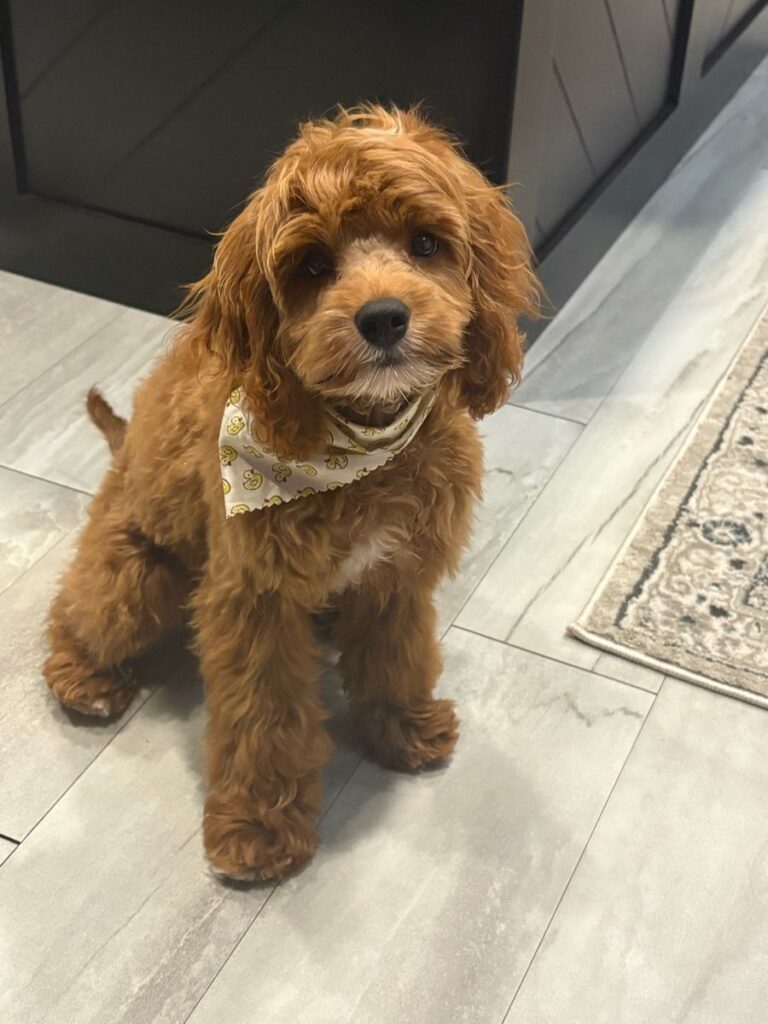
Bringing home a Cavapoo puppy is an exciting experience. These affectionate companion dogs can quickly become an important part of the family, but responsible ownership involves more than providing food, toys, and plenty of cuddles. Training, socialization, identification, supervision, and everyday safety all play important roles in helping a Cavapoo grow into a confident and well-adjusted companion.
The good news is that most mistakes made by new dog owners are preventable. You do not need to be a perfect pet parent, and you certainly will not get every decision right on the first attempt. What matters is learning from common problems and establishing safe, consistent habits.
Whether you are already raising a Cavapoo or researching the breed before searching for Cavapoo Puppies For Sale Near Me, understanding these mistakes can help you prepare for life with your new puppy.
Here are five common mistakes Cavapoo owners should watch for.
Mistake #1: Giving Commands Without Following Through
One of the most common training mistakes is repeatedly giving a command without making sure the dog understands what is expected.
For example, imagine saying “come” several times while your Cavapoo is distracted by something outside. If nothing happens when the command is given, the puppy may learn that the word does not require an immediate response.
This does not mean you should constantly force your puppy to obey. Instead, training should be structured so your Cavapoo has frequent opportunities to succeed.
Build commands gradually
Start training in a quiet environment with minimal distractions. Use a reward your puppy values and reinforce the desired behavior immediately.
For example, when teaching recall, you might begin by saying your puppy’s name followed by “come” while you are only a short distance away. When your puppy moves toward you, reward the behavior enthusiastically.
As your puppy becomes more reliable, gradually increase the distance and introduce controlled distractions.
The goal is to teach your Cavapoo that responding to you consistently produces something positive.
Avoid repeating commands over and over
If you say “sit, sit, sit, sit” while your puppy ignores you, the puppy may begin to learn that the first command does not matter.
Instead, make the exercise easier. Get your puppy’s attention, use the cue once, and help create the conditions in which the correct response is likely.
Training should also be age-appropriate. A young Cavapoo puppy has a limited attention span, so several short sessions can be more effective than one long session.
Positive reinforcement, consistency, management, and patience are generally more useful than punishment-based approaches.
For additional guidance, see our [Cavapoo Care Guide], [Cavapoo Breed Guide], and [How to Raise a Cavapoo Puppy].
Mistake #2: Choosing a Dog Sitter Without Preparing Them Properly
Asking a friend or family member to look after your Cavapoo can be a great option. However, familiarity with your dog is not the only thing that matters.
A responsible caregiver should know your puppy’s routine, feeding instructions, medications if applicable, emergency contacts, veterinary information, and any behaviors or restrictions that are important to your dog.
This becomes especially important when you are traveling or leaving your puppy with someone for the first time.
Create a simple Cavapoo care sheet
Before leaving your puppy with someone, write down the information they need.
Include your Cavapoo’s normal meal schedule, portion instructions, water routine, bathroom schedule, exercise requirements, sleeping arrangements, medications if prescribed, veterinarian contact information, your contact information, and instructions about what your puppy should and should not eat.
You should also explain any behavioral concerns.
For example, if your Cavapoo becomes nervous around unfamiliar dogs, the caregiver should know that before deciding to visit a busy dog park.
If your puppy is still being house-trained, explain the normal potty schedule and the signs your puppy uses when they need to go outside.
Don’t assume your dog will behave exactly the same without you
Some dogs behave differently when their owner is away. A puppy who normally seems relaxed may become nervous, vocal, destructive, or unusually clingy when placed in a different environment.
For that reason, a short trial period can be helpful.
You might first have your caregiver spend time with your puppy while you are still nearby. Then try a short absence before leaving the dog for an extended period.
If your Cavapoo has significant medical, behavioral, or separation-related concerns, discuss the situation with your veterinarian or an appropriately qualified professional rather than assuming a friend or family member can manage everything.
Mistake #3: Assuming Your Cavapoo Will Automatically Make Friends
Cavapoos are often described as social companion dogs, but that does not mean every Cavapoo will immediately want to interact with every dog, person, or environment.
Individual temperament matters.
Some puppies confidently approach new experiences. Others need more time to observe before participating. A puppy may also behave differently depending on the environment, the size and energy level of another dog, and how crowded or overwhelming the situation is.
Never force social interactions
One of the most important principles of puppy socialization is that exposure should be positive and controlled.
If your Cavapoo looks frightened when approaching another dog, forcing the interaction can make the experience more stressful.
Instead, create distance and allow your puppy to observe from a comfortable position. Reward calm behavior and gradually build confidence.
Socialization is much broader than simply taking a puppy to a dog park.
Your Cavapoo can gradually experience different people, household sounds, surfaces, environments, grooming routines, car rides, handling, and appropriately selected dogs while learning that these experiences are safe.
For puppies, health considerations also matter. Your veterinarian can help you determine when and where socialization opportunities are appropriate based on vaccination status, local disease risks, and your puppy’s individual health.
Our [Puppy Socialization Guide] can help you build a more thoughtful approach.
Watch your Cavapoo’s body language
Do not assume a wagging tail always means a dog is happy and ready to interact.
Look at the entire body and situation. A relaxed posture, loose movements, normal curiosity, and the ability to disengage are generally more useful indicators than one isolated behavior.
Likewise, signs such as cowering, freezing, hiding, repeated attempts to escape, tucked posture, or intense avoidance can indicate that your puppy needs more distance or a calmer environment.
Good socialization is not about making your Cavapoo love everybody.
It is about helping your puppy develop the ability to experience the world with confidence while respecting individual boundaries.
Mistake #4: Microchipping Your Cavapoo but Forgetting to Register the Information
Microchipping is an important part of permanent pet identification, but simply having a microchip implanted is not enough.
The chip needs to be associated with accurate owner contact information in the appropriate registry or registries.
If your phone number, address, or email changes, your information should also be updated.
This is particularly important because a microchip is not a GPS tracker. It does not allow you to watch your Cavapoo’s location in real time.
Instead, when a lost dog is found, a shelter, veterinarian, animal control agency, or other authorized organization can scan the dog for a microchip and use the associated information to help identify the owner.
Check your information after moving or changing phone numbers
One of the easiest mistakes to make is forgetting about the microchip after moving.
Imagine that your Cavapoo becomes lost and someone finds the dog months after you changed your phone number. If the old information is still attached to the microchip, contacting you can become more difficult.
Make microchip information part of your normal pet-record routine.
Keep your Cavapoo’s microchip number with important veterinary records and check that your contact information remains current.
It is also wise to use multiple identification methods, such as a properly fitted collar and identification tag, while following local requirements.
For authoritative information about microchipping and pet identification, consult resources from organizations such as the [American Veterinary Medical Association].
Mistake #5: Leaving a Cavapoo in a Hot Car “Just for a Minute”
This is one mistake that should never be treated casually.
A parked vehicle can become dangerously hot very quickly, even when the outside temperature does not seem extreme. Cracking a window does not make leaving a dog unattended in a hot vehicle safe.
For a Cavapoo puppy, the risk can be especially concerning because puppies are still developing their ability to regulate body temperature and may be unable to escape the heat or communicate how severely they are struggling.
Never rely on “I’ll only be gone for a minute”
A quick stop at a store can unexpectedly become longer because of a line, conversation, payment problem, or another delay.
The safest habit is simple:
Do not leave your Cavapoo unattended in a parked vehicle.
If your dog cannot safely accompany you into your destination, make another arrangement.
This is not only a summer issue. Vehicle temperatures can become dangerous in various weather conditions, and the appropriate response to an animal in distress can depend on the circumstances and local laws.
Recognize possible heatstroke warning signs
Signs of heat-related illness can include excessive panting, drooling, weakness, confusion, vomiting, diarrhea, collapse, or seizures.
Heatstroke can become life-threatening and requires urgent veterinary attention.
If you believe your Cavapoo is suffering from heatstroke, move the dog away from the heat and contact a veterinarian or emergency veterinary hospital immediately. Avoid relying on home treatment alone.
For more summer safety advice, read our [Cavapoo Summer Safety Guide] and [Cavapoo Travel Tips].
Other Everyday Mistakes Cavapoo Owners Should Watch For
The five mistakes above are particularly important, but responsible Cavapoo ownership involves many small decisions every day.
New puppy owners should also be careful about allowing puppies access to unsafe foods, medications, cleaning products, toxic plants, electrical cords, small objects, and other household hazards.
Puppy-proofing is especially important during the first months at home because puppies explore their surroundings with their mouths.
Training and supervision should also evolve as your Cavapoo grows. A puppy that was safe with a particular toy at one stage may eventually be able to destroy or swallow pieces of it.
Regular veterinary care, appropriate parasite prevention, vaccinations according to your veterinarian’s recommendations, dental care, grooming, nutrition, exercise, and behavioral enrichment should all form part of your dog’s overall care routine.
If you are still researching the breed before bringing home a puppy, our [Cavapoo Buying Guide] and [Puppy Buying Checklist] can help you prepare.
How to Become a More Confident Cavapoo Owner
You do not need to know everything before bringing home a puppy.
Responsible ownership is a process.
The most useful approach is to build good habits early, learn from reliable veterinary and canine behavior resources, and pay attention to your individual dog’s needs.
Before bringing home a Cavapoo, think about where your puppy will sleep, how you will handle potty training, who will provide care when you are away, how you will introduce new experiences, where you will obtain veterinary care, and what safety precautions you need around the home.
If you are currently researching Cavapoo Puppies For Sale In Tennessee, for example, our Tennessee Cavapoo page can help you explore the available information for that location.
Likewise, families researching Cavapoo Puppies For Sale In Ohio can visit our Ohio page, while Florida families can explore our guide to Cavapoo Puppies For Sale In Florida.
And if your search began with Cavapoo Puppies For Sale Near Me, remember that choosing a puppy should involve more than geographic convenience. Look at the breeder’s transparency, communication, puppy care practices, available health information, adoption process, and the documentation provided for the individual puppy.
A good puppy-buying decision is the beginning of responsible ownership, not the end of the process.
Frequently Asked Questions
What is the biggest mistake new Cavapoo owners make?
One of the most common problems is inconsistency. Puppies learn through repetition, so inconsistent training rules, feeding routines, household boundaries, or reinforcement can make learning more difficult.
Are Cavapoos easy to train?
Cavapoos can be responsive to training, but individual temperament, age, motivation, environment, and the owner’s consistency all influence progress. Short, positive training sessions are often a useful approach.
Should I force my Cavapoo to socialize with other dogs?
No. Social interactions should be appropriate, controlled, and positive. If your puppy appears fearful or overwhelmed, create more distance rather than forcing an interaction.
Does a microchip track my Cavapoo’s location?
No. A standard pet microchip is not a GPS tracker. It provides an identification number that can be scanned by an appropriate organization and connected with registered owner information.
Do I need to register my dog’s microchip?
You should ensure that your dog’s microchip is registered with accurate contact information according to the instructions associated with the chip and registry. Keep the information updated whenever your contact details change.
Can I leave my Cavapoo in the car with the windows cracked?
No. Leaving a dog unattended in a parked vehicle can create dangerous temperatures, even when the windows are partially open.
What should I do if my Cavapoo seems overheated?
Move your dog away from the heat and contact a veterinarian or emergency veterinary facility immediately. Signs such as heavy panting, weakness, confusion, vomiting, collapse, or seizures can indicate a serious heat-related emergency.
How long should Cavapoo training sessions be?
Young puppies generally benefit from short, frequent sessions rather than long sessions that cause them to lose focus. Adjust the duration according to your puppy’s age, attention span, and individual response.
Should my Cavapoo go to a dog park for socialization?
Not necessarily. Dog parks can be overwhelming or inappropriate for some puppies. Controlled experiences with suitable dogs and environments may provide a better starting point, particularly while a puppy is still developing confidence or completing its vaccination schedule.
What should a Cavapoo caregiver know before I leave my puppy with them?
Provide feeding instructions, potty routines, emergency contacts, veterinary information, medication instructions if applicable, sleeping arrangements, behavioral information, and clear instructions about what your puppy should not access.
Are Cavapoos naturally friendly with everyone?
Not every Cavapoo has the same temperament. Some are highly outgoing, while others may be more cautious. Socialization and individual experiences can influence confidence, but owners should always respect their dog’s boundaries.
What should I prepare before bringing home a Cavapoo puppy?
Prepare a safe sleeping area, food and water supplies, appropriate toys, grooming supplies, identification, veterinary arrangements, puppy-proofed rooms, and a realistic plan for training and supervision.
Final Thoughts: Avoiding Mistakes Is Part of Responsible Dog Ownership
Every dog owner makes mistakes. What matters is recognizing potential problems and creating better habits.
For Cavapoo owners, five particularly important areas are consistent training, careful caregiver selection, respectful socialization, proper microchip identification, and vehicle safety.
Your Cavapoo depends on you to make decisions that keep them safe when they cannot make those decisions for themselves.
Take training one step at a time. Introduce new experiences gradually. Keep identification information current. Prepare carefully when someone else is caring for your dog. And never take the risk of leaving your Cavapoo alone in a hot vehicle.
Responsible Cavapoo ownership is built through hundreds of small decisions—and those decisions can make a major difference in your puppy’s everyday life.
Continue Learning About Cavapoos
If you’re preparing for life with a Cavapoo or still researching the breed, explore these Atlantic Cavapoo Puppies resources:
- Available Cavapoo Puppies — Browse our current Cavapoo puppy availability.
- Cavapoo Breed Guide — Learn about Cavapoo characteristics, temperament, size, and general care.
- Cavapoo Care Guide — Learn more about everyday Cavapoo care.
- Cavapoo Buying Guide — Important considerations when researching and choosing a puppy.
- Cavapoo Puppies by State — Explore Cavapoo information for different U.S. locations.
- Puppy Buying Checklist — Prepare before contacting a breeder or bringing home a puppy.
- Questions to Ask Before Buying a Cavapoo Puppy — Questions worth asking during your puppy search.
- Health Guarantee — Review Atlantic’s health-related information and policies.
- Shipping & Delivery — Learn about the delivery process.
- Adoption Process — Understand the steps involved in bringing home a Cavapoo.
- Frequently Asked Questions — Find answers to common Cavapoo questions.
