Cavapoo Health & Wellness, Cavapoo Nutrition Guide
Antlers for Dogs: Are They Safe? Risks, Benefits & Safer Alternatives
Aug
Antlers have become a popular natural chew for dogs.
Deer, elk, and moose antlers are widely sold as long-lasting chews for dogs that love to gnaw. They can seem appealing because they are durable, natural, and often last much longer than ordinary chew toys.
But there is an important question every dog owner should ask before offering one:
Are antlers actually safe for dogs?
The answer isn’t as simple as yes or no.
Antlers can satisfy a dog’s natural desire to chew, but their extreme hardness creates important risks. Tooth fractures, choking, mouth injuries, and digestive problems are possible, particularly when a dog is an aggressive chewer.
For puppies and smaller dogs, choosing an appropriate chew is especially important.
If you’re raising a puppy, our Cavapoo puppy care guide covers many of the everyday decisions that help keep a young dog healthy and safe.
Let’s take a closer look at antler chews, their potential benefits, their risks, and safer alternatives.
What Are Antler Chews for Dogs?
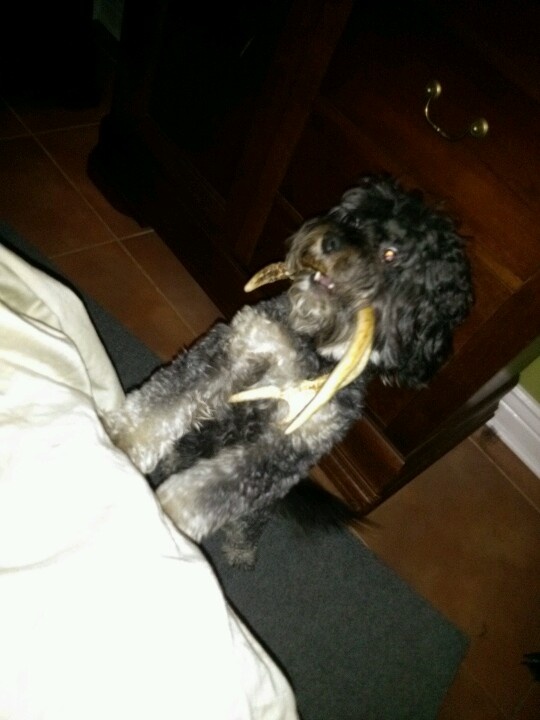
Antlers are naturally shed structures that grow on animals such as deer, elk, and moose.
Once collected and cleaned, they may be cut into different shapes and sizes for use as dog chews.
Unlike many soft treats or rubber toys, antlers are extremely hard.
That durability is one of the main reasons dog owners buy them.
A powerful chewer may work on an antler for weeks or even longer.
However, durability isn’t automatically a sign that something is safe.
In fact, a chew that is extremely hard can create a greater risk of breaking a dog’s tooth.
Types of Antlers for Dogs
Antlers are available in several varieties.
Deer Antlers
Deer antlers are generally dense and very hard.
They may appeal to strong chewers, but their hardness is also one of the reasons veterinarians and animal-care professionals urge caution.
Elk Antlers
Elk antlers are often somewhat less dense than deer antlers.
They are still extremely hard and can present many of the same dental risks.
Moose Antlers
Moose antlers can have different textures depending on how they are prepared.
Some products contain softer inner material, while the exterior remains hard.
Whole and Split Antlers
Whole antlers retain their outer structure.
Split antlers are cut lengthwise to expose the softer interior.
Although split antlers may make the inner material easier to reach, the exterior can still be hard enough to damage teeth.
Regardless of the type, the most important consideration is not simply which animal the antler came from.
It’s whether the chew is appropriate for your individual dog’s teeth, size, chewing style, and health.
Are Antlers Safe for Dogs?
Antlers aren’t automatically safe simply because they are natural.
Their biggest concern is their hardness.
If your dog bites down forcefully on an antler, the pressure can potentially fracture a tooth.
Dental fractures can be painful and may require veterinary treatment.
Antlers can also create other risks if pieces break away and are swallowed.
For this reason, many veterinarians recommend avoiding extremely hard chews.
A simple rule is useful when evaluating dog chews:
If you cannot make a mark on the chew with your fingernail, it may be too hard for your dog’s teeth.
This isn’t a perfect safety test, but it can help owners recognize why very hard chews deserve caution.
The Biggest Risk: Broken Teeth
Tooth fractures are one of the most important concerns associated with antlers.
Dogs can be incredibly determined chewers.
A dog that repeatedly bites down on a hard antler may eventually fracture a tooth.
Some dental fractures are obvious.
Others are harder to notice.
Your dog may continue eating and playing even while experiencing significant dental discomfort.
Possible signs of dental pain include:
- Dropping food
- Chewing on one side of the mouth
- Avoiding hard food
- Excessive drooling
- Pawing at the mouth
- Facial swelling
- Bad breath
- Reluctance to chew
- Changes in appetite
If you notice these symptoms after your dog has been chewing a hard object, contact your veterinarian.
Regular dental care is also important for your dog’s overall health. Our Cavapoo health guide provides additional information about maintaining your dog’s wellbeing.
Can Antlers Cause Choking?
Yes.
Although whole antlers are large, they can gradually wear down.
Small pieces may eventually break away.
A dog that attempts to swallow a fragment could potentially choke.
The risk can increase when an antler becomes small enough to fit entirely inside a dog’s mouth.
Never allow your dog to continue chewing an antler once it has become small, cracked, sharp, or damaged.
Discard damaged chews rather than trying to reshape them.
Can Antlers Cause Digestive Blockages?
Swallowed pieces of antler can potentially create gastrointestinal problems.
A sufficiently large fragment may become lodged in the digestive tract.
Possible signs of an intestinal obstruction include:
- Vomiting
- Loss of appetite
- Abdominal discomfort
- Lethargy
- Difficulty passing stool
- Changes in normal behavior
A suspected obstruction can become an emergency.
If your dog swallows a large piece of antler or develops concerning symptoms, contact your veterinarian promptly (safest chews for dogs).
Don’t wait for symptoms to become severe.
Do Antlers Clean Dogs’ Teeth?
This is one area where dog owners should be careful about marketing claims.
Chewing can mechanically interact with plaque, but that doesn’t mean an antler is a safe or recommended dental-care product.
The potential benefit of scraping plaque doesn’t necessarily outweigh the risk of tooth fracture from an extremely hard chew.
There are safer approaches to maintaining canine dental health.
Your veterinarian can recommend appropriate dental products based on your dog’s age, size, and individual needs.
Do Antlers Provide Nutritional Benefits?
Antlers contain minerals, including calcium and phosphorus.
However, that doesn’t mean an antler should be considered an important nutritional supplement.
Dogs should receive their essential nutrients from a complete and balanced diet appropriate for their life stage.
Antlers are primarily offered as chew items rather than as a replacement for nutritionally complete food.
If you’re evaluating your dog’s diet, don’t choose foods simply because an ingredient sounds natural or healthy.
Our guide to dog food ingredients to avoid can help you understand what to look for when reading dog food labels.
Why Do Dogs Like Antlers?
Dogs have a natural desire to chew.
Chewing can provide physical and mental stimulation and may help some dogs stay occupied.
An engaging chew can also be useful when a dog needs an appropriate activity.
However, the goal should not simply be to find the hardest object your dog can destroy.
The best chew is one that provides enrichment without creating unnecessary dental or digestive risks.
This is especially important for puppies.
Young dogs are still developing their adult teeth, so owners should be particularly cautious about offering extremely hard objects.
Are Antlers Safe for Puppies?
Extra caution is appropriate with puppies.
Puppies explore their environment with their mouths, and chewing is a normal part of development.
However, their teeth and jaws are still developing.
An extremely hard chew can cause dental damage.
Instead of automatically giving a puppy an antler because it is marketed as a natural chew, ask your veterinarian what type of chew is appropriate for the puppy’s age, size, and chewing behavior.
For new Cavapoo owners, proper early development also involves training and socialization.
Our puppy socialization guide explains how positive experiences during puppyhood can help build confidence.
How to Choose a Safer Chew
If your dog loves chewing, you don’t have to eliminate chewing from their routine.
Instead, focus on appropriate options.
Choose the Correct Size
A chew should be large enough that your dog cannot easily swallow it whole.
At the same time, excessively hard products should be avoided.
Consider Your Dog’s Chewing Style
A gentle chewer and an aggressive chewer have very different needs.
Aggressive chewers may destroy softer products quickly, but that doesn’t mean an extremely hard chew is the best solution.
Supervise Chewing
Don’t simply hand your dog a new chew and leave them alone.
Watch how they interact with it.
Remove the chew if pieces break off or if it becomes small enough to swallow.
Inspect Chews Regularly
Throw away damaged chews.
Cracks, sharp edges, loose pieces, and significant wear are signs that a product should be replaced.
Ask Your Veterinarian
Your veterinarian knows your dog’s dental and health history.
They can help you determine which types of chews are appropriate.
Safer Alternatives to Antlers for Dogs
There are many alternatives to extremely hard antlers.
Durable Rubber Chew Toys
High-quality rubber toys can provide satisfying chewing while offering more flexibility than antlers.
Many are also designed to hold treats, making them useful for mental enrichment.
Veterinary-Approved Dental Chews
Some dental chews are specifically designed to support oral hygiene.
Choose products appropriate for your dog’s size and follow the manufacturer’s feeding instructions.
Soft or Flexible Chews
Some dogs prefer softer textures.
These may be particularly appropriate for dogs that don’t tolerate very hard objects well.
Carrots and Other Dog-Safe Foods
For some dogs, appropriately prepared vegetables such as carrots can provide a crunchy, low-calorie treat.
However, any food should be given in moderation and introduced appropriately.
Interactive Food Toys
Food puzzles and treat-dispensing toys can provide mental stimulation without requiring your dog to chew on an extremely hard object.
For additional nutrition guidance, see our article on dog food ingredients to avoid.
What Should I Do If My Dog Breaks a Tooth on an Antler?
If you suspect your dog has fractured a tooth, contact your veterinarian.
Don’t assume that the dog is fine simply because they continue eating or playing.
Dogs can hide signs of pain.
A broken tooth may expose sensitive internal structures and can lead to significant discomfort or infection.
Your veterinarian can examine the tooth and determine whether treatment is necessary.
In the meantime, remove the antler and avoid offering other extremely hard chews.
What If My Dog Swallows a Piece of Antler?
Don’t panic, but don’t ignore it either.
The appropriate response depends on the size of the piece, your dog’s size and health, and whether symptoms are present.
Contact your veterinarian for guidance.
Seek urgent veterinary attention if your dog is choking, having difficulty breathing, repeatedly vomiting, collapsing, or showing severe distress.
Do not induce vomiting unless your veterinarian specifically tells you to do so.
Antlers for Dogs: Frequently Asked Questions
Are deer antlers safe for dogs?
Deer antlers are extremely hard and can fracture teeth or create choking and obstruction risks. Talk with your veterinarian before offering one.
Are elk antlers safer than deer antlers?
Elk antlers may differ in density, but they are still hard chews and aren’t automatically safe. Dental fracture remains a concern.
Can puppies chew antlers?
Antlers may be too hard for developing puppy teeth. Ask your veterinarian about age-appropriate chew options instead.
Do antlers clean dogs’ teeth?
Chewing may mechanically affect plaque, but antlers aren’t a risk-free dental-care solution. Their hardness can cause tooth fractures.
How long should my dog chew an antler?
There isn’t a universal safe chewing time because risk depends on the individual dog and the product. Supervise chewing and remove the product if it becomes damaged or small.
Can antlers splinter?
Antlers can break or develop sharp edges as dogs chew them. Inspect them regularly and discard damaged pieces.
Can dogs swallow antler pieces?
They can, but swallowing fragments can create choking or gastrointestinal risks. Contact your veterinarian if your dog swallows a significant piece.
What are safer alternatives to antlers?
Depending on your dog’s needs, alternatives can include appropriate rubber chew toys, veterinary-approved dental chews, flexible chews, and interactive food toys.
Final Thoughts: Should You Give Your Dog an Antler?
Antlers may look like an appealing natural chew, but natural doesn’t automatically mean safe.
Their extreme hardness is the biggest concern.
Dogs that chew aggressively can potentially fracture teeth, while broken pieces can create choking or digestive risks.
For many dogs, there are safer ways to satisfy their natural desire to chew.
Before introducing any new chew, consider your dog’s age, size, dental health, chewing style, and overall health.
When in doubt, ask your veterinarian.
Your dog’s chew should provide enrichment without creating an avoidable trip to the emergency clinic.
And if you’re raising a Cavapoo, remember that good health involves much more than choosing the right chew. Proper nutrition, grooming, exercise, training, socialization, and preventative veterinary care all work together to help your puppy grow into a happy companion.
If you’re preparing for your new puppy, you can also explore our Available Cavapoo Puppies and learn more about responsible puppy ownership before bringing your new companion home.
