
Cavapoo Care Guide
Cavapoo Apartment Living: 9 Tips for a Smooth Start
Oct
Living in an apartment does not automatically mean you cannot welcome a puppy into your home. With thoughtful preparation, a suitable daily routine, and a commitment to training, many Cavapoos can adapt well to apartment life.
Cavapoos are a cross between a Cavalier King Charles Spaniel and a Poodle. They are often sought after as companion dogs, but every puppy has individual needs. Your puppy’s energy level, temperament, age, training, and comfort with being alone will all influence how successfully it settles into a smaller home.
Before bringing a Cavapoo home, prepare your apartment, review your building’s rules, and plan how you will handle toilet breaks, exercise, enrichment, and neighbors. These nine practical tips can help you create a safe, comfortable environment for your new companion.
1. Check Your Apartment’s Pet Rules Before Choosing a Puppy
The first step in preparing for Cavapoo apartment living is confirming that your building permits dogs. Do not assume that a small puppy will automatically be accepted or that every property has the same pet policy.
Contact your landlord, leasing office, or property manager and ask for the current rules in writing. Find out whether there are restrictions on dog size, adult weight, breed, number of pets, or particular areas where dogs are allowed.
Ask about all related costs, including pet deposits, one-time fees, monthly pet rent, and any additional requirements. Clarify whether the building requires vaccination records, registration, or proof of renter’s insurance.
Remember that a puppy’s adult size cannot be predicted perfectly. Cavapoos can vary depending on their parentage and inherited traits, so do not rely solely on a seller’s estimate of how large the dog will become. If your apartment has a strict weight limit, ask management how that limit is applied to growing puppies and adult dogs.
Also check the rules for elevators, shared hallways, outdoor relief areas, and designated dog-walking spaces. Knowing these requirements in advance helps prevent stressful surprises after your puppy arrives.
2. Prepare a Safe, Comfortable Puppy Area
Apartments often have limited space, so it helps to decide where your Cavapoo will eat, sleep, play, and relax before bringing it home.
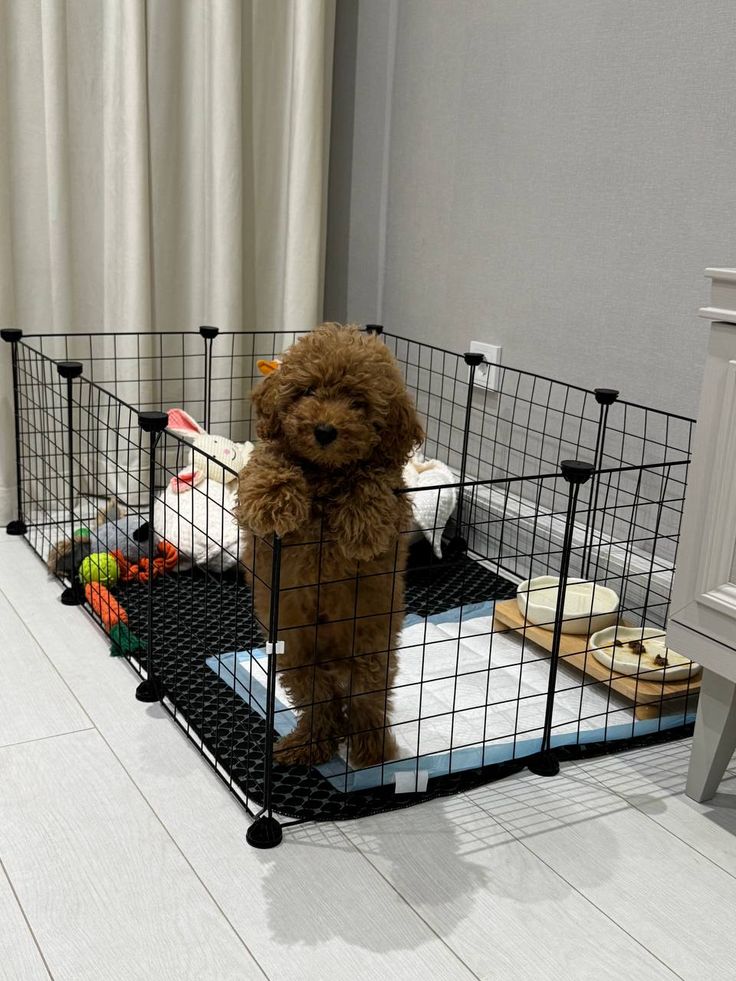
Choose a quiet area away from busy doorways and household hazards. Place a comfortable bed there, along with water, suitable toys, and a crate or puppy pen if you plan to use one. Keep food and water bowls in a location that is easy to clean and does not obstruct walking paths.
Puppy-proof the entire apartment. Secure electrical cords, move cleaning products and medications out of reach, and remove small objects that could be swallowed. Check houseplants for potential toxicity, secure rubbish bins, and keep balconies and windows safely enclosed.
Be especially careful with balconies. Never leave a puppy unattended where it could squeeze through railings, climb furniture, or fall. Use secure barriers where necessary, and supervise your puppy around open windows and exterior doors.
If you share your apartment with other people, agree on household rules before the puppy arrives. Everyone should use consistent cues, follow the same toilet routine, and understand which areas are off-limits.
A smaller home can work well when it is organized around the puppy’s safety and daily needs.
3. Choose a Crate or Puppy Pen That Suits Your Cavapoo
A crate can provide a comfortable resting place and help you manage routines, but it should never be used as punishment or as a substitute for companionship, exercise, and toilet breaks.
Choose a crate that allows your puppy to stand up, turn around, and lie down comfortably. It should be secure, well ventilated, and positioned in an appropriate area of the apartment. A puppy pen may also be useful when you need to create a larger, puppy-safe space.
Introduce the crate gradually. Let your Cavapoo investigate it voluntarily, add comfortable bedding if appropriate, and reward the puppy for entering and settling inside. You can offer meals or safe treats near or inside the crate to build positive associations.
Begin with short sessions while you are nearby. Increase the duration slowly as your puppy becomes comfortable. If the puppy panics, cries intensely, or shows signs of distress, reassess the pace rather than forcing it to remain confined.
Young puppies need frequent toilet breaks and plenty of interaction. A crate is not intended to keep a puppy confined for an entire workday. If you will be away for long periods, arrange a suitable pet sitter, trusted helper, or other appropriate care plan.
In an apartment, a crate or pen can support supervision and rest—but it works best as one part of a broader training routine.
4. Establish a Consistent Potty-Training Routine
Potty training can take extra planning when you live several floors above the nearest outdoor area. Your puppy may need to pass through a hallway, use an elevator, and walk to a designated relief spot before reaching the appropriate place.
Take your Cavapoo to its toilet area frequently, particularly after waking, eating, drinking, playing, and before bedtime. Very young puppies may need breaks during the night as well. The exact schedule will depend on age, health, and individual progress.
Choose a suitable outdoor location and use it consistently when possible. Reward your puppy immediately after it toilets in the correct place. Indoors, supervise closely and watch for signs such as sniffing, circling, or suddenly leaving play.
Accidents are a normal part of learning. Clean them with an appropriate enzymatic cleaner and adjust your routine if accidents happen repeatedly. Avoid punishment, which can make a puppy fearful or teach it to hide when it needs to go.
Some apartment residents consider indoor toilet options, such as puppy pads or a designated grass tray. If you choose one, make the location consistent and understand that transitioning to outdoor toileting may require additional training.
Plan for bad weather, late-night breaks, and days when you are busy. A realistic routine is more effective than expecting a young puppy to hold its bladder for long periods.
5. Plan Exercise and Mental Enrichment Every Day
A Cavapoo does not need a large backyard to have an active, fulfilling life, but it does need regular opportunities to move, explore, play, and learn.
Daily activity should be adapted to your puppy’s age, health, confidence, and energy level. Short walks, gentle play, brief training sessions, and sniffing opportunities can provide a useful foundation. As your dog matures, you can adjust the duration and intensity of activity to its individual needs.
Do not force a young puppy to complete long walks or strenuous exercise. Ask your veterinarian for guidance about activity appropriate to your puppy’s age, vaccination status, and health.
Mental stimulation is particularly helpful in smaller homes. Try food puzzles designed for dogs, supervised sniffing games, short reward-based training sessions, or hiding a few pieces of your puppy’s daily food for it to find. Rotate safe toys to keep the environment interesting without overwhelming your puppy.
Apartment corridors and shared spaces are not substitutes for structured exercise. Follow building rules, keep your dog under control, and avoid allowing it to rush at neighbors or other pets.
A balanced routine combines movement, mental engagement, toilet breaks, social contact, and rest. The goal is not to exhaust your Cavapoo but to meet its needs consistently.
6. Prepare for Barking and Noise in Shared Buildings
Noise can be a concern when you share walls with neighbors. Cavapoos vary in how vocal they are, and no breeder or seller can guarantee that a puppy will never bark.
A puppy may bark when it hears footsteps in the hallway, notices a neighbor through the window, becomes excited, wants attention, or feels uncomfortable being alone. The most effective response is to identify the cause rather than treating all barking the same way.
Start by helping your puppy become familiar with ordinary household sounds at a comfortable pace. Reward calm behavior and provide appropriate activities before periods when noise is likely to be a problem.
If hallway sounds trigger barking, consider using curtains or repositioning the puppy’s resting area away from the front door. White noise may help soften some environmental sounds, although it will not replace training or address anxiety by itself.
Teach your puppy to settle on a mat and reward quiet moments. Avoid yelling in response to barking, since your dog may interpret the raised voice as additional excitement.
If you need to leave the apartment, gradually teach your puppy to tolerate short periods alone. Do not leave a newly arrived puppy alone for a long stretch without first building that skill and arranging appropriate care.
Persistent barking, panic, or destructive behavior when alone may indicate distress. A veterinarian or qualified reward-based behavior professional can help you develop an appropriate plan.
7. Find Suitable Walking Areas and Socialization Opportunities
Before your puppy arrives, locate the nearest dog-friendly outdoor spaces, walking routes, and permitted relief areas. Check local park regulations, leash requirements, opening hours, and any restrictions that apply to puppies.
You do not need a large dog park for successful socialization. In fact, crowded dog parks can be overwhelming or unsuitable for young puppies who are still developing confidence and may not yet have completed their vaccination schedule.
Socialization means helping your Cavapoo experience a variety of people, sounds, surfaces, and everyday situations in a safe, positive way. It does not mean forcing the puppy to greet every dog or stranger.
Ask your veterinarian how to balance early socialization with infectious-disease precautions in your area. A well-managed puppy class may be a suitable option when the provider follows appropriate hygiene and vaccination policies.
During walks, keep your puppy on a leash where required, pick up waste, and give other residents enough space. Teach calm greetings and avoid allowing your puppy to jump on people in shared hallways.
Planning your walking routes in advance makes it easier to maintain a consistent routine and helps your puppy learn what to expect from life in the building.
8. Create a Daily Routine That Fits Apartment Life
Puppies generally benefit from predictable routines. A schedule also helps apartment residents coordinate toilet breaks, play, training, feeding, and quiet time.
Your routine might include a morning toilet break, breakfast, a short period of play or training, rest, another toilet break, and additional supervised activities throughout the day. Repeat appropriate opportunities after meals, naps, and active play.
Keep training sessions short and rewarding. Practice basic cues such as “come,” “sit,” and “leave it,” and teach your puppy to settle quietly while you work or relax. Give it suitable chew toys and other safe enrichment when you cannot actively play.
Rest is just as important as activity. Puppies need plenty of sleep, and an overstimulated puppy may become nippy, restless, or unable to settle. Create a calm sleeping area and avoid allowing every moment of the day to become an exciting interaction.
If you work outside the apartment, arrange for someone reliable to provide toilet breaks, interaction, and supervision when necessary. The plan should reflect your puppy’s age and needs rather than assuming it can remain alone for a full workday.
Consistency helps your Cavapoo understand the household routine and makes it easier for you to notice changes in appetite, toileting, energy, or behavior.
9. Budget for Apartment Living and Long-Term Care
Preparing for a puppy involves more than purchasing a bed and a crate. Make a realistic budget for food, routine veterinary visits, vaccinations as advised by your veterinarian, parasite prevention, grooming, training, toys, cleaning supplies, and unexpected medical expenses.
Apartment living may add costs such as pet deposits, monthly pet rent, pet-sitting services, dog walking, or transportation to suitable outdoor areas. Check these expenses before committing to a puppy.
Cavapoo coats vary, but many require regular brushing and professional grooming to help prevent tangles and mats. Consider whether you have the time and budget to maintain the coat throughout the dog’s life.
Also plan for changes in your circumstances. Work schedules, moves, travel, and family commitments can affect a dog’s routine. A responsible plan should include how you will continue meeting your Cavapoo’s needs if your daily schedule changes.
Before choosing a puppy, ask about its care history, available veterinary records, observed behavior, and placement terms. Read the written agreement and clarify delivery or collection arrangements before making a payment.
If you are researching Cavapoos, start with the available-puppy information and learn about the placement process before deciding whether a particular puppy suits your home.
Finding a Cavapoo Puppy for Apartment Living
If you are searching online for Cavapoo Puppies For Sale Near Me, remember that distance alone does not determine whether a puppy or seller is a good fit. Review the available information carefully, ask clear questions, and make sure you understand the puppy’s needs before committing.
The same approach applies to regional searches such as Cavapoo Puppies For Sale In Tennessee, Cavapoo Puppies For Sale In Ohio, and Cavapoo Puppies For Sale In Florida. Check your building’s pet rules first, then evaluate the puppy’s individual characteristics, available records, seller communication, and arrangements for bringing the puppy home.
A Cavapoo’s eventual size, coat, energy level, and comfort with apartment routines can vary. Be cautious of guarantees about adult size, shedding, temperament, or how easily a puppy will adapt.
The best choice is one that fits your household and whose care requirements you can realistically meet.
Frequently Asked Questions About Cavapoo Apartment Living
Can a Cavapoo live happily in an apartment?
Many Cavapoos can adapt to apartment life when their needs for companionship, training, exercise, toilet breaks, enrichment, and rest are met. Individual temperament and the owner’s schedule matter more than the size of the home alone.
Are Cavapoos good for first-time dog owners in apartments?
Some may be suitable, but first-time owners should be prepared for house-training, grooming, socialization, and consistent positive training. Researching these responsibilities before choosing a puppy is important.
Do Cavapoos bark a lot in apartments?
Barking varies between dogs. Training, environment, socialization, and comfort with being alone can influence vocal behavior. No puppy can be guaranteed to remain silent.
Should I crate-train my Cavapoo?
A properly introduced crate can provide a comfortable resting space and help with supervision and routines. It should never be used for excessive confinement or as a substitute for toilet breaks and interaction.
How do I potty-train a puppy when I live on an upper floor?
Plan frequent toilet trips, use a consistent designated area, and reward success immediately. Account for the time needed to reach the outdoor area, and discuss suitable indoor options with your trainer or veterinarian if necessary.
Does a Cavapoo need a backyard?
A backyard is not essential for every Cavapoo. Owners must still provide appropriate outdoor opportunities, exercise, toilet breaks, enrichment, and social interaction.
Final Thoughts
Apartment living can be a workable environment for a Cavapoo when you prepare carefully and build a routine around the puppy’s needs. Check the building rules, create a safe space, introduce crate training gradually, plan frequent toilet breaks, and make time for exercise and positive socialization.
The most important factor is not whether your home has a backyard. It is whether you can consistently provide the care, attention, training, and companionship your dog needs.
With realistic expectations and thoughtful preparation, you can make the transition into apartment life more comfortable for both you and your Cavapoo.
Continue Learning About Cavapoos
- Available Cavapoo Puppies
- Cavapoo Breed Guide
- Cavapoo Care Guide
- Cavapoo Buying Guide
- Cavapoo Puppies by State
- How to Train a Cavapoo Puppy
- Puppy Buying Checklist
- Questions to Ask Before Buying a Cavapoo Puppy
- Health Guarantee
- Shipping & Delivery
- Adoption Process
- Frequently Asked Questions

Pingback: Best Dogs for Apartment Living: Size, Exercise and Care