Cavapoo Care Guide, Cavapoo Training Guide
Should I Crate Train My Cavapoo Puppy?
Aug
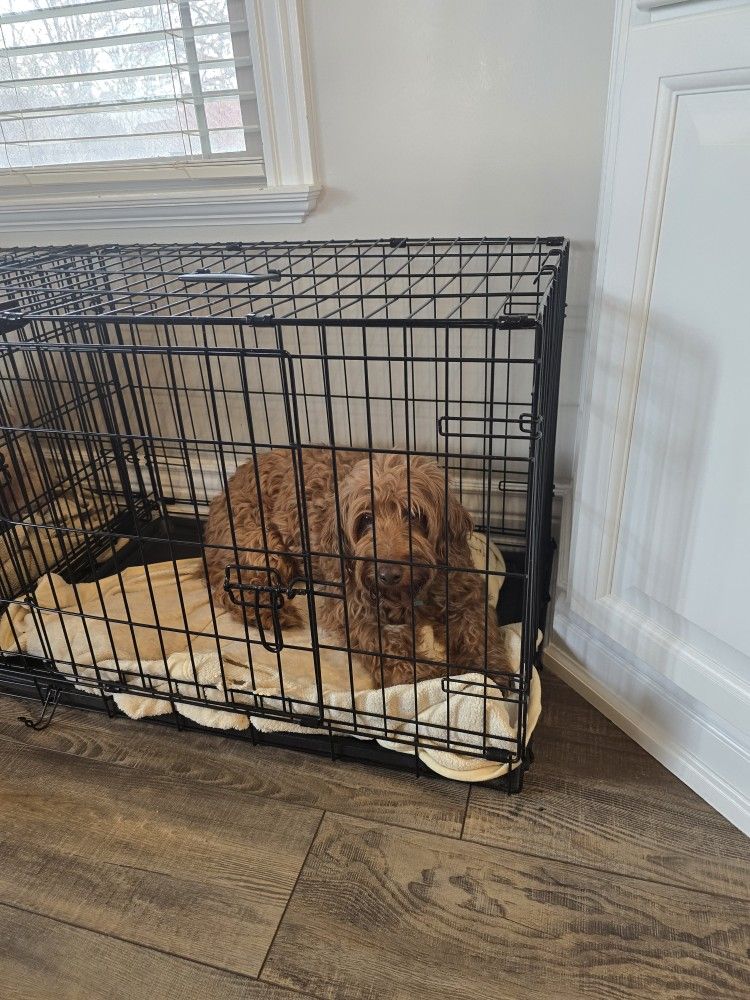
Crate training is one of the most useful skills you can teach a Cavapoo puppy. When introduced correctly, a crate can become a comfortable resting space rather than a place your puppy associates with punishment (Should I Crate Train My Cavapoo Puppy).
Cavapoos are intelligent, affectionate, and people-oriented dogs. These qualities can make them wonderful companions, but they can also mean that some puppies need help learning how to relax independently.
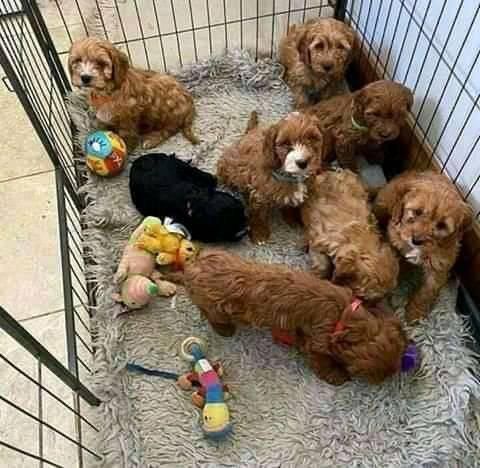
A properly introduced crate can support house training, travel, rest, and everyday routines. The goal is not to keep your Cavapoo confined for long periods. Instead, crate training should teach your puppy that having a quiet space of their own is completely normal.
What Is Crate Training: Should I Crate Train My Cavapoo Puppy
Crate training means gradually teaching your puppy to enter, remain, and relax inside a crate.
The crate should be large enough for your Cavapoo to stand up, turn around, lie down comfortably, and stretch naturally. It should not be excessively large because a puppy may be more likely to use one end as a bathroom.
The crate should also be comfortable and located somewhere your family spends time. Your puppy should be able to feel connected to the household while still having a peaceful place to rest.
Most importantly, never use the crate as punishment.
If your puppy begins to associate the crate with being yelled at or isolated after doing something wrong, training can become much more difficult.
Why Crate Training Can Help a Cavapoo Puppy
Crate training can provide several practical benefits for both puppies and their families.
1. It Gives Your Puppy a Safe Space
Young puppies experience many new things after leaving their litter. New people, sounds, environments, routines, and household activity can sometimes become overwhelming.
A crate can provide a quiet place where your Cavapoo can settle down.
Some puppies naturally seek a peaceful area when they become tired. Teaching your puppy that the crate is a comfortable resting area can make it easier for them to take breaks throughout the day.
2. It Can Support Potty Training
Crate training can also complement a consistent potty-training routine.
Many puppies prefer not to soil the area where they sleep. This can encourage them to wait until they are taken outside, although young puppies still have limited bladder control.
Your Cavapoo puppy will need frequent bathroom breaks, especially after waking, eating, drinking, playing, and sleeping.
The crate should never be used as a substitute for taking your puppy outside.
Instead, use it as one part of a predictable house-training routine.
For more guidance, see our Cavapoo Puppy Care Guide.
3. It Helps Your Puppy Learn to Relax
Cavapoos often enjoy being close to their people. While this is one of their most lovable qualities, puppies also need to learn that they can relax when nobody is actively playing with them.
Short, positive crate sessions can help your puppy develop this skill.
Start with very short periods while you remain nearby. Gradually increase the time as your puppy becomes comfortable.
Do not rush the process.
4. It Makes Travel Safer
A properly sized crate can be useful when traveling with your dog.
Whether you are taking a short car trip or traveling farther from home, having a familiar crate can provide your Cavapoo with a predictable environment.
A puppy who already enjoys their crate may also find travel less stressful because the space smells and feels familiar.
You can learn more about preparing your puppy for travel in our guide to Shipping & Delivery.
5. It Can Help With Household Management
Puppies are naturally curious.
A young Cavapoo may investigate electrical cords, household objects, shoes, furniture, and anything else that looks interesting.
A crate can provide a safe place for your puppy during short periods when you cannot actively supervise them.
However, supervision and puppy-proofing remain essential. A crate should never replace proper care and interaction.
How to Start Crate Training Your Cavapoo
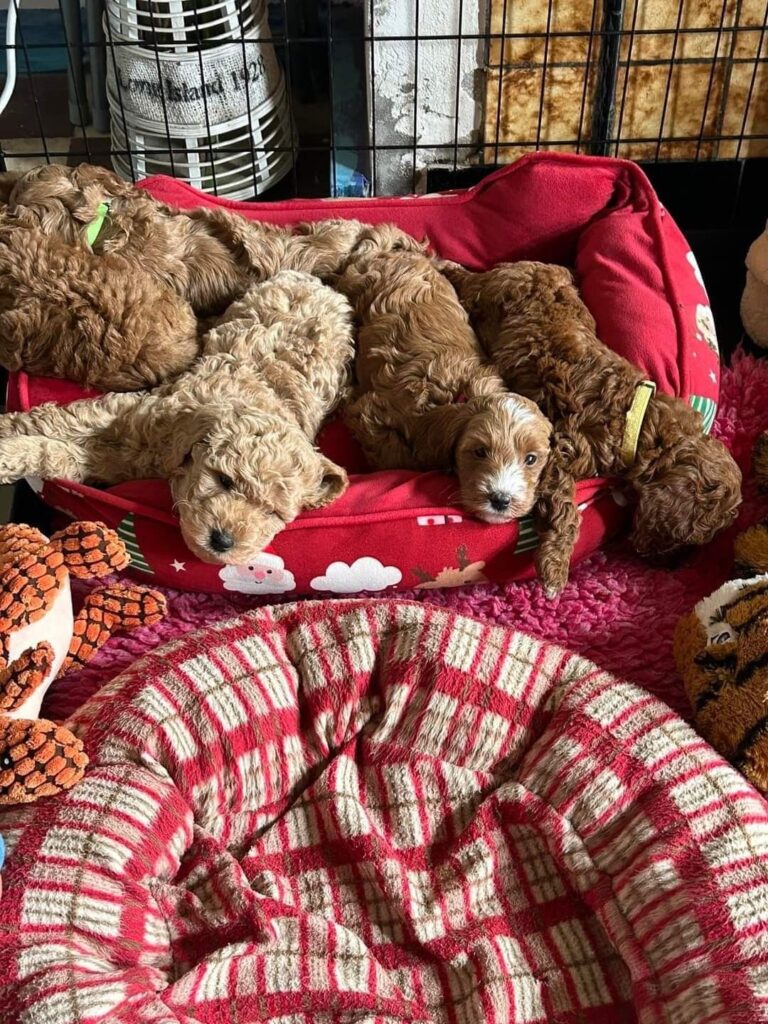
The best approach is gradual and positive.
Step 1: Choose the Right Crate
Select a crate that gives your puppy enough room to stand, turn around, sit, and lie down comfortably.
If you have a young Cavapoo that is still growing, you may choose an appropriately sized crate with a divider so the available space can be adjusted as your puppy grows.
Make sure the crate has good ventilation and is sturdy enough for your puppy.
Step 2: Make the Crate Comfortable
Place comfortable bedding inside if your puppy does not chew or destroy it.
You can also place a safe puppy toy inside.
Keep the crate in an area where your family spends time. Your puppy should not feel as though they have been completely removed from the household.
Step 3: Let Your Puppy Investigate
Leave the crate door open and allow your Cavapoo to investigate it voluntarily.
Do not force your puppy inside.
You can place a small treat near the entrance. Once your puppy is comfortable, place another treat farther inside.
The objective is to let your puppy discover that entering the crate produces positive experiences.
Step 4: Introduce a Cue
Once your puppy willingly enters the crate, introduce a simple cue such as “crate” or “bed.”
Say the cue calmly as your puppy enters, then reward them.
With repetition, your puppy can begin connecting the word with the behavior.
Step 5: Practice Closing the Door
When your puppy is comfortable entering the crate, briefly close the door.
Stay nearby.
After a few seconds, open the door and reward calm behavior.
Gradually increase the duration.
If your puppy becomes distressed, you have probably progressed too quickly. Return to a shorter session and build up again.
Step 6: Practice While You Are Nearby
Once your Cavapoo can remain calmly inside the crate with the door closed, practice moving around the room.
Then briefly step away.
Return before your puppy becomes extremely anxious.
Over time, your puppy can learn that you leaving the room does not mean you have disappeared permanently.
Should You Put Food in the Crate?
Food can be a useful part of positive crate training.
You can provide meals near or inside the crate depending on how comfortable your puppy is. Treats can also reward voluntary entry and calm behavior.
However, avoid leaving anything inside the crate that could become a choking hazard or that your puppy can easily destroy and swallow.
Always consider your individual puppy’s chewing habits when selecting toys and bedding.
How Long Can a Cavapoo Puppy Stay in a Crate?
There is no single number that works for every puppy.
Age, bladder control, health, activity level, previous training, and individual temperament all matter.
Young puppies generally need frequent bathroom opportunities and should not be expected to remain confined for extended periods.
A crate is primarily a resting and management tool. Puppies still need exercise, training, social interaction, bathroom breaks, mental stimulation, and plenty of time with their families.
If you will be away from home for a long period, arrange for someone to provide appropriate care rather than expecting a young puppy to remain crated throughout the entire absence.
What If Your Puppy Cries in the Crate?
Some whining is common when a puppy is first learning to settle.
First, consider whether your puppy needs something. They may need to use the bathroom, especially if they are very young.
If their physical needs have been met, remain calm.
Avoid turning every small whine into an immediate release because your puppy may learn that vocalizing makes the door open. At the same time, never ignore severe distress simply because you want your puppy to “tough it out.”
Crate training should build confidence, not fear.
If your puppy repeatedly panics, scratches frantically, attempts to escape, or shows other concerning behavior, slow the training down and consider speaking with a qualified positive-reinforcement trainer or veterinarian.
Common Crate Training Mistakes
Several mistakes can make crate training harder.
Using the Crate as Punishment
Your puppy should view the crate as a safe place. Sending them there angrily after unwanted behavior can create a negative association.
Making Sessions Too Long
A puppy who is comfortable for five minutes may not be ready for an hour.
Increase duration gradually.
Forcing Your Puppy Inside
Physically forcing a nervous puppy into the crate can create fear.
Instead, use treats, praise, meals, and patience to encourage voluntary entry.
Ignoring Bathroom Needs
Accidents do not mean your puppy is being stubborn.
Young puppies have developing bladder control. Frequent bathroom trips are an important part of successful house training.
Expecting the Crate to Solve Separation Anxiety
Crate training and separation training are not the same thing.
A crate can provide a safe resting space, but it should not be used to manage serious separation anxiety without professional guidance.
Should a Cavapoo Sleep in a Crate?
Many families choose to have their Cavapoo puppy sleep in a crate, particularly during the early stages of house training.
A crate can provide a predictable nighttime routine and make it easier to monitor bathroom needs.
Keep the crate somewhere appropriate for your household. Some owners place it near their bed during the first few nights so the puppy does not feel completely alone.
As your puppy becomes comfortable, you can gradually adjust the arrangement if necessary.
When Should You Stop Using the Crate?
There is no requirement to stop using a crate at a particular age.
Some adult dogs continue to enjoy having their crate available because they view it as their personal resting space.
As your Cavapoo matures and demonstrates reliable house manners, you may give them more freedom around the home.
The decision should depend on your individual dog rather than a fixed age.
Final Thoughts
Crate training can be an excellent part of raising a well-adjusted Cavapoo puppy when it is approached with patience and positive reinforcement.
The crate should provide comfort, security, and routine. It should never become a place of punishment or prolonged confinement.
Start with short sessions, reward calm behavior, respect your puppy’s bathroom needs, and gradually increase the amount of time your Cavapoo spends inside.
With consistency, many puppies learn to see their crate as a comfortable place to rest.
If you are preparing to bring home a Cavapoo puppy, explore our Available Cavapoo Puppies and learn more about the breed with our Cavapoo Breed Guide.
Helpful External Resources
For additional evidence-based guidance about crate training and puppy behavior, these resources are worth reading:
- American Kennel Club – Crate Training Your Dog
- Humane Society of the United States – Crate Training
- RSPCA – Dog Training and Behavior

Pingback: A New Puppy for the New Year: Best Guide in 2026