
Grooming Guide
What Info Should My Dog Have On Its ID Tag?

Aug
A dog ID tag is one of the simplest and most affordable ways to help protect your pet if they ever wander away from home.
Unlike a microchip, an ID tag can be read immediately by someone who finds your dog. The person does not need special equipment or access to a veterinary clinic to see your contact information.
For that reason, every dog should wear an identification tag whenever appropriate, especially when outside the home.

Your dog’s ID tag should contain enough information to help someone contact you quickly without making the tag so crowded that the details become difficult to read.
Why Is a Dog ID Tag Important: What Info Should My Dog Have On Its ID Tag
Dogs can escape even when their owners are extremely careful.
A gate may accidentally be left open. A leash may break. A dog may become frightened by a loud noise and run. Even a well-trained dog can sometimes wander farther than expected.
If your dog is wearing a readable ID tag, the person who finds them may be able to contact you immediately.

This can significantly simplify the process of getting your dog home.
A tag is also useful because it provides visible identification. A microchip is an excellent additional form of identification, but someone who finds a lost dog may not know that the dog has one.
The best approach is to use multiple identification methods rather than relying on only one.
What Information Should Go on a Dog ID Tag?
The information you place on the tag should be practical and easy to read.
Your Dog’s Name
Including your dog’s name can help a finder communicate with them and make the interaction less stressful.
However, the dog’s name does not necessarily need to be the largest or most prominent piece of information.
Your contact information is ultimately more important.
Your Phone Number
A current phone number is arguably the most useful piece of information on an ID tag.
If someone finds your dog, you want them to be able to reach you as quickly as possible.
If space is limited, prioritize a phone number over unnecessary details.
You can include a second phone number if the tag has enough room.
Your Address
A complete home address can be included, but it is not always necessary.
Many owners prefer to use their city and state instead of printing their full residential address.
This can provide useful location information while keeping the tag less crowded.
Consider your personal privacy when deciding how much address information to display.
Your Email Address
An email address can provide another way for someone to contact you.
However, phone numbers are usually more practical when a dog has just been found.
If there is limited space, prioritize the information that allows the fastest contact.
Medical or Special Needs
If your dog has an important medical condition or special requirement, a short message can be useful.
For example, a tag might say:
“Needs Medication”
or
“Diabetic — Call Owner”
Keep medical information brief because there is limited space on most tags.
For detailed medical information, a separate medical alert tag or veterinary documentation may be more appropriate.
Additional Information
Some owners include messages such as:
“Microchipped”
“Needs Medication”
“Reward If Found”
or
“Please Call My Owner”
These messages can be useful when space permits.
The goal is not to fill every available line.
The goal is to make sure the most important information can be read quickly.
Should You Put Your Full Home Address on the Tag?
Not necessarily.
A full address may help someone return your dog, but it also places personal information on an item that is publicly visible.
Many owners choose a combination such as:
Max
Call: 555-123-4567
Hoboken, NJ
Microchipped
This provides enough information to identify the dog and contact the owner without putting a complete residential address on the collar.
There is no universal requirement that every dog tag contain the same information. Identification requirements can vary depending on where you live, so check your local animal-control regulations.
Types of Dog ID Tags
There are several types of identification tags available.
Hanging ID Tags
Hanging tags are among the most recognizable options.
They attach to the collar with a small ring and can generally be engraved on both sides.
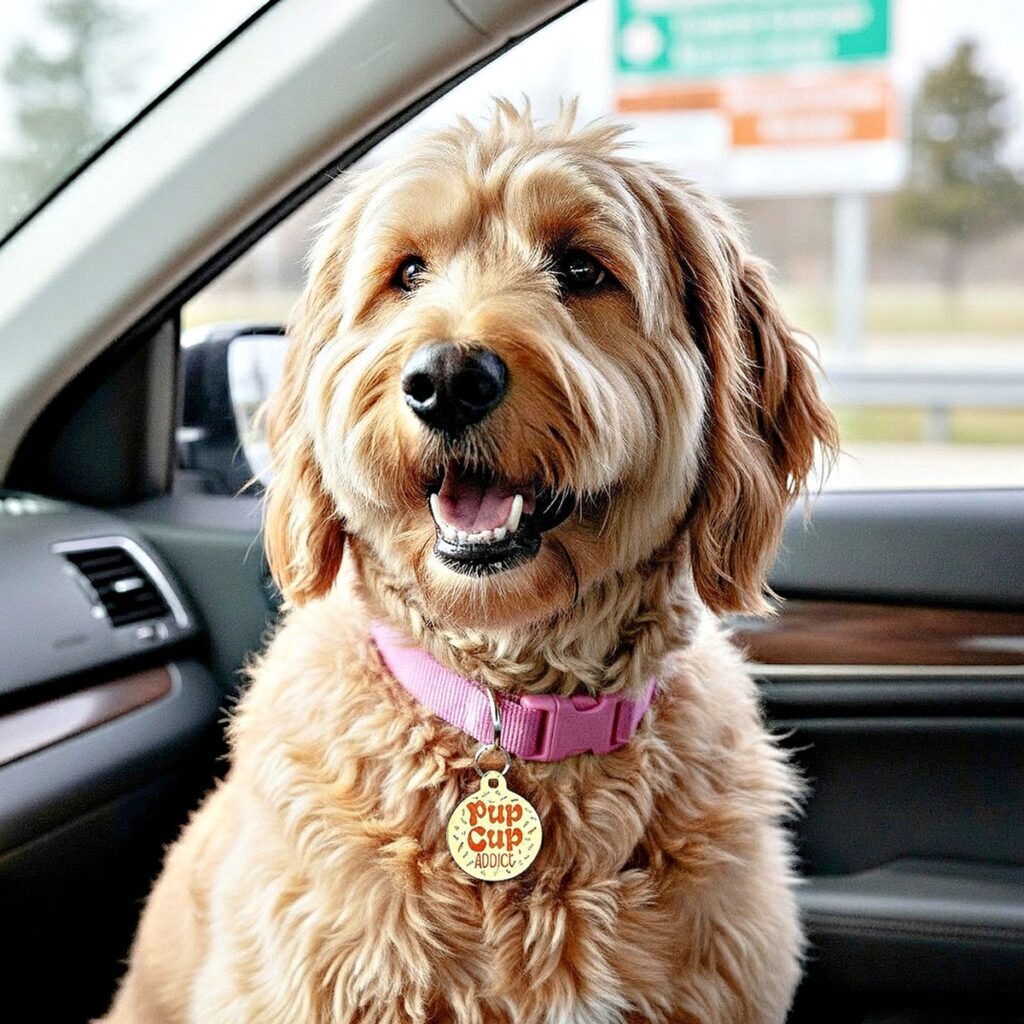
One side can contain your dog’s name and your phone number, while the other side can contain additional information.
The downside is that hanging tags can make noise when they hit the collar or other tags.
They can also occasionally become caught on objects.
Slide-On Tags
Slide-on tags attach directly to certain types of collars.
Because they sit flat against the collar, they are quieter than traditional hanging tags.
They can also reduce the possibility of the tag catching on objects.
The main limitation is compatibility. They may only work with particular collar designs.
Rivet-On Tags
Rivet-on tags are attached directly to the collar.
They can provide a sturdy identification option and are less likely to swing around compared with hanging tags.
However, changing the tag can be less convenient if your contact information changes.
How Much Information Should a Dog Tag Have?
More information is not always better.
If you try to include your dog’s entire history on a small tag, the writing may become too small to read.
Prioritize the information someone needs to contact you.
A simple example is:
BELLA
CALL 555-123-4567
HOBOKEN, NJ
MICROCHIPPED
This is concise and easy to understand.
If you have room, you can add another phone number or a short medical alert.
Keep Your Dog’s Information Updated
An ID tag is only useful if the information on it is accurate.
If you change your phone number, move to another city, or change your primary contact information, update your dog’s tag.
You should also check the tag periodically for scratches, fading, corrosion, or other damage.
A tag that was perfectly readable when purchased may become difficult to read after months or years of daily wear.
Make checking the tag part of your regular pet-care routine.
Your Dog Should Also Be Microchipped
An ID tag should not be considered a replacement for a microchip.
A tag can fall off or become damaged.
A microchip provides another form of permanent identification that can help reunite a lost dog with their owner.
The American Veterinary Medical Association recommends microchipping pets and keeping the registration information current.
You can learn more about microchipping and pet identification through the American Veterinary Medical Association.
Remember that a microchip is only useful for identification if your current contact information is registered with the appropriate microchip company.
ID Tag vs. Microchip: Which Is Better?
You do not really have to choose between them.
Using both provides greater protection.
An ID tag offers immediately visible contact information.
A microchip provides identification if the collar or tag is lost.
Think of them as two layers of protection.
Your dog can also benefit from having secure identification through your local licensing system where required.
When Should a Puppy Start Wearing an ID Tag?
A puppy can begin wearing an appropriately sized collar and identification once they are comfortable with it.
The collar should fit securely without being excessively tight.
Check the fit regularly as your puppy grows because puppies can outgrow collars surprisingly quickly.
For a new Cavapoo puppy, introducing a collar and ID tag gradually can help make wearing them feel completely normal.
You can learn more about preparing for your puppy with our Cavapoo Puppy Care Guide.
Check the Collar and Tag Regularly
Your dog’s identification system should be inspected regularly.
Check that:
- The collar is secure and properly fitted.
- The tag is firmly attached.
- Your phone number is still correct.
- The engraving is readable.
- The tag has not become badly damaged.
- The collar has not developed weak or broken areas.
- Your dog’s microchip information remains current.
These small checks can make a significant difference if your dog ever becomes lost.
Frequently Asked Questions
What is the most important information on a dog ID tag?
A current phone number is one of the most important pieces of information because it allows someone who finds your dog to contact you quickly.
Should I put my dog’s name on the ID tag?
Yes, you can include your dog’s name. However, make sure the contact information is also clearly displayed.
Should I put my full address on my dog’s tag?
You can, but it is not always necessary. Some owners prefer listing their city and state while keeping their full residential address private.
Should my dog’s ID tag include my email?
An email address can be useful as a secondary contact method, especially if there is enough space on the tag.
Does my dog need an ID tag if they have a microchip?
Yes. A microchip and ID tag serve different purposes. A visible tag allows someone to contact you without needing a microchip scanner.
How often should I replace my dog’s ID tag?
Replace the tag whenever the engraving becomes difficult to read, the tag becomes damaged, or your contact information changes.
Can puppies wear ID tags?
Yes, puppies can wear appropriately sized identification tags once they are comfortable wearing a collar. Check the collar regularly as your puppy grows.
What if my dog loses their tag?
Replace it as soon as possible and make sure the collar remains secure. A microchip provides an additional layer of identification if the tag is lost.
Are dog tags legally required?
Identification and licensing requirements vary by location. Check your city, county, or state animal-control regulations to determine exactly what is required where you live.
Is a GPS tracker the same as an ID tag?
No. A GPS tracker can help locate a dog electronically, while an ID tag provides visible contact information. They can be used together.
Final Thoughts
A dog ID tag may be small, but it can play an important role in keeping your pet safe.
The best tag is one that is durable, easy to read, securely attached, and filled with current contact information.
Prioritize your phone number and other details that can help someone reach you quickly.
For additional protection, combine your dog’s ID tag with a registered microchip and keep both forms of identification updated.
If you are preparing for a new Cavapoo puppy, explore our Available Cavapoo Puppies and learn more about the Adoption Process before bringing your new companion home.
Continue Learning About Cavapoos
- Available Cavapoo Puppies
- Cavapoo Breed Guide
- Cavapoo Care Guide
- Cavapoo Buying Guide
- How to Train a Cavapoo Puppy
- Puppy Buying Checklist
- Questions to Ask Before Buying a Cavapoo Puppy
- Health Guarantee
- Shipping & Delivery
- Adoption Process
- Frequently Asked Questions
Recommended External Resources
- American Veterinary Medical Association – Microchips
- American Kennel Club – Dog Identification
- ASPCA – Lost Pet Prevention

Pingback: Accessorizing Your Dog for the Holidays: Best Guide in 2026