
Grooming Guide, Cavapoo Care Guide
How Often Should I Groom My Dog? A Complete Grooming Schedule for Cavapoos
Aug
Regular grooming is an important part of keeping your dog comfortable, clean, and healthy. It is not only about making your puppy look adorable. Grooming also gives you an opportunity to check the coat, skin, ears, paws, nails, and other areas for changes that may need attention.
For Cavapoo owners, grooming deserves particular attention because Cavapoos typically have soft, wavy or curly coats that can develop tangles and mats when they are not brushed regularly.
So, how often should you groom your dog?
There is no single schedule that works for every dog. Grooming needs depend on the dog’s breed, coat type, coat length, lifestyle, age, activity level, and overall condition. However, establishing a consistent routine makes grooming much easier for both you and your puppy.
How Often Should You Groom a Dog: How Often Should I Groom My Dog
A practical grooming routine can include several different activities rather than one large grooming session.
For many dogs, regular brushing may be needed several times a week, while nail care, bathing, ear cleaning, teeth cleaning, and professional grooming follow different schedules.
A general routine may look like this:
- Brushing: Several times per week, depending on the coat
- Bathing: When necessary, often every few weeks to several weeks
- Nail trimming: Regularly, based on nail growth and activity
- Ear checks: Frequently, especially for dogs with floppy ears
- Teeth cleaning: Several times per week, ideally daily
- Professional grooming: Based on breed, coat, haircut, and maintenance needs
These are starting points rather than strict rules. The right schedule should be adjusted according to your dog’s individual needs.
The American Kennel Club notes that grooming frequency varies according to breed, coat type, and other factors. Regular home grooming is also important between professional appointments.
Why Cavapoos Need Regular Grooming
Cavapoos are a cross between a Cavalier King Charles Spaniel and a Poodle. Their coats can range from wavy to quite curly, and coat texture can vary considerably from one Cavapoo to another.
That beautiful coat can also be prone to tangling.
Without regular brushing, loose hair can become trapped within the coat. Small tangles can eventually develop into mats that pull against the skin and become uncomfortable.
This is why Cavapoo grooming should be treated as part of your puppy’s normal care routine rather than something reserved for occasional visits to a groomer.
A consistent grooming routine also helps your puppy become comfortable with being handled.
This is particularly important when your Cavapoo is young.
Puppies that learn early that brushing, paw handling, ear checks, and nail care are normal experiences are often easier to manage as adults.
How Often Should I Brush My Cavapoo?
Brushing is one of the most important parts of Cavapoo grooming.
A Cavapoo with a longer or curlier coat may need brushing every day or every other day. A Cavapoo with a shorter, less curly coat may require less frequent brushing.
The important thing is to prevent tangles before they become mats.
Pay particular attention to areas where friction commonly creates knots, including:
- Behind the ears
- Around the neck
- Under the front legs
- Around the chest
- Along the belly
- Around the legs
- Around the tail
- Between the toes
Do not simply brush the surface of the coat.
For a curly or wavy Cavapoo coat, brushing should reach through the coat carefully without aggressively pulling at the skin.
A professional groomer or your veterinarian can show you which brush and comb are appropriate for your puppy’s particular coat.
The AKC recommends regular brushing to remove loose hair and debris, prevent matting, and maintain the condition of the coat.
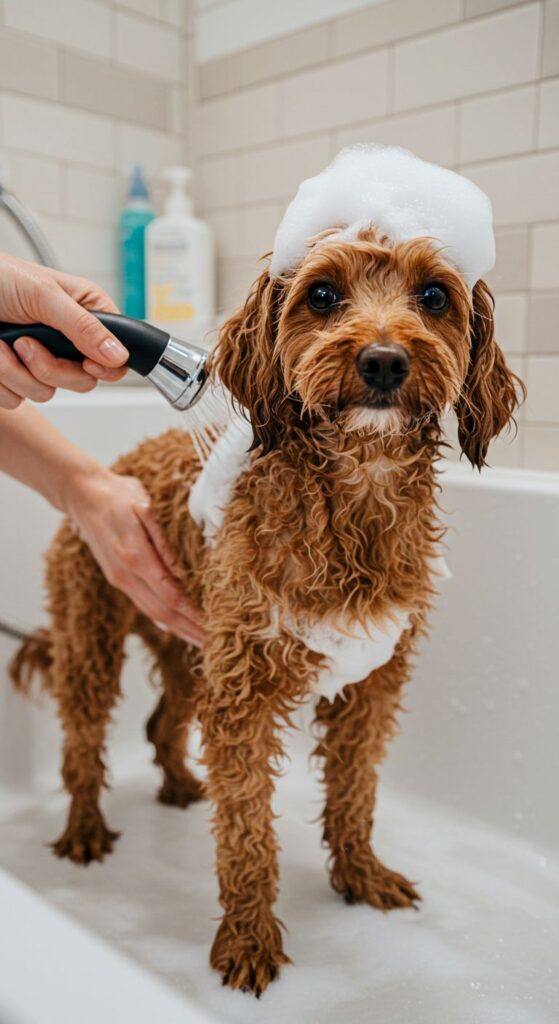
How Often Should I Bathe My Dog?
Dogs generally do not need daily baths.
In fact, bathing too frequently can remove natural oils from the skin and contribute to dryness or irritation. The appropriate bathing schedule depends on your dog’s coat, lifestyle, outdoor activity, skin condition, and how dirty the dog becomes.
For many dogs, bathing every few weeks to several weeks can be appropriate, but there is no universal schedule.
Cavapoos may need more attention because their coats can trap dirt and debris.
If your Cavapoo spends a lot of time outdoors, rolls in mud, swims, or gets particularly dirty, a bath may be necessary sooner.
Always use shampoo specifically formulated for dogs.
Human shampoo is not designed for canine skin and can cause irritation because dogs have different skin chemistry and needs.
Before bathing your Cavapoo, brush the coat thoroughly.
This is especially important if your dog has tangles or mats. Water can tighten existing mats and make them considerably harder to remove.
After bathing, rinse thoroughly and dry your dog properly.
Your puppy should be kept comfortable and warm while drying, and the coat should be checked again once it is dry.
How Often Should I Trim My Dog’s Nails?
Nail trimming is another important part of grooming.
Long nails can interfere with normal movement and may become painful. They can also break, which may expose sensitive tissue and cause bleeding.
There is no exact number of days that applies to every dog.
Some dogs naturally wear their nails down through regular walking on hard surfaces. Other dogs need frequent trimming because their nails grow quickly or their activity does not naturally wear them down.
Check your dog’s nails regularly.
If you hear nails clicking loudly against hard floors, they may need attention.
You should also pay attention to the dewclaws because they may not receive enough contact with the ground to wear down naturally.
If you are uncomfortable trimming your puppy’s nails, ask a veterinarian or professional groomer to demonstrate the correct technique.
The quick contains blood vessels and nerves, so cutting too far can cause pain and bleeding.
Don’t Forget Your Cavapoo’s Ears
Cavapoos often have floppy ears, which means their ears deserve regular attention.
During grooming sessions, look at the outside and inside of your dog’s ears.
You are looking for changes such as:
- Redness
- Swelling
- Unusual discharge
- Strong or unpleasant odor
- Excessive scratching
- Frequent head shaking
- Sensitivity when the ear is touched
Do not insert objects deep into your dog’s ear canal.
If you notice signs that could indicate an ear problem, contact your veterinarian rather than attempting to diagnose or treat the problem yourself.
Regular observation is useful because grooming gives you an opportunity to notice changes early.
How Often Should I Brush My Dog’s Teeth?
Dental care should also be part of your dog’s grooming routine.
Although teeth cleaning is sometimes overlooked, dental hygiene is an important component of overall dog care.
Ideally, dogs should have their teeth brushed regularly, with daily brushing being the preferred routine when your dog can tolerate it.
Start slowly with puppies.
Allow your Cavapoo to become familiar with having their mouth and gums handled before introducing a toothbrush.
Use toothpaste specifically designed for dogs rather than human toothpaste.
Some human dental products contain ingredients that are unsafe for dogs. The AKC recommends regular canine dental care and specifically advises against using human toothpaste.
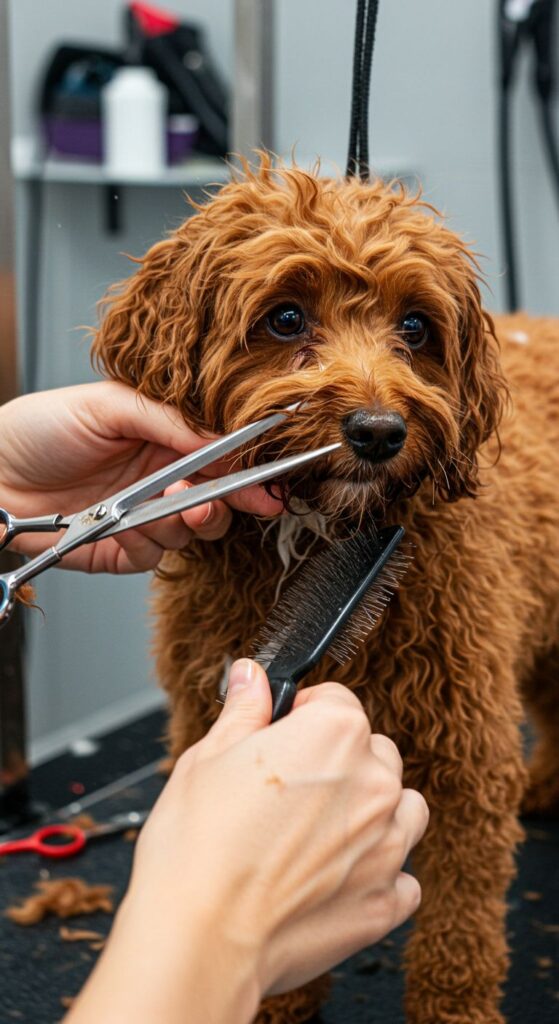
How Often Should a Dog Visit a Professional Groomer?
Professional grooming frequency depends heavily on your dog’s coat and the haircut you choose.
A Cavapoo kept in a longer style may require more frequent professional appointments than a Cavapoo maintained with a shorter puppy-style haircut.
Many owners schedule professional grooming every several weeks, but your groomer can recommend a schedule based on your puppy’s coat.
A professional grooming appointment may include:
- Bathing
- Drying
- Brushing
- Coat trimming
- Nail trimming
- Paw trimming
- Face trimming
- Ear cleaning
- Removing minor tangles
Professional grooming is particularly useful for Cavapoos because curly and wavy coats can become difficult to maintain when they are allowed to grow too long.
Professional groomers can also identify areas that need additional attention.
According to the AKC, grooming frequency depends on factors such as breed, coat length, coat type, lifestyle, and the style of grooming requested.
Why Regular Grooming Is Important
Grooming provides benefits that go far beyond appearance.
Grooming Helps Prevent Mats
Regular brushing removes loose hair and prevents small tangles from developing into painful mats.
This is especially important for dogs with curly or wavy coats.
Grooming Helps You Notice Skin Problems
While brushing your dog, you can inspect the skin for unusual redness, swelling, lumps, irritation, or other changes.
A healthy coat can provide useful clues about your dog’s general condition.
Veterinary guidance notes that changes in coat appearance can sometimes be associated with underlying health problems.
Grooming Supports Comfortable Movement
Keeping nails at an appropriate length can help your dog move comfortably.
Long nails can affect gait and may become painful or prone to breaking.
Grooming Keeps Your Dog Comfortable
Matted hair, dirty ears, overgrown nails, and an unmaintained coat can make your dog uncomfortable.
Regular grooming helps prevent these problems from becoming more difficult to manage.
Grooming Builds Trust
Grooming is also an opportunity to teach your puppy that being handled is safe.
Touch your puppy’s paws gently.
Handle their ears carefully.
Run your hands through their coat.
Reward calm behavior with praise and appropriate treats.
Over time, these small interactions can make future grooming sessions much easier.
How to Introduce a Puppy to Grooming
Do not wait until your Cavapoo desperately needs a haircut before introducing grooming.
Begin when your puppy is young.
Start with very short sessions.
Let your puppy investigate the brush.
Reward calm behavior.
Gently touch the paws.
Briefly handle the ears.
Touch the tail.
Run your hands through the coat.
Then gradually introduce brushing.
If your puppy becomes frightened, slow down rather than forcing the experience.
The objective is to create positive associations.
You want your puppy to learn that grooming is a normal part of life.
A Simple Cavapoo Grooming Schedule
A practical routine can make grooming much easier to remember.
Every Day or Every Other Day
Brush your Cavapoo if their coat is prone to tangling.
Check the face, paws, and coat for debris.
Give your puppy a quick physical check while you groom.
Several Times Per Week
Brush your dog’s teeth.
Inspect the ears.
Check the nails.
Look for small tangles before they become mats.
Every Few Weeks
Assess whether your dog needs a bath based on their coat and lifestyle.
Check the paw hair and areas around the face.
Clean your dog’s grooming equipment.
Every Several Weeks
Schedule professional grooming when your Cavapoo’s coat requires trimming.
The exact interval depends on coat length, growth rate, and the haircut you maintain.
Throughout the Year
Keep vaccinations, parasite prevention, veterinary examinations, and other routine care up to date.
Grooming should complement veterinary care, not replace it.
Signs Your Dog May Need More Frequent Grooming
Your current grooming schedule may need adjustment if you notice:
- Frequent tangles
- Mats forming quickly
- A dirty or greasy coat
- Excessive shedding
- Long nails
- Strong odor
- Hair covering the eyes
- Hair growing heavily between the paw pads
- Your dog becoming uncomfortable during brushing
- Repeated ear problems
If your Cavapoo continually develops mats despite regular brushing, speak with a professional groomer about changing the haircut or grooming routine.
Should I Groom My Dog at Home or Use a Professional?
For most owners, the best approach is a combination of both.
Home grooming keeps your dog’s coat maintained between professional appointments.
Professional grooming handles more complicated trimming and styling.
You do not need to become an expert groomer.
Learning basic brushing, nail observation, dental care, and coat maintenance can make a significant difference.
For complicated areas or dogs that become highly stressed during grooming, professional assistance is often the safer choice.
If your dog has a medical skin condition, wounds, painful areas, or unusual changes to the coat, speak with your veterinarian before attempting to treat the issue through grooming.
Final Thoughts
So, how often should you groom your dog?
The answer depends on your dog’s individual needs.
For Cavapoos, regular brushing is particularly important because their wavy or curly coats can develop tangles and mats. Bathing should be based on the dog’s coat and lifestyle rather than following an unnecessarily strict schedule. Nails, ears, teeth, paws, and the face should also receive regular attention.
The most important thing is consistency.
A few minutes of grooming throughout the week can be much easier for your puppy than trying to handle everything during one long session.
Start grooming habits early, use the right tools, reward calm behavior, and work with a professional groomer when necessary.
A well-maintained Cavapoo is not only beautiful to look at. Regular grooming can help your puppy stay comfortable while giving you another opportunity to notice changes that may deserve professional attention.
Learn More About Caring for Your Cavapoo
Continue learning with our guides on [Cavapoo Puppies for Sale], [Cavapoo Breed Guide], [Cavapoo Care Guide], [How to Train a Cavapoo Puppy], [Health Guarantee], [Shipping & Delivery], [Adoption Process], and [Frequently Asked Questions].
Trusted Dog-Care Resources
For additional guidance on dog grooming, bathing, nail care, and general hygiene, consult trusted veterinary and canine-care resources such as the [American Kennel Club] and your veterinarian.

Pingback: Holiday Puppy Palooza