
Cavapoo Care Guide, Grooming Guide
5 Extinct Dog Breeds You May Not Know About
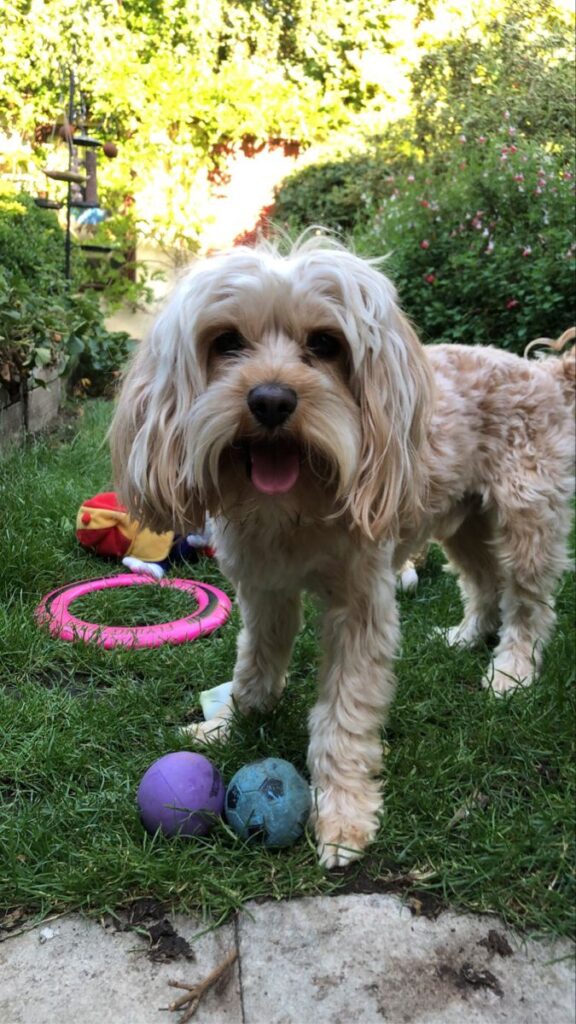
Sep
When people think about extinction, they often imagine dinosaurs, mammoths, or other prehistoric animals.
Dogs can disappear too.
Throughout history, people developed dogs for hunting, guarding, herding, companionship, transportation, and other specialized jobs. As human needs changed, some dog types became less useful or were absorbed into other breeds (Cavapoo Ppuppies For Sale Near Me).
Some disappeared completely.
Others contributed to breeds that still exist today.
This makes the history of extinct dog breeds particularly fascinating. Looking at these forgotten dogs also shows how strongly human lifestyles have influenced canine development.
Here are five extinct or historically lost dog types worth knowing about.
1. The Talbot
The Talbot is one of the better-known names in historical British dog literature.
It was described as a white hunting hound associated with medieval England. Historical accounts often connect the Talbot with hunting and scent work.
However, much of what we know about the Talbot comes from historical descriptions and artwork rather than modern breed records.
That means its exact appearance, ancestry, and relationship to later breeds are difficult to establish with certainty.
The Talbot gradually disappeared as other hunting hounds became more common and specialized.
Rather than thinking of it as a direct ancestor of one particular modern breed, it is safer to view the Talbot as part of the historical foundation of British scent-hound development.
Modern Bloodhounds, Beagles, and other scent hounds have their own complex histories involving multiple older dog types.
The Talbot’s story therefore illustrates an important point.
Dog breeds have rarely developed in complete isolation.
People have repeatedly selected, crossed, and refined dogs to suit changing hunting and working requirements.
2. The Dogo Cubano
The Dogo Cubano, sometimes called the Cuban Mastiff, was a large working dog associated with Cuba.
Historical accounts describe these dogs as powerful and capable of working as guard dogs and catch dogs.
They were also associated with livestock work.
The breed was not simply a companion animal. Like many historical working dogs, its value was closely connected to the jobs people needed it to perform.
As those roles changed, the Dogo Cubano became increasingly uncommon.
Crossbreeding with other dogs also contributed to the disappearance of the original type.
Eventually, the distinct Dogo Cubano was lost.
Its history demonstrates how quickly a working dog population can change when the economic and social environment around it changes.
A breed does not necessarily disappear because the dogs themselves become incapable.
Sometimes the human demand for their particular abilities simply disappears.
3. The Paisley Terrier
The Paisley Terrier originated in Scotland and was closely associated with the Victorian-era show-dog world.
It was a small terrier with a long, silky coat.
Unlike many working terriers, the Paisley Terrier became known primarily as a companion and exhibition dog.
Its distinctive coat required considerable grooming.
The breed was also closely connected with the development of long-coated terrier varieties.
As dog shows changed and breed preferences evolved, the Paisley Terrier gradually disappeared as a distinct breed.
Its historical importance is particularly interesting because its influence can be seen in the development of other terrier types.
The Yorkshire Terrier is frequently discussed in connection with the Paisley Terrier and other historical long-coated terriers.
However, breed ancestry is rarely as simple as saying one extinct breed became one modern breed.
Modern breeds usually have complicated histories involving several related populations.
The Paisley Terrier therefore offers an interesting look at how appearance, fashion, breeding preferences, and dog shows influenced canine history.
4. The Moscow Water Dog
The Moscow Water Dog was a Soviet-era working-dog project developed after World War II.
The goal was to produce a large dog capable of water rescue work.
The project involved crossing several breeds and working-dog types.
Newfoundland dogs were among the breeds associated with the development of the Moscow Water Dog, alongside other working breeds.
The dogs were intended to help rescue people from water.
However, the breed did not become widely established.
Its temperament and working characteristics did not ultimately make it a successful replacement for more established rescue dogs.
The Moscow Water Dog disappeared as a distinct breed during the later 20th century.
Its history is a fascinating reminder that deliberate breeding does not always produce a lasting breed.
A breeding program can create a distinctive population, but maintaining a breed requires consistent demand, breeding programs, recognition, and enough genetic continuity over generations.
5. The Salish Wool Dog
The Salish Wool Dog has one of the most unusual stories among extinct dog breeds.
It was associated with Coast Salish communities of the Pacific Northwest.
These small dogs were valued for their distinctive woolly coats.
Their fiber was used in traditional textile production, making the dogs culturally and economically important.
The Salish Wool Dog was not simply kept as a household pet.
Its coat provided a valuable material for textile production.
Historical evidence suggests that communities carefully managed these dogs and their wool.
The dogs eventually disappeared as a distinct population.
Several factors likely contributed to their decline, including major changes in Indigenous communities, colonial disruption, changing economic systems, and the introduction of sheep and other sources of wool.
This is an important distinction from the simplistic idea that the breed disappeared only because people wanted “purer” dogs.
The history of the Salish Wool Dog is connected to much larger social and economic changes.
It also reminds us that extinct dog breeds can represent much more than lost genetics.
They can represent lost traditions, technologies, and relationships between humans and animals.
Why Do Dog Breeds Become Extinct?
There is rarely one simple explanation for the disappearance of a dog breed.
Several factors can contribute.
Their Original Job Disappears
Many historical dogs were developed for specific work.
A dog used for hunting, guarding, hauling, or rescue could become less valuable when technology or human lifestyles changed.
When fewer people needed that work, fewer people had a reason to maintain the dog population.
Other Breeds Become More Popular
People may also replace an older dog type with another breed that performs the same job more efficiently.
This happened repeatedly throughout canine history.
Breeders selected dogs with specific characteristics and gradually developed new populations.
Over time, an older type could become increasingly rare.
Crossbreeding Changes the Original Population
Crossbreeding does not automatically mean something negative.
In fact, crossbreeding has played an important role in canine development throughout history.
However, when an existing breed is repeatedly crossed with other populations without maintaining its original characteristics, the original breed may eventually disappear as a distinct type.
Fashion and Appearance Change
Companion dogs can also disappear because people’s preferences change.
A dog that was once fashionable may eventually become unpopular.
If very few breeders continue maintaining the population, numbers can fall dramatically.
Small Populations Become Vulnerable
Rare breeds face another challenge.
When only a small number of dogs remain, maintaining genetic diversity and a stable breeding population becomes increasingly difficult.
A population can disappear even without a single dramatic event.
Are Extinct Dog Breeds Really Gone?
In some cases, yes.
If there are no living dogs that retain the original breed population and its defining characteristics, the historical breed can be considered extinct.
However, extinction can be complicated when related dogs remain.
Some historical breeds contributed to later breeds.
Others were absorbed into broader populations.
This means genetic influence can survive even when the original breed name disappears.
It is similar to a branch disappearing from a tree while some of its characteristics remain in branches that developed later.
What Is the Difference Between an Extinct Breed and a Rare Breed?
An extinct breed has no surviving population that can reasonably be considered the original breed.
A rare breed still has living dogs.
This distinction matters.
A breed with only a small number of registered dogs may be endangered or extremely rare, but it has not necessarily gone extinct.
Breed conservation organizations sometimes work to increase numbers and preserve genetic diversity in vulnerable populations.
That work can help prevent modern breeds from following the same path as historical dog types.
Why Dog Breed History Matters
Learning about extinct breeds is not simply an exercise in memorizing unusual names.
It helps explain why today’s dogs look and behave the way they do.
Modern breeds are the result of generations of human selection.
Their physical characteristics, instincts, working abilities, and temperaments have been shaped by different purposes.
A hunting dog was selected differently from a herding dog.
A companion breed was developed differently from a livestock guardian.
A water-rescue dog required different physical characteristics from a small household terrier.
Understanding that history can help dog owners appreciate breed traits today.
What About the Cavapoo?
The Cavapoo is very different from these historical extinct breeds.
A Cavapoo is a cross between a Cavalier King Charles Spaniel and a Toy or Miniature Poodle.
Both parent breeds have their own histories and characteristics.
The Cavalier King Charles Spaniel developed as a companion breed with a long association with European aristocratic households.
Poodles have a much stronger historical connection with working water retrieval and later became highly successful companion and performance dogs.
Combining these backgrounds produces a modern crossbreed with characteristics that can vary between individual dogs.
Cavapoos are generally known for being affectionate, social, playful, and intelligent.
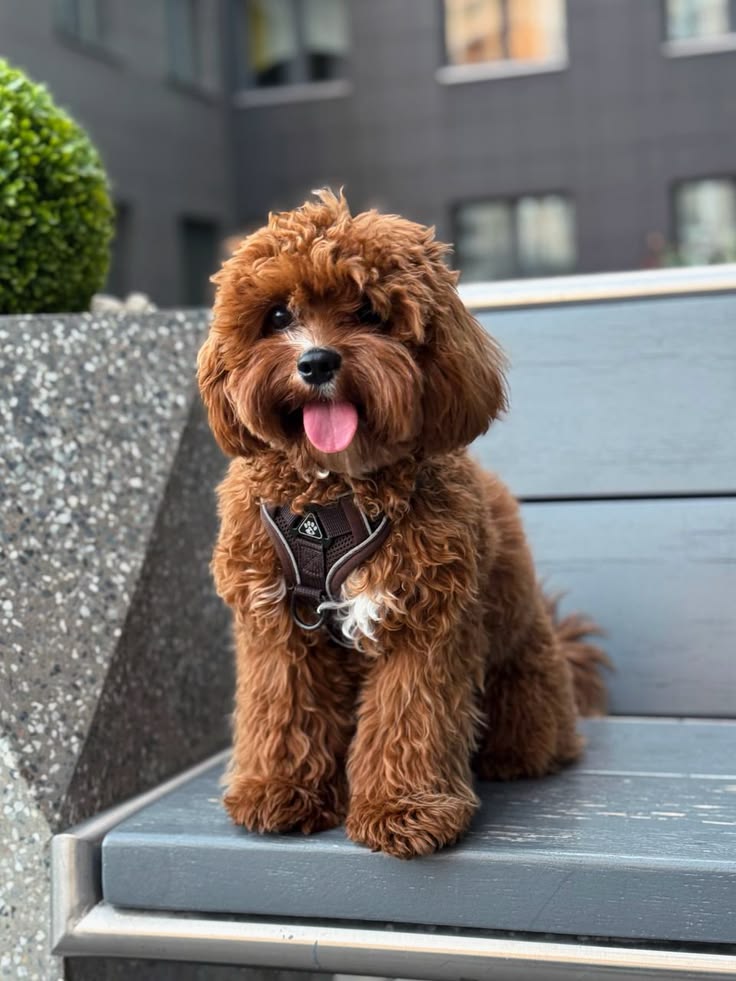
Their coats can also vary considerably.
Some have more Poodle-like curls, while others have softer or wavier coats.
Learning about the parent breeds is therefore useful when deciding whether a Cavapoo fits your household (Cavapoo Puppies For Sale In Tennessee).
Visit our Cavapoo Breed Guide to learn more about the breed.
Could a Lost Dog Breed Ever Be Brought Back?
People sometimes wonder whether extinct dog breeds could be recreated.
There is an important distinction between recreating a breed and recreating the exact historical population.
If closely related living dogs still exist, breeders might attempt to reproduce some of the historical characteristics.
But that would not necessarily mean the original breed had returned.
Modern breeding programs operate with different genetic populations, selection pressures, and goals.
Reconstructing an extinct breed would therefore be extremely complicated.
A dog that looks similar to an old painting is not automatically the same historical breed.
What Can Modern Dog Owners Learn From Extinct Breeds?
The history of extinct dogs offers several useful lessons.
First, breeds are shaped by human needs.
When those needs change, dogs can change with them.
Second, preserving a breed requires responsible breeding and continued interest.
Third, historical records should be treated carefully.
Descriptions of old dogs are sometimes incomplete or inconsistent.
Finally, dogs are not static.
The breeds we know today are part of a much longer history of human-dog relationships.
That history will continue to evolve (Cavapoo Puppies For-Sale In Ohio).
Frequently Asked Questions
What is the oldest extinct dog breed?
There is no single universally accepted “oldest extinct dog breed.”
Many ancient dog populations existed before modern breed standards and names were established.
Calling one historical type the oldest extinct breed can therefore be misleading.
Why did dog breeds go extinct?
Dog breeds and historical dog types can disappear because their original jobs became unnecessary, other breeds became more popular, populations were crossbred, breeding programs ended, or major social and economic changes occurred.
Is the Talbot dog extinct?
Yes, the historical Talbot is generally considered extinct.
It was a medieval British hunting hound described in historical records.
Is the Paisley Terrier extinct?
Yes.
The Paisley Terrier disappeared as a distinct breed, although historical long-coated terrier populations contributed to the development of later terrier varieties.
What happened to the Moscow Water Dog?
The Moscow Water Dog was a Soviet-era attempt to develop a large water-rescue dog.
The breeding program did not produce a lasting established breed, and the type eventually disappeared.
Was the Salish Wool Dog a real dog?
Yes.
Historical and archaeological evidence supports the existence of the Salish Wool Dog, a small woolly dog associated with Coast Salish communities.
Are Bloodhounds descended directly from Talbots?
Historical sources sometimes describe the Talbot as contributing to later British hounds.
However, modern breed ancestry is more complicated than a simple one-to-one descent claim.
Can an extinct dog breed be recreated?
A breeding program might reproduce some characteristics associated with a historical dog type.
However, recreating the exact original genetic population would be much more difficult.
Are rare dogs the same as extinct dogs?
No.
A rare breed still has living representatives.
An extinct breed no longer has a surviving population that can reasonably be identified as the original breed.
Learn More About Cavapoos
If dog history has made you curious about modern breeds, continue exploring our Cavapoo resources:
- Cavapoo Breed Guide
- Cavapoo Care Guide
- How to Train a Cavapoo Puppy
- Questions to Ask Before Buying a Cavapoo Puppy
- How Much Do Cavapoo Puppies Cost in 2026?
- Puppy Buying Checklist
- Available Cavapoo Puppies
Final Thoughts
The story of extinct dog breeds shows how closely dogs have always been connected to human life.
Some dogs disappeared because their jobs disappeared.
Others were absorbed into new populations.
Some declined because breeding preferences changed.
The Salish Wool Dog also demonstrates that the history of a dog can be connected to culture, tradition, and community.
Although these dogs are no longer with us as distinct breeds, their stories remain part of canine history.
Modern dogs continue that history (Cavapoo Puppies For-Sale In Florida).
Every breed and crossbreed reflects generations of relationships between people and dogs.
For Cavapoo owners, learning where today’s dogs came from can make the companionship we enjoy with them even more fascinating.
