Cavapoo Care Guide, Grooming Guide
Dog Breeds That Have the Largest Litters of Puppies

Aug
When people think about puppies, they often imagine a small group of adorable newborns sleeping beside their mother (dog breeds with the largest litters).
But some dogs can have surprisingly large litters.
Litter size can vary considerably between individual dogs. Breed, age, reproductive health, timing of breeding, genetics, and other factors can all influence the number of puppies born. Large and giant breeds are often capable of producing larger litters than very small breeds, but there is no guaranteed number for any particular breed.
Some large breeds are particularly well known for producing sizeable litters.
However, when discussing puppy litters, bigger is not always better. A large litter can place additional demands on the mother and can increase the risk of low birth weight and other complications for newborn puppies.
So, which breeds tend to have some of the largest litters?
Dog Breeds With The Largest Litters
Which Dog Breeds Tend to Have Large Litters?
There is no single breed that always produces the largest litter.
However, several large and giant breeds are commonly associated with relatively large litters.
These include:
- Great Danes
- Saint Bernards
- Newfoundlands
- Irish Wolfhounds
- German Shepherds
- Labrador Retrievers
- Golden Retrievers
- Bernese Mountain Dogs
Individual litters can be much smaller or larger than expected.
The number of puppies should therefore never be used as a measure of a breeder’s quality.
The American Kennel Club emphasizes that responsible breeders should focus on health, temperament, appropriate pairings, genetic screening, and suitable homes for puppies rather than simply pursuing large litter numbers (breeds with the largest litters).
1. Great Danes
Great Danes are among the largest domestic dog breeds, so it is not surprising that they can produce relatively large litters.
A Great Dane pregnancy can involve several puppies, and some litters can become quite large.
However, carrying and delivering a large litter places significant physical demands on the mother.
Great Dane breeders should therefore work closely with veterinarians throughout pregnancy.

Veterinary monitoring can help determine whether the mother and developing puppies are progressing normally. Ultrasound can help assess pregnancy, while later-pregnancy radiographs can help veterinarians determine litter size.
The focus should always be a healthy mother and healthy puppies rather than achieving a specific number (Great Dane litter size).
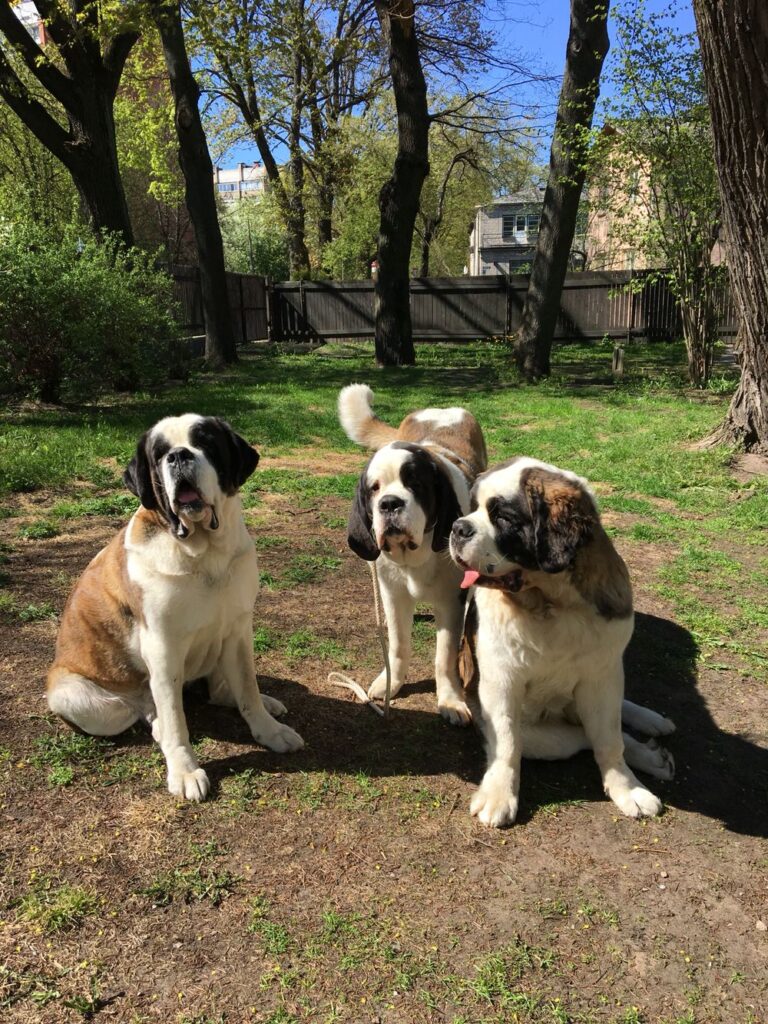
2. Saint Bernards
Saint Bernards are another giant breed known for having the potential to produce large litters.
Their impressive size and reproductive capacity can result in numerous puppies in a single pregnancy.
However, a large litter can create additional challenges.
The mother needs appropriate nutrition, veterinary monitoring, a suitable whelping environment, and adequate support after delivery.
Newborn puppies also need to nurse effectively and gain weight consistently.
When a litter is particularly large, some puppies may require additional nutritional support if the mother cannot meet everyone’s needs (Saint Bernard litter size).
3. Newfoundlands
Newfoundlands are another large breed that can produce substantial litters.
These gentle giants were historically developed as working dogs and are known for their strength and water-loving nature.
When a Newfoundland has a large litter, careful monitoring becomes especially important.
The breeder should monitor the mother before and after delivery and track each puppy’s development.
A puppy that is consistently losing weight, failing to nurse, or appearing weak may require prompt veterinary attention (dog breeds with large litters).
4. Irish Wolfhounds
Irish Wolfhounds are one of the tallest dog breeds in the world.
Their large bodies allow them to carry more puppies than many small dog breeds, although litter size still varies considerably between individuals.
Irish Wolfhound puppies also have significant growth requirements.
The goal is not simply to make puppies grow as quickly as possible.
Proper nutrition should support healthy development without excessive growth.
This principle applies particularly strongly to large and giant breeds because rapid growth can contribute to developmental orthopedic problems (largest dog litters).
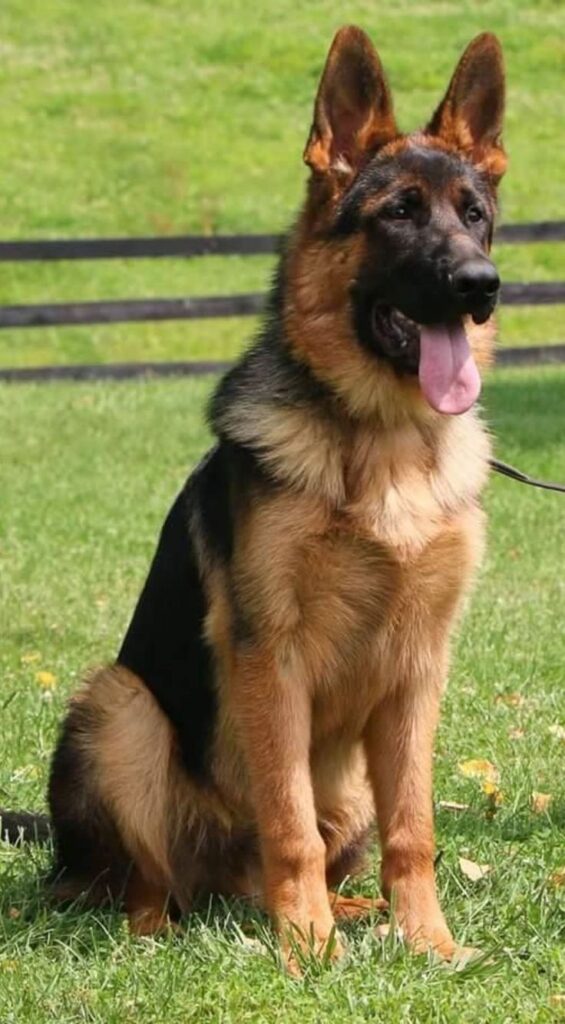
5. German Shepherds
German Shepherds are another breed that can have moderately large litters.
They are popular working and companion dogs known for their intelligence, athleticism, and trainability.
A German Shepherd litter can include several puppies, although there is considerable variation from one pregnancy to another.
As with every breed, responsible breeding requires more than simply producing puppies.
Potential parents should be evaluated for health, temperament, and inherited conditions before breeding decisions are made (German Shepherd litter size).
6. Labrador Retrievers
Labrador Retrievers are among the world’s most popular dog breeds and can also produce relatively large litters.
Labs are known for their friendly temperament, intelligence, and versatility.
When a Labrador has a large litter, the breeder must ensure that every puppy receives adequate nutrition and monitoring.
Puppies should be weighed regularly during the newborn period.
Consistent weight gain is one useful indicator that puppies are receiving adequate nutrition (Labrador litter size).
7. Golden Retrievers
Golden Retrievers can also have sizeable litters.
Their friendly personalities and popularity as family dogs have made them one of the most recognizable breeds in the world.
However, the same responsible breeding principles apply.
A breeder should not choose breeding pairs simply because they are attractive or because they are capable of producing many puppies.
Health, temperament, structure, genetics, and the ability to provide appropriate homes for the puppies are all important considerations.
The AKC recommends health screening of breeding dogs for inherited conditions and a veterinary examination before breeding (Golden Retriever litter size).
8. Bernese Mountain Dogs
Bernese Mountain Dogs are another large breed capable of producing relatively sizeable litters.
Their calm and affectionate personalities have made them popular family companions.
However, breeding a large dog does not automatically mean that every pregnancy will produce a large litter.
Individual reproductive history and health matter.
This is one reason experienced breeders should work with veterinarians when planning pregnancies (dogs that have the most puppies).
Why Do Larger Dogs Often Have Larger Litters?
One common pattern in canine reproduction is that larger breeds tend to have larger litters than very small breeds.
However, this is a general trend rather than a rule.
A small dog can have several puppies, while a large dog can have a surprisingly small litter.
Genetics, reproductive timing, age, health, and other factors can all influence litter size.
Veterinary guidance also emphasizes that accurate ovulation timing can help optimize breeding and evaluate expected pregnancy timing.
This means that breeders should never assume a particular dog will produce a certain number of puppies simply because of its breed (largest puppy litters).
What Determines How Many Puppies a Dog Has?
Several factors can influence litter size.
Breed
Breed is one factor associated with litter size.
Large and giant breeds often have more puppies than toy breeds, but there is substantial variation within every breed.
Age
A female dog’s reproductive history and age can influence pregnancy and litter outcomes.
Responsible breeding decisions should take the individual dog’s health and reproductive history into account.
Genetics
Genetic factors can influence reproductive performance and litter size.
This is another reason responsible breeders study pedigrees rather than making decisions based solely on appearance.
Timing of Breeding
Timing matters.
Veterinary reproductive specialists can use hormone testing and other methods to identify the fertile period.
Proper ovulation timing can help improve breeding management and optimize litter size.
Overall Health
A healthy mother is better positioned to support a pregnancy and care for her puppies.
Before breeding, responsible breeders should work with veterinarians to evaluate the mother’s overall health and screen for relevant inherited conditions (biggest dog litters).
What Happens When a Dog Has a Very Large Litter?
A large litter can be exciting, but it also creates additional responsibilities.
The mother may have difficulty providing enough milk for every puppy.
Some puppies may be smaller than their littermates or struggle to compete for a nursing position.
Large litters are associated with increased risk of neonatal problems related to low birth weight (biggest dog litters).
Breeders may therefore need to:
- Monitor every puppy’s weight.
- Make sure each puppy nurses.
- Watch the mother for signs of illness.
- Maintain a clean and safe whelping environment.
- Provide appropriate nutrition.
- Monitor body temperature and general condition.
- Contact a veterinarian when problems arise.
The first days are particularly important.
Why Puppy Weight Matters
Newborn puppies cannot tell us when something is wrong.
That makes regular observation extremely important.
A digital scale can help breeders track individual puppy weight.
A puppy that is gaining weight consistently is generally providing a more reassuring picture than one that repeatedly loses weight or fails to gain.
The AKC notes that low birth weight and significant early weight loss are associated with increased neonatal mortality risk.
This is why responsible breeders should monitor puppies individually rather than simply looking at the litter as a whole (responsible dog breeding).
Large Litters Require More Than More Food
It is easy to assume that the solution to a large litter is simply feeding the mother more food.
Nutrition is certainly important, especially during lactation.
However, the mother’s nutritional requirements can increase substantially depending on the number of puppies she is nursing.
Her diet should therefore be managed carefully with appropriate veterinary or nutritional guidance.
The puppies also require appropriate nutrition as they grow.
Weaning typically begins around three to four weeks of age, with a gradual transition toward appropriate puppy food (puppy litter care).
Socialization Matters in Every Litter
Nutrition and veterinary care are only part of raising puppies.
Early experiences can also influence how puppies respond to people and their environment as they mature.
Responsible breeders can gradually introduce puppies to appropriate sounds, handling, surfaces, people, and everyday experiences.
The goal is not to overwhelm puppies.
Instead, controlled positive experiences can help them become more comfortable with new situations.
This is particularly important when raising puppies intended to become family companions.
Does a Bigger Litter Mean a Better Breeder?
Absolutely not.
This is one of the most important points to understand when researching puppies.
A breeder should not be judged by how many puppies a female produces.
A responsible breeder should prioritize:
- Healthy parent dogs
- Appropriate genetic testing
- Good temperament
- Veterinary care
- Proper nutrition
- Clean living conditions
- Early socialization
- Appropriate puppy development
- Suitable homes
- Honest communication with buyers
The AKC specifically advises prospective breeders to focus on health screening, responsible pairings, adequate resources, and appropriate puppy placement.
Quality matters more than quantity.
What About Cavapoos?
Cavapoos are considerably smaller than the giant breeds discussed above.
They are a cross between the Cavalier King Charles Spaniel and Poodle, and their adult size can vary depending on their parents and generation.
Because Cavapoos are smaller companion dogs, prospective owners should not compare their expected litter size with breeds such as Great Danes or Saint Bernards.
More importantly, a breeder should never try to maximize the number of Cavapoo puppies produced (Cavapoo litter size).
The health of the mother and every individual puppy should come first.
If you are researching Cavapoos, our Cavapoo Breed Guide provides more information about their characteristics, temperament, care, and lifestyle needs.
Responsible Cavapoo Breeding Should Focus on Health
When choosing a Cavapoo puppy, prospective owners should look beyond the number of puppies available.
Ask questions about the parents.
Ask about veterinary care.
Ask what health information is available.
Ask how the puppies are raised and socialized.
Ask what documentation accompanies the puppy.
These questions can tell you much more than the size of the litter.
Our Cavapoo Buying Guide can help prospective owners understand what to look for when evaluating a puppy and breeder (responsible Cavapoo breeder).
You can also read Questions to Ask Before Buying a Cavapoo Puppy before making a decision.
Preparing Puppies for Their New Families
Once puppies begin growing and developing, breeders have an important responsibility.
They need to monitor development, provide appropriate veterinary care, introduce puppies to positive experiences, and prepare them for the transition into their new homes.
For prospective Cavapoo owners, preparation should begin before the puppy arrives.
Your home should be ready with:
- Puppy food
- Food and water bowls
- Comfortable bedding
- Safe toys
- A crate or appropriate sleeping area
- Puppy-safe cleaning supplies
- Grooming supplies
- Identification information
- Veterinary contact information
Our Cavapoo Care Guide can help you understand the everyday responsibilities that come with raising a Cavapoo (Cavapoo puppies).
How Long Is a Dog Pregnant?
A dog’s pregnancy typically lasts around 62–64 days when measured appropriately from ovulation, although the exact timing can vary. Breeding dates alone are not always reliable for predicting the exact delivery date.
Veterinarians can use examinations, hormone testing, ultrasound, and radiographs to help monitor pregnancy and determine litter size (Cavapoo litter size).
This is particularly valuable when a breeder expects a large litter.
Can You Predict the Exact Number of Puppies?
Not perfectly.
Even experienced breeders cannot guarantee an exact litter size.
Veterinary imaging can provide useful information.
Ultrasound can confirm pregnancy and assess fetal viability, while radiographs later in pregnancy can be used to determine litter size more accurately.
This is why claims about an exact number of puppies should always be treated cautiously until appropriate veterinary evaluation has been performed.
Frequently Asked Questions
Which dog breeds have the largest litters?
Large and giant breeds such as Great Danes, Saint Bernards, Newfoundlands, Irish Wolfhounds, and some working and sporting breeds can produce relatively large litters. However, litter size varies considerably between individual dogs.
Do bigger dogs always have more puppies?
No. Larger breeds tend to have larger litters on average, but there are many exceptions.
Can a dog have 15 puppies?
Yes, some individual dogs can have very large litters. However, there is no guarantee that a particular breed or dog will produce 15 puppies.
Are large litters dangerous?
Large litters can create additional risks for both the mother and newborn puppies. Low birth weight and competition for nutrition can be concerns. Veterinary monitoring is especially important.
Are Cavapoo litters as large as Great Dane litters?
Generally, no. Cavapoos are much smaller dogs, and their litter sizes should not be compared directly with giant breeds.
Does a large litter mean the breeder is better?
No. Responsible breeding is about health, temperament, genetics, veterinary care, socialization, and appropriate puppy placement rather than producing the largest possible litter.
How can breeders determine litter size?
Veterinarians can use ultrasound and later-pregnancy radiographs to help evaluate pregnancy and estimate or determine the number of puppies.
Final Thoughts on Large Puppy Litters
Large puppy litters are fascinating, but the number of puppies should never be the most important consideration.
Great Danes, Saint Bernards, Newfoundlands, Irish Wolfhounds, Labradors, Golden Retrievers, German Shepherds, and other larger breeds can produce sizeable litters.
However, every pregnancy is different.
A healthy mother carrying a smaller litter may be far better off than a mother struggling with an unusually large one.
The same principle applies to Cavapoos.
Responsible breeding should focus on producing healthy, well-adjusted puppies from appropriately screened parents, not simply producing as many puppies as possible.
For families looking for a Cavapoo puppy, the quality of care, transparency, health information, early socialization, and support provided should matter far more than the number of puppies in the litter (puppy socialization).
If you are ready to learn more, explore our Available Cavapoo Puppies and review our Adoption Process before welcoming your new companion home.
