Cavapoo Care Guide, Cavapoo Nutrition Guide
Can Dogs Eat Chicken Bones or Turkey Bones? What Every Dog Owner Should Know

Aug
Chicken and turkey are common foods at family meals, especially during holidays (Can Dogs Eat Chicken Bones or Turkey Bones).
They are also foods that can create a serious temptation for dogs.
Your dog may stare at you while you prepare dinner, hoping for a bite of turkey or chicken. While plain, properly prepared meat may sometimes be appropriate as part of a balanced diet, chicken bones and turkey bones are a different story.
So, can dogs eat chicken bones?
No. Chicken bones should not be given to dogs.
Can dogs eat turkey bones?
Turkey bones should also be avoided.
Both chicken and turkey bones can cause choking, gastrointestinal injuries, or intestinal obstruction. Cooked poultry bones can be particularly dangerous because cooking changes their structure and can make them brittle.
If your dog accidentally swallowed a chicken or turkey bone, don’t panic. However, you should take the situation seriously and contact your veterinarian for individualized advice.

Can Dogs Eat Chicken Bones or Turkey Bones: Why Are Chicken Bones Dangerous for Dogs?
Dogs have strong jaws and are natural chewers, but that does not mean every type of bone is appropriate for them.
Chicken bones can break into sharp or irregular pieces. Cooked chicken bones are especially concerning because they can become brittle and splinter when chewed.
Those fragments can potentially cause several problems.
1. Choking
A bone fragment can become lodged in the mouth, throat, or airway.
A choking dog may:
- Gag
- Cough
- Paw at their mouth
- Struggle to breathe
- Make unusual breathing sounds
- Become extremely distressed
- Collapse in severe cases
Difficulty breathing is an emergency.
If your dog appears to be choking or cannot breathe normally, seek emergency veterinary care immediately.
2. Mouth and Throat Injuries
Sharp fragments can injure the mouth, tongue, gums, or throat.
A dog may drool excessively, paw at their mouth, refuse food, or appear uncomfortable after chewing a bone.
3. Esophageal Injuries
A bone fragment can become lodged in the esophagus or cause irritation as it moves through the digestive tract.
This can result in discomfort, gagging, repeated swallowing, or vomiting.
4. Stomach or Intestinal Injuries
Sharp fragments can potentially damage the digestive tract.
In some cases, pieces may pass through the digestive system without causing a problem. In other cases, they can become lodged or cause an obstruction.
That is one reason it is important to contact your veterinarian after your dog has swallowed a poultry bone rather than simply assuming everything will be fine.
Are Turkey Bones Safer Than Chicken Bones?
Not necessarily.
Turkey bones are often larger and may seem stronger than chicken bones, but their size does not make them appropriate for dogs.
A large turkey bone can still:
- Become lodged
- Cause choking
- Break into dangerous pieces
- Injure the digestive tract
- Cause an intestinal obstruction
This can be particularly concerning for smaller dogs and puppies.
A Cavapoo may be enthusiastic about chewing a leftover turkey bone, but enthusiasm does not make the bone safe.
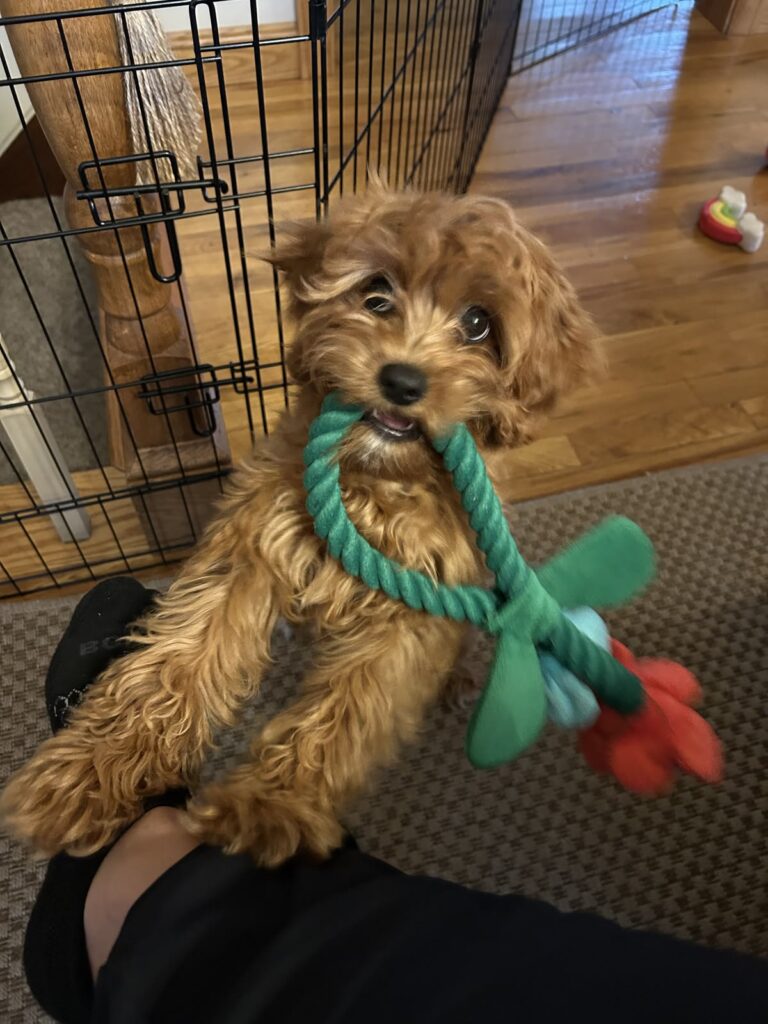
If you have a puppy at home, preventing access to unsafe table scraps should be part of your normal Cavapoo puppy care routine.
Why Are Cooked Chicken Bones Especially Dangerous?
Cooking changes the physical structure of bones.
When poultry bones are cooked, they can become brittle and more likely to break when chewed.
That means a leftover chicken wing, drumstick, or turkey leg should never be considered a safe dog treat simply because your dog seems interested in it.
Holiday meals deserve particular attention.
Turkey bones can easily end up in:
- Trash cans
- Plates left on tables
- Kitchen counters
- Outdoor garbage
- Compost containers
- Leftover food containers
A determined dog may find these opportunities surprisingly quickly.
If you have guests visiting during Thanksgiving, Christmas, or another celebration, remind everyone not to feed poultry bones to your dog.
Can Dogs Eat Raw Chicken Bones?
Raw bones are sometimes discussed differently from cooked bones, but that does not mean raw chicken bones are risk-free.
Raw poultry bones can still cause:
- Choking
- Dental injuries
- Gastrointestinal obstruction
- Internal injury
- Bacterial exposure
Raw meat and bones may also carry pathogens that can pose risks to dogs and people in the household.
For these reasons, do not assume that a raw chicken bone is automatically safe simply because it has not been cooked.
If you’re considering a raw or homemade diet for your dog, discuss the diet with your veterinarian or a qualified veterinary nutrition professional.
My Dog Ate a Chicken Bone. What Should I Do?
If your dog has swallowed a chicken bone, the first step is to stay calm.
Your next step should be to contact your veterinarian or an emergency veterinary clinic for guidance.
The appropriate response can depend on factors such as:
- Your dog’s size
- Your dog’s age
- Whether the bone was cooked
- The size and type of bone
- How much was swallowed
- Whether the dog chewed it
- Whether symptoms are already present
- Your dog’s medical history
Do not assume that a dog who looks normal immediately after swallowing a bone is automatically safe.
Some complications can take time to become apparent.
Do Not Induce Vomiting Unless a Veterinarian Tells You To
This is an important point.
Do not automatically make your dog vomit after swallowing a chicken or turkey bone.
Bringing a sharp object back through the esophagus could potentially cause additional injury.
Instead, contact your veterinarian and explain exactly what happened.
Follow the professional’s instructions.
Don’t Reach Deep Into Your Dog’s Throat
If you can clearly see an object near the front of your dog’s mouth, do not automatically try to pull it out.
A frightened dog may bite, and attempting to push or retrieve an object incorrectly can make the situation worse.
If your dog is choking or struggling to breathe, seek emergency veterinary help immediately.
What Symptoms Should You Watch For?
After your dog has swallowed a chicken or turkey bone, watch closely for signs of illness or discomfort.
Potential warning signs include:
- Vomiting
- Repeated gagging
- Excessive drooling
- Difficulty swallowing
- Refusing food
- Abdominal discomfort
- Lethargy
- Changes in bowel movements
- Straining to defecate
- Blood in vomit or stool
- Difficulty breathing
- Pale gums
- Weakness
- Collapse
Some symptoms require immediate veterinary attention.
Difficulty breathing, collapse, severe distress, or signs of choking should be treated as an emergency.
If your dog develops vomiting, abdominal pain, lethargy, blood in the stool, or other concerning symptoms after swallowing a bone, contact your veterinarian promptly.

Can a Dog’s Stomach Acid Dissolve Bones?
A dog’s stomach acid is strong, but you should not rely on it to make a swallowed bone safe.
Some bone material may be broken down during digestion. However, larger or sharp fragments can still create problems before they are completely digested or passed.
A bone that appears small to one dog may be significant for another.
Your veterinarian can help assess the situation based on your dog’s individual circumstances.
What Are Safer Alternatives to Chicken Bones?
Dogs naturally enjoy chewing.
Fortunately, you don’t have to give your dog dangerous poultry bones to satisfy that instinct.
Consider appropriately sized:
- Veterinary-recommended dental chews
- Commercial dog chews designed for your dog’s size
- Durable dog toys
- Food-stuffed enrichment toys
- Other veterinarian-approved chewing products
Always follow the manufacturer’s size recommendations.
A chew intended for a large dog may be inappropriate for a small Cavapoo puppy.
Your veterinarian can also help you select appropriate chewing products based on your dog’s age, size, chewing style, dental health, and dietary needs.
What About Other Types of Bones?
You may hear that large raw beef or lamb bones are safer than chicken bones.
The important distinction is that “lower risk” does not mean “risk-free.”
Any bone can potentially cause:
- Choking
- Broken teeth
- Mouth injuries
- Digestive obstruction
- Gastrointestinal injuries
Some veterinarians recommend avoiding recreational bones altogether.
If you’re considering giving your dog a bone, ask your veterinarian first and choose products appropriate for your individual dog.
Why Puppies Need Extra Protection
Puppies explore the world with their mouths.
They chew furniture.
They investigate shoes.
They pick up random objects.
And, unfortunately, they don’t understand which items are dangerous.
That makes prevention especially important.
A young Cavapoo may grab a chicken bone from underneath the dinner table before you even realize it has fallen.
Puppy-proof your home by keeping dangerous foods and objects out of reach.
This includes:
- Chicken bones
- Turkey bones
- Cooked meat bones
- Chocolate
- Grapes and raisins
- Certain sugar-free products containing xylitol
- Medications
- Household chemicals
- Small objects that can be swallowed
Teaching your puppy a reliable “leave it” and “drop it” cue can provide another layer of protection.
Positive-reinforcement training can make these commands easier to teach while building trust with your puppy.
How to Prevent Accidental Bone Ingestion
Prevention is much easier than dealing with a medical emergency.
Keep Food Off Accessible Surfaces
Do not leave plates containing chicken or turkey within reach of your dog.
Remember that some dogs can reach kitchen counters and tables more easily than you might expect.
Secure Your Trash
Bones can smell extremely appealing to dogs.
A trash can that is easy for your dog to open can quickly become a dangerous buffet.
Use a secure container or keep food waste somewhere your dog cannot access.
Tell Your Guests
During holidays and family gatherings, make sure visitors understand your dog’s food rules.
A well-meaning guest may toss your dog a turkey bone without realizing the potential danger.
A simple reminder can prevent an emergency.
Teach “Leave It”
Training your dog to ignore something on the floor is extremely useful.
Start with safe objects and positive reinforcement.
Gradually build the behavior until your dog learns that leaving something alone earns a reward.
Supervise Your Puppy
Young puppies need close supervision.
If your Cavapoo is still exploring everything with their mouth, keep potentially dangerous objects out of reach.
Good supervision is one of the most important parts of responsible puppy ownership.
Can Dogs Eat Plain Chicken Without the Bones?
Plain, fully cooked chicken meat can be appropriate for many dogs when prepared safely and offered in appropriate portions.
However, avoid serving chicken that contains:
- Cooked bones
- Excessive fat
- Heavy seasoning
- Garlic
- Onion
- Rich sauces
- Excessive salt
If you want to add human foods to your dog’s diet, ask your veterinarian which foods and portions are appropriate.
Your dog’s primary diet should provide complete and balanced nutrition appropriate for their life stage.
Frequently Asked Questions About Chicken and Turkey Bones
Can dogs eat chicken bones?
No. Chicken bones should not be intentionally given to dogs. They can cause choking, obstruction, dental injury, or gastrointestinal damage.
Can dogs eat turkey bones?
No. Turkey bones can also pose choking, obstruction, and injury risks. Their larger size does not make them automatically safe.
Are cooked chicken bones worse than raw chicken bones?
Cooked poultry bones can become brittle and may splinter when chewed. Raw poultry bones are not risk-free either and can pose choking, injury, obstruction, and bacterial risks.
My dog ate a cooked chicken bone. Should I call the vet?
Yes. Contact your veterinarian for advice, even if your dog currently appears normal. Tell them what type of bone was swallowed, whether it was cooked, approximately how large it was, and when it happened.
Should I make my dog vomit after eating a chicken bone?
No, not unless a veterinarian specifically instructs you to do so. Sharp bone fragments can potentially cause additional injury if brought back up.
Should I give my dog bread after swallowing a chicken bone?
Do not rely on bread as a home treatment or assume that it will safely protect your dog’s digestive tract. Contact your veterinarian for individualized instructions instead.
Can dogs digest bones?
Dogs can digest some bone material, but that does not make every bone safe. Sharp, large, or irregular fragments can still cause choking, obstruction, or injury.
What should I do if my dog is choking on a chicken bone?
Treat choking or difficulty breathing as an emergency. Seek emergency veterinary care immediately rather than waiting to see whether the problem resolves.
Are large beef bones safe for dogs?
Large bones may have different risks than poultry bones, but they are not risk-free. They can still fracture teeth, cause choking, or create gastrointestinal problems. Ask your veterinarian before offering recreational bones.
Final Thoughts: Keep Chicken and Turkey Bones Away From Your Dog
Chicken and turkey can be delicious parts of a family meal, but their bones should stay away from your dog’s food bowl.
The safest approach is simple:
Don’t give dogs chicken bones or turkey bones.
Keep poultry bones away from curious puppies and adult dogs.
Secure your trash.
Supervise your dog during family meals.
Teach useful commands such as “leave it” and “drop it.”
And if your dog accidentally swallows a bone, contact your veterinarian for guidance rather than relying on home remedies.
A few seconds of prevention can save you and your dog from a potentially serious emergency.
For Cavapoo owners, food safety is just one part of keeping a puppy healthy. Proper nutrition, preventive veterinary care, grooming, exercise, training, and a safe home environment all contribute to your puppy’s long-term well-being.
If you’re preparing to bring home a Cavapoo puppy, learn more about Cavapoo puppies for sale, responsible puppy preparation, and the care your new companion will need from the beginning.
Continue Learning About Cavapoos
Keep building your Cavapoo care knowledge with these helpful resources:
- Cavapoo Puppies for Sale — Learn more about available puppies and preparing to welcome a new companion.
- Cavapoo Puppy Care Guide — Explore practical guidance for feeding, grooming, exercise, training, and everyday puppy care.
- Cavapoo Health & Wellness — Learn about important health considerations and preventive care.
- Cavapoo Training Guide — Build essential behaviors such as “leave it,” “drop it,” recall, and basic obedience.
- Cavapoo Breed Guide — Learn more about Cavapoo temperament, size, personality, coat, exercise, and care.
- Cavapoo Adoption Process — Understand what to expect when preparing to bring a Cavapoo puppy into your family.
Atlantic Cavapoo Puppies is committed to helping families make informed decisions and provide responsible, loving care for their dogs. From choosing the right puppy to creating a safe home, our goal is to help Cavapoos enjoy happy, healthy lives with the families who love them.
