
Cavapoo Care Guide, Cavapoo Health & Wellness
Bringing a New Puppy Home: A Complete First-Day and First-Week Guide
Aug
Bringing a new puppy home is an exciting experience for the entire family. Those first few days can also feel overwhelming.
Your puppy is entering a completely unfamiliar environment. New smells, sounds, people, rooms, routines, and pets can be a lot to process.
The best approach is to slow things down and give your puppy time to adjust.
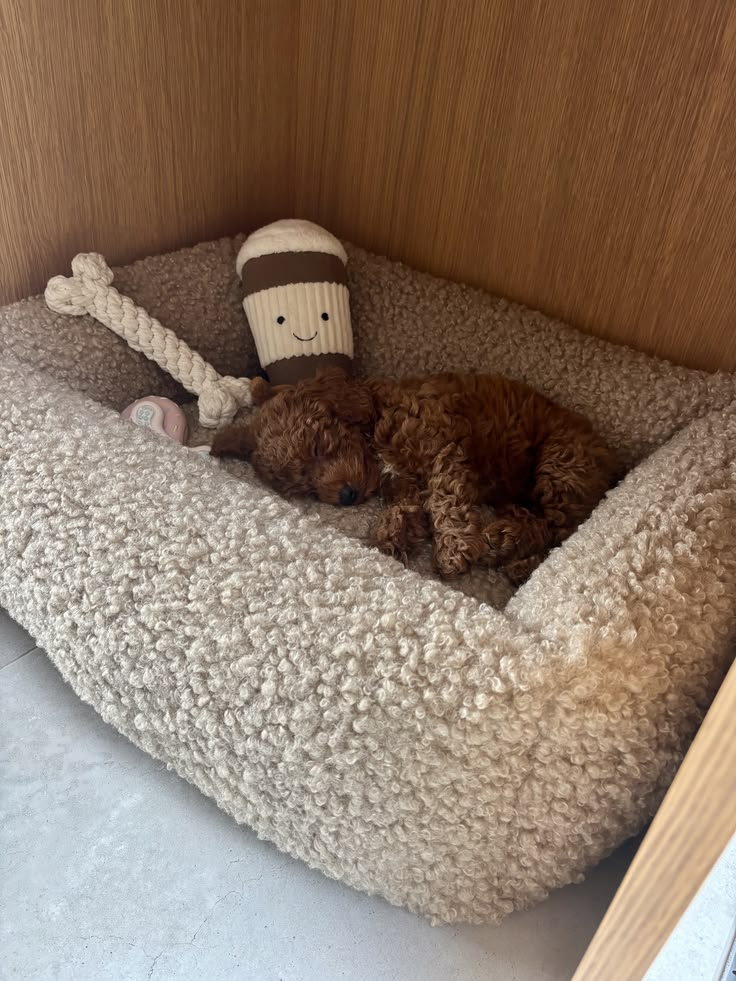
Instead of expecting your new puppy to immediately explore the entire house and interact with everyone, create a calm introduction. Give your puppy a safe place to rest, establish a predictable routine, and begin positive training from day one.
If you are preparing for your puppy’s arrival, our Essential Puppy Checklist can help you make sure you have the basic supplies ready before pickup day (bringing home a new puppy).
Prepare Your Home Before Bringing Your Puppy Home
Preparation should begin before your puppy arrives.
Puppies are naturally curious. They investigate their surroundings with their mouths, paws, noses, and teeth.
Walk through your home and look for anything that could become dangerous.
Secure electrical cords, medications, cleaning products, small objects, toxic plants, and anything else your puppy could chew or swallow. Baby gates can also help you limit access to rooms that are not puppy-proofed.
Create a dedicated puppy area with:
- A comfortable puppy bed or crate
- Fresh water
- Food bowls
- Safe puppy toys
- Appropriate chew toys
- Training treats
- A leash and collar or harness
- Potty-training supplies
- A few familiar-smelling items
A designated home base gives your puppy somewhere predictable to relax when everything else feels new.
The ASPCA also recommends preparing essential supplies and restricting access to potentially hazardous chemicals, plants, and foods before a new dog arrives.
You can also review our guide on everything you need for a new puppy before bringing your puppy home (first day with a puppy).
Keep the First Day Calm
It can be tempting to invite everyone over to meet the new puppy.
Try to resist that temptation.
Your puppy has already experienced a major transition. Leaving their mother and littermates and traveling to a new home can be stressful.
Give your puppy time to settle.
Start with one quiet area rather than immediately giving your puppy unrestricted access to the entire house.
Allow your puppy to sniff and investigate at their own pace. If they want to rest, let them rest.
There is no need to rush the process.
A gradual introduction can help prevent your puppy from becoming overwhelmed. The ASPCA similarly recommends starting a dog in a smaller “home base” area and gradually introducing additional parts of the home as the dog becomes comfortable (new puppy home checklist).
Let Your Puppy Explore at Their Own Pace
Once your puppy has had time to settle, allow supervised exploration.
You can gradually introduce different rooms rather than opening every door at once.
Watch your puppy’s body language.
A relaxed puppy may sniff, investigate, play, eat, drink, and eventually settle down. A puppy who becomes overwhelmed may hide, freeze, avoid interaction, or show other signs of stress.
If your puppy appears uncomfortable, give them more space.
Puppy socialization isn’t simply about exposing a puppy to as many experiences as possible. The goal is to help the puppy experience new people, animals, places, sounds, and situations without becoming overwhelmed.
This is especially important during the early months of life.
Introduce Family Members Slowly: Bringing a New Puppy Home
Everyone in the household will probably be excited to meet the new puppy.
However, several people crowding around a nervous puppy can be overwhelming.
Instead, have family members sit calmly and allow the puppy to approach them.
Avoid forcing physical interaction.
Children should also learn how to interact appropriately with the puppy. Teach them to avoid grabbing, chasing, cornering, or disturbing the puppy while sleeping or eating.
Your puppy should learn that people are safe and predictable.
Reward calm interactions with treats, praise, or play when appropriate.
Positive experiences during this period can help establish a strong relationship between your puppy and your family (how to introduce a puppy to your home).
Start Puppy Training From Day One
Training doesn’t need to involve long sessions.
In fact, very young puppies generally learn best through short, positive interactions.
Begin with simple behaviors such as:
- Responding to their name
- Coming when called
- Sitting
- Walking calmly with you
- Going to their designated area
- Leaving inappropriate objects alone
- Using the appropriate potty area
Use rewards to reinforce behaviors you want your puppy to repeat.
The American Veterinary Society of Animal Behavior recommends reward-based training and advises against training methods based on pain, fear, or intimidation.
This is an important update from older puppy-training advice that focused on establishing yourself as a “pack leader.”
You don’t need to dominate your puppy.
Instead, focus on clear communication, consistency, management, and positive reinforcement.
Begin Potty Training Immediately
Your puppy won’t automatically understand where they should go to the bathroom.
Take your puppy to the appropriate potty area frequently, particularly:
- After waking up
- After eating
- After drinking
- After playing
- After naps
- Before bedtime
When your puppy successfully eliminates in the correct location, reward them immediately.
Accidents are normal.
Never punish your puppy for an accident you discover later. Puppies do not understand delayed punishment, and punishment can make housetraining more difficult.
Reward-based housetraining is recommended by veterinary behavior professionals. Immediate reinforcement helps the puppy understand which behavior earned the reward (bringing a new puppy home).
For more help, read our Puppy Potty Training Guide.
Introducing Your New Puppy to Another Dog
If you already have a dog, the introduction deserves special attention.
Don’t simply bring the puppy through the front door and place them directly into your existing dog’s space.
Whenever possible, introduce the dogs in a calm, neutral environment.
Keep both dogs supervised and allow them to investigate each other naturally.
You don’t need to force interaction.
Give each dog enough space to move away if they become uncomfortable.
Watch their body language carefully. If either dog becomes tense, fearful, overly excited, or defensive, create more distance and slow the introduction down.
Once both dogs appear comfortable, you can gradually move toward spending more time together.
The goal isn’t to force an instant friendship.
The goal is to create safe, positive experiences that allow the relationship to develop naturally.
Give Your Existing Dog Individual Attention
A new puppy can completely change the household routine.
Your older dog may suddenly have to share toys, food, sleeping areas, and human attention.
Continue giving your existing dog individual time with you.
Take them for walks, play with them, and maintain familiar routines whenever possible.
At the same time, give the puppy their own opportunities for rest, training, and one-on-one interaction.
This helps both dogs adjust to the new household arrangement (bringing a new puppy home).
Give Your Puppy Plenty of Rest
Puppies sleep a lot.
After an exciting first day, your puppy may become tired quickly.
Don’t assume that a puppy who is acting wild needs more exercise. Sometimes an overtired puppy needs a quiet place to sleep.
Provide a comfortable crate, pen, or puppy-proofed area where your puppy can rest without being disturbed.
Scheduled rest can also help prevent your puppy from becoming overstimulated.
AVSAB guidance emphasizes providing puppies with safe places for rest and opportunities to play independently, which can help them become comfortable entertaining themselves (bringing home a new puppy).
Socialize Your Puppy Safely
Socialization is one of the most important parts of raising a confident puppy.
Your puppy should gradually experience different:
- People
- Sounds
- Surfaces
- Environments
- Gentle handling
- Friendly, appropriate dogs
- Household experiences
- Car rides
- Grooming experiences
However, socialization does not mean forcing your puppy into every possible situation.
Pay attention to how your puppy responds.
If your puppy becomes frightened, increase distance and make the experience easier.
AVSAB recommends exposing puppies to new experiences during the important early socialization period while keeping those experiences safe and avoiding excessive fear or overstimulation.
Because vaccination and disease risks vary, discuss appropriate public outings and puppy socialization activities with your veterinarian.
Our Puppy Vaccines and Deworming Guide can also help you understand why preventive veterinary care is an important part of your puppy’s first months (first day with a puppy).
Create a Consistent Daily Routine
Puppies thrive when they can predict what happens next.
Try to establish consistent times for:
- Meals
- Potty breaks
- Play
- Training
- Walks
- Rest
- Bedtime
Your schedule won’t always be perfect, and that’s okay.
Consistency matters more than following an exact minute-by-minute timetable.
A predictable routine can make the transition easier while helping you recognize when your puppy needs food, sleep, exercise, or a potty break (new puppy home checklist).
Don’t Give Your Puppy Too Much Freedom Too Soon
A common mistake is allowing a new puppy to roam freely throughout the house.
More freedom means more opportunities for accidents, chewing, and unsafe exploration.
Instead, gradually increase your puppy’s access to the home as they demonstrate that they can handle the additional freedom.
Use baby gates, a playpen, or a properly introduced crate when you cannot directly supervise your puppy.
Management isn’t punishment.
It is simply a way to prevent your puppy from practicing unwanted behaviors while they are still learning (how to introduce a puppy to your home).
Build a Positive Relationship With Your Puppy
The first few weeks are about much more than teaching commands.
You’re teaching your puppy what life with humans feels like.
Reward calm behavior.
Play together.
Handle your puppy gently.
Provide appropriate toys.
Give them opportunities to explore.
Allow them to rest.
Teach them that coming to you leads to good things.
Positive reinforcement can strengthen communication between you and your puppy while helping them learn appropriate behaviors (bringing a new puppy home).
What Should You Expect During the First Week?
Every puppy is different.
Some puppies settle quickly.
Others need several days to become comfortable.
During the first week, focus on the basics:
Day 1: Keep things quiet and establish a safe home base.
Days 2–3: Begin introducing additional areas of the home and simple training.
Days 3–5: Establish a consistent potty, feeding, sleeping, and play routine.
Days 5–7: Continue gradual socialization, positive training, supervised exploration, and bonding.
Don’t worry if your puppy isn’t progressing at exactly the same speed.
Your puppy’s personality, previous experiences, environment, and age can all influence the adjustment period (bringing home a new puppy).
Common Mistakes to Avoid When Bringing Home a Puppy
Avoid overwhelming your puppy with too many visitors during the first few days.
Don’t force your puppy to interact with people or dogs.
Don’t punish accidents.
Don’t use physical punishment or intimidation during training.
Don’t give unrestricted access to the entire home immediately.
Don’t ignore your puppy’s need for sleep.
Don’t compare your puppy’s progress with another puppy.
And don’t forget that raising a puppy takes patience.
Some days will feel easy.
Other days may involve accidents, chewing, barking, or frustration.
That’s normal.
Your job is to provide structure, patience, supervision, and positive guidance.
Final Thoughts
Bringing a new puppy home is the beginning of a long relationship.
The first day doesn’t need to be perfect.
The first week doesn’t need to be perfect either.
What matters is creating a safe environment where your puppy can gradually become comfortable, learn household routines, build positive associations, and develop trust in the people around them.
Take things slowly.
Use positive reinforcement.
Give your puppy plenty of rest.
Socialize thoughtfully.
And remember that your puppy is learning about their new world every day.
If you’re preparing to welcome a Cavapoo puppy, you can also explore our Cavapoo Puppies for Sale page to learn more about available puppies and continue your puppy-planning journey.

Pingback: First Time Puppy Parent Guide: How to Prepare for Your Cavapoo