Grooming Guide, Cavapoo Care Guide
Treats, Toys, or Both for Christmas? A Safe Holiday Gift Guide for Dogs
Aug
Christmas is a wonderful opportunity to spoil your dog with a thoughtful gift (A Safe Holiday Gift Guide for Dogs).
While your puppy may not understand Christmas morning in quite the same way you do, they can certainly enjoy the extra playtime, attention, and enrichment that comes with the holiday season.
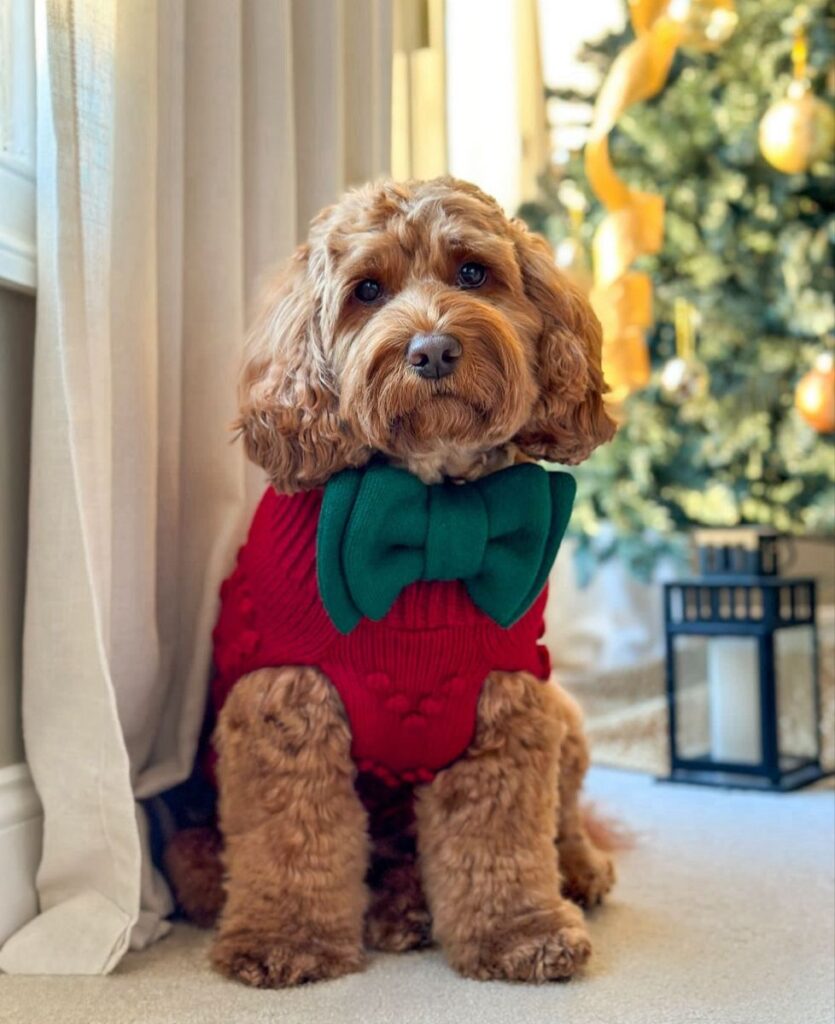
So, what should you put under the tree?
Treats, toys, or both?
For most dogs, a combination of safe toys and appropriate treats can make an excellent Christmas gift. The key is choosing items based on your dog’s age, size, chewing habits, and individual preferences.
Why Toys Make Great Christmas Gifts for Dogs: A Safe Holiday Gift Guide for Dogs
You can rarely go wrong with a well-chosen dog toy.
Toys give dogs opportunities to play, chew, explore, and interact with their owners. They can also provide mental stimulation when your dog needs something interesting to do.
However, not every toy is suitable for every dog.
A tiny toy may be dangerous for a large dog, while an extremely hard or oversized toy may be unsuitable for a small puppy.
Always choose toys designed for your dog’s size and chewing style. Inspect them regularly and replace damaged toys before pieces can be swallowed.
Self-Amusement Toys
Self-amusement toys can keep your dog occupied while you are nearby but temporarily busy.
Durable chew toys and appropriately sized rubber toys can give dogs something constructive to focus on.
These can be especially useful during the holidays when visitors, decorations, and unusual household activity create additional distractions.
Choose a toy that matches your dog’s chewing habits rather than simply selecting the strongest-looking product.
Aggressive chewers may destroy toys quickly, while puppies may need softer options designed for developing teeth.
Training Toys
Training toys can combine play with learning.
Balls, chew toys, and food-dispensing toys can be incorporated into training sessions to encourage desirable behavior.
For puppies, toys can also provide an appropriate outlet for chewing.
Instead of allowing your puppy to chew furniture, shoes, or holiday decorations, redirect them toward an appropriate toy.
This is particularly useful during Christmas because puppies naturally want to investigate new objects around the house.
If you are bringing home a puppy, our How to Train a Cavapoo Puppy guide can help you establish positive training habits from the beginning.
Comfort Toys
Some dogs love having a soft toy to carry around, cuddle with, or sleep beside.
Comfort toys can become familiar objects that help dogs relax.
However, plush toys should be chosen carefully.
If your dog immediately tears through stuffed toys and removes the filling, a plush toy may not be the best unsupervised option.
Always supervise dogs that are likely to rip apart and swallow pieces of fabric, stuffing, squeakers, or other toy components.
Interactive Toys
Interactive toys are particularly valuable because they involve your dog and often encourage movement or problem-solving.
Tug toys, appropriately sized balls, and certain puzzle toys can turn Christmas playtime into an opportunity for bonding.
Rather than simply giving your dog a toy and walking away, spend some time playing together.
That interaction can be more valuable than the toy itself.
Dogs often enjoy the attention of their favorite person just as much as the object they are playing with.
Puzzle Toys for Mental Stimulation
Puzzle toys can be another excellent Christmas option.
Some are designed to hold part of your dog’s normal meal or a small amount of an appropriate treat.
Your dog then has to interact with the toy to access the food.
This can encourage problem-solving and provide mental enrichment.
Start with an appropriately simple puzzle and increase the difficulty as your dog learns.
Remember that treats used in enrichment toys should still fit within your dog’s overall daily diet.
What About Christmas Treats?
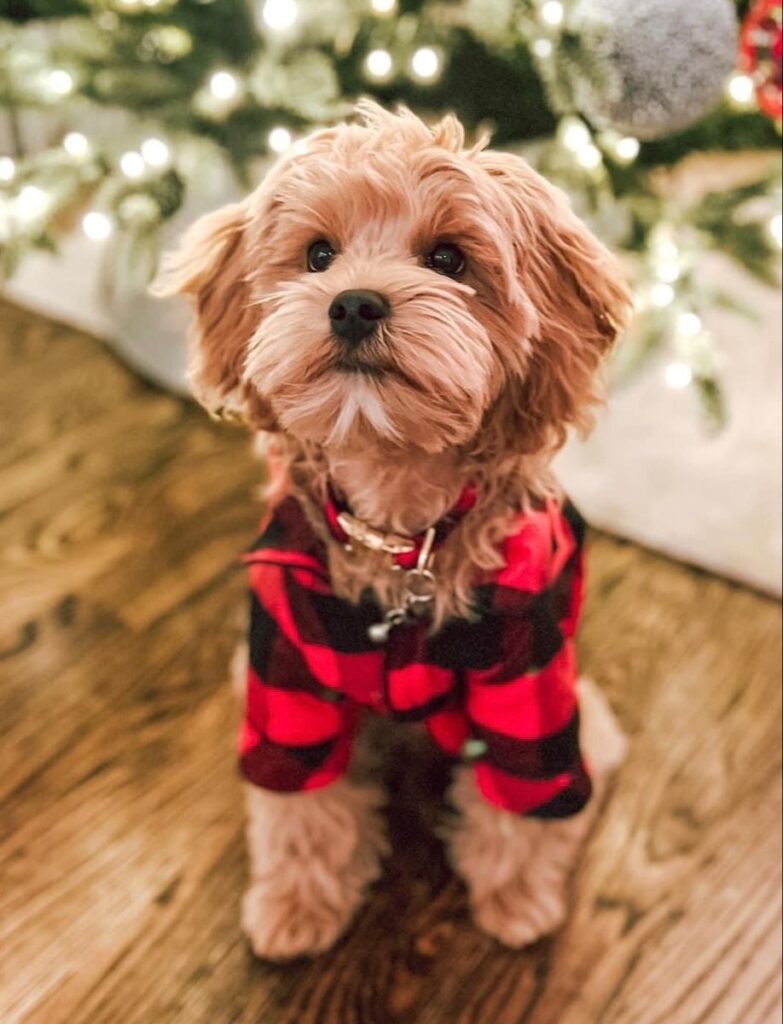
Of course, toys are only one part of the Christmas fun.
Dogs also deserve a special treat during the holidays.
However, Christmas treats should not simply be leftovers from the human dinner table.
Many foods commonly found at holiday celebrations can be dangerous for dogs.
Chocolate, alcohol, grapes, raisins, onions, garlic, and foods containing certain artificial sweeteners can pose serious risks. Cooked poultry bones can also splinter and cause injuries or digestive problems.
Instead, choose treats specifically made for dogs or ask your veterinarian which treats are appropriate for your individual pet.
Dental Treats
Dental treats can make an enjoyable addition to your dog’s Christmas stocking.
However, they should not be viewed as a replacement for proper dental care.
Your dog’s dental routine should still include appropriate brushing and professional veterinary care when necessary.
If you are interested in improving your dog’s oral hygiene, read our guide on keeping your dog’s teeth clean for more information.
Training Treats
Small training treats can be particularly useful for puppies.
Rather than giving your puppy large treats, small pieces can be used during short training sessions.
This allows you to reward good behavior without adding excessive calories.
You can use treats to reinforce behaviors such as sitting, coming when called, waiting, or leaving an object alone.
Christmas can actually be a useful time to practice these behaviors because there are more distractions around the home.
Choosing Safe Chews
Chews require particular attention.
A chew that is perfectly appropriate for one dog may be unsuitable for another.
Dogs that aggressively break off and swallow large pieces can face choking or intestinal obstruction risks.
The ASPCA recommends considering the dog’s size and chewing habits and supervising dogs while they use potentially consumable chews.
The American Kennel Club also recommends considering factors such as hardness, durability, size, and the way an individual dog chews when choosing edible chews.
When in doubt, ask your veterinarian for guidance.
How Many Treats Should You Give Your Dog?
Christmas is a special occasion, but that does not mean your dog’s entire diet should change.
Treats should remain a small part of their overall food intake.
If your dog receives several treats throughout the day, reduce other extras accordingly.
It is also worth remembering that guests may unknowingly give your dog treats.
If several family members are visiting, let everyone know what your dog is allowed to eat.
This prevents your puppy from receiving treats from five different people without anyone realizing how much they have consumed.
A Christmas Stocking for Your Dog
A dog Christmas stocking can be a fun way to combine several smaller gifts.
You could include:
- A safe chew toy
- A small interactive toy
- A few appropriate training treats
- A dental treat
- A new collar
- A leash
- A grooming brush
- A puzzle toy
- A comfortable blanket
If you have a Cavapoo, choose products according to their individual size and chewing habits rather than assuming every Cavapoo needs the same items.
Should You Choose Treats or Toys?
If you can only choose one, consider your dog’s personality.
A dog that loves playing may appreciate a new interactive toy more than another bag of treats.
A highly food-motivated dog may get enormous enjoyment from a puzzle feeder or training treats.
A puppy that is teething may benefit from appropriate chew toys.
An older dog may appreciate enrichment toys that encourage gentle mental activity.
The best Christmas gift is therefore not necessarily the most expensive one.
It is the one that matches what your dog actually enjoys.
Why Both Can Be Better
For many dogs, the ideal Christmas package includes both toys and treats.
You could give your dog a new toy for interactive play and a few appropriate treats for training.
You could also combine the two by placing a suitable food reward inside a puzzle toy.
This creates an activity rather than simply giving your dog something to consume.
It also gives you an opportunity to spend quality time together.
After all, the greatest gift you can give your dog may simply be your attention.
Keep Christmas Decorations Away From Your Dog
Christmas gifts are not the only consideration.
Holiday decorations can also create risks for curious dogs.
Tinsel, ornaments, electrical cords, candles, and other decorations can become tempting objects for puppies that like to explore with their mouths.
The ASPCA recommends keeping pets away from hazards such as unsecured Christmas trees, tinsel, candles, and certain holiday foods.
The American Kennel Club similarly recommends keeping potentially dangerous decorations and foods out of your dog’s reach.
A puppy-proofed Christmas tree area can help prevent an enjoyable holiday from becoming an emergency veterinary visit.
Remember Your Dog’s Normal Routine
Christmas can completely change the normal household routine.
There may be visitors, unfamiliar smells, loud music, wrapped presents, children running around, and people coming and going.
Some dogs enjoy the excitement.
Others can become overwhelmed.
Try to maintain your dog’s normal feeding, exercise, sleep, and bathroom schedule as much as possible.
Give your dog access to a quiet area where they can retreat when they need a break.
The American Kennel Club recommends providing dogs with a calm space and maintaining familiar routines during the holiday season.
This is particularly important for puppies that are still learning how to cope with new environments.
Christmas Gift Ideas for a New Cavapoo Puppy
If your Christmas gift is for a Cavapoo puppy, focus on practical items that make their first months easier.
A good puppy gift package could include:
- A comfortable puppy bed
- Age-appropriate chew toys
- Small training treats
- A food puzzle
- A collar and ID tag
- A puppy-safe leash
- A grooming brush
- A washable blanket
- A suitable crate
- Interactive toys for supervised play
You can learn more about preparing for your new puppy through our Puppy Buying Checklist.
Our Cavapoo Care Guide is also useful for understanding the everyday responsibilities that come with raising a Cavapoo.
Final Thoughts
So, should Santa Paws bring treats, toys, or both?
Both can be fantastic choices.
The important thing is to choose gifts that are appropriate for your dog’s size, age, chewing habits, dietary needs, and personality.
A new toy can provide exercise and mental stimulation.
A small treat can reinforce training and add a little excitement to the day.
But the best Christmas experience combines those gifts with something that cannot be purchased in a store: quality time with your dog.
Play together, practice training, take a winter walk, and give your pup plenty of attention.
Just remember to keep potentially dangerous foods, decorations, and gifts safely out of reach.
For additional holiday safety information, the [ASPCA Holiday Safety Guide]https://www.aspca.org/pet-care/general-pet-care/holiday-safety-tips and [American Kennel Club Holiday Safety Guide]https://www.akc.org/expert-advice/home-living/4-tips-safe-stress-free-holiday/ are useful resources.
Continue Learning About Cavapoos
If you are preparing for a Cavapoo puppy, explore these related resources:
- Available Cavapoo Puppies
- Cavapoo Breed Guide
- Cavapoo Care Guide
- How to Train a Cavapoo Puppy
- Puppy Buying Checklist
- Questions to Ask Before Buying a Cavapoo Puppy
- Adoption Process
- Health Guarantee
- Shipping & Delivery
- Frequently Asked Questions
This article provides general educational information. Treat and toy choices should be based on your dog’s individual needs. When you are unsure whether a food, chew, or toy is appropriate, consult your veterinarian.
