
Cavapoo Care Guide
Raising Puppies in Apartments: 7 Tips for a Happy, Healthy Start
Oct
Raising a puppy in an apartment can be a rewarding experience when you plan for your dog’s daily needs. Although you may not have a private backyard, you can still provide a puppy with exercise, training, companionship, and a comfortable place to grow (Raising Puppies in Apartments). The secret is to create consistent routines and make the most of the space you have.
Cavapoos can be a good fit for some apartment households because they are generally companion-oriented dogs and often have a manageable size. However, every puppy has an individual personality, energy level, and training needs. Before bringing one home, consider your schedule, building rules, access to outdoor spaces, and ability to provide daily attention.
If you’re researching Cavapoo Puppies For Sale Near Me, use these seven practical tips to prepare your home and help your new puppy settle in successfully.
Raising Puppies in Apartments
1. Research the Right Puppy for Your Lifestyle
Choosing a puppy involves more than looking at breed size or appearance. Consider how much exercise the dog needs, how much grooming you can manage, how long the puppy will be alone, and whether you have time for daily training.
Small and medium-sized dogs may be convenient for apartment living, but size alone does not determine whether a dog will thrive in a smaller home. Some larger dogs adapt well to apartments when their exercise and enrichment needs are met, while energetic smaller dogs can become restless without enough activity.
Cavapoos are a cross between Cavalier King Charles Spaniels and Poodles. They are often affectionate and people-oriented, but their temperament, adult size, coat, and activity level can vary. Some may also develop separation-related distress or bark when they hear noises in a shared building.
Before choosing a puppy, ask yourself:
- Can I provide regular walks, playtime, and short training sessions?
- Will someone be available for potty breaks throughout the day?
- Does my apartment allow dogs, and are there breed or weight restrictions?
- Can I afford food, grooming, routine veterinary care, and unexpected expenses?
- Do I have a plan for workdays, travel, and emergencies?
Review our Cavapoo Breed Guide to learn more about the breed’s general characteristics before deciding whether a Cavapoo suits your household.
2. Puppy-Proof Your Apartment Before Arrival
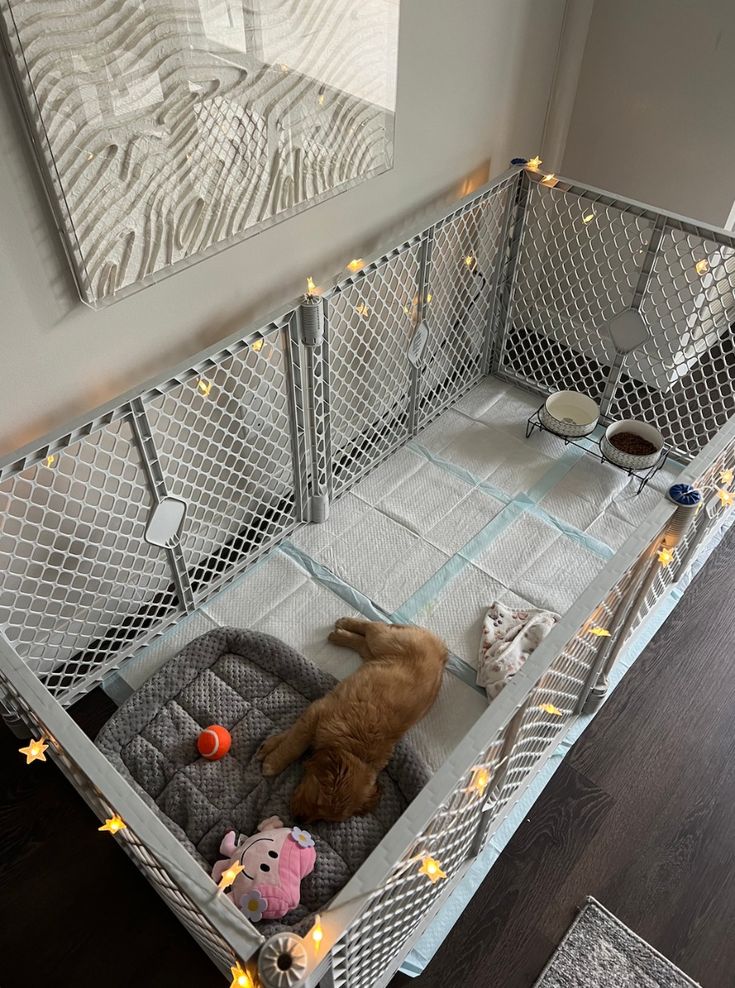
A puppy explores the world with its nose and mouth. Preparing your apartment before arrival can reduce accidents, protect your belongings, and give your puppy a safer place to learn.
Start by putting electrical cords, cleaning products, medications, small objects, and other potential hazards out of reach. Check houseplants for pet safety, and keep foods that may be harmful to dogs securely stored. Use baby gates or a puppy pen to limit access to rooms that are not ready for a curious new resident.
Create a designated puppy area with:
- A comfortable bed or resting space
- Fresh water and appropriate food bowls
- Safe, age-appropriate chew toys
- A crate, if you plan to introduce crate training positively
- A washable mat or clearly defined potty area, if needed
Keep the puppy’s space away from dangerous cords, unstable furniture, and busy doorways. If you have a balcony, never assume it is safe simply because it has railings. Check for gaps, climbing hazards, and other risks, and supervise your puppy whenever the balcony is in use.
For more preparation advice, visit our guide to Puppy-Proofing for Cavapoos.
3. Establish a Consistent Daily Routine
Puppies learn through repetition. A predictable routine helps them understand when to eat, go potty, play, train, and rest.
Choose regular meal times and take your puppy to the designated toilet area after waking, eating, drinking, and playing. Young puppies need frequent opportunities to relieve themselves, so apartment owners should plan around the time it takes to reach an outdoor potty spot.
An elevator ride or several flights of stairs can make an urgent potty break more complicated. Keep a leash, waste bags, and other essentials near the door so you can leave quickly. If you use an indoor potty option, place it in a consistent location and follow one clear training approach.
Accidents are normal during house training. Clean them thoroughly, avoid punishment, and reward your puppy when they use the correct place. If progress is difficult, ask your veterinarian or a qualified trainer for guidance.
A routine should also include quiet time. Puppies need plenty of sleep, and a busy apartment can make it harder for them to settle if there is constant noise or activity. Provide a calm resting area where your puppy can relax without being disturbed.
The American Kennel Club explains practical approaches to potty training a dog in an apartment.
4. Provide Daily Exercise and Mental Enrichment
Living in an apartment does not eliminate a puppy’s need for physical activity. However, exercise should be appropriate for the puppy’s age, health, development, and individual energy level.
Short walks, gentle play, and brief training sessions can help your puppy explore the world without becoming overtired. As your puppy grows, your veterinarian can help you determine suitable activity levels and when public spaces are appropriate based on vaccination status and local disease risks.
You can also provide enrichment indoors. Try hiding a few pieces of your puppy’s daily food for a supervised sniffing game, practicing simple cues, or offering a safe food puzzle. Rotate toys to maintain interest, and give your puppy opportunities to investigate new sights, sounds, and textures gradually.
Do not rely on long walks alone to tire out a young puppy. Rest is essential, and high-impact or repetitive exercise may not be suitable for every growing dog.
For Cavapoo-specific ideas, read our guide to Cavapoo Exercise. You can also explore the Cavapoo Care Guide for everyday care considerations.
5. Socialize Your Puppy Thoughtfully
Apartment life exposes puppies to a variety of sounds and experiences, including elevators, hallway footsteps, delivery people, traffic, neighboring dogs, and unfamiliar visitors. Introducing these experiences gradually can help your puppy become more comfortable with everyday life.
Use calm, positive experiences rather than forcing your puppy to approach every person or dog. Reward relaxed behavior, allow your puppy to observe from a comfortable distance, and give them a way to retreat if they seem worried.
Socialization does not mean allowing every dog to greet your puppy. Choose suitable interactions and follow your veterinarian’s advice about vaccination and disease prevention before visiting dog parks or other high-traffic areas.
Teach polite leash walking and calm greetings. In shared spaces, keep your puppy under control, avoid blocking hallways, clean up waste promptly, and respect neighbors who may not want to interact with your dog.
These habits help your puppy learn that the apartment building and its surroundings are places to navigate calmly and safely.
6. Teach Basic Training and Manage Barking
Training is especially valuable in apartments because neighbors share walls, hallways, and outdoor areas. You do not need a large room to teach essential skills. Short sessions in your living room can build good habits over time.
Start with simple cues such as their name, come, sit, wait, and leave it. Reward the behavior you want to see, and keep sessions brief enough that your puppy stays interested.
Barking can happen when a puppy hears unfamiliar noises, wants attention, feels anxious, or has excess energy. Rather than shouting, first try to understand what triggers the behavior. You can reduce exposure to upsetting sounds where practical, reward calm responses, and teach your puppy to settle on a mat.
Also practise short, gradual periods of being alone. Avoid leaving a very young puppy alone for longer than they can comfortably manage, and arrange suitable care or potty breaks when necessary. If barking or distress continues, consult a qualified, reward-based trainer or your veterinarian.
Professional classes can help you develop consistent techniques, but daily practice at home is what reinforces those lessons. The American Kennel Club’s training guidance offers additional advice for building useful habits.
7. Plan for Grooming, Health Care, and Ongoing Costs
A happy apartment puppy needs more than a bed and a few toys. Before bringing a dog home, budget for food, routine veterinary visits, parasite prevention recommended by your veterinarian, grooming, training, supplies, and emergency care.
Cavapoos may have wavy, curly, or straighter coats, and grooming requirements vary. Many need regular brushing and professional grooming to prevent tangles and mats. Their coat should not be assumed to be hypoallergenic, and shedding can differ from one dog to another.
Keep up with veterinary appointments and ask your veterinarian about vaccinations, parasite prevention, dental care, nutrition, and age-appropriate exercise. Monitor appetite, energy, stool, and behavior, and seek professional advice if you notice concerning changes.
Consider how your apartment setup will work as your puppy grows. You may need to adjust the bed, crate, gates, feeding arrangements, or daily schedule. A flexible plan makes it easier to meet your dog’s changing needs.
Are Cavapoos Good Apartment Dogs?
Cavapoos may adapt well to apartment living when their owners provide companionship, regular exercise, training, grooming, and opportunities to go potty. Their suitability depends on the individual puppy and the owner’s lifestyle—not simply on the breed name or the size of the apartment.
People who work long hours away from home should arrange appropriate breaks and companionship, especially during puppyhood. Anyone living in an apartment should also check pet policies before choosing a dog.
If you are considering a puppy from Atlantic Cavapoo Puppies, start by reviewing our Available Cavapoo Puppies page and learning about the Adoption Process. Take time to ask questions, understand the arrangements, and decide whether a puppy fits your household.
Families searching for Cavapoo Puppies For Sale In Tennessee, Cavapoo Puppies For Sale In Ohio, or Cavapoo Puppies For Sale In Florida should also consider travel arrangements, local veterinary access, and the practical details of settling a new puppy into an apartment. You can explore our Tennessee Cavapoo puppies page, Ohio Cavapoo puppies page, and Florida Cavapoo puppies page for location-specific information.
Frequently Asked Questions About Raising Apartment Puppies
Can a puppy be happy without a backyard?
Yes. A backyard is convenient, but it is not the only way to meet a dog’s needs. Regular outdoor breaks, walks, play, training, enrichment, and companionship can support a happy life in an apartment.
How often should I take an apartment puppy outside?
Young puppies generally need frequent potty opportunities, especially after waking, eating, drinking, and playing. The exact schedule depends on age and individual needs. Plan for frequent breaks rather than expecting a young puppy to wait for long periods.
Is crate training necessary for apartment puppies?
Crate training is optional, but a properly introduced crate can provide a safe resting place and support a house-training routine. It should never be used as a substitute for exercise, social interaction, or timely potty breaks.
How can I reduce barking in an apartment?
Identify what triggers the barking, provide appropriate activity and rest, reward quiet behavior, and gradually help your puppy become comfortable with common sounds. Seek professional advice if barking is persistent or appears related to fear or separation distress.
Can Cavapoos live in small apartments?
Some Cavapoos can adapt well to small apartments, provided their physical, social, grooming, and training needs are met. Consider the individual puppy’s temperament and energy level before making a decision.
Should I take my puppy to a dog park?
Not necessarily. Dog parks are not suitable for every puppy, and vaccination status, disease exposure, temperament, and the quality of dog interactions matter. Ask your veterinarian when public dog areas are appropriate and consider quieter alternatives for early social experiences.
Final Thoughts
Raising happy apartment puppies is about preparation, consistency, and understanding your dog’s needs. A puppy can thrive without a large backyard when you provide a safe home, a predictable routine, appropriate exercise, positive training, and regular veterinary care.
Before bringing a Cavapoo home, make sure your schedule and budget can support puppyhood as well as adult-dog care. Thoughtful preparation gives you and your puppy a stronger foundation for a rewarding life together.
Continue Learning About Cavapoos
- Available Cavapoo Puppies
- Cavapoo Breed Guide
- Cavapoo Care Guide
- Cavapoo Buying Guide
- Cavapoo Puppies by State
- Cavapoo Training and Nutrition
- Puppy-Proofing for Cavapoos
- Cavapoo Exercise
- Health Guarantee
- Shipping and Delivery
- Adoption Process
- Frequently Asked Questions
