
Cavapoo Care Guide
Play Time With Your Cavapoo Puppy: Fun Games for Exercise, Training & Bonding
Oct
Play Time With Your Cavapoo Puppy
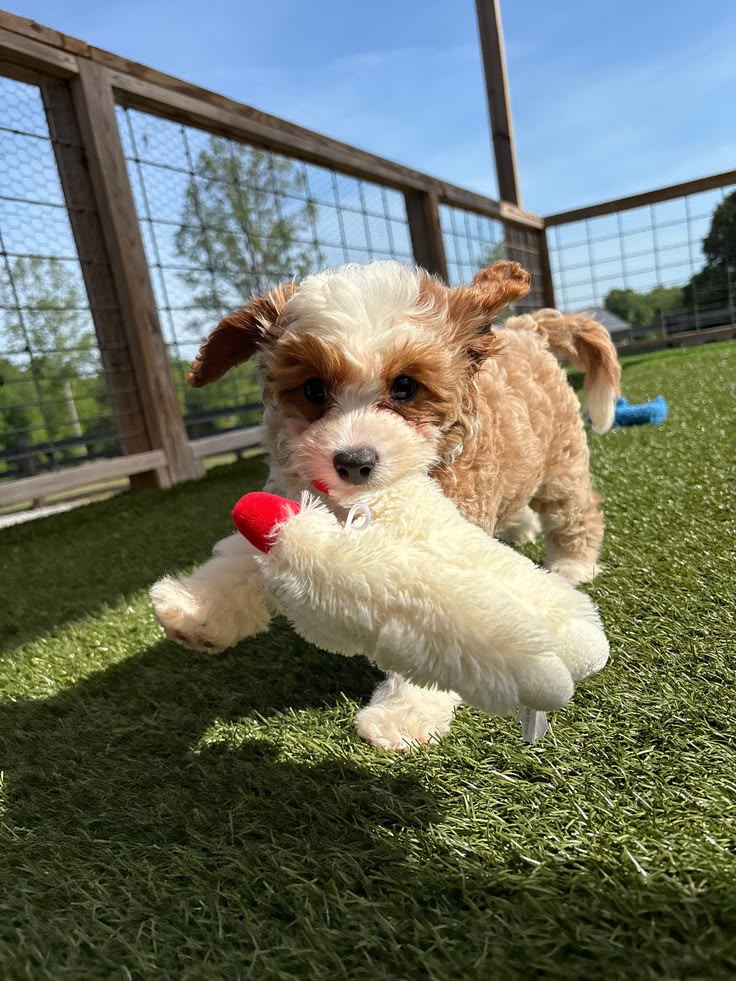
Bringing a Cavapoo puppy home means welcoming a playful, curious companion into your family. One of the best ways to build a strong relationship with your puppy is simply to spend time playing together.
Play is much more than entertainment. Appropriate games can give your puppy opportunities to move, explore, think, practice communication, learn useful behaviors, and develop confidence. For a young Cavapoo, even a few minutes of structured play can become an excellent learning experience.
If you have been searching for Cavapoo Puppies For Sale Near Me, it is worth thinking beyond the day you bring your puppy home. Choosing a puppy is only the beginning. The routines, training, enrichment, and positive interactions you provide afterward help shape your puppy’s everyday experience.
The best games are not necessarily complicated. Fetch, gentle tug, scent games, short training sessions, hide-and-seek, food puzzles, and simple obstacle activities can all become part of a Cavapoo puppy’s routine when they are appropriate for the puppy’s age, development, health, and temperament.
Why Play Is Important for a Cavapoo Puppy
Cavapoos are companion dogs that often enjoy spending time with their people. Play gives you an opportunity to use that natural interest in interaction while teaching your puppy how to participate appropriately.
A good play session can provide several types of enrichment at once.
Physical games encourage age-appropriate movement. Training games encourage your puppy to think and respond to cues. Interactive games strengthen communication between you and your dog. Scent-based activities encourage natural investigation and problem-solving.
Play can also help prevent boredom. A puppy who receives appropriate mental and physical enrichment has more opportunities to practice desirable behaviors rather than constantly looking for something interesting to do.
However, more activity is not always better. Puppies need substantial sleep, and young dogs should not be pushed into excessive jumping, repetitive high-impact exercise, or long sessions simply because they appear excited.
Keep puppy play sessions short, positive, and flexible.
1. Play Fetch With Your Cavapoo
Fetch is one of the simplest games to introduce, although puppies do not automatically understand the complete game.
Start in a safe, relatively small area with a lightweight puppy-appropriate toy. Roll or gently toss the toy a short distance rather than throwing it far.
When your puppy shows interest in the toy, encourage him or her to investigate it. If the puppy picks it up, use enthusiasm to encourage a return toward you.
When your puppy comes back, reward the behavior with praise or another appropriate reward.
You can eventually introduce cues such as:
- Come
- Drop it
- Wait
- Take it
The goal is not to create a perfect retrieve immediately. The goal is to make returning to you rewarding.
Keep Fetch Puppy-Friendly
Young puppies are still developing physically. Avoid repeatedly launching toys high into the air or encouraging your puppy to make large jumps, sharp turns, or long sprints.
A short game of rolling a toy across the floor can be more appropriate for a young puppy than an intense game of long-distance fetch.
As your Cavapoo matures, you can gradually adjust games according to the dog’s physical development and your veterinarian’s recommendations.
2. Try a Simple Indoor Obstacle Course
You do not need a huge backyard to make play interesting.
A hallway, puppy-safe room, or open section of your home can become a simple enrichment area.
For example, you might arrange safe objects that allow your puppy to walk around, investigate, or follow you through a simple route.
You can use everyday household items creatively, but safety should come first.
Avoid unstable furniture, sharp edges, slippery surfaces, high jumps, or anything that could collapse if your puppy bumps into it.
Instead of creating an obstacle course that requires jumping over objects, focus on low-impact activities such as:
- Walking around a chair
- Following you between safe objects
- Walking through a puppy-safe tunnel
- Going onto a stable low surface when appropriate
- Following a treat or toy around a simple route
- Finding a toy at the end of the course
The objective is mental engagement and controlled movement—not athletic competition.
3. Play Tug-of-War
Tug can be a fantastic interactive game when it is taught with clear boundaries.
Choose a suitable tug toy and invite your puppy to take hold of it. Keep the movement controlled and avoid jerking the puppy’s neck or pulling excessively hard.
During the game, you can practice cues such as take it and drop it.
If your puppy releases the toy when asked, reward that cooperation and resume the game.
This teaches an important lesson: releasing a toy does not necessarily mean the fun is over.
What About the Myth That Tug Makes Dogs Aggressive?
Playing tug does not automatically make a puppy aggressive or dominant.
What matters is how the game is managed.
Do not encourage your puppy to bite your hands, clothing, furniture, or other inappropriate objects. If teeth repeatedly make contact with your skin during an overly excited game, calmly pause the interaction and redirect your puppy toward an appropriate toy.
The American Veterinary Society of Animal Behavior supports reward-based training rather than outdated dominance-based approaches. For training guidance, you can review resources from AVSAB.
4. Play Hide-and-Seek
Hide-and-seek can become an excellent bonding and recall game.
Ask someone to help supervise your puppy while you move only a short distance away. Call your puppy’s name in an enthusiastic voice.
When your puppy finds you, celebrate the successful response.
You can gradually make the game more interesting by hiding behind a doorway or around a safe corner.
This game gives your puppy a reason to pay attention to where you are while making coming to you rewarding.
It can also become a useful foundation for practicing recall.
Never turn recall into something consistently negative. If your puppy learns that coming when called always means the end of fun, the behavior can become less rewarding.
5. Turn Training Into a Game
Training does not have to feel like a formal lesson.
Some of the best puppy games are simply short training exercises mixed with praise, play, and rewards.
You can practice:
Sit: Ask for a sit before giving a toy.
Wait: Ask your puppy to pause briefly before releasing the toy.
Come: Move a short distance away and reward your puppy for coming to you.
Drop it: Practice releasing a toy during a calm tug session.
Touch: Teach your puppy to touch your hand with the nose.
Find it: Toss a few pieces of appropriate food onto the floor and encourage your puppy to locate them.
Keep sessions short. Puppies have limited attention spans, and ending while your puppy is still engaged can help keep training enjoyable.
For more guidance, see our Cavapoo Care Guide and How to Raise a Cavapoo Puppy.
6. Make a Simple “Find It” Game
Cavapoos can benefit from activities that encourage them to use their senses.
One easy game is “find it.”
Start by placing a favorite toy or a small amount of an appropriate food reward somewhere easy to locate. Encourage your puppy to investigate.
Once your puppy understands the game, you can gradually make the hiding locations more challenging while keeping the activity safe.
This type of enrichment can be especially useful when outdoor activity is limited by weather or other circumstances.
You can also use commercially designed puzzle feeders or food toys appropriate for your puppy’s size and chewing habits.
Always supervise new toys and remove anything that becomes damaged or small enough to swallow.
7. Play With a Toy Rotation
Your puppy does not necessarily need dozens of toys available at once.
Instead, consider rotating several safe toys.
For example, you might have:
- A soft interactive toy
- A suitable chew toy
- A tug toy
- A food puzzle
- A ball or retrieve toy
After several days, rotate some toys so previously stored items become interesting again.
This can help keep the toy collection more engaging without constantly buying new products.
Inspect toys regularly. Puppies can be enthusiastic chewers, and damaged toys may become a swallowing or choking hazard.
8. Create a Calm Indoor Play Session
Not every play session needs to involve running.
This is particularly important with young puppies.
A calm session could include sitting on the floor with your puppy, offering a suitable toy, practicing gentle handling, rewarding calm behavior, and allowing your puppy to explore a safe area.
You can also practice simple grooming-related handling in tiny increments.
Touch a paw gently, reward calm behavior, and stop. Later, you can work on ears, brushing, collar handling, and other everyday experiences.
These interactions can help your puppy learn that handling does not always mean something unpleasant is about to happen.
Our Cavapoo Puppy Socialization Guide provides additional guidance on introducing puppies to new experiences positively.
9. Play Outside When Conditions Are Appropriate
Outdoor play can provide valuable sensory enrichment, but puppies should not simply be exercised as much as possible.
Age, vaccination status, health, weather, terrain, and individual development all matter.
Before taking a young puppy into areas where unfamiliar dogs or contaminated surfaces may present an infectious-disease risk, discuss appropriate precautions with your veterinarian.
When outdoor play is appropriate, your puppy can explore safe surfaces, investigate smells, practice short training sessions, and play with you.
Avoid very hot pavement, extreme temperatures, strenuous repetitive exercise, and activities that force a puppy to continue when tired.
For additional ideas, read our guide to Fun Activities for Dogs With Lots of Energy.
10. Let Your Cavapoo Puppy Learn How to Settle
One of the most overlooked parts of play is knowing when to stop.
A puppy should not learn that every waking moment has to involve entertainment.
After a short play session, provide an opportunity to drink, potty if needed, and rest.
You can reward calm behavior by giving your puppy a suitable chew or allowing quiet time in a comfortable, secure area.
Learning to transition from excitement to relaxation is an important life skill.
A healthy routine balances:
Play → training → exploration → potty → rest
rather than keeping a puppy continuously stimulated.
How Long Should You Play With a Cavapoo Puppy?
There is no single number of minutes that is perfect for every Cavapoo puppy.
Age, health, temperament, environment, and the type of activity all matter.
A five-minute training game is very different from five minutes of intense chasing.
Watch your puppy rather than following a rigid exercise target.
Signs that it is time for a break can include becoming unusually distracted, losing interest, lying down, becoming excessively mouthy, struggling to focus, or simply appearing tired.
Puppies need plenty of sleep. Rest is part of healthy development, not a sign that your puppy is bored.
Play Should Never Become Overstimulation
Some puppies become more excited the longer a game continues.
Instead of interpreting this as a signal to keep going, recognize when excitement is becoming excessive.
If your puppy starts biting clothing, jumping repeatedly, barking excessively, grabbing hands, or struggling to respond to familiar cues, calmly reduce the stimulation.
You can offer a quiet activity and give your puppy an opportunity to settle.
The objective is not to exhaust your puppy. It is to provide appropriate physical activity, mental enrichment, and positive interaction.
Play Time Can Strengthen Your Bond
One of the biggest benefits of playing with your Cavapoo is not physical exercise.
It is the relationship you are building.
Your puppy learns that you are a source of good experiences, guidance, games, rewards, and security.
At the same time, you learn how your puppy communicates.
You may discover which toys your Cavapoo prefers, which games create too much excitement, how long your puppy can concentrate, and which activities help your dog relax.
That information becomes valuable as your puppy grows.
Choosing a Cavapoo Is Only the Beginning
If you are researching Cavapoo Puppies For Sale Near Me, remember that responsible puppy ownership extends well beyond finding a puppy.
Before bringing a puppy home, think about veterinary care, nutrition, grooming, training, socialization, exercise, enrichment, safe transportation, and the time your household can realistically provide.
If you are considering Cavapoo Puppies For Sale In Tennessee, our Tennessee page can help you explore the available information and the process of bringing a Cavapoo into your home.
Families researching Cavapoo Puppies For Sale In Ohio can also review our Ohio-specific Cavapoo information before making a decision.
Likewise, if you are researching Cavapoo Puppies For Sale In Florida, consider Florida’s climate and the importance of managing heat, outdoor exercise, hydration, and parasite prevention as part of your puppy-care planning.
You can also visit our main Available Cavapoo Puppies page to learn more about current puppies and the next steps.
A Simple Weekly Play Routine for Your Cavapoo
You do not need to schedule elaborate activities every day.
A simple routine might include short sessions such as:
Monday: Fetch and basic recall practice.
Tuesday: Find-it scent game and gentle handling.
Wednesday: Short tug session with drop-it practice.
Thursday: Indoor enrichment or a simple obstacle route.
Friday: Training game involving sit, wait, touch, and come.
Saturday: Safe outdoor exploration and play.
Sunday: Gentle interactive play followed by a calm rest period.
The exact routine should be adapted to your puppy’s age, health, energy level, and veterinarian’s recommendations.
Frequently Asked Questions About Playing With a Cavapoo Puppy
What are the best games to play with a Cavapoo puppy?
Fetch, gentle tug, hide-and-seek, find-it games, short training sessions, food puzzles, and safe exploration can all provide useful enrichment. Choose activities based on your puppy’s age, development, health, and temperament.
Is fetch good exercise for a Cavapoo puppy?
Fetch can provide movement and mental engagement, but young puppies should not be pushed into excessive running, jumping, sharp turns, or repetitive high-impact activity. Keep games short and age appropriate.
Can I play tug-of-war with my Cavapoo?
Yes. Tug can be an enjoyable interactive game when played with an appropriate toy and clear boundaries. Teaching cues such as “take it” and “drop it” can make the game a useful training opportunity.
Does tug-of-war make Cavapoos aggressive?
Tug does not automatically cause aggression. The game should be managed appropriately, and puppies should be taught to interact with toys rather than hands, clothing, or other inappropriate objects.
How much play does a Cavapoo puppy need?
There is no universal number of minutes that applies to every puppy. Age, health, development, temperament, and activity type all matter. Young puppies also need substantial sleep and recovery time.
Can Cavapoos play indoors?
Yes. Indoor play can include training games, gentle fetch, hide-and-seek, scent games, puzzle toys, and safe exploration.
Can I make an obstacle course for my puppy?
Yes, but keep it low-impact and puppy-safe. Avoid unstable objects, high jumps, slippery flooring, and activities that place unnecessary stress on developing joints.
How can I mentally stimulate my Cavapoo?
Try scent games, food puzzles, short training sessions, toy searches, new safe environments, and controlled exploration.
What should I do if my puppy becomes too excited during play?
Stop or reduce the intensity of the game and give your puppy an opportunity to settle. A calm chew or quiet rest period can help your puppy transition from excitement to relaxation.
Should I play with my puppy before bedtime?
A short, calm interaction may be appropriate, but highly stimulating games immediately before bedtime may make it harder for some puppies to settle. A predictable evening routine can help.
Can play help with Cavapoo training?
Absolutely. Many behaviors can be taught through play, including coming when called, releasing toys, waiting briefly, responding to a name, and choosing appropriate objects.
Is running good exercise for a young Cavapoo?
Young puppies should not be pushed into strenuous or repetitive running. Their exercise needs change as they mature. Ask your veterinarian about appropriate activity for your puppy’s age and development.
Final Thoughts: Make Play Part of Your Cavapoo’s Everyday Life
Play is one of the easiest ways to make puppyhood enjoyable while helping your Cavapoo learn important skills.
You do not need expensive equipment or a huge yard. A toy, a few minutes of your attention, and a safe environment can be enough to create a valuable learning opportunity.
Try fetch. Practice tug with boundaries. Hide behind a doorway and call your puppy. Set up a simple indoor enrichment activity. Turn basic training into a game. Then give your puppy time to rest.
The most important part is that play remains safe, positive, age appropriate, and enjoyable for both of you.
And if your journey begins with searching for Cavapoo Puppies For Sale Near Me, remember that the real adventure starts after your puppy comes home.
Continue Learning About Cavapoos
Ready to learn more about raising and caring for your Cavapoo?
- Available Cavapoo Puppies
- Cavapoo Breed Guide
- Cavapoo Care Guide
- Cavapoo Buying Guide
- Cavapoo Puppies by State
- Puppy Buying Checklist
- Questions to Ask Before Buying a Cavapoo Puppy
- Health Guarantee
- Shipping & Delivery
- Cavapoo Adoption Process
- Frequently Asked Questions
