
Cavapoo Buying Guide
Preparing for a Cavapoo Puppy: Complete New Puppy Checklist
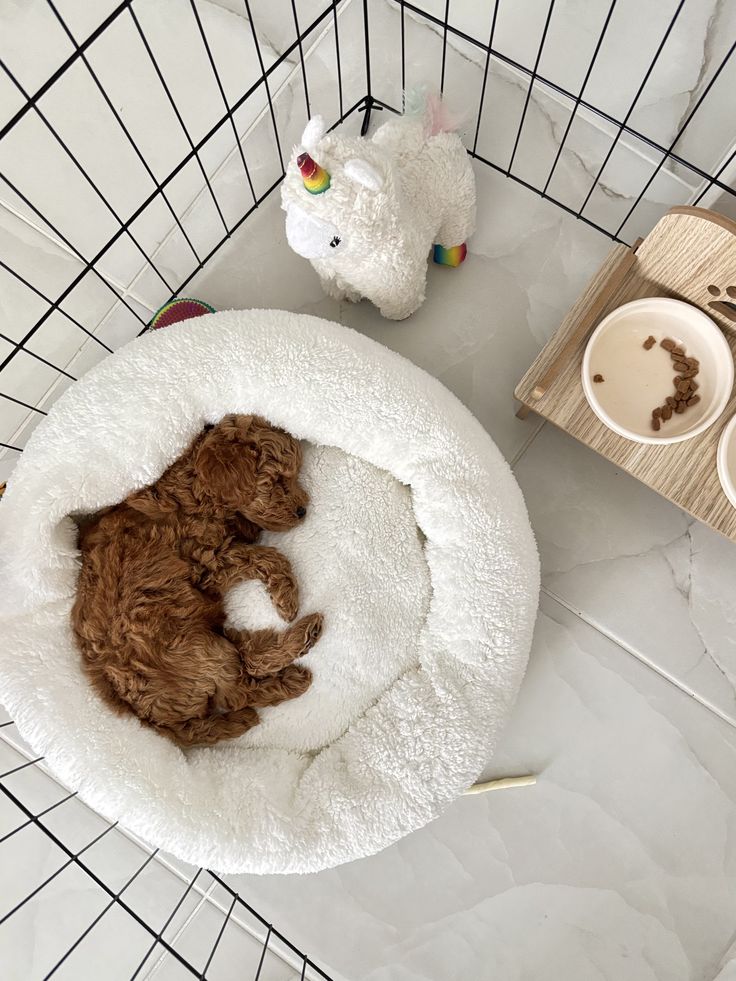
Oct
Bringing home a Cavapoo puppy is exciting, but preparing for your new companion should begin before the puppy arrives (preparing for a Cavapoo puppy).
A new puppy doesn’t need an enormous collection of expensive products. What they really need is a safe environment, appropriate food and water, a comfortable place to sleep, suitable toys, basic grooming supplies, identification, and a predictable routine.
If you’re researching Cavapoo Puppies For Sale Near Me, preparing your home ahead of time can make those first few days much easier for both you and your puppy.
Your Cavapoo will be experiencing a completely new environment. New smells, sounds, people, rooms, routines, and experiences can be overwhelming. Having the essentials ready means you can concentrate on helping your puppy settle in rather than rushing to the store for something you forgot.
This complete Cavapoo puppy preparation checklist covers what to buy, what to prepare, and what to consider before your puppy comes home.
What Do You Need Before Bringing Home a Cavapoo Puppy?
Before your puppy arrives, try to have these essentials ready:
- Food and water bowls
- Appropriate puppy food
- A properly sized crate or safe sleeping area
- Comfortable puppy bedding
- Puppy-safe toys and chew items
- Collar or harness
- Leash
- Identification information
- Waste bags and potty supplies
- Grooming supplies
- Puppy-safe cleaning products
- Basic puppy-proofing supplies
- A secure area for rest and play
- Veterinary contact information
- A plan for feeding, potty breaks, sleep, and training
You don’t need to purchase everything available in a pet store.
Start with practical essentials and add items as you learn what your individual Cavapoo likes and needs.
1. Food and Water Bowls
Food and water bowls are some of the simplest items on your shopping list, but choosing practical bowls can make everyday puppy care easier.
Look for bowls that are stable, easy to clean, and appropriately sized for a small puppy.
Stainless steel is a practical choice because it is durable and generally easy to wash.
You should also consider where the bowls will be placed.
Choose an area where your puppy can eat and drink without being constantly interrupted by household traffic.
Keep Fresh Water Available
Your Cavapoo should have access to fresh water appropriate for their age, health, and daily routine.
Puppies can be active and may need frequent opportunities to drink.
Keep the water bowl clean and refresh the water regularly.
Your veterinarian can provide individualized guidance if your puppy has a medical condition that requires a specific feeding or hydration routine.
What About the Food?
Ideally, find out what food your puppy has already been eating before bringing them home.
A sudden change in diet can contribute to digestive upset.
If you want to transition to a different food, make the change gradually and discuss appropriate nutrition with your veterinarian.
Puppies have different nutritional requirements from adult dogs, so choose a food appropriate for puppy growth rather than simply feeding an adult dog formula.
2. A Collar, Harness, and Leash
Your Cavapoo will eventually need to leave the house for walks, veterinary visits, training, and other appropriate outings.
A properly fitted collar or harness and a suitable leash should therefore be part of your preparation.
For a young Cavapoo, fit is particularly important.
Your puppy will grow, so check the fit regularly rather than assuming the same collar or harness will remain appropriate for months.
Collar or Harness?
Both can have a place in your puppy’s life.
A collar can carry identification information, while a properly fitted harness can provide another option for leash walking.
The right choice depends on your puppy, the equipment’s fit, your training goals, and your veterinarian or trainer’s recommendations.
Avoid equipment that is excessively tight, restrictive, or uncomfortable.
Our Cavapoo Care Guide provides additional information about everyday puppy care.
3. Identification
Identification is something you should think about before your puppy comes home.
A collar or harness can carry an identification tag with appropriate contact information.
You should also discuss permanent identification, such as microchipping, with your veterinarian.
Make sure your contact information stays current if your phone number, address, or other details change.
Identification is particularly important because puppies can be surprisingly quick and curious.
A door accidentally left open or a gate that isn’t fully secured can create an opportunity for a puppy to wander away.
4. Puppy-Safe Toys
Your Cavapoo will need appropriate ways to play, explore, chew, and stay mentally engaged.
You don’t need dozens of toys immediately.
A small collection of appropriately sized, durable, puppy-safe toys is a better starting point.
Consider having a combination of:
- Puppy-safe chew toys
- Appropriate rubber toys
- Interactive food toys
- Soft toys designed for dogs
- Simple enrichment toys
- Toys suitable for supervised play
Choose Toys Carefully
A toy should be appropriate for your puppy’s size, chewing style, and developmental stage.
Avoid toys that can easily break into pieces, create sharp edges, or become small enough to swallow.
Inspect toys regularly.
Even a toy that was perfectly safe when new can become unsafe after significant chewing or damage.
Replace damaged toys rather than waiting until a piece breaks off.
Don’t Teach Your Puppy to Steal Household Items
It can be tempting to give a puppy an old sock or shoe because it seems harmless.
Unfortunately, this can teach your puppy that household belongings are acceptable toys.
Instead, redirect your puppy toward an appropriate dog toy.
If your puppy grabs something they shouldn’t have, calmly trade it for an appropriate item rather than turning the situation into an exciting chase.
5. A Comfortable Sleeping Area
Your Cavapoo needs a safe place where they can rest undisturbed.
This could include a properly introduced crate, puppy bed, pen, or another secure sleeping area.
Puppies sleep frequently, so don’t underestimate the importance of creating a quiet place for naps.
A comfortable bed should be appropriately sized, washable, and easy for your puppy to get onto and off.
You can learn more in our Cavapoo Dog Bed Guide.
Should You Use a Crate?
A crate can be a useful part of puppy management and house training when introduced positively.
The goal is to make the crate a safe and comfortable place rather than a punishment area.
Start gradually.
Allow your puppy to investigate the crate voluntarily, reward calm behavior, and build up the amount of time spent inside according to your puppy’s age and individual needs.
Never use the crate as a place to punish your puppy.
Our Cavapoo Comfortable at Home Guide includes additional advice for creating a secure home environment.
6. Puppy-Proof Your Home
Puppy-proofing may be one of the most important things you do before your Cavapoo arrives.
Puppies investigate the world with their mouths, noses, paws, and teeth.
That means ordinary household objects can become potential hazards.
Walk through your home from a puppy’s perspective.
Look for:
- Electrical cords
- Small objects
- Loose strings
- Plastic packaging
- Medication
- Cleaning products
- Food
- Trash
- Houseplants
- Children’s toys
- Small batteries
- Accessible chemicals
- Open cabinets
- Unsecured doors
- Gaps behind furniture
Move dangerous items out of reach or secure them appropriately.
Our Puppy Proof Your Home Guide can help you work through the main areas of the house.
7. Prepare a Safe Puppy Area
Your Cavapoo doesn’t need unrestricted access to your entire home on day one.
A designated puppy-safe area can make the transition easier.
Depending on your home, this could include a gated room, puppy pen, or another appropriately secured area.
Keep the space equipped with the basics:
- Sleeping area
- Water
- Appropriate toys
- Safe floor surface
- Easy access for supervision
- Puppy-proofed surroundings
Gradually give your puppy access to additional areas as they become more reliable and comfortable.
8. Potty Training Supplies
Accidents are part of puppyhood.
Prepare before they happen.
Keep appropriate cleaning supplies available so accidents can be cleaned thoroughly.
An enzymatic cleaner designed for pet messes can be useful because ordinary cleaning may not completely remove odors that a dog’s sensitive nose can detect.
Avoid punishing your puppy for accidents.
Instead, establish frequent, age-appropriate bathroom opportunities and reward appropriate elimination.
Consistency is much more effective than punishment.
9. Grooming Supplies
Cavapoos can have coats that require regular grooming and maintenance.
Start preparing your puppy for grooming early with gentle, positive handling.
Basic supplies may include:
- A suitable puppy brush
- Comb
- Dog-safe shampoo
- Nail-care equipment
- Towels
- Ear-care supplies recommended by your veterinarian
- Toothbrush and dog-safe toothpaste
You don’t need to perform every grooming procedure yourself.
Professional grooming can become an important part of maintaining a Cavapoo’s coat, particularly as the coat becomes longer and more developed.
Start Handling Early
Before your puppy ever needs a full grooming appointment, gradually introduce them to gentle handling of:
- Paws
- Ears
- Face
- Tail
- Legs
- Mouth
- Brushing
Keep sessions short and positive.
Reward your puppy for calm behavior.
Our Cavapoo Ear Cleaning Guide and Cavapoo Dental Care Guide provide additional care information.
10. Prepare for Puppy Teething
Teething is one of the reasons your puppy may suddenly become fascinated with chewing.
Instead of trying to eliminate chewing completely, give your Cavapoo appropriate alternatives.
When your puppy begins chewing something inappropriate, redirect them toward a suitable puppy-safe chew or toy.
Avoid extremely hard objects that can damage teeth.
If you’re uncertain whether a chew is appropriate, ask your veterinarian.
11. Make a Veterinary Plan Before Your Puppy Arrives
Don’t wait until your puppy is sick before deciding which veterinarian to use.
Research veterinary clinics before your puppy comes home.
Have the clinic’s phone number saved and ask about:
- Puppy wellness examinations
- Vaccination schedules
- Parasite prevention
- Microchipping
- Dental care
- Nutrition
- Spay/neuter recommendations
- Emergency services
- After-hours care
Bring any veterinary records supplied with your puppy to the first appointment.
Your veterinarian can establish a preventive-care plan based on your puppy’s age, health, lifestyle, and local risks.
The American Veterinary Medical Association provides general veterinary information, but your own veterinarian should provide individualized medical advice.
12. Prepare for Your Puppy’s First Night
The first night can be one of the most challenging parts of bringing a puppy home.
Your Cavapoo has just experienced a major change.
They may be used to sleeping near their mother and littermates, and suddenly everything around them is different.
Don’t interpret nighttime whining as your puppy being “bad.”
They may be frightened, lonely, need to eliminate, or simply be adjusting.
Create a calm bedtime routine.
Take your puppy out for an appropriate bathroom break, settle them in their designated sleeping area, and keep nighttime interactions calm and boring.
The goal is to teach your puppy that nighttime is for resting.
13. Establish a Daily Routine
Puppies benefit from predictable patterns.
You don’t need to schedule every minute of the day, but having a general routine can help.
Your puppy’s day might include:
Wake up → bathroom → food → play → training → rest → bathroom → enrichment → rest
The exact schedule will depend on your puppy’s age and needs.
As your puppy grows, the routine will naturally change.
Consistency can make training easier because your puppy starts learning what happens next.
14. Prepare Your Family
Everyone in the household should understand the basic rules before the puppy arrives.
Decide:
- Where the puppy will sleep
- Where the puppy will eat
- Which rooms are accessible
- Where potty breaks happen
- Which behaviors are rewarded
- Which household items are off-limits
- Who handles feeding
- Who handles training
- Who supervises children around the puppy
Consistency matters.
If one person allows the puppy to jump on furniture while another person constantly pushes the puppy away, the puppy receives mixed signals.
Use clear, reward-based training instead.
The American Veterinary Society of Animal Behavior provides evidence-based guidance on humane dog training and behavior.
15. Prepare Children for the New Puppy
If children live in the home, teach them how to interact safely with the puppy before the puppy arrives.
Children should understand that a puppy is not a stuffed animal.
They need sleep, space, and gentle handling.
Teach children not to:
- Pull ears or tails
- Climb on the puppy
- Chase the puppy
- Disturb the puppy while eating
- Take toys away forcefully
- Wake a sleeping puppy unnecessarily
- Corner the puppy
Young children should always have appropriate adult supervision around a puppy.
Your Cavapoo should also have a safe place where they can retreat when they want to rest.
16. Prepare for Socialization
Puppy socialization involves much more than meeting as many people and dogs as possible.
Your goal is to introduce your puppy to appropriate experiences in a positive, controlled way.
This can include exposure to:
- Different surfaces
- Household sounds
- Car rides
- Grooming
- Gentle handling
- New people
- Appropriate environments
- Everyday objects
Your veterinarian can help you determine how to balance socialization opportunities with vaccination status and local infectious-disease risks.
Our Puppy Socialization Guide provides a more detailed approach.
17. Prepare for Training
You don’t need to wait until your Cavapoo is several months old to begin teaching useful behaviors.
Start with simple, reward-based training.
Your puppy can gradually learn:
- Their name
- Come
- Sit
- Leave it
- Gentle handling
- Leash skills
- Appropriate chewing
- Calm settling
- Basic household boundaries
Keep sessions short.
Puppies have limited attention spans, so several brief sessions can be more effective than one long training session.
18. Have a Plan for When You Leave the House
Think about your schedule before your puppy arrives.
Who will take the puppy outside?
Who will provide meals?
How long will the puppy be alone?
Where will the puppy stay?
Young puppies cannot simply be expected to stay alone for a full workday without appropriate care and bathroom opportunities.
If your schedule requires you to be away, consider whether a trusted family member, pet sitter, dog walker, or other appropriate support is needed.
Our Pet Sitters vs Kennels Guide can help you think through care options for times when you cannot be home.
19. Don’t Buy Everything at Once
Preparing for a puppy can become expensive quickly.
Pet stores are filled with products marketed as essential.
Most aren’t.
Start with the basics:
Must-have items:
- Appropriate puppy food
- Food and water bowls
- Safe sleeping area
- Crate if you plan to crate train
- Collar or harness
- Leash
- Identification
- Appropriate toys
- Grooming basics
- Cleaning supplies
- Waste bags
- Veterinary plan
Then add products based on your puppy’s actual needs.
Your Cavapoo may love one type of toy and completely ignore another.
There is no need to fill your house with supplies before you know what your puppy prefers.
20. Keep Important Puppy Information Together
Create a folder—digital or physical—for your puppy’s important information.
You can keep:
- Veterinary records
- Vaccination information
- Microchip information
- Feeding instructions
- Adoption paperwork
- Health information provided at placement
- Veterinary contact details
- Insurance information, if applicable
- Training notes
- Emergency contact information
Keeping everything together makes it much easier to find important information when you need it.
Bringing Home a Cavapoo: Your Final Preparation Checklist
Before your puppy arrives, walk through this checklist one final time.
Feeding
Have you purchased an appropriate puppy food?
Do you have stable, easy-to-clean bowls?
Do you know your puppy’s current feeding routine?
Sleeping
Is there a safe sleeping area?
Do you have an appropriately sized crate if you plan to use one?
Do you have washable bedding?
Safety
Have electrical cords and small objects been secured?
Are medications and cleaning products inaccessible?
Have toxic foods and dangerous substances been removed?
Are doors and gates secure?
Training
Have you decided where bathroom breaks will happen?
Does everyone understand the household rules?
Have you prepared rewards for positive reinforcement?
Grooming
Do you have basic grooming equipment?
Have you planned how your puppy will become comfortable with brushing, paw handling, ear handling, and tooth brushing?
Veterinary Care
Do you know which veterinarian you will use?
Do you know where the nearest emergency veterinary service is?
Do you have your puppy’s veterinary information ready?
Family
Does everyone know how to handle the puppy safely?
Have children been taught appropriate puppy interaction?
Does the puppy have a quiet place to retreat?
If the answer to most of these questions is yes, you’re in a much better position to welcome your Cavapoo home.
Finding Cavapoo Puppies in Your Area
If you’re researching Cavapoo Puppies For Sale Near Me, preparing your home should happen before you make the final transition to puppy ownership.
The same basic preparation applies whether you’re searching locally or arranging a puppy’s transition over a longer distance.
Families looking for Cavapoo Puppies For Sale In Tennessee can explore our Cavapoo Puppies For Sale In Tennessee page for Tennessee-focused information.
If you’re researching Cavapoo Puppies For Sale In Ohio, visit our Cavapoo Puppies For Sale In Ohio page.
For families looking for Cavapoo Puppies For Sale In Florida, our Cavapoo Puppies For Sale In Florida page provides Florida-focused information.
You can also visit our main Available Cavapoo Puppies page to learn more about currently available puppies.
Before choosing a puppy, take time to understand the adoption process, puppy care requirements, health information, and what will be expected of you as a new owner.
Frequently Asked Questions About Preparing for a Cavapoo Puppy
What should I buy before bringing home a Cavapoo puppy?
At minimum, prepare appropriate puppy food, food and water bowls, a safe sleeping area, suitable toys, a collar or harness, leash, identification, grooming supplies, cleaning supplies, and puppy-proofed space.
Does my Cavapoo puppy need a crate?
A crate can be useful for safe management, sleep, and house training when introduced positively. It is not mandatory for every household, but it can be a helpful tool.
What kind of toys should I buy for a Cavapoo puppy?
Choose toys designed for puppies and appropriate for your puppy’s size and chewing behavior. Avoid toys that can easily break apart, become small enough to swallow, or contain hazardous components.
Should I buy a collar or harness?
Many owners use both. A collar can hold identification, while a properly fitted harness can be useful for leash walking. Fit and comfort are more important than choosing one simply because it is marketed for puppies.
How do I puppy-proof my house?
Remove or secure small objects, electrical cords, medications, cleaning products, toxic foods, dangerous plants, trash, and anything else your puppy could chew or swallow. Secure doors, gates, cabinets, and other areas that could create hazards.
How long should a new Cavapoo puppy sleep?
Puppies generally need a lot of sleep throughout the day. Their exact sleep needs vary with age and individual development. Allow plenty of opportunities for uninterrupted rest.
When should I take my new Cavapoo to the veterinarian?
Arrange veterinary care according to your veterinarian’s recommendations after bringing your puppy home. Bring any available veterinary records and information about previous care.
Should I change my puppy’s food immediately?
Usually, there is no reason to make a sudden dietary change simply because the puppy has moved homes. Ask what your puppy has been eating and discuss any transition with your veterinarian.
What should I do if my puppy cries at night?
A puppy may cry because they are adjusting to a new environment, need a bathroom break, or are uncomfortable. Keep nighttime routines calm and predictable and make sure your puppy’s needs are being met.
How can I prepare my puppy for grooming?
Begin with short, positive handling sessions. Gently touch paws, ears, face, legs, and other areas while rewarding calm behavior. Gradually introduce brushing and other grooming experiences.
Do I need to buy expensive puppy products?
No. Focus on safety, comfort, nutrition, training, and practical daily care rather than purchasing every product marketed as essential.
Final Thoughts: Prepare First, Enjoy Your Puppy More
Bringing home a Cavapoo puppy should be exciting—not a frantic search for supplies after your puppy has already arrived.
A little preparation goes a long way.
Set up a safe sleeping area. Puppy-proof the house. Buy appropriate food and water bowls. Have suitable toys ready. Prepare a collar or harness and leash. Gather grooming supplies. Establish a veterinary plan. Talk to your family about expectations.
Most importantly, remember that your puppy doesn’t need a perfect home.
They need a safe home, patient guidance, appropriate care, plenty of rest, positive training, and people who are prepared to help them learn.
Your Cavapoo will teach you plenty along the way.
The first few days may not go exactly according to plan, and that’s okay. Puppyhood is a learning experience for both the dog and the owner.
The better prepared you are before your Cavapoo arrives, the more time you can spend doing what you really wanted to do in the first place: getting to know your new companion.
Continue Learning About Cavapoos
Keep preparing for your Cavapoo with these Atlantic Cavapoo Puppies resources:
- Available Cavapoo Puppies
- Cavapoo Breed Guide
- Cavapoo Care Guide
- Cavapoo Buying Guide
- Cavapoo Puppies by State
- How to Raise a Cavapoo Puppy
- Puppy Buying Checklist
- Questions to Ask Before Buying a Cavapoo Puppy
- Puppy Age Guide
- Puppy Proof Your Home
- Puppy Socialization Guide
- Cavapoo Dog Bed Guide
- Cavapoo Dental Care
- Cavapoo Ear Cleaning Guide
- Cavapoo Health Guide
- Cavapoo Comfortable at Home
- Health Guarantee
- Shipping & Delivery
- Cavapoo Adoption Process
- Frequently Asked Questions
