
Cavapoo Care Guide
How to Make Your Cavapoo Comfortable at Home: Complete Guide for New Owners
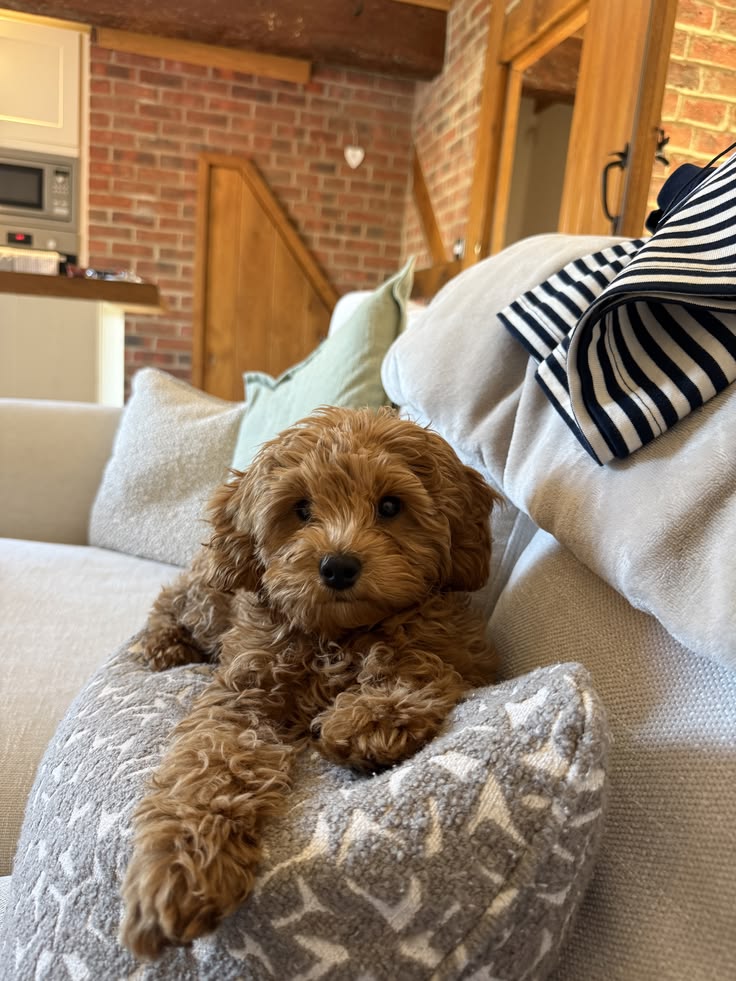
Oct
Bringing a Cavapoo puppy home is an exciting experience, but the first few days can also be a major adjustment for your new companion. A puppy is suddenly leaving the environment, people, sounds, smells, and routines it has known and entering a completely unfamiliar home.
It is normal for a new Cavapoo to need time to settle in.
Some puppies immediately begin exploring, playing, and seeking attention. Others may be quieter, cautious, sleepy, or unsure about their new surroundings. Instead of expecting your puppy to feel completely at home immediately, give it time and create an environment where it can gradually develop confidence.
Making your Cavapoo comfortable at home involves much more than buying a soft bed. Your puppy needs a predictable routine, appropriate food and water, a safe sleeping area, positive training, gentle handling, mental enrichment, opportunities for appropriate socialization, and time to rest.
If you have recently been searching for Cavapoo Puppies For Sale Near Me, preparing your home before your puppy arrives can make the transition considerably easier.
Why Your New Cavapoo May Need Time to Settle In
A puppy entering a new home is experiencing many changes at once.
The sounds are different. The smells are different. The people may be different. The surfaces under its feet may be unfamiliar, and even ordinary household objects such as televisions, vacuum cleaners, washing machines, doors, and kitchen appliances can seem strange.
Your puppy may also have a completely different sleeping and feeding routine.
That is why it is important not to interpret every quiet or cautious behavior as a sign that your puppy dislikes its new home.
Give your Cavapoo an opportunity to observe its surroundings at its own pace. Avoid overwhelming the puppy with too many visitors, outings, new experiences, and handling sessions immediately after arrival.
A calm beginning can help establish a foundation for confidence.
1. Create a Comfortable Sleeping Area
One of the first things your Cavapoo should have is a designated place where it can rest undisturbed.
This might be a comfortable dog bed, a properly introduced crate, or another secure sleeping area that is appropriate for your household.
The goal is to create a space your puppy can associate with relaxation and safety.
Young puppies sleep a lot, and rest is an important part of development. If everyone in the household constantly wakes, handles, or plays with the puppy, the puppy may struggle to get the rest it needs.
Teach children that when the puppy is sleeping or resting in its designated space, it should be left alone.
A comfortable sleeping area should also be positioned somewhere that allows the puppy to feel included without being in the middle of constant traffic.
You can learn more about preparing your home in our Cavapoo Puppy Apartment Guide and our resources on sleeping with your Cavapoo.
2. Consider Crate Training as Part of Your Puppy’s Routine
A properly introduced crate can become a useful management and resting tool.
However, a crate should never be used as punishment.
Introduce it gradually and positively. Your puppy should be able to enter the crate voluntarily and learn that it is a safe, predictable place to relax.
Avoid forcing a frightened puppy into the crate and leaving it there for excessive periods.
Crate training also does not replace bathroom breaks. Young puppies have limited bladder control and need frequent opportunities to eliminate.
When crate training is introduced appropriately, it can become part of a broader routine that includes sleeping, house training, travel, and quiet time.
3. Give Your Cavapoo a Quiet Place to Retreat
Your puppy does not need to interact with everyone all the time.
A designated retreat can be particularly useful in a busy household.
If your home has children, visitors, other pets, or frequent activity, your Cavapoo should have somewhere it can relax without being disturbed.
This does not mean isolating the puppy from the family.
Instead, think of it as giving your dog the option to step away when it needs rest.
A dog that can voluntarily move to a safe resting area may have an easier time managing a busy household.
4. Establish a Predictable Daily Routine
Dogs often benefit from predictable routines.
Your new Cavapoo does not need every minute of the day scheduled, but having relatively consistent patterns for meals, bathroom breaks, sleep, play, training, and quiet time can help your puppy understand what to expect.
For example, a morning routine might include waking up, going outside for a bathroom break, eating breakfast, having a short period of play or training, and then resting.
The exact routine will depend on your puppy’s age, health, household, and veterinarian’s guidance.
Consistency can also make house training easier because you begin to recognize when your puppy commonly needs to go outside.
5. Feed Your Cavapoo an Appropriate Diet
Nutrition plays an important role in puppy development.
When your Cavapoo arrives, avoid making unnecessary and sudden food changes unless there is a veterinary reason to do so. If you plan to change the puppy’s food, discuss the transition with your veterinarian and make changes appropriately.
Puppies have different nutritional requirements from adult dogs, so their diet should be appropriate for their life stage.
If you are unsure how much your puppy should eat, how often meals should be offered, or which food is appropriate, speak with your veterinarian rather than relying solely on general internet recommendations.
Always provide access to fresh, clean drinking water.
Our Cavapoo Care Guide provides additional information for new owners learning about everyday puppy care.
6. Puppy-Proof Your Home
A comfortable home must also be a safe home.
Cavapoo puppies are curious and may investigate objects with their mouths. Before your puppy arrives, look around your home from a puppy’s perspective.
Secure electrical cords, household chemicals, medications, small objects, unsafe plants, and anything else your puppy could chew, swallow, knock over, or become trapped behind.
Pay particular attention to kitchens, bathrooms, bedrooms, living rooms, balconies, stairs, and areas where cleaning products or medications are stored.
Our guide to Puppy Proofing Your Home can help you work through the most important areas before bringing your puppy home.
7. Let Your Cavapoo Explore Gradually
It can be tempting to let a new puppy immediately explore every room in the house.
However, some puppies may feel more comfortable if they are introduced to their new environment gradually.
Start with a safe area and allow your puppy to investigate at its own pace.
You can gradually introduce additional rooms as your puppy becomes more comfortable and learns the household rules.
There is no need to rush.
If your puppy appears overwhelmed, give it an opportunity to retreat, rest, and try again later.
8. Spend Quality Time With Your Puppy
Your Cavapoo needs companionship, but quality matters more than simply being physically present.
Sit near your puppy. Talk calmly. Offer appropriate play. Practice short training sessions. Give your puppy opportunities to explore safe areas with you.
These ordinary interactions help your puppy learn that you are a predictable and safe part of its environment.
At the same time, avoid creating a routine where your puppy expects constant attention every minute of the day.
A healthy relationship includes both companionship and gradually developing independence.
9. Teach Your Cavapoo That Alone Time Is Normal
One common mistake new puppy owners make is assuming that a puppy should always be with them.
Cavapoos can be highly people-oriented, which makes teaching independence especially important.
Start with very short, manageable periods of separation while your puppy is comfortable. You can gradually increase the amount of time as appropriate.
The goal is not to suddenly leave a puppy alone for a long workday.
Instead, teach the puppy through gradual experiences that being separated from you for reasonable periods is a normal part of life.
If your schedule means your puppy will regularly be alone for extended periods, consider appropriate arrangements such as a trusted pet sitter, dog walker, family member, or other suitable care.
Our guide to Pet Sitters vs Kennels can help you think through care options when you cannot be home.
10. Make Grooming a Positive Experience
Cavapoos can require regular coat maintenance, so grooming should become a normal part of life.
A puppy may initially be unsure about brushing, having its paws handled, looking inside its ears, or having its face touched.
Instead of forcing grooming sessions, introduce handling gradually and reward calm behavior.
Very short sessions can be more productive than trying to complete an entire grooming routine when the puppy is frightened or restless.
This is particularly important because regular grooming can become much easier when a dog learns from an early age that gentle handling is predictable and safe.
Our Cavapoo Ear Cleaning, Cavapoo Paw Care, and grooming resources can help you build an appropriate routine.
11. Give Your Cavapoo Appropriate Mental Enrichment
A comfortable home should not be boring.
Your Cavapoo can benefit from age-appropriate mental stimulation such as simple training games, food puzzles, scent games, safe toys, and supervised exploration.
Mental enrichment gives your puppy an opportunity to investigate and learn without requiring intense physical exercise.
Training itself can be excellent enrichment.
Teaching a simple cue, rewarding calm behavior, practicing name recognition, or working on appropriate leash skills can provide a puppy with useful mental challenges.
Keep sessions short and positive.
12. Use Positive Reinforcement
Your puppy is learning constantly.
If your Cavapoo makes a mistake, focus on teaching the behavior you want rather than frightening or punishing the puppy.
Reward-based training can help your dog understand which behaviors earn reinforcement.
For example, if your puppy calmly settles on its bed, you can reinforce that behavior. If your puppy chooses an appropriate chew toy instead of a household object, reward the choice.
Training becomes easier when your puppy understands what you want it to do.
Our Cavapoo Training Myths guide contains additional information about common misconceptions surrounding puppy training.
13. Introduce New Experiences Carefully
Socialization is not simply introducing your puppy to as many people and animals as possible.
Good socialization means providing positive, controlled experiences with different people, sounds, environments, surfaces, handling experiences, and appropriate situations while considering the puppy’s health and vaccination status.
A puppy that is overwhelmed can have the opposite experience from what you intended.
Instead of forcing your Cavapoo to interact with every person or dog it encounters, allow your puppy to observe and investigate at an appropriate pace.
Our Puppy Socialization Guide explains why controlled, positive exposure is such an important part of puppy development.
14. Keep Your Home Calm During the First Few Days
The first days are not the ideal time for a huge welcome party.
Your friends and extended family may be excited to meet the new puppy, but your Cavapoo may need time to adjust before being introduced to a large number of people.
Keep the environment relatively calm.
Give your puppy time to sleep, eat, explore, eliminate, and settle into its routine.
Once your puppy becomes more comfortable, you can gradually introduce new experiences.
15. Pay Attention to Your Cavapoo’s Body Language
Your dog cannot tell you in words that it needs space.
Instead, learn to recognize its body language.
A puppy may move away, hide, freeze, turn its head, yawn, lick its lips, lower its body, or otherwise show signs that it is uncomfortable or overwhelmed.
These behaviors should not automatically be interpreted as stubbornness.
If your puppy repeatedly appears frightened, unusually withdrawn, painful, lethargic, or unwell, speak with your veterinarian.
Behavior and health can sometimes overlap, so persistent or concerning changes deserve professional attention.
16. Make Exercise Age-Appropriate
Exercise can help your Cavapoo stay active and engaged, but more exercise is not automatically better.
Puppies are developing physically and need appropriate amounts and types of activity.
Avoid treating a young puppy like a miniature adult dog.
Short play sessions, appropriate walks when your veterinarian considers them safe, training, exploration, and enrichment can all contribute to a balanced routine.
Weather matters too.
During hot weather, avoid strenuous exercise during the hottest part of the day. During cold or wet conditions, adjust outdoor activities according to your puppy’s needs.
17. Make Your Cavapoo Comfortable While You Work
Many modern dog owners work from home or have hybrid schedules.
Having your puppy nearby can be wonderful, but it can also make it easy to accidentally reinforce constant attention-seeking.
Create a routine where your puppy has opportunities to settle independently while you work.
A comfortable bed or crate placed appropriately near your workspace can allow your dog to remain part of the household without requiring constant interaction.
Reward calm behavior.
Over time, your puppy can learn that you being busy does not mean something is wrong.
18. Introduce Other Pets Carefully
If you already have another dog, cat, or pet, introductions should be gradual and supervised.
Do not assume that your existing pet will automatically love the new puppy.
Both animals need opportunities to adjust.
Provide separate resources where appropriate, including food areas, resting spaces, toys, and places to retreat.
Never leave a young puppy unsupervised with another animal simply because their first interaction appeared friendly.
19. Prepare for the First Night
The first night can be difficult for some puppies.
Your Cavapoo has just experienced a major transition, so crying or restlessness may occur.
Prepare a secure sleeping arrangement before bedtime and keep the nighttime routine calm and predictable.
Young puppies also need appropriate bathroom opportunities during the night depending on their age and individual needs.
Avoid turning nighttime wake-ups into exciting play sessions.
Keep the interaction calm, meet the puppy’s needs, and return to the established bedtime routine.
20. Give Your Cavapoo Time
Perhaps the most important rule is simple: give your puppy time.
You do not need to create the perfect home overnight.
Your Cavapoo will gradually learn your routines, recognize household sounds, become familiar with different rooms, develop trust, and understand what is expected.
Some puppies become confident very quickly. Others take longer.
Avoid comparing your puppy’s adjustment to another person’s dog.
Every puppy is an individual.
What If My Cavapoo Still Seems Uncomfortable?
If your Cavapoo continues to appear unusually withdrawn, frightened, aggressive, painful, lethargic, or unwell, do not assume that it is simply adjusting.
Contact your veterinarian if you are concerned.
Behavioral changes can have many possible causes, and a veterinarian can help determine whether there is an underlying health concern or whether additional behavioral support would be useful.
A qualified reward-based trainer or veterinary behavior professional may also be appropriate for persistent behavior concerns.
Searching for Cavapoo Puppies For Sale Near Me?
If you are still researching Cavapoo Puppies For Sale Near Me, preparing your home before choosing a puppy can help you make a more informed decision.
Do not focus only on finding the closest available puppy.
Instead, consider the information provided about the puppy, available health records, the adoption process, communication, transportation arrangements, and the support available after adoption.
A responsible puppy purchase should be based on much more than location.
Before committing, review our Puppy Buying Checklist and Questions to Ask Before Buying a Cavapoo Puppy.
Preparing for Cavapoo Puppies For Sale In Tennessee
If you are researching Cavapoo Puppies For Sale In Tennessee, prepare your home before your puppy arrives.
Tennessee households may experience warm, humid summers and colder conditions during other parts of the year, so your puppy’s indoor environment and outdoor routine should be adjusted to the weather.
During warmer conditions, provide fresh water, shade, and appropriate indoor cooling. Avoid strenuous outdoor activity during excessive heat.
Our dedicated Tennessee Cavapoo page can help you continue researching your options.
Preparing for Cavapoo Puppies For Sale In Ohio
Families searching for Cavapoo Puppies For Sale In Ohio should also consider the home environment before bringing their puppy home.
Ohio’s seasonal changes mean that your Cavapoo may spend significant amounts of time indoors during cold, wet, or snowy weather.
That makes indoor enrichment particularly valuable.
Training games, puzzle toys, appropriate play, grooming practice, and short indoor activities can help keep your puppy mentally engaged when outdoor conditions are unsuitable.
Explore our Ohio Cavapoo page for additional information.
Preparing for Cavapoo Puppies For Sale In Florida
If you are considering Cavapoo Puppies For Sale In Florida, preparation should include a plan for warm weather.
Florida’s heat can affect outdoor activity, so plan walks and play during cooler periods when appropriate.
Never leave a Cavapoo unattended in a parked vehicle, even if you expect to be away for only a short time.
At home, make sure your puppy has access to fresh water, a comfortable temperature, and a cool resting area.
You can also explore our Florida Cavapoo page as you continue your research.
Final Thoughts
Making your Cavapoo comfortable at home is not about buying the most expensive bed or filling your house with toys.
It is about creating an environment where your puppy can understand what to expect.
Provide a safe sleeping area. Establish a predictable routine. Feed an appropriate diet. Puppy-proof the home. Offer positive training and age-appropriate enrichment. Give your puppy quiet time. Introduce new experiences gradually. Teach appropriate independence. Pay attention to body language. And give your new companion time to adjust.
The relationship you build with your Cavapoo develops through hundreds of small interactions.
A calm greeting, a successful training session, a peaceful nap, a gentle grooming experience, and a quiet evening beside you can all contribute to helping your puppy feel secure.
With patience and consistency, your home can become more than just the place where your Cavapoo lives. It can become the safe, predictable environment where your puppy grows into a confident and well-adjusted companion.
Continue Learning About Cavapoos
If you are preparing to bring a Cavapoo home, continue learning with our Available Cavapoo Puppies, Cavapoo Breed Guide, Cavapoo Care Guide, and Cavapoo Buying Guide.
You can also explore Cavapoo Puppies by State, the Cavapoo Adoption Process, Puppy Buying Checklist, Questions to Ask Before Buying a Cavapoo Puppy, Health Guarantee, Shipping & Delivery, and Frequently Asked Questions.
For ongoing care, explore our guides covering Puppy Socialization, Cavapoo Dental Care, Cavapoo Ear Cleaning, Cavapoo Paw Care, Cavapoo Puppy Apartment Preparation, and Cavapoo Travel.

Pingback: 5 Reasons to Get a Cavapoo Puppy: Why Families Love This Companion Dog
Pingback: Let Sleeping Cavapoos Lie: How to Choose the Best Cavapoo dog bed
Pingback: The Amazing Cavapoo Sense of Smell: 5 Facts About Your Dog’s Nose
Pingback: How Do Cavapoos Sleep? 5 Common Cavapoo Sleeping Positions Explained
Pingback: Preparing for a Cavapoo Puppy: Complete New Puppy Checklist