Cavapoo Care Guide, Cavapoo Health & Wellness
Cavapoo Paw Care: Why Dogs Lick Their Paws & What to Do
Sep
Your Cavapoo’s paws might not be something you think about very often, but they play an important role in almost everything your dog does.
Paws help your Cavapoo walk, run, play, explore, climb, dig, and move across different surfaces. They also come into contact with everything your dog encounters outdoors, including grass, dirt, sand, pavement, snow, ice, salt, plants, and other environmental substances.
That makes regular Cavapoo paw care an important part of responsible Cavapoo ownership.
Healthy Cavapoo paws support comfortable movement and everyday activity. Regular dog paw care can also help you notice cuts, irritation, swelling, debris, or other changes early.
You may occasionally notice your dog licking their paws. A little grooming can be completely normal. Dogs naturally clean themselves, and an occasional lick does not automatically mean something is wrong.
The concern is when paw licking becomes frequent, persistent, intense, or accompanied by chewing, redness, swelling, odor, hair loss, discharge, sores, limping, or other changes.
Excessive licking can have many possible causes. Allergies, parasites, infections, foreign material, injuries, irritation, and other skin or medical conditions can all affect a dog’s paws.
For Cavapoo owners, learning how to inspect and care for the paws can help you notice changes early and support overall Cavapoo health.
What Makes a Dog’s Paws Special?
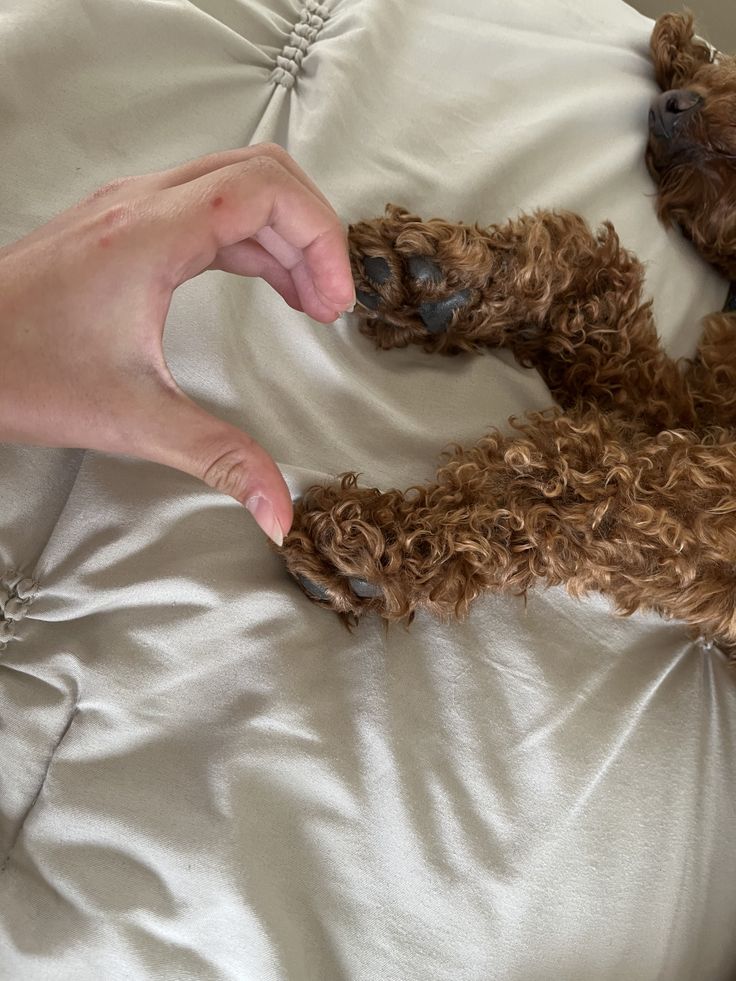
A dog’s paw is more than just a soft surface at the bottom of the foot.
The paw contains pads that help absorb impact and provide traction. Dogs also have nails and the spaces between their toes, where dirt, plant material, moisture, and other debris can collect.
The dog paw pads are tough, but they are not indestructible.
Hot pavement can burn them.
Sharp objects can cut them.
Ice and deicing products can irritate them.
Rough surfaces can contribute to abrasions.
Foreign material can become lodged between the toes.
That is why checking your Cavapoo’s paws after outdoor activities can be worthwhile.
Regular inspections are a simple part of maintaining dog paw health.
Why Does My Cavapoo Lick Their Paws?
There isn’t one universal explanation for paw licking.
Occasional licking can be normal grooming. But if your Cavapoo suddenly begins licking much more than usual, consider it a reason to look more closely.
If you’re wondering, why does my Cavapoo lick his paws, the answer could involve several different conditions.
Potential causes include:
- allergies
- parasites
- bacterial or yeast infections
- cuts or abrasions
- foreign objects
- irritation from environmental substances
- burns from hot surfaces
- contact with irritating chemicals
- dry or damaged paw pads
- nail problems
- other skin conditions
- discomfort elsewhere that causes increased grooming
- behavioral or anxiety-related licking
Veterinary sources emphasize that paw licking can occur with several different conditions, meaning the behavior itself does not identify the underlying cause. AKC notes that paw licking may occur after irritation from sharp objects, hot or salted sidewalks, insects, blisters, dermatitis, or parasites.
That distinction is important.
Instead of assuming, “My Cavapoo is licking because they’re bored,” look for other clues.
The same principle applies to the broader question, why does my dog lick his paws. Paw licking is a symptom, not a diagnosis.
When Is Paw Licking Normal?
Dogs naturally groom themselves.
Your Cavapoo may occasionally lick their paws after walking outside, eating, playing, or getting something on their feet.
An occasional lick followed by normal behavior is usually very different from repeatedly stopping to chew the same paw.
Pay attention to frequency and changes from your dog’s normal routine.
If your Cavapoo has suddenly started licking one paw repeatedly, inspect it.
If your dog is licking all four paws frequently, look for other signs such as itchy skin, redness, odor, or irritation.
If the behavior persists, contact your veterinarian.
Occasional dog paw licking can be normal, but persistent or excessive paw licking deserves closer attention.
Excessive Paw Licking Can Create a Cycle
Persistent licking can become a problem in itself.
Imagine that your Cavapoo develops an itchy paw because of an underlying skin problem.
Your dog licks it because it feels uncomfortable.
The repeated moisture and mechanical irritation can further damage the skin.
The damaged skin may become more inflamed.
Secondary infection may develop.
The paw becomes even more uncomfortable.
Your dog licks it again.
This can create a cycle that becomes difficult to break without addressing the underlying cause.
Veterinary guidance notes that inflammation of the paws can have infectious, allergic, parasitic, traumatic, and other causes, and treatment depends on identifying the cause. VCA describes this inflammation as dog pododermatitis, which can have numerous possible causes.
This is why persistent Cavapoo paw licking shouldn’t automatically be treated as a behavioral habit.
Allergies Can Cause Itchy Paws
Allergies are one possible reason dogs lick or chew their paws.
Environmental allergens can include things such as pollen, molds, and dust, while some dogs can also experience food-related allergic reactions or flea-related problems.
Merck Veterinary Manual notes that itching is the most typical sign of canine allergies and that the feet are among the areas commonly affected.
This means dog paw allergies can sometimes appear as licking, chewing, redness, or irritated skin.
For a Cavapoo with recurring Cavapoo allergies, paw problems may occur alongside other signs.
Look at the rest of your Cavapoo’s body.
Are they scratching?
Rubbing their face?
Licking their legs?
Developing recurrent ear problems?
Showing seasonal changes?
If several symptoms occur together, tell your veterinarian.
Dogs with Cavapoo itchy paws may need an evaluation to determine whether allergies, infection, parasites, irritation, or another condition is involved.
Fleas and Other Parasites
Parasites can also cause intense itching.
Fleas, for example, can trigger allergic reactions in some dogs. Other parasites can cause skin irritation as well.
Do not assume that you would always see fleas if they are causing a problem.
If your Cavapoo is persistently itchy, your veterinarian can help determine whether parasites or another condition may be responsible.
Keeping your dog’s parasite-prevention plan current is an important part of routine health care.
Paw Infections
Infections can affect a dog’s paws.
Bacterial and fungal or yeast-related problems can produce signs such as redness, swelling, odor, hair loss, discharge, or persistent licking.
VCA notes that pododermatitis can have infectious, allergic, parasitic, traumatic, and other causes.
This is why simply treating the surface without identifying the cause may not solve a recurring problem.
If your Cavapoo has a swollen, painful, foul-smelling, draining, or persistently irritated paw, contact your veterinarian.
A dog paw infection may require veterinary examination and appropriate treatment rather than home care alone.
Check Between Your Cavapoo’s Toes
The spaces between the toes deserve attention during a paw inspection.
Grass seeds, small pieces of debris, dirt, mud, salt, and other material can collect there.
After outdoor walks, gently inspect between the toes and around the pads.
The American Kennel Club recommends checking between the toes and pads when cleaning a dog’s feet because debris can accumulate in these areas and cause irritation.
If you find something deeply embedded, do not dig aggressively into the paw.
A veterinarian may need to remove it safely.
Regular inspection is one of the easiest ways to support healthy Cavapoo paws.
Paw Injuries Can Cause Licking
A small cut, abrasion, blister, puncture, splinter, thorn, or other injury can cause a dog to focus intensely on one paw.
This is especially important when the licking is sudden and localized.
If your Cavapoo normally ignores their paws but suddenly starts chewing one front foot, inspect that paw carefully.
Look for:
- cuts
- swelling
- redness
- bleeding
- broken nails
- foreign objects
- damaged pads
- unusual odor
- discharge
If your dog is limping or appears painful, veterinary evaluation is appropriate.
A dog paw injury can sometimes be small and difficult to see, especially between the toes or underneath the foot.
Hot Pavement Can Burn Paw Pads
Summer pavement deserves special attention.
Asphalt and concrete can become much hotter than the surrounding air. Paw pads can suffer burns, blisters, or other damage from extremely hot surfaces.
This is particularly important for puppies.
If the ground is too hot for your hand, it is a warning sign that the surface may be too hot for your dog’s paws.
Instead of walking during the hottest part of the day, choose cooler morning or evening hours and consider grassy or shaded routes.
Never assume that because your Cavapoo seems eager to walk, the pavement is safe.
AKC warns that hot pavement and similar surfaces can cause discomfort, blisters, and burns to a dog’s paw pads.
This is an important part of protecting against hot pavement dog paws injuries.
How to Protect Cavapoo Paws in Summer
Summer paw care begins with choosing appropriate walking conditions.
Try to:
Walk during cooler hours.
Choose grass or shaded routes when pavement is hot.
Avoid prolonged walks on hot asphalt.
Check your dog’s paws after outdoor activities.
Watch for limping or sudden licking.
Provide fresh water and shade.
Do not wait until your dog develops obvious paw damage before adjusting the walking routine.
AKC recommends avoiding the hottest surfaces and times of day and notes that early morning or evening walks can reduce exposure to dangerous heat.
Winter Paw Care for Cavapoos
Cold weather creates a different set of paw problems.
Snow, ice, freezing surfaces, and deicing products can irritate or damage paw pads.
Salt and other ice-melting substances can also become a concern if they remain on your dog’s feet and are subsequently licked.
After winter walks, gently clean and dry your Cavapoo’s paws.
Pay particular attention to the spaces between the toes.
AKC recommends cleaning dogs’ feet after exposure to snow, ice, salt, and other winter substances and checking between the toes for accumulated material.
This makes winter paw care for dogs especially important in areas that regularly experience snow and ice.
Should Cavapoos Wear Dog Boots?
Some dogs benefit from boots or other protective paw coverings in certain environments.
They can help protect paws from hot surfaces, ice, snow, and rough terrain.
But boots aren’t automatically necessary for every Cavapoo.
Your dog also needs time to become comfortable wearing them.
Introduce boots gradually indoors.
Reward your Cavapoo for calmly wearing them.
Check that they fit securely without being too tight.
Do not suddenly put boots on your puppy for the first time immediately before a long walk.
The same principle applies to any new piece of equipment: introduce it gradually and positively.
Dog boots are one form of dog paw protection, but they should fit properly and be appropriate for the conditions.
Cleaning Your Cavapoo’s Paws
Regular paw cleaning doesn’t have to become a complicated routine.
After a muddy walk, gently rinse or wipe the paws using a pet-safe product when appropriate.
Make sure you clean between the toes when dirt or other material has accumulated.
Then dry the paws thoroughly.
The AKC recommends pet-safe wipes for light dirt and washing paws when more substantial contamination needs to be removed.
Avoid using household cleaning products or harsh chemicals on your dog’s paws.
If your dog has a known skin condition, ask your veterinarian what cleaning products are appropriate.
If you’re wondering how to clean dog paws, focus on gentle cleaning, checking between the toes, and thorough drying.
This simple form of dog paw cleaning can help remove dirt, mud, salt, and other substances picked up outdoors.
Don’t Overlook the Hair Between the Toes
Cavapoos can have coats that grow around their feet and between their toes.
Excess hair can collect dirt and moisture and may contribute to mats or the accumulation of outdoor debris.
Regular grooming can help keep the feet manageable.
However, avoid aggressively cutting or shaving close to the skin yourself if you are unsure how to do it safely.
A professional groomer can help maintain the hair around the feet, particularly when your Cavapoo has a dense or easily matted coat.
This is one reason Cavapoo grooming should include regular attention to the feet.
Nail Care Is Part of Paw Care
Healthy paws also depend on healthy nails.
Overgrown nails can become uncomfortable and may affect how your dog stands and walks.
Get your Cavapoo accustomed to having their paws handled while they are young.
Touch the paw.
Reward.
Touch a nail.
Reward.
Gradually introduce the sound and sensation of nail trimming.
If your puppy becomes extremely stressed, stop and try again gradually or ask a professional groomer or veterinarian for assistance.
Paw handling should be part of your Cavapoo’s normal grooming routine rather than something that only happens when nails have become severely overgrown.
AKC notes that long nails can affect gait, cause discomfort, and increase the risk of broken nails.
Paw Pads Can Become Dry or Cracked
Dry, rough, or cracked paw pads can be uncomfortable.
Environmental conditions, friction, hard surfaces, weather, and other factors can contribute to paw-pad changes.
If your Cavapoo has minor dryness, discuss appropriate paw-care products with your veterinarian or groomer.
Do not assume every cracked paw needs the same treatment.
If there are deep cracks, bleeding, significant pain, swelling, or recurrent problems, veterinary evaluation is appropriate.
Regular inspection of the dog paw pads can help you identify changes before they become more serious.
Is Paw Balm Safe for Dogs?
Paw balms formulated specifically for dogs may be useful in certain circumstances, but more product is not necessarily better.
If you use one, follow the product instructions and prevent your dog from consuming large quantities.
If your dog’s paws are persistently irritated, balm should not be used to hide the underlying problem.
A recurring medical condition needs an appropriate diagnosis.
A properly formulated dog paw balm may help protect or moisturize paw pads in certain situations, but it should not replace veterinary care when your dog has persistent symptoms.
AKC also discusses paw balms and protective products as options for helping protect paw pads in certain weather conditions.
Why Do Cavapoos Sometimes Get Brown Paw Staining?
Some owners notice reddish-brown staining on the fur around their dog’s feet.
Saliva can discolor light-colored fur, particularly when a dog repeatedly licks the same area.
But the staining itself doesn’t tell you why the dog is licking.
The underlying reason could involve allergies, infection, irritation, parasites, or another problem.
VCA notes that reddish-brown staining can occur with chronic paw inflammation and licking.
If staining is accompanied by persistent licking, redness, odor, swelling, or discomfort, discuss it with your veterinarian.
Could Boredom Cause Paw Licking?
Boredom can contribute to repetitive behaviors in some dogs, but it should not automatically be blamed for excessive paw licking.
If your Cavapoo is licking excessively, first consider physical causes.
Once medical problems have been considered, make sure your dog has appropriate exercise, enrichment, training, rest, and social interaction.
Puzzle toys, sniffing activities, training sessions, play, and age-appropriate exercise can help provide mental stimulation.
But enrichment should complement veterinary evaluation, not replace it when a physical problem is suspected.
Could Anxiety Cause Excessive Paw Licking?
Stress and anxiety can influence repetitive behaviors in dogs.
Changes in household routines, separation, environmental stressors, and other experiences can affect individual dogs differently.
However, it is important not to diagnose anxiety simply because your Cavapoo licks their paws.
Physical problems should be considered first.
If your dog has persistent repetitive behavior or other concerning behavioral changes, talk with your veterinarian.
A veterinarian can help determine whether a medical issue, behavioral issue, or combination of factors may be involved.
When Should You Call the Veterinarian?
Contact your veterinarian if your Cavapoo has persistent or worsening paw problems, especially if you notice:
- swelling
- bleeding
- open sores
- pus or discharge
- strong odor
- significant redness
- persistent chewing
- persistent licking
- limping
- obvious pain
- a damaged nail
- a suspected foreign object
- burns
- deep cracks
- sudden severe changes
You should also seek prompt veterinary advice if your dog seems generally unwell in addition to having a paw problem.
Do not wait for a small problem to become a large one when your dog is clearly uncomfortable.
These symptoms can occur with conditions such as dog paw infection, injury, allergic inflammation, irritation, or dog pododermatitis. VCA notes that pododermatitis can involve redness, swelling, hair loss, ulcers, discharge, and constant licking, depending on the underlying cause.
Don’t Diagnose the Paw From Licking Alone
One of the most important things to remember is that a symptom isn’t always a diagnosis.
Paw licking can occur with allergies.
It can occur with infection.
It can occur after an injury.
It can occur when something is stuck between the toes.
It can occur with parasites.
It can occur with irritation.
It can also occur alongside behavioral problems.
Merck Veterinary Manual emphasizes that itching in dogs can have multiple causes, including infections, insect bites, food allergies, and environmental allergies.
That is why recurring paw licking deserves investigation rather than guesswork.
For example, dog paw irritation and Cavapoo itchy paws can look similar from the outside even when the underlying causes are different.
A Simple Cavapoo Paw-Check Routine
You don’t need a complicated medical examination at home.
After a walk, take a few seconds to look at your dog’s feet.
Check:
Paw pads: Look for cuts, cracks, burns, or unusual discoloration.
Between the toes: Look for dirt, grass, stones, or other debris.
Nails: Check for cracks, breaks, or excessive length.
Top of the paw: Look for redness, swelling, or irritation.
Fur: Look for mats, moisture, or staining.
Behavior: Notice whether your Cavapoo is licking, chewing, limping, or avoiding pressure on a foot.
A regular quick inspection can help you notice changes before they become more obvious.
This simple routine is one of the easiest ways to support dog paw health at home.
Paw Care for a Cavapoo Puppy
Puppies benefit from learning that paw handling is normal.
Start when your Cavapoo is relaxed.
Gently touch one paw.
Give a reward.
Release the paw.
Repeat later.
As your puppy becomes comfortable, briefly touch the individual toes.
Then introduce a nail clipper without trimming.
Let your puppy hear the sound from a distance.
Reward calm behavior.
You are building an association:
Paw handling = safe + predictable + rewarding.
This can make future nail trims, grooming appointments, veterinary examinations, and paw inspections easier.
This is the foundation of puppy paw care and Cavapoo puppy paw care.
Starting early can also help your puppy become more comfortable with routine Cavapoo grooming.
Choosing a Cavapoo Puppy: Ask About Early Handling
If you are researching Cavapoo Puppies For-Sale Near Me, paw and grooming preparation are worth asking about before choosing a puppy.
Ask whether puppies are accustomed to gentle handling of their paws.
Ask whether they have experienced grooming preparation.
Ask how the puppies respond to brushing and routine handling.
These experiences can help you understand how the puppy has been prepared for normal care.
The same questions can be useful when researching Cavapoo Puppies For Sale In Tennessee, Cavapoo Puppies For-Sale In Ohio, or Cavapoo Puppies For-Sale In Florida.
A puppy’s early experiences, health care, temperament, and preparation for life in a family are more important than simply choosing based on appearance.
Cavapoo Paw Care and Grooming
Because Cavapoos generally need regular coat maintenance, paw care should fit naturally into their grooming routine.
A complete routine can include:
Regular brushing.
Paw inspections.
Nail maintenance.
Gentle foot handling.
Checking between the toes.
Cleaning after muddy outings.
Keeping foot hair manageable.
Monitoring for unusual licking or chewing.
Professional grooming when appropriate.
Starting these habits while your Cavapoo is young can help make routine care less stressful.
Consistent Cavapoo paw care is a small but useful part of broader Cavapoo health and grooming.
Keep Your Cavapoo’s Walking Environment in Mind
Paw care doesn’t only happen inside the home.
The surfaces your Cavapoo walks on matter.
Grass can contain plant material and parasites.
Pavement can become extremely hot.
Winter sidewalks may contain salt or deicing products.
Rocky terrain can cause abrasions.
Trails can contain sharp sticks, thorns, or other debris.
That doesn’t mean your Cavapoo needs to avoid outdoor activities.
It means you should match the activity to the conditions.
Inspect your dog’s paws afterward.
If something looks abnormal, investigate rather than ignoring it.
Environmental awareness is an important part of dog paw protection.
Paw Care After Long Walks and Outdoor Adventures
After hiking, beach visits, long walks, or extended outdoor play, take a moment to inspect your Cavapoo’s feet.
Check for:
Sand.
Small stones.
Plant material.
Cuts.
Blisters.
Cracked pads.
Thorns.
Foreign objects.
Redness.
Swelling.
Pay particular attention if your dog begins licking one paw immediately after an outdoor adventure.
That sudden change may help you identify where a problem has occurred.
Regular inspection after outdoor activities is an easy addition to your overall dog paw care routine.
Don’t Ignore Changes in Walking Behavior
Paw problems aren’t always obvious.
Sometimes the first sign is a change in how your Cavapoo walks.
Your dog may:
Walk more slowly.
Avoid certain surfaces.
Limp slightly.
Stop frequently.
Hold up one paw.
Refuse stairs.
Avoid jumping.
Lick one foot after walking.
These behavioral changes can be clues that something hurts.
If the change persists or appears significant, speak with your veterinarian.
A subtle change in movement can sometimes be an early clue of a dog paw injury, irritated pads, nail problem, or another condition.
Frequently Asked Questions About Cavapoo Paws
Why does my Cavapoo lick their paws?
Occasional licking can be normal grooming, but frequent or persistent licking can occur with allergies, parasites, infection, injury, irritation, foreign material, or other problems.
Why does my dog lick his paws?
Dogs may lick their paws for normal grooming or because the feet are itchy, irritated, painful, or contaminated with something uncomfortable. Persistent licking should be investigated rather than automatically attributed to behavior.
Is it normal for dogs to lick their paws?
Occasional grooming can be normal. Excessive licking, chewing, or sudden changes in behavior deserve closer attention.
Why is my Cavapoo chewing their paws?
Chewing can occur when the paws are itchy, painful, irritated, or otherwise uncomfortable. Allergies, infection, injury, parasites, and foreign objects are among the possibilities.
Why are my Cavapoo’s paws red?
Redness can have multiple causes, including inflammation, allergies, infection, irritation, or trauma. A veterinarian can help determine the cause.
Why does my Cavapoo have brown fur around their paws?
Repeated licking can cause saliva staining on light-colored fur. However, staining does not identify the reason for licking, so persistent licking should be investigated.
Can allergies cause Cavapoo paw licking?
Yes. Allergic skin disease can affect the feet and may cause licking or chewing. Some dogs with Cavapoo allergies may also have itching elsewhere on the body.
What are dog paw allergies?
Dog paw allergies can involve environmental, food-related, flea-associated, or contact-related allergic reactions. Your veterinarian can help determine which possibilities need investigation.
Can fleas cause paw licking?
Parasites can contribute to itching, and some dogs have significant allergic reactions to flea bites. Your veterinarian can help determine whether parasites are involved.
Should I clean my Cavapoo’s paws after walks?
Cleaning can be useful when paws are muddy, sandy, salty, or exposed to substances that could irritate them. Check between the toes and dry the feet afterward.
How can I clean my dog’s paws?
For light dirt, pet-safe wipes can be useful. For heavier contamination, gently wash the paws with appropriate water and a pet-safe cleaning method. Check between the toes and dry the paws thoroughly afterward.
Can hot pavement hurt a dog’s paws?
Yes. Very hot pavement can cause burns and blisters. Choose cooler walking times and safer surfaces when conditions are hot.
How can I protect my Cavapoo’s paws in winter?
Clean and dry the paws after exposure to snow, ice, salt, and deicing products. Dog boots may also provide protection when appropriately fitted and introduced gradually.
What is winter paw care for dogs?
Winter paw care includes checking feet after walks, removing snow and ice, cleaning off salt or deicing products, drying between the toes, and monitoring for cracked or irritated pads.
Should Cavapoos wear boots?
Some dogs benefit from boots in extreme weather or on difficult surfaces. They should fit correctly and be introduced gradually.
Can I use human lotion on my dog’s paws?
Do not assume a human product is appropriate for your dog. Ask your veterinarian about suitable products, especially if your dog’s paws are damaged or irritated.
What is dog paw balm used for?
A properly formulated dog paw balm may help moisturize or protect paw pads in certain situations. It should not be used to mask persistent irritation or replace veterinary evaluation.
What should I do if something is stuck between my dog’s toes?
If the object is superficial and easily removed without causing pain, you may be able to remove it gently. If it is deeply embedded, painful, or difficult to remove, contact your veterinarian rather than digging into the paw.
Why is my Cavapoo licking only one paw?
A single-paw problem can sometimes point toward a localized issue such as an injury, foreign material, damaged nail, or irritation. Inspect the paw and contact your veterinarian if the behavior persists.
Why is my Cavapoo licking all four paws?
Licking multiple paws can occur with generalized itchiness, allergies, irritation, infection, or other conditions. Your veterinarian can help determine the underlying cause.
Can anxiety cause paw licking?
Stress can influence repetitive behavior in some dogs, but medical causes should be considered before assuming that excessive paw licking is anxiety-related.
Can boredom cause paw licking?
Boredom may contribute to repetitive behaviors, but persistent paw licking should not automatically be attributed to boredom. Physical causes should be considered first.
How often should I check my Cavapoo’s paws?
A quick inspection after outdoor activities is useful, particularly after long walks, hiking, beach trips, snow, or hot weather.
When should I take my Cavapoo to the vet for paw licking?
Seek veterinary advice when licking is persistent, worsening, painful, associated with redness or swelling, accompanied by limping, or when you see wounds, discharge, odor, or other concerning changes.
How can I teach my Cavapoo to accept paw handling?
Start with very short, gentle touches while your puppy is relaxed. Reward calm behavior and gradually increase the amount of handling.
Is paw care part of Cavapoo grooming?
Yes. Paw inspections, nail care, foot-hair maintenance, and cleaning after outdoor activities can all form part of a Cavapoo’s grooming routine.
What is dog pododermatitis?
Dog pododermatitis is a term for inflammation of the feet or paws. It can have infectious, allergic, parasitic, traumatic, irritant, immune-mediated, hormonal, or other causes, so veterinary evaluation may be necessary to determine the underlying problem.
Continue Learning About Cavapoos
If you’re learning how to keep your Cavapoo healthy, comfortable, and well cared for, continue with these related guides:
Questions to Ask Before Buying a Cavapoo Puppy
Final Thoughts
Your Cavapoo’s paws work hard every day.
They carry your dog across floors, grass, sidewalks, trails, beaches, and countless other surfaces. Taking a few moments to inspect and care for them can help you notice problems early.
Occasional paw licking may simply be grooming.
Persistent licking or chewing is different.
If your Cavapoo repeatedly focuses on their paws, look for redness, swelling, injury, debris, odor, discharge, damaged nails, or changes elsewhere on the body. Allergies, parasites, infections, injuries, irritation, and other conditions can all produce similar behaviors, so persistent symptoms should be evaluated rather than self-diagnosed.
Protect paws from extreme heat, clean them after exposure to irritating substances, keep nails and foot hair appropriately maintained, and teach your puppy that paw handling is a normal and rewarding part of life.
Good Cavapoo paw care is a small routine that can make a meaningful difference to your Cavapoo’s everyday comfort and overall dog paw health.
