
Cavapoo Care Guide, Cavapoo Training Guide, Grooming Guide
Outdoor Dog Safety: 10 Essential Tips for Safe Adventures
Sep
Spending time outdoors is one of the best ways to enrich your dog’s daily life.
Walks, playtime, hikes, backyard games, and trips to the park provide exercise and mental stimulation.
Dogs also experience the outdoor world differently from people. Their powerful sense of smell allows them to investigate countless scents around them.
However, outdoor environments can also contain hazards.
Parasites, extreme weather, unfamiliar animals, toxic substances, traffic, and contaminated water can all create problems (dog parasite prevention).
Good outdoor dog safety does not mean keeping your dog indoors.
Instead, it means understanding the risks and preparing for them.
Whether you have an energetic puppy or an adult Cavapoo, a few simple precautions can make outdoor adventures safer and more enjoyable.
1. Check the Area Before Letting Your Dog Explore
Before visiting a new park, trail, beach, or outdoor recreation area, take a moment to inspect the surroundings.
Look for obvious hazards such as:
- Broken glass
- Sharp metal
- Fishing hooks or line
- Litter
- Toxic substances
- Stagnant water
- Aggressive animals
- Unsafe fencing
- Excessive heat from pavement
- Poisonous plants
You should also consider how busy the area is.
A crowded location with uncontrolled dogs may not be appropriate for every puppy.
If you are visiting somewhere unfamiliar, keeping your dog on a leash initially gives you more control.
Allow your dog to explore gradually once you understand the environment (outdoor safety for dogs).
2. Protect Your Dog From Parasites
Outdoor environments can expose dogs to fleas, ticks, mosquitoes, and other parasites.
Ticks can transmit several diseases, while mosquitoes can transmit heartworm disease.
Fleas can also cause significant irritation and may contribute to flea allergy dermatitis in sensitive dogs.
Your veterinarian can recommend an appropriate parasite-prevention program based on your dog’s age, lifestyle, location, and health.
Do not assume that a dog needs parasite prevention only during summer.
Some parasites can remain a concern throughout much of the year.
After outdoor adventures, inspect your dog for ticks and unusual skin irritation.
Pay particular attention to areas around the ears, neck, between the toes, and other places where ticks may hide (dog safety tips).
3. Pay Close Attention to the Weather
Weather is one of the most important parts of outdoor dog safety.
Dogs can struggle with both excessive heat and extreme cold.
Hot Weather Safety
Warm weather can become dangerous surprisingly quickly.
Dogs do not cool themselves exactly as humans do, and overheating can become a medical emergency.
During hot weather:
- Exercise during cooler parts of the day.
- Provide access to fresh drinking water.
- Choose shaded areas.
- Avoid prolonged activity on hot pavement.
- Watch for excessive panting.
- Take frequent breaks.
- Never leave your dog alone inside a parked vehicle.
Be especially careful with puppies, senior dogs, dogs with thick coats, and dogs with certain health conditions (keeping dogs safe outside).
If your dog appears weak, confused, unusually tired, or has difficulty breathing, seek veterinary assistance immediately.
Cold Weather Safety
Cold weather also requires planning.
Your dog’s tolerance depends on factors such as coat type, body size, age, health, wind, moisture, and the actual temperature.
Do not assume that a particular breed automatically makes a dog safe in freezing conditions.
Some dogs may benefit from a properly fitted coat during cold weather.
However, clothing should never replace sensible exposure limits.
Keep your dog dry, monitor their behavior, and return indoors if they become uncomfortable.
For more information about clothing and weather protection, see our guide on [whether dogs like wearing clothes].
4. Keep Fresh Water Available
Outdoor activities increase the importance of hydration.
Always bring clean drinking water when you are taking your dog on a longer walk, hike, road trip, or outdoor adventure.
Avoid allowing your dog to drink from questionable water sources.
Ponds, puddles, stagnant water, and other untreated sources may contain organisms or contaminants that can make dogs sick (dog walking safety).
A portable dog bowl or travel water container makes hydration easier.
During warm weather, offer water regularly rather than waiting until your dog appears extremely thirsty.
5. Be Careful Around Unknown Animals
Outdoor environments can bring your dog into contact with animals you cannot control.
This includes unfamiliar dogs, wildlife, livestock, and other animals.
Do not allow your dog to chase wildlife.
Rabbits, squirrels, rodents, and other animals may carry parasites or diseases.
Wildlife can also react unpredictably when cornered.
Dogs should never be encouraged to approach unfamiliar wild animals.
At dog parks, watch interactions carefully.
Not every dog enjoys the same style of play.
If another dog appears fearful, overly aggressive, or uncomfortable, calmly create distance.
Your dog does not need to greet every animal they encounter (puppy outdoor safety).
6. Use a Secure Leash and Identification
A reliable leash is one of the simplest outdoor safety tools available.
Use equipment appropriate for your dog’s size, strength, and behavior.
Your dog should also wear secure identification.
An identification tag can help someone contact you if your dog becomes lost.
Microchipping provides another important form of identification and should be discussed with your veterinarian.
Before every outdoor adventure, check that your dog’s collar or harness fits correctly.
A poorly fitted harness or collar may allow an excited dog to escape.
This is particularly important with small dogs and puppies.
7. Keep Vaccinations and Preventive Care Current
Vaccination is an important part of responsible dog ownership.
Dogs that spend time outdoors can encounter other animals, contaminated environments, and infectious organisms.
Rabies vaccination is particularly important because rabies is a serious and fatal disease once clinical signs develop (dog vaccinations).
Other vaccines may be recommended depending on your dog’s age, lifestyle, location, and exposure risks.
Your veterinarian can create a vaccination and preventive-care schedule appropriate for your dog.
Do not assume that every dog requires exactly the same vaccine schedule.
Lifestyle matters.
A dog that frequently visits boarding facilities, dog parks, grooming salons, or outdoor events may have different exposure risks from a dog that mainly stays at home.
8. Watch What Your Dog Eats Outside
Dogs investigate the world with their mouths.
That can become a problem outdoors.
Your dog may encounter discarded food, poisonous plants, animal remains, chemicals, or other substances that should not be swallowed.
Keep your dog away from unfamiliar substances whenever possible.
Be particularly cautious around picnic areas.
Foods such as chocolate, grapes and raisins, onions, garlic, xylitol-containing products, alcohol, and certain other human foods can be dangerous to dogs.
Do not allow your dog to eat unknown food from the ground.
Training a reliable “leave it” cue can be extremely useful for outdoor safety (dog park safety).
9. Prepare an Outdoor Dog Safety Kit
A small safety kit can make outdoor adventures much easier.
Depending on the activity, consider bringing:
- Fresh drinking water
- Portable water bowl
- Leash
- Backup leash
- Identification information
- Waste bags
- Basic first-aid supplies
- Your veterinarian’s contact information
- Emergency veterinary contact information
- Towel
- Appropriate weather protection
- Necessary medications
- Your dog’s regular food or treats
For hiking or longer trips, your kit should be more comprehensive.
Check your supplies periodically and replace anything that has expired or become damaged (winter dog safety).
10. Inspect Your Dog After Outdoor Activities
Your safety routine should not end when you return home.
Take a few minutes to examine your dog.
Check the paws for cuts, foreign objects, irritation, or burns.
Look through the coat for ticks or other parasites.
Check for unusual swelling, scratches, or wounds.
If your dog has been swimming, drying the coat and ears properly can also be helpful.
This is especially important for dogs with longer or thicker coats.
A post-adventure inspection can help you notice small problems before they become larger ones (summer dog safety).
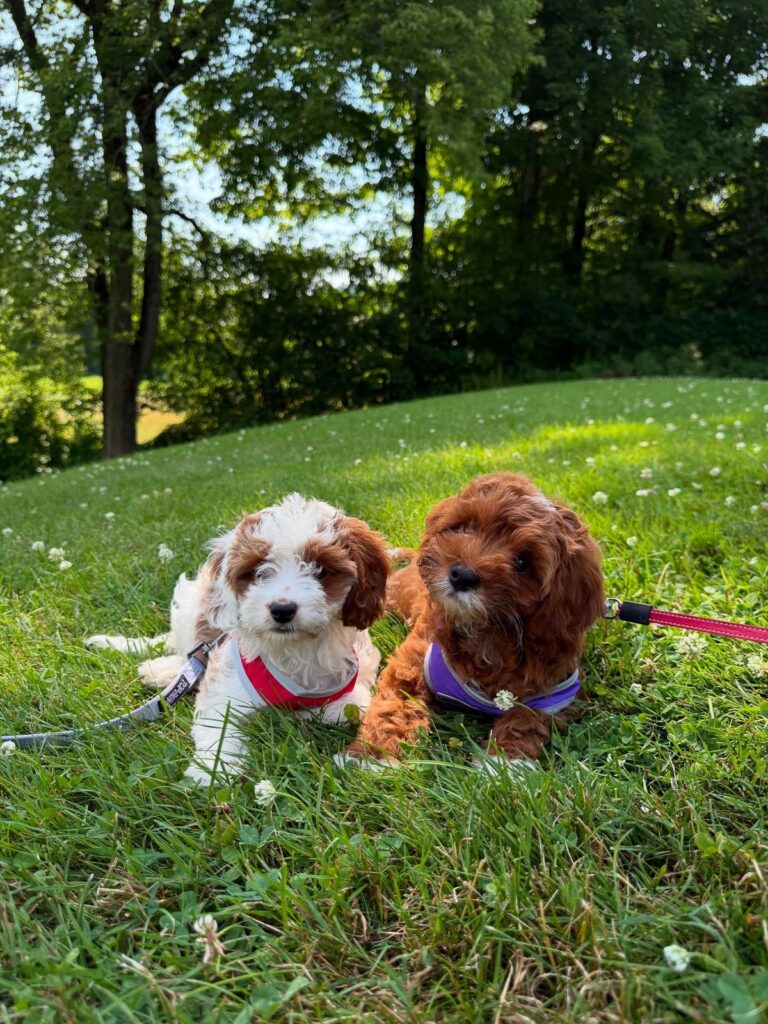
Outdoor Dog Safety for Cavapoo Puppies
Cavapoo puppies can be curious, playful, and eager to explore.
That curiosity makes outdoor experiences valuable, but puppies require additional supervision.
Young puppies are still developing physically and behaviorally.
Their outdoor experiences should therefore be controlled and age appropriate.
A Cavapoo puppy may investigate grass, leaves, sticks, puddles, insects, and almost anything else within reach.
Instead of trying to eliminate exploration, guide it safely.
Keep potentially dangerous objects away from your puppy.
Use appropriate restraint near roads and unfamiliar environments.
Follow your veterinarian’s recommendations regarding vaccinations and outdoor exposure.
Puppies also benefit from positive socialization.
However, socialization does not mean forcing a puppy to interact with every dog or person.
The goal is to help the puppy experience different sights, sounds, surfaces, people, and environments while remaining comfortable and confident (Cavapoo Ppuppies For Sale Near Me).
Our [Cavapoo Care Guide] provides additional information about caring for a Cavapoo through different stages of life.
Dog Park Safety Tips
Dog parks can provide exercise and social opportunities, but they are not suitable for every dog.
Before visiting one, consider your dog’s temperament and experience with other dogs.
Observe the park before entering.
Look at how the dogs interact.
If the environment appears chaotic or several dogs are displaying inappropriate behavior, another location may be a better choice.
Once inside, stay attentive.
Avoid becoming distracted by your phone.
Watch your dog’s body language and interactions.
If play becomes too intense, calmly redirect your dog and create some space.
Never assume that dogs will resolve every conflict safely on their own.
Hiking Safety for Dogs
Hiking provides excellent physical and mental enrichment.
It also introduces additional risks.
Before a hike, research the trail conditions and difficulty.
Bring enough water for both you and your dog.
Keep your dog under control around cliffs, roads, wildlife, cyclists, horses, and other hikers.
Check your dog’s paws after the hike.
Long walks can expose paw pads to rough rocks, hot surfaces, ice, or sharp objects.
Your dog’s physical condition should also influence the length and difficulty of the hike.
A puppy should not automatically be expected to handle the same distance as a healthy adult dog.
Backyard Safety Matters Too
You do not need to visit a park for outdoor hazards to become a concern.
Your backyard should also be inspected regularly.
Check fences and gates for gaps.
Remove toxic substances and dangerous objects.
Keep lawn chemicals and other household products securely stored.
Prevent access to pools or other water hazards when appropriate.
Do not assume that a fenced yard is completely safe simply because your dog cannot leave it.
Dogs can still encounter plants, insects, chemicals, wildlife, and physical hazards inside a private yard.
Regular inspections help reduce these risks.
Learn Your Dog’s Warning Signs
Good outdoor dog safety depends partly on understanding your dog’s behavior.
Pay attention to changes in body language.
Heavy panting can occur after normal exercise, but excessive or unusual panting deserves attention.
Other concerning signs can include:
- Weakness
- Confusion
- Difficulty breathing
- Collapse
- Persistent vomiting
- Severe diarrhea
- Unusual lethargy
- Limping
- Excessive drooling
- Sudden behavioral changes
When you are unsure whether something is serious, contact your veterinarian.
For emergencies, seek veterinary care promptly rather than waiting for symptoms to disappear.
How to Make Outdoor Adventures Safer
You do not need complicated equipment to improve your dog’s outdoor safety.
Start with the basics.
Know the environment.
Check the weather.
Bring water.
Use reliable identification.
Maintain preventive care.
Watch your dog’s behavior.
Control interactions with unfamiliar animals.
Inspect your dog after outdoor activities.
These simple habits can significantly reduce preventable risks.
The goal is not to prevent your dog from enjoying the outdoors.
The goal is to make outdoor exploration safer while preserving the exercise, enrichment, and companionship that make these activities so valuable.
Frequently Asked Questions About Outdoor Dog Safety
Is it safe to let my dog play outside?
Yes, outdoor play can be healthy and enriching when the environment is appropriate.
Supervise your dog and remove obvious hazards from the area.
How can I protect my dog from ticks?
Use veterinarian-recommended parasite prevention and check your dog after outdoor activities.
Your veterinarian can recommend products appropriate for your dog’s lifestyle and location.
Should dogs drink from outdoor ponds?
It is safer to provide clean drinking water rather than allowing dogs to drink from unknown outdoor water sources.
Some water sources may contain harmful organisms or contaminants.
How hot is too hot for a dog?
There is no single temperature that is safe for every dog.
Humidity, sun exposure, pavement temperature, breed characteristics, coat, age, health, and activity level all matter.
When conditions are hot, reduce exercise and monitor your dog closely.
Do dogs need coats in winter?
Some dogs may benefit from properly fitted coats in cold weather.
However, the need depends on the individual dog and conditions.
A coat should not be used to justify prolonged exposure to unsafe temperatures.
Should my dog wear an ID tag outside?
Yes.
An identification tag provides a simple way for someone to contact you if your dog becomes lost.
Microchipping provides an additional identification method.
Can my dog play with every dog at the park?
No.
Dogs have different temperaments and play styles.
Supervise interactions and remove your dog from situations that become stressful or unsafe.
What should I bring when hiking with my dog?
Bring sufficient water, a bowl, leash, waste bags, identification information, basic first-aid supplies, and any necessary medications.
Longer trips require additional preparation.
How often should I check my dog for ticks?
Check your dog after outdoor activities, particularly when visiting areas where ticks are common.
Ask your veterinarian about year-round parasite prevention.
Is outdoor exercise good for Cavapoos?
Outdoor activity can provide valuable exercise and mental stimulation for Cavapoos.
The appropriate amount depends on the dog’s age, health, fitness, and individual needs (Cavapoo Ppuppies For Sale Near Me).
Helpful Cavapoo Resources
If you are learning how to provide a safe and healthy life for your Cavapoo, explore these related guides:
- [Cavapoo Care Guide]
- [Cavapoo Veterinarian]
- [How to Train a Cavapoo Puppy]
- [Cavapoo Breed Guide]
- [Puppy Buying Checklist]
- [Questions to Ask Before Buying a Cavapoo Puppy]
- [Health Guarantee]
- [Adoption Process]
- [Available Cavapoo Puppies]
Final Thoughts
Outdoor adventures can become an important part of your dog’s life.
Walks, hikes, backyard play, and trips to dog-friendly locations provide opportunities for exercise, exploration, and bonding.
However, responsible outdoor time requires preparation.
Check the environment, monitor the weather, protect against parasites, carry fresh water, maintain identification, and keep preventive veterinary care current.
Most importantly, learn to recognize your individual dog’s limits.
Every dog is different.
A safe outdoor routine should match your dog’s age, size, health, temperament, fitness, and lifestyle.
With thoughtful preparation, you can give your Cavapoo or other companion dog the freedom to enjoy the outdoors while reducing unnecessary risks (Cavapoo Ppuppies For Sale Near Me).

Pingback: Pet First Aid: Essential Tips Every Cavapoo Owner Should Know
Pingback: Puppy Dog Park Tips: When Can a Cavapoo Puppy Visit a Dog Park?
Pingback: How to Protect Dog Paws in Winter: Cavapoo Paw Care Guide
Pingback: First Time Puppy Parent Guide: How to Prepare for Your Cavapoo