
Grooming Guide, Cavapoo Care Guide
Dogs That Get Along Well With Cats: Best Breeds for a Cat-Friendly Home

Aug
The saying “they fight like cats and dogs” has been around for generations (dogs that get along with cats). But the reality is much more positive.
Dogs and cats can absolutely live together peacefully when they are introduced carefully and given time to adjust. In many homes, dogs and cats become close companions, sharing beds, playing together, and even following each other around the house.
However, choosing the right dog can make the process easier.
A dog’s breed traits, prey drive, energy level, temperament, socialization, and individual personality can all influence how well they interact with cats. Breed alone does not guarantee compatibility, but understanding typical breed characteristics can help families make better decisions.
If you’re considering adding a puppy to a home that already has a cat, preparation and a gradual introduction are just as important as breed selection.
Can Dogs and Cats Really Live Together?
Yes.
Dogs and cats can successfully share a home, but every animal is different.
Some dogs naturally have a strong instinct to chase small moving animals. Others are calm and easily redirected when they see a cat (best dogs for cats). Likewise, some cats are confident around dogs while others may become frightened or stressed.
This is why choosing a dog based solely on breed is not enough.
A puppy that has been properly socialized and introduced to cats in a controlled environment may have an easier transition than an adult dog with a strong history of chasing animals.
The American Kennel Club recommends gradual introductions, careful supervision, and providing each animal with a safe area where they can retreat.
What Makes a Dog More Likely to Get Along With a Cat?
When looking for a cat-friendly dog, consider several characteristics.
Low prey drive
Dogs bred specifically to chase or hunt small animals may require additional management around cats.
Calm temperament
A relaxed dog is often easier for a cat to tolerate than an extremely excitable puppy that constantly wants to chase or play.
Trainability
A dog that responds reliably to commands such as “leave it,” “stay,” and “come” can be easier to manage around another animal.
Early socialization
Positive experiences with different animals, people, environments, and sounds can help puppies develop confidence.
Individual personality
Perhaps most importantly, every dog is an individual.
Two dogs of the same breed can have completely different personalities (dog breeds good with cats).
1. Australian Shepherd
The Australian Shepherd is an intelligent, energetic, and highly trainable herding breed.
Despite its name, the modern Australian Shepherd was developed primarily in the United States.
Aussies were developed to work closely with people while managing livestock. Their intelligence and responsiveness can make them highly trainable in a household with other pets.
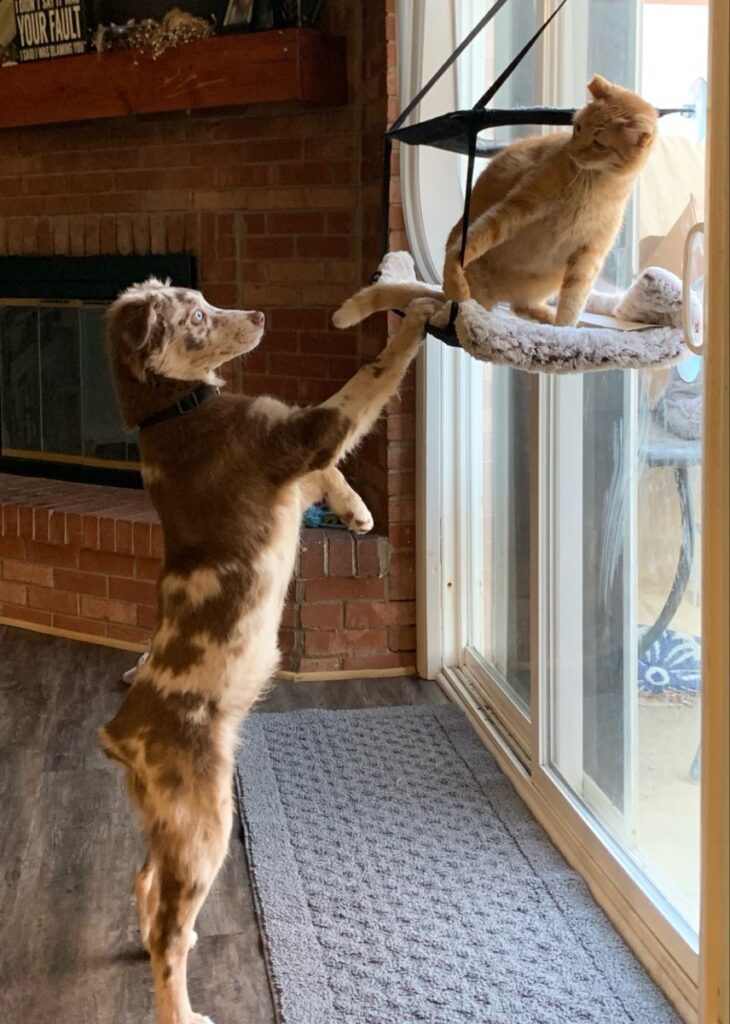
However, they are also active dogs with strong herding instincts.
An Australian Shepherd may try to chase, circle, or control a cat’s movement. This behavior does not necessarily mean aggression, but it can make a cat uncomfortable.
Early socialization and training are therefore particularly important.
If an Aussie is introduced to a cat carefully and taught appropriate boundaries, they can potentially become wonderful companions (best dog breeds for cats).
2. German Shepherd
German Shepherds are intelligent, loyal, confident, and highly trainable dogs.
They have historically been used for herding, police work, military work, search and rescue, and many other jobs.
Their intelligence makes them capable of learning how to behave appropriately around cats.
However, German Shepherds are also powerful and active dogs.
A playful puppy that wants to chase a running cat can unintentionally frighten or injure the cat.
Supervision is therefore essential during introductions.
Training commands such as “leave it,” “stay,” and “come” can become extremely useful when teaching a German Shepherd how to coexist with other pets.
You can also learn more about effective training techniques in our Cavapoo Training Guide, as many of the positive reinforcement principles apply to dogs of different breeds (dogs good with cats).
3. Border Collie
Border Collies are famous for their intelligence and remarkable ability to learn.
They were developed as working herding dogs and are particularly skilled at controlling livestock movement.
Their intelligence can be a major advantage when teaching appropriate behavior around cats.
However, their herding instinct can also create challenges.
A Border Collie may attempt to stare at, stalk, follow, or control a cat’s movements.
The behavior may look different from traditional predatory chasing, but it can still cause stress for a cat.
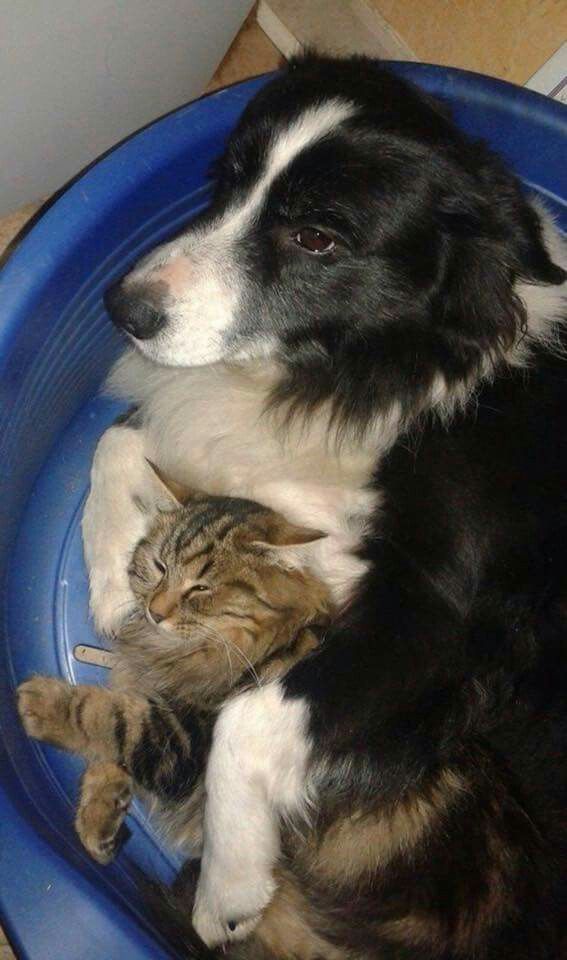
Owners should provide plenty of exercise and mental stimulation while teaching the dog that the cat is not something to herd.
A well-trained Border Collie can potentially coexist successfully with cats, particularly when introduced at a young age (cat friendly dog breeds).
4. Shetland Sheepdog
The Shetland Sheepdog, commonly called the Sheltie, is a smaller herding breed originating from the Shetland Islands of Scotland.
Shelties are intelligent, responsive, affectionate, and generally eager to work with their owners.
Their smaller size can make them easier for some households to manage, although size alone does not determine whether a dog will get along with a cat.
Like other herding breeds, Shelties may try to control movement.
A cat running across the room can become an exciting target for a curious Sheltie.
Positive training and careful supervision can help establish boundaries.
What About Cavapoos and Cats?
Cavapoos can also be a good option for families that already have a cat.
Cavapoos are a companion-dog cross between the Cavalier King Charles Spaniel and Poodle.
They are generally known for being affectionate, social, and people-oriented.
Their smaller size can also make them easier to manage in many multi-pet households.

However, you should never assume that every Cavapoo will automatically get along with cats.
Individual personality matters.
A young Cavapoo may be extremely excited when it first meets a cat (dogs that live well with cats). Instead of allowing the puppy to immediately chase the cat, introduce them gradually and reward calm behavior.
Our Cavapoo Breed Guide provides more information about Cavapoo temperament, characteristics, care, and lifestyle.
If you’re considering bringing one home, you can also explore our Available Cavapoo Puppies.
How to Introduce a Dog and Cat
Even the most suitable breed can have a difficult introduction if the process is rushed.
Take your time.
Start With Separate Spaces
Before allowing the dog and cat to meet face-to-face, give them separate areas.
The cat should have access to food, water, a litter box, sleeping areas, and elevated spaces where the dog cannot reach (Cavapoos and cats).
This gives the cat somewhere safe to retreat.
Let Them Smell Each Other
Dogs and cats rely heavily on scent.
Before the animals meet, allow them to become familiar with each other’s scent.
You can exchange bedding or use a clean cloth to transfer scent between areas.
This can help make the eventual introduction less overwhelming (can Cavapoos get along with cats).
Use a Barrier
A baby gate or similar barrier can allow the animals to see each other without giving them direct access.
Keep the dog under control and reward calm behavior.
If the dog becomes overly excited, increase the distance and try again later (best puppy for a home with cats).
Keep the Dog on a Leash
When you eventually allow the animals to share the same room, keep the dog on a leash.
Do not force the cat to approach.
Allow the cat to decide how close it wants to get.
Reward the dog whenever it remains calm.
Never Allow Chasing
This is one of the most important rules.
Do not allow your dog to chase the cat.
Even if the dog appears to be playing, repeated chasing can create fear and stress.
It can also reinforce the dog’s desire to pursue the cat.
Instead, redirect the dog’s attention and reward calm behavior (introducing a puppy to a cat).
Give Your Cat an Escape Route
Your cat should always have somewhere to escape.
Cat trees, shelves, furniture, gated rooms, and other elevated areas can give cats the ability to move away from the dog.
This is particularly important during the first few weeks.
A cat that feels trapped may become frightened or defensive.
Providing an escape route gives the cat more control over the interaction (how to introduce a dog and cat).
Watch Their Body Language
Pay attention to both animals.
A relaxed dog may have a loose body, normal movement, and a soft expression.
A stressed dog may become stiff, fixated, or excessively excited.
Cats can communicate discomfort through:
- Flattened ears
- Hissing
- Growling
- Swishing or puffed tails
- Hiding
- Avoiding the dog
- Excessive grooming
- Refusing to eat
If either animal becomes highly stressed, separate them and try again later (dog and cat compatibility).
Never Leave a New Dog and Cat Unsupervised
Even if an introduction appears to be going well, don’t immediately leave the animals alone together.
A sudden chase or unexpected movement can change the situation quickly.
Continue supervising interactions until you’re confident the animals can safely coexist.
This is particularly important when introducing a puppy to a cat because puppies often have poor impulse control (dog breeds that get along with cats).
Breed Is Only Part of the Equation
It’s tempting to search for the “best dog breed for cats.”
But there isn’t one breed that guarantees success.
A dog’s individual temperament matters enormously.
A calm individual from a breed with a reputation for being energetic may get along better with a cat than a highly excitable individual from a supposedly cat-friendly breed.
Previous experiences also matter.
A dog that has lived peacefully with cats before may have an easier transition than a dog that has never encountered one.
Socialization Makes a Difference
Early socialization is an important part of raising a confident puppy.
Puppies should gradually experience different people, environments, sounds, surfaces, and appropriate animals.
The goal isn’t to expose a puppy to everything at once.
Instead, introduce new experiences gradually and positively.
If you’re preparing for a new puppy, our Puppy Buying Checklist can help you prepare for the responsibilities that come with bringing a puppy home.
You can also review our Adoption Process to understand what to expect when welcoming a Cavapoo puppy into your family (dogs that get along with cats).
What Dog Breeds Should Cat Owners Consider Carefully?
There is no universal list of breeds that cannot live with cats.
However, owners should carefully consider dogs bred for strong hunting or chasing behaviors.
Some terriers were developed specifically to pursue small animals.
Many hounds were developed to track or chase prey.
Certain working breeds can also have strong chase or herding instincts.
This does not mean these dogs cannot live with cats.
It means their natural instincts may require more management, training, and careful introductions.
If you’re unsure about a particular dog, speak with a qualified trainer, behavior professional, or veterinarian before bringing the animals together (best dogs for cats).
Frequently Asked Questions
What is the best dog breed for a home with cats?
There is no single best breed. Individual temperament, socialization, prey drive, training, and the personality of the cat all matter.
Can Cavapoos get along with cats?
Yes, many Cavapoos can live successfully with cats. However, each dog’s personality is different, so gradual introductions and supervision are important.
Are herding dogs good with cats?
Some herding dogs can live very well with cats. However, their instinct to control movement may cause them to chase or herd cats.
Should I let my puppy chase my cat?
No. Chasing should be discouraged from the beginning because it can reinforce the behavior and make the cat feel unsafe.
How long does it take for a dog and cat to get along?
There is no fixed timeline. Some animals adjust within days, while others may require several weeks or longer.
Should my dog be on a leash when meeting my cat?
Keeping a new dog on a leash during initial face-to-face introductions provides additional control and allows you to redirect unwanted behavior.
Should my cat have a separate room?
Yes. Giving your cat a safe area can make the transition less stressful and provide an escape when needed.
Final Thoughts: Dogs and Cats Can Become Great Companions
Dogs and cats don’t have to fight like cats and dogs.
With the right preparation, many can become wonderful housemates.
Australian Shepherds, German Shepherds, Border Collies, and Shetland Sheepdogs can potentially live successfully with cats when properly socialized and trained (dog breeds good with cats). Cavapoos may also be a good choice for families looking for an affectionate companion that can share a home with other pets.
But remember that breed is only one part of the equation.
The individual dog’s personality, the cat’s temperament, previous experiences, training, socialization, and the introduction process all matter.
Take things slowly.
Give both animals their own safe spaces.
Reward calm behavior.
Never allow chasing.
And most importantly, allow the relationship to develop at its own pace.
If you’re considering a Cavapoo for a multi-pet household, start with our Cavapoo Breed Guide and Cavapoo Care Guide before making your decision.
