Full Grown Cavapoo Guide, Cavapoo Exercise
How Much Exercise Does Your Cavapoo Puppy Really Need? A Practical Guide for Growing Dogs
Aug
We all know what it feels like to need a little movement (how much exercise does a puppy need).
A walk can clear your head. Play can lift your mood. A little outdoor time can make an ordinary day feel much better.
Your Cavapoo puppy benefits from movement too.
Exercise supports healthy development, coordination, confidence, and good behavior. It also gives your puppy opportunities to explore the world and bond with you.
However, more exercise is not always better for a growing puppy. Young dogs are still developing, and excessive or high-impact activity can place unnecessary stress on their bones and joints. Veterinary guidance recommends age-appropriate, moderate activity rather than strenuous exercise for growing puppies.
Why Exercise Matters for a Cavapoo Puppy
Exercise is about much more than burning off puppy energy.
A growing Cavapoo needs appropriate physical activity to help develop coordination and healthy movement. Regular activity can also support a predictable daily routine.
Mental stimulation matters just as much.
Training, sniffing, exploring new environments, and interactive games can challenge your puppy’s brain without requiring long walks.
The American Kennel Club recommends tailoring puppy exercise to the dog’s age, breed, and individual needs. Short, positive sessions are often more appropriate than pushing a puppy through long workouts.
This is particularly important for Cavapoos because individual puppies can have different energy levels and physical development.
How Much Exercise Does a Puppy Need?
There is no single number that works perfectly for every puppy.
Age, size, health, personality, and development all matter.
A commonly used guideline is approximately five minutes of structured exercise per month of age, once or twice daily. For example, a three-month-old puppy might begin with around 15 minutes of structured activity. A five-month-old puppy might handle around 25 minutes.
However, this should be treated as a general starting point rather than a strict prescription.
Your veterinarian can help you determine what is appropriate for your individual Cavapoo.
v=td
vavg=td=560=12m/s
d
m
d
t
s
taverage-rate modelper 1 stotal d (m)
Give feedback
Most importantly, puppy exercise should not become a competition to see how long your puppy can keep going.
Short sessions, natural play, and plenty of rest are usually better than one exhausting outing.
Think About Your Cavapoo’s Individual Energy Level
Every Cavapoo has a unique personality.
Some puppies are constantly looking for something to investigate. Others are perfectly happy playing for a few minutes before curling up for a nap.
Your puppy’s behavior can provide useful clues.
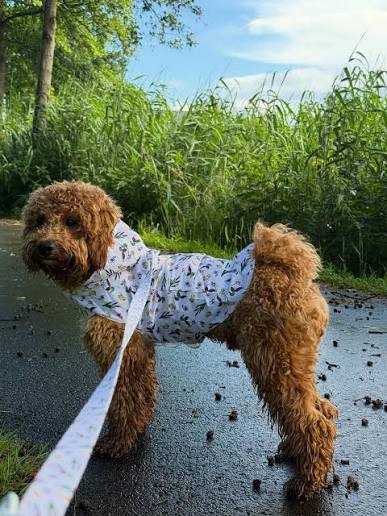
A puppy who happily plays, explores, and settles afterward may be getting an appropriate amount of activity.
A puppy who becomes excessively tired, starts lagging behind, or struggles to settle may need more rest.
The goal is not to completely exhaust your puppy.
The goal is to provide enough appropriate activity to support healthy development while allowing plenty of recovery time.
Prioritize Quality Over Intensity
Puppy exercise should be controlled, gentle, and appropriate for a growing body.
Good activities can include:
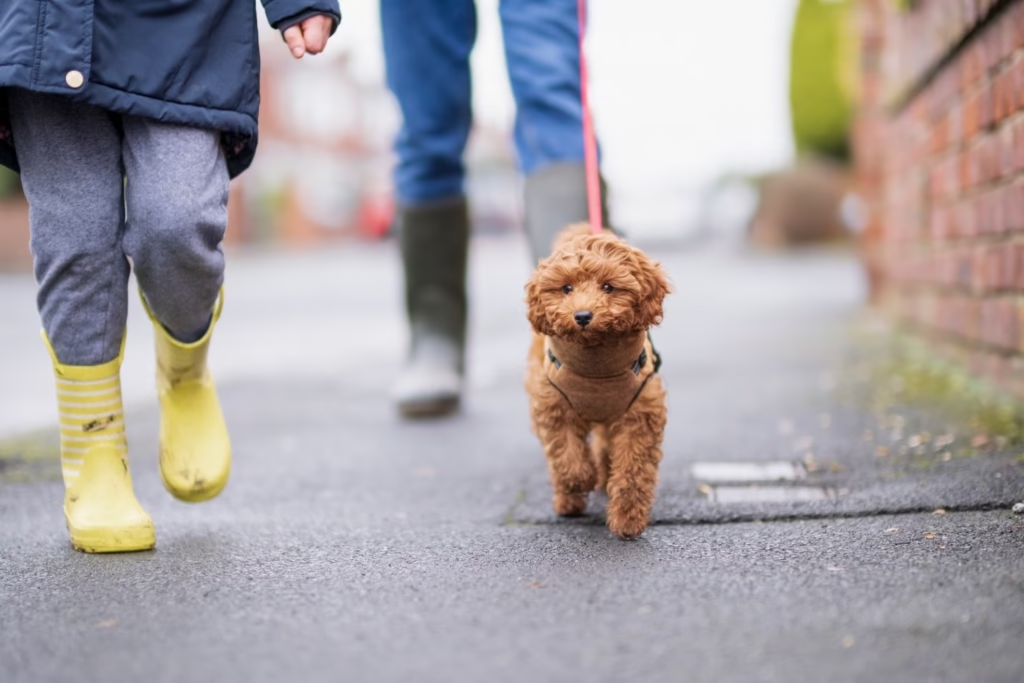
- Short neighborhood walks
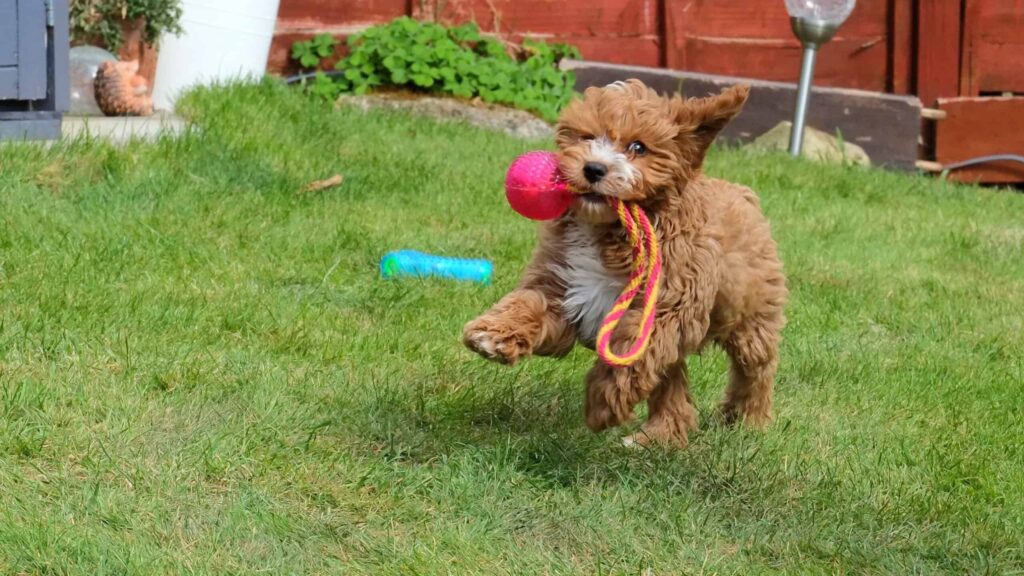
- Gentle games with age-appropriate toys
- Supervised play in a secure yard
- Basic obedience training
- Sniffing and exploring safe environments
- Simple food puzzles
- Hide-and-seek games
- Short training sessions
Mental enrichment can be especially valuable.
Teaching your Cavapoo to sit, touch, come, stay, or follow a simple cue can provide stimulation without requiring strenuous physical activity.
The AKC also recommends enrichment activities such as trick training, food puzzles, and scent-based games for puppies.
Be Careful With Running and Jumping
This is one of the most important parts of puppy exercise.
Your puppy’s bones and growth plates are still developing. Strenuous activities such as long-distance running, repetitive jumping, and competitive agility should generally wait until the dog is mature enough for them.
Veterinary guidance warns that excessive or prolonged exercise can place stress on developing bones and joints.
Avoid making your young Cavapoo run beside you for long distances.
You should also limit activities that involve repeated high jumps, sharp turns, or sudden stops.
Your puppy can still have fun.
Let them play naturally at an appropriate pace instead of turning puppyhood into an athletic training program.
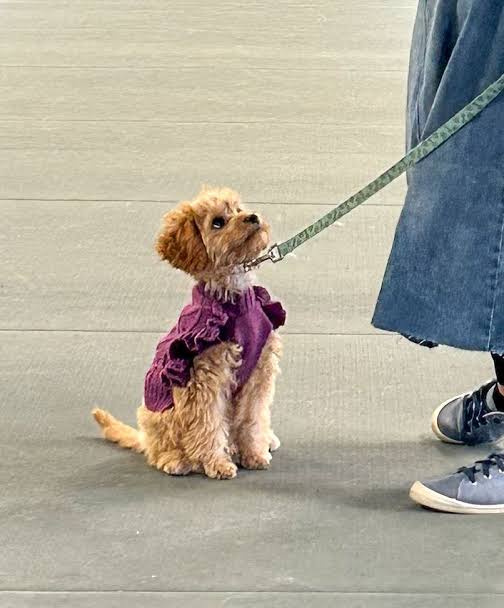
Let Your Puppy Take Breaks
Puppies do not need to keep moving simply because you have planned an activity.
If your puppy stops playing, lies down, becomes unusually tired, or starts struggling to keep up, give them a break.
Self-regulated play can be particularly useful because puppies can naturally slow down when they become tired. VCA recommends avoiding strenuous exercise and allowing growing puppies to play and move at their own pace.
Never force a tired puppy to continue walking simply because you have not reached your planned distance.
Watch for Signs of Overexertion
Your puppy cannot tell you, “I think I’ve had enough exercise.”
Instead, you need to watch their behavior.
Possible signs that your puppy needs to stop and rest include:
- Slowing down significantly
- Lagging behind
- Excessive panting
- Repeatedly sitting or lying down
- Losing interest in the activity
- Appearing unusually tired
- Changes in normal movement
If your puppy develops persistent limping, pain, difficulty moving, or another concerning symptom, stop the activity and contact your veterinarian.
When in doubt, professional veterinary guidance is always the safest choice.
Mental Exercise Can Be Just as Important
One of the easiest mistakes new puppy owners make is thinking every behavior problem requires more physical exercise.
Sometimes your puppy needs to use their brain, not their legs.
Try hiding a few pieces of their regular food for a supervised sniffing game. Practice a new training cue. Introduce a simple puzzle toy. Let your puppy explore a safe environment at their own pace.
These activities encourage curiosity and problem-solving.
They can also help reduce boredom and give your puppy appropriate outlets for their natural behaviors.
For a Cavapoo puppy, a few minutes of focused training followed by a quiet rest can be more beneficial than simply adding another long walk.
Don’t Forget Rest
Rest is a major part of puppy development.
A busy puppy may seem as though they could play forever. In reality, young puppies need substantial amounts of sleep and downtime.
Several short activity periods throughout the day are generally preferable to one long, exhausting session.
A simple daily routine might include:
Morning: Potty break, short walk, breakfast, and rest.
Midday: Gentle play, short training session, and another nap.
Afternoon: Supervised exploration or a short walk followed by quiet time.
Evening: Gentle play, mental enrichment, potty break, and bedtime routine.
The exact schedule should be adjusted to your puppy’s age, health, personality, and veterinary recommendations.
Exercise During Hot Weather
Summer requires additional caution.
Cavapoos can become uncomfortable in hot weather, especially during strenuous activity. Try scheduling walks during cooler parts of the day and provide plenty of fresh water.
Pay attention to hot pavement too.
If the ground is uncomfortable for your hand, it can be uncomfortable for your puppy’s paws.
For more warm-weather advice, read our guide on keeping your puppy healthy during summer.
Exercise and Your Cavapoo’s Overall Health
Exercise is only one part of raising a healthy puppy.
Your Cavapoo also needs appropriate nutrition, routine veterinary care, vaccinations, parasite prevention, grooming, training, socialization, and plenty of affection.
If you are preparing for your puppy’s arrival, our Bringing a New Puppy Home guide can help you prepare for those important first days.
You can also learn more about Cavapoo puppies for sale if you’re still searching for your new companion.
When Should You Increase Exercise?
As your puppy grows, their physical abilities will change.
You can gradually adjust activity as your puppy matures, but avoid suddenly increasing the duration or intensity of exercise.
A puppy that comfortably handles a short walk today does not necessarily need a much longer walk tomorrow.
Gradual progression is safer.
Your veterinarian can also help determine when your Cavapoo is physically ready for more demanding activities.
Because individual dogs mature at different rates, there is no universal age when every puppy should begin strenuous exercise.
A Balanced Approach Creates Happier Puppies
The best exercise routine is not the one that leaves your puppy completely exhausted.
It is the routine that provides appropriate physical movement, mental stimulation, social experiences, and plenty of recovery time.
Your Cavapoo should have opportunities to walk, sniff, explore, learn, play, and rest.
That balance helps create a puppy who is not only physically healthy but also confident and mentally engaged.
The Goal Isn’t to Tire Your Puppy Out
Puppyhood goes incredibly quickly.
Instead of trying to wear your Cavapoo out every day, focus on building healthy habits that can continue throughout their life.
Keep activities short and positive. Watch your puppy’s body language. Avoid strenuous exercise while they’re still developing. Give them plenty of opportunities to rest.
And remember that sometimes the best exercise session ends with your puppy curled up beside you for a well-earned nap.
Important: Exercise recommendations vary between individual puppies. If your puppy has a medical condition, shows pain or lameness, or you are unsure how much activity is appropriate, speak with your veterinarian before changing their exercise routine. The guidance above is general educational information, not a substitute for veterinary care.

Pingback: How to Workout With Your Dog: 9 Fun Cavapoo Exercises
Pingback: How Too Much Exercise For Dogs