
Grooming Guide, Cavapoo Care Guide
How to Trim Your Dog’s Nails Safely: A Complete Puppy & Dog Grooming Guide
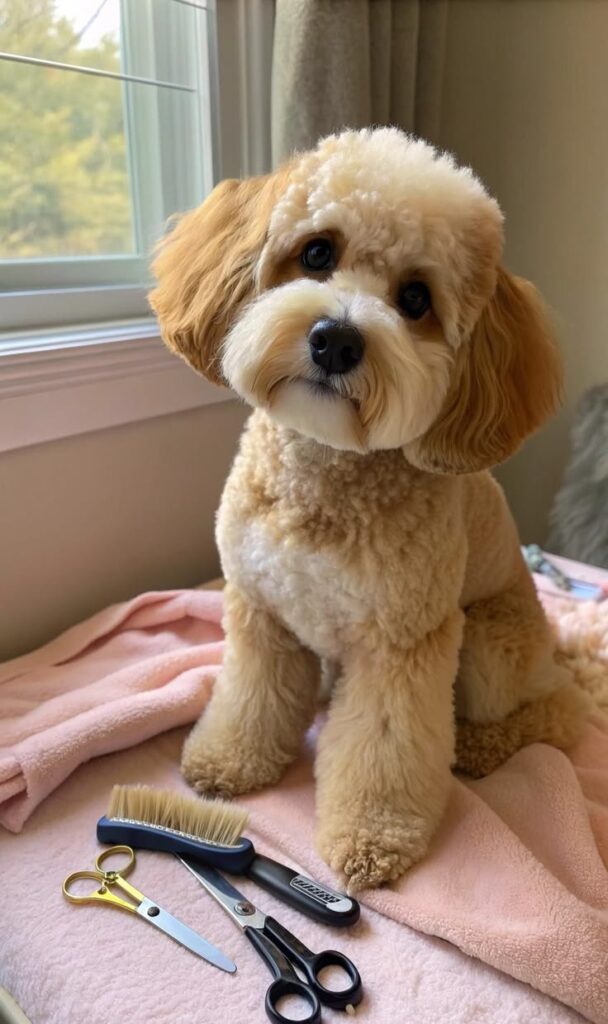
Aug
How to Trim Your Dog’s Nails Safely
Regular nail trimming is an important part of responsible dog care.
Long nails can become uncomfortable and may interfere with the way your dog walks. Overgrown nails can also catch on surfaces, split, or break.
For puppies, learning how to tolerate nail trimming early can make grooming much easier throughout their lives.
The good news is that nail trimming does not have to become a stressful battle.
With patience, the right equipment, positive reinforcement, and careful technique, you can teach your puppy that having their paws handled is a normal part of life.
This guide explains how to trim your dog’s nails, how to identify the quick, what to do with dark nails, and what to do if you accidentally cause bleeding.
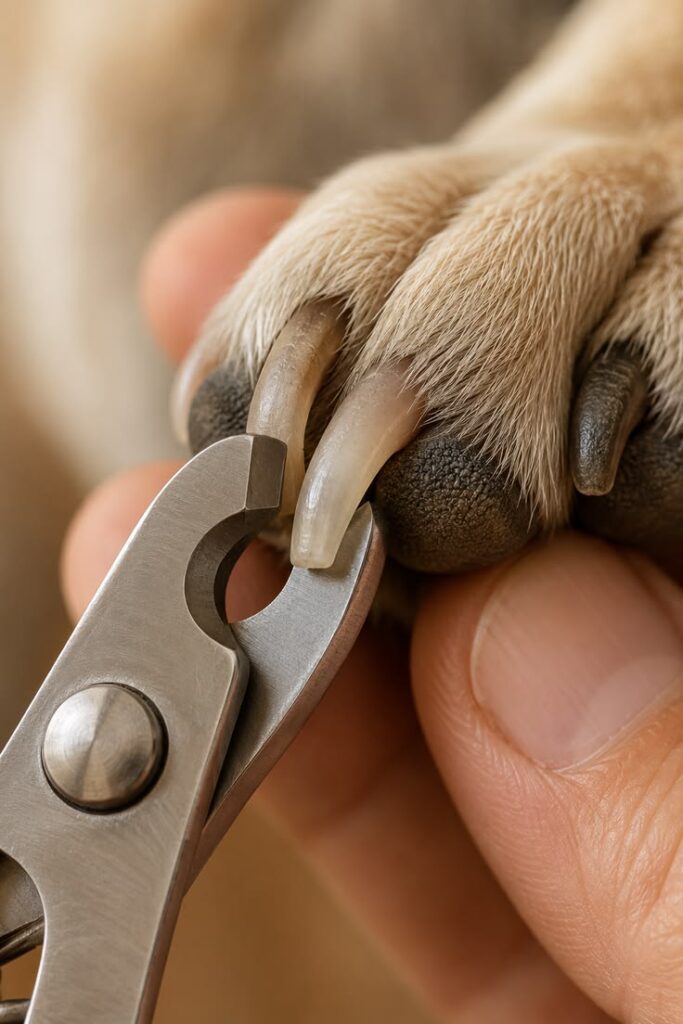
Why Is Regular Dog Nail Trimming Important?
A dog’s nails naturally wear down through normal activity, but many dogs still need regular trimming.
The amount of trimming required depends on your dog’s lifestyle, activity level, environment, and individual nail growth.
When nails become excessively long, they can alter the way a dog places its paws.
Long nails may also become caught on carpets, furniture, or other surfaces.
A broken nail can be painful and may require veterinary attention.
Regularly checking your dog’s paws allows you to identify overgrown nails before they become a bigger problem.
If you’re unsure how short your dog’s nails should be, ask your veterinarian or a professional groomer to demonstrate the appropriate length (how to cut dog nails).
How Often Should You Trim Your Dog’s Nails?
There isn’t one perfect schedule for every dog.
Some dogs may need their nails trimmed every few weeks, while others naturally wear their nails down more through regular activity.
Instead of relying entirely on a calendar, check your dog’s nails regularly.
If you can hear the nails clicking against hard floors or they appear to be touching the ground when your dog is standing normally, it may be time for a trim.
Your veterinarian or groomer can also help you establish an appropriate grooming routine.
For puppies, frequent short handling sessions can be more useful than waiting until the nails become very long (Cavapoo grooming).
What You Need to Trim Your Dog’s Nails
Before starting, gather everything you need.
Having your supplies ready means you won’t have to stop halfway through the process.
Useful supplies include:
- Dog nail clippers
- A dog nail grinder, if preferred
- Styptic powder
- Small training treats
- A towel or non-slip surface
- Good lighting
- A flashlight for dark nails
There are several types of dog nail clippers, including scissor-style and guillotine-style designs.
Some owners prefer grinders because they allow small amounts of nail to be removed gradually.
Choose whichever method you and your dog can use safely and comfortably (how to groom a Cavapoo).
Step 1: Get Your Puppy Comfortable With Paw Handling
One of the biggest mistakes owners make is immediately trying to clip the nails.
Instead, begin by teaching your puppy that paw handling is safe.
Sit somewhere comfortable with your puppy.
Gently touch one paw.
Then reward your puppy.
Repeat the process several times.
Once your puppy remains relaxed, gently hold a toe for a second or two before rewarding them.
Gradually increase the amount of handling.
Your goal isn’t to trim the nails during the first session.
Your goal is to teach your puppy:
Paw handling = good things happen.
This foundation can make future grooming sessions significantly easier (trimming puppy nails).
Step 2: Introduce the Nail Clippers
Allow your puppy to see and sniff the nail clippers.
Don’t immediately bring them toward the nail.
Let your puppy investigate them while you provide treats and praise.
If your puppy becomes nervous, move the clippers away and try again later.
You can also practice touching the clipper against the nail without actually cutting it.
Reward calm behavior.
Over multiple sessions, your puppy can gradually become comfortable with the sound and sensation of nail trimming (how to trim your dog’s nails).
Step 3: Choose a Calm Time
Timing matters.
Avoid attempting to trim your dog’s nails immediately after an exciting play session when your puppy is bouncing around the room.
Choose a calm period when your dog is relaxed.
Some puppies are more cooperative after exercise or a meal, while others prefer grooming when they are naturally sleepy.
Find what works best for your individual dog.
Keep the first few sessions short.
Success doesn’t mean trimming every nail.
Success means ending the session while your puppy is still comfortable (how to cut dog nails).
Step 4: Find the Quick
The quick is the living tissue inside the nail.
It contains blood vessels and nerves.
Cutting into the quick can cause pain and bleeding, so learning to identify it is one of the most important parts of nail trimming.
With light-colored nails, the quick may appear as a pink area inside the nail.
With dark nails, identifying the quick is more difficult.
This is why dark nails should generally be trimmed gradually.
Instead of taking a large piece off at once, remove tiny amounts and inspect the cut surface after each clip.
If you’re uncomfortable identifying the quick, have a veterinarian or professional groomer demonstrate the process (Cavapoo grooming).
How to Trim Clear Dog Nails
Clear or light-colored nails are generally easier to trim because the quick may be visible.
Hold your dog’s paw securely but gently.
Position the clippers so you remove only a small amount of nail.
Make a controlled cut rather than repeatedly squeezing the clippers.
After each small trim, inspect the nail.
Avoid cutting into the pink portion.
When you’re close to the desired length, stop rather than trying to make the nail as short as possible.
A little extra length is preferable to accidentally cutting the quick (how to groom a Cavapoo).
How to Trim Dark Dog Nails
Dark nails require additional patience.
Because the quick isn’t always visible from the outside, avoid making a large cut.
Instead:
- Remove a very small amount.
- Inspect the exposed nail.
- Remove another small amount if appropriate.
- Continue checking after each clip.
- Stop when you approach the quick.
A professional groomer can demonstrate this technique if you’re unsure.
A nail grinder can also make gradual removal easier for some dogs and owners.
However, grinders create noise and vibration, so your puppy should be introduced to the device slowly.
What Happens If You Cut the Quick?
Even experienced dog owners can occasionally cut the quick.
If it happens, try not to panic.
Your dog may react because the area is sensitive, and there may be bleeding.
Stop trimming and comfort your dog.
A veterinary-approved styptic product can help control minor nail bleeding.
Apply it according to the product instructions.
If bleeding doesn’t stop or the injury appears significant, contact your veterinarian.
Don’t continue trimming immediately after an accident.
Give your dog time to relax and rebuild confidence.
How to Make Nail Trimming Less Stressful
The goal isn’t necessarily to make your dog love nail trimming.
The goal is to make the process predictable and manageable.
Positive reinforcement can help.
Reward your dog for:
- Allowing you to touch their paws
- Sitting calmly
- Looking at the nail clippers
- Allowing one nail to be handled
- Remaining relaxed during trimming
- Finishing a grooming session calmly
You don’t need to complete every nail in one session.
If your puppy becomes stressed, stop and try again later.
Several successful two-minute sessions are often better than one long and stressful session.
Never Force a Frightened Puppy
If your puppy is struggling intensely, don’t turn nail trimming into a wrestling match.
Forcing a frightened puppy can make future grooming more difficult.
Instead, return to an easier step.
For example, if your puppy tolerates paw touching but becomes nervous when the clippers approach, spend more time rewarding paw handling.
Then gradually reintroduce the clippers.
If your dog becomes extremely fearful or aggressive during grooming, seek assistance from a qualified professional.
Your veterinarian can also help determine whether pain or another underlying issue could be contributing to the behavior.
What About Cavapoo Puppy Nails?
Cavapoo puppies need the same basic nail care as other puppies.
However, regular grooming is particularly important to incorporate into a Cavapoo’s routine because the breed’s coat also requires ongoing maintenance.
Your Cavapoo puppy should become comfortable with having their:
- Paws touched
- Nails handled
- Ears examined
- Coat brushed
- Face gently handled
- Teeth checked
Starting these routines early can make professional grooming and home maintenance much easier later.
If you’re bringing home a Cavapoo puppy, our Bringing a New Puppy Home guide can help you prepare for those first days.
You can also review our Essential Puppy Checklist to make sure you’ve prepared the grooming supplies your puppy needs.
When Should You Use a Professional Groomer?
There’s nothing wrong with having a professional trim your dog’s nails.
In fact, professional grooming can be especially useful if:
- Your dog strongly resists nail trimming.
- Your dog has very dark nails.
- You’re uncomfortable identifying the quick.
- Your dog has had previous nail injuries.
- Your dog becomes aggressive when its paws are handled.
- You simply don’t feel confident doing it yourself.
A professional groomer can also show you how to hold the paw and clip safely.
For puppies, professional grooming can be combined with gentle home handling so your dog becomes comfortable with both environments.
Nail Trimming Is Part of a Bigger Grooming Routine
Nail care is only one part of maintaining your dog’s overall hygiene.
Regular grooming can include brushing, bathing when appropriate, dental care, ear checks, and coat maintenance.
Cavapoos in particular benefit from consistent coat care because their coats can become tangled or matted without regular brushing.
You can learn more about maintaining your puppy’s grooming routine in our Puppy Care resources.
It’s also important to maintain your puppy’s preventative healthcare.
Our guide to Puppy Vaccines and Deworming explains why veterinary preventive care is an important part of raising a healthy puppy.
Frequently Asked Questions About Dog Nail Trimming
How often should I trim my dog’s nails?
It depends on your dog’s nail growth and lifestyle. Check the nails regularly and trim them when they become excessively long or begin touching the ground.
How do I know where to cut my dog’s nails?
Look for the quick inside the nail. With light-colored nails, it may be visible as a pink area. Dark nails require small, gradual trims.
What should I do if I cut the quick?
Stop trimming and use an appropriate styptic product according to its instructions for minor bleeding. Contact your veterinarian if bleeding continues or the injury appears serious.
Can I use human nail clippers on my puppy?
Dog nail clippers are generally designed specifically for canine nails and are easier to use safely. Choose a size and style appropriate for your puppy.
Is a nail grinder better than clippers?
Neither method is automatically better. Some dogs tolerate grinders well, while others dislike the sound and vibration. Choose the method your dog can comfortably tolerate.
Should I trim all of my dog’s nails at once?
Not necessarily. If your dog becomes stressed, trim a few nails and take a break. Building positive experiences is more important than finishing everything in one session.
Why are my dog’s nails still long even though we walk regularly?
Walking can naturally wear down some nails, but the amount of wear depends on the surface, activity level, gait, and individual dog. Some nails may still require regular trimming.
Can a groomer trim my puppy’s nails?
Yes. A professional groomer can trim your puppy’s nails and may also help you learn safe handling techniques.
Final Thoughts
Learning how to trim your dog’s nails can seem intimidating at first.
However, patience and gradual training can make the experience much easier.
Start by teaching your puppy that paw handling is safe.
Introduce the clippers slowly.
Take tiny amounts of nail at a time.
Reward calm behavior.
And remember that you don’t have to finish every nail during every session.
If you’re uncertain about the quick or worried about accidentally hurting your puppy, ask your veterinarian or a professional groomer to demonstrate the process.
A calm approach today can help your puppy become a much more cooperative grooming companion tomorrow.
