
Cavapoo Training Guide, Cavapoo Temperament Guide
Helping Your Puppy Adjust to the Back-to-School Transition
Aug
Behavior · Socialization · Puppy Training · Tips
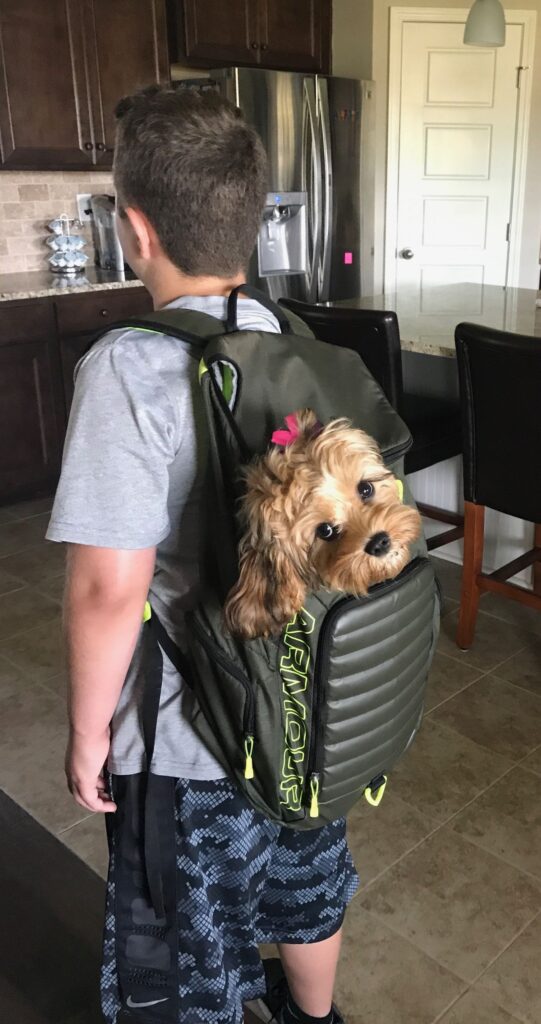
When summer ends and the school year begins, your family’s daily routine can change quickly (Helping Your Puppy Adjust to the Back-to-School Transition). For a puppy, that sudden change can be confusing.
During summer, your puppy may have become accustomed to having people around throughout the day. Then, almost overnight, children leave for school, adults return to work, and the house becomes much quieter.
This change can sometimes lead to barking, whining, destructive chewing, accidents, or difficulty settling alone.
The good news is that you can help your puppy adjust.
With a predictable schedule, gradual practice, positive reinforcement, and plenty of appropriate mental stimulation, your puppy can learn that being alone is temporary and that everyone will return home.
If you have recently brought home a Cavapoo puppy, establishing healthy routines early can also make future changes much easier.
Helping Your Puppy Adjust to the Back-to-School Transition: Why the Back-to-School Transition Can Be Difficult for Puppies
Puppies are creatures of habit.
They learn what to expect from the people and environment around them. If your family has spent most of the summer together, your puppy may have developed an expectation that someone will always be nearby.
Back-to-school season changes that pattern.
Your puppy may suddenly experience:
- Longer periods alone
- Different feeding times
- Different walking schedules
- Less daytime interaction
- More activity during mornings
- More noise during departures
- Changes in sleeping routines
- Different bathroom opportunities
These changes do not necessarily mean your puppy has a serious behavioral problem.
They may simply need time to understand the new routine.
The goal is to make the transition predictable instead of sudden.
1. Start the New Puppy Routine Before School Begins
One of the easiest ways to help your puppy adjust is to begin changing the schedule before the first day of school.
If everyone normally wakes up at 8:00 a.m. during summer but needs to wake up at 6:30 a.m. for school, begin shifting the schedule gradually.
Move breakfast, bathroom breaks, walks, playtime, and naps closer to their future times.
You do not have to change everything overnight.
A gradual transition gives your puppy time to adjust.
For example, you might begin moving the morning routine 10–15 minutes earlier every few days.
By the time school starts, the new schedule will already feel familiar.
2. Create a Predictable Morning Routine
School mornings can become chaotic quickly.
Backpacks are being packed. Shoes are disappearing. Breakfast is being prepared. Children are getting ready.
Your puppy may become excited by all the activity.
Creating a predictable sequence can help.
For example:
Wake up → bathroom break → breakfast → short walk → calm activity → family leaves
The exact routine will depend on your household.
What matters most is consistency.
A puppy that knows what happens next may find the morning transition easier than a puppy experiencing a completely different routine every day.
3. Give Your Puppy Quality Time Before School
Your puppy does not need hours of exercise before everyone leaves.
A short walk, training session, sniffing activity, or play session can provide valuable physical and mental stimulation.
For example, spend 5–10 minutes practicing:
- Sit
- Down
- Come
- Name recognition
- Leave it
- Place
- Relaxing on a mat
You can also provide a short sniffing walk where your puppy is allowed to investigate safe smells.
Mental stimulation can be particularly useful because puppies need opportunities to use their brains as well as their bodies.
Avoid turning the morning into an extremely exciting play session immediately before everyone leaves.
The goal is to finish with your puppy feeling relaxed rather than highly stimulated.
4. Practice Being Alone Before School Starts
If your puppy has rarely been alone, do not wait until the first day of school to introduce several hours of separation.
Start with short periods.
Place your puppy in their safe area with an appropriate toy or enrichment activity and step away for a few minutes.
Return calmly.
Gradually increase the duration when your puppy is comfortable.
The process might look like:
2 minutes → 5 minutes → 10 minutes → 15 minutes → 30 minutes
There is no requirement to increase the time on a specific schedule.
Move forward only when your puppy is coping comfortably.
If your puppy becomes increasingly distressed, shorten the next session.
The objective is not to see how long your puppy can tolerate being alone.
The objective is to teach your puppy that alone time is safe and temporary.
5. Make Your Departure Boring
Many families accidentally make departures more dramatic than necessary.
Long goodbyes, repeated hugs, excited voices, and emotional statements can increase the importance of the departure for your puppy.
Instead, keep departures calm.
Give your puppy an appropriate activity, say goodbye normally, and leave.
You can also practice leaving without actually going anywhere.
Pick up your keys.
Put on your shoes.
Walk toward the door.
Then sit back down.
This helps your puppy learn that these signals do not always mean a long separation is about to happen.
6. Create a Safe Puppy Space
Your puppy should have a comfortable area where they can relax while the family is away.
Depending on your puppy and household, this could include a puppy-proofed room, exercise pen, or properly introduced crate.
The space should contain appropriate items such as:
- Comfortable bedding
- Fresh water
- Safe puppy toys
- Appropriate enrichment
- A designated bathroom area when appropriate
Remove anything your puppy could chew, swallow, or damage.
Electrical cords, household chemicals, medications, small objects, and unsafe decorations should be kept out of reach.
If you use a crate, your puppy should already be comfortable with it. Never use a crate as punishment.
7. Give Your Puppy Something Safe to Do
A puppy left alone with nothing to do may find their own entertainment.
Unfortunately, that entertainment could involve your furniture, shoes, carpet, or other household objects.
Appropriate enrichment can help provide an alternative.
Consider rotating safe options such as:
- Food puzzle toys
- Stuffable enrichment toys
- Snuffle activities
- Puppy-safe chew toys
- Treat-dispensing toys
Always choose products appropriate for your puppy’s size and chewing style.
Supervise new toys initially to make sure your puppy uses them safely.
Instead of giving your puppy every toy at once, rotate them.
This can help familiar toys remain interesting.
8. Practice Positive Reinforcement
Positive reinforcement can help your puppy develop confidence during the transition.
Reward behaviors you want to see.
For example, give your puppy praise or an appropriate reward when they:
- Relax independently
- Settle on their bed
- Play quietly
- Enter their crate voluntarily
- Remain calm when someone leaves
- Wait patiently
- Follow the new routine
You do not need to reward every behavior forever.
The goal is to help your puppy understand which behaviors are desirable.
For additional training ideas, see our guide to clicker training for puppies.
9. Don’t Punish Separation-Related Behavior
If your puppy has an accident, chews something inappropriate, or barks while alone, punishment after you return home is unlikely to teach them what you want.
Your puppy may not connect the punishment with the earlier behavior.
Instead, look at what caused the problem.
Was your puppy alone too long?
Did they have a bathroom opportunity before being left?
Were they sufficiently prepared for the transition?
Was the puppy’s environment safe and appropriate?
Training works best when you identify the underlying need and adjust the environment or routine.
10. Keep Your Puppy Socialized
Back-to-school season should not mean your puppy suddenly stops experiencing the world.
Continue providing positive and age-appropriate socialization opportunities.
Depending on your puppy’s vaccination status and your veterinarian’s recommendations, this may include safe exposure to:
- Different people
- Household sounds
- Different surfaces
- Car rides
- Grooming
- Handling
- Appropriate dogs
- New environments
Always follow your veterinarian’s advice regarding vaccination and exposure to public areas.
For more guidance, read our complete puppy socialization guide.
11. Keep Your Puppy Active After School
When the family returns home, your puppy may be excited to see everyone.
Give them an appropriate opportunity to reconnect.
A walk, training session, playtime, or enrichment activity can help your puppy use some of the energy accumulated during the day.
However, avoid assuming that every behavior is caused by excess energy.
Puppies also need substantial amounts of sleep.
A puppy that becomes overly tired can sometimes become more irritable, mouthy, or difficult to settle.
Balance activity with plenty of rest.
12. Watch for Signs That Your Puppy Is Struggling
Some puppies adjust quickly.
Others need more time.
Pay attention to changes in behavior, particularly if they appear after the family’s schedule changes.
Possible signs that your puppy is struggling include:
- Excessive barking
- Persistent whining
- Destructive chewing
- Repeated accidents
- Pacing
- Excessive drooling
- Attempts to escape confinement
- Loss of appetite
- Difficulty settling
- Increased fearfulness
These signs can have many possible causes.
If the behavior is severe, persistent, or worsening, speak with your veterinarian or a qualified positive-reinforcement trainer.
Your veterinarian can also help determine whether an underlying health problem could be contributing to a change in behavior.
13. Don’t Leave a Young Puppy Alone for the Entire School Day
One important consideration is your puppy’s age.
Young puppies generally cannot be expected to remain alone for an entire school or workday without bathroom breaks, interaction, exercise, and supervision.
Their physical and emotional needs are still developing.
If your family will be away for a significant portion of the day, consider whether someone can provide a midday break.
Depending on your circumstances, options may include:
- A family member
- A trusted friend
- A professional dog walker
- A qualified pet sitter
- A reputable puppy daycare
Choose the option that fits your puppy’s age, temperament, health, and training level.
14. Make After-School Time a Positive Ritual
Children often want to rush home and see their puppy.
That excitement can be wonderful, but encourage everyone to greet the puppy calmly.
Allow your puppy to settle before beginning a high-energy play session.
You can create an after-school ritual such as:
Come home → bathroom break → calm greeting → snack or enrichment → play → rest
A predictable routine gives your puppy another reassuring part of the day to anticipate.
15. Prepare for the Weekend
The back-to-school routine should not disappear completely every weekend.
Of course, weekends can be more flexible.
However, huge differences between weekday and weekend schedules can make Monday morning harder.
Try to maintain relatively consistent:
- Wake-up times
- Feeding times
- Bathroom routines
- Exercise
- Bedtime
You can still enjoy weekend adventures with your puppy.
Just avoid completely reversing the routine every Saturday and Sunday.
Back-to-School Puppy Routine Example
Here’s a simple example that families can adapt:
6:30 a.m. — Wake up and bathroom break
6:45 a.m. — Breakfast
7:00 a.m. — Short walk or training session
7:20 a.m. — Calm enrichment activity
7:45 a.m. — Family prepares to leave
8:00 a.m. — Puppy settles in their safe area
12:00 p.m. — Midday bathroom break and interaction, if needed
3:30 p.m. — Family returns home
3:45 p.m. — Bathroom break
4:00 p.m. — Walk, play, or training
5:00 p.m. — Rest
The exact times are not important.
Your puppy’s age, bathroom needs, health, energy level, and your family’s schedule should determine the routine.
Frequently Asked Questions About Puppies and Back-to-School
How Do I Prepare My Puppy for Going Back to School?
Start preparing before school begins. Gradually adjust your puppy’s feeding, bathroom, walking, sleeping, and alone-time schedule.
Practice short periods of separation and reward calm behavior.
Will My Puppy Get Lonely When the Kids Go Back to School?
Your puppy may notice that the house becomes quieter.
However, being alone for appropriate periods can become a normal part of a healthy routine.
Gradual practice can help your puppy become comfortable with periods of independence.
How Long Can a Puppy Be Left Alone?
There is no single number that applies to every puppy.
Age, bladder development, health, training, temperament, and previous experience all matter.
Young puppies generally need more frequent bathroom breaks and interaction than older dogs.
If your puppy cannot comfortably handle the planned period alone, arrange a midday break rather than simply expecting them to tolerate it.
Should I Leave the TV On for My Puppy?
Some dogs may find gentle background noise comforting, while others do not need it.
If you use television or music, keep the volume moderate and choose calm background sounds.
Do not assume that background noise is necessary for every puppy.
Should I Crate My Puppy While Everyone Is at School?
A crate can be useful when a puppy has been properly introduced to it and is comfortable using it.
However, a crate should not be used as a way to leave a young puppy confined for an unreasonable period.
Your puppy still needs appropriate bathroom breaks, movement, enrichment, and interaction.
Why Is My Puppy Barking When the Kids Leave for School?
Your puppy may be reacting to the sudden change in routine, excitement, frustration, boredom, or difficulty being alone.
Try creating a predictable departure routine and practicing short periods of separation.
If barking is persistent or accompanied by significant distress, consult a veterinarian or qualified trainer.
Should I Give My Puppy a Toy Before Leaving?
An appropriate enrichment toy can help provide your puppy with something safe and interesting to do.
Choose toys suitable for your puppy’s size and chewing behavior.
Always supervise your puppy with unfamiliar toys before leaving them alone with the item.
Final Thoughts
Back-to-school season changes more than the family calendar.
It can change your puppy’s entire daily routine.
The transition does not have to be stressful.
Start early, introduce changes gradually, maintain predictable routines, and give your puppy appropriate opportunities for exercise, enrichment, rest, and interaction.
Most importantly, remember that puppies are still learning.
A puppy that struggles during the first few days is not necessarily misbehaving.
They may simply need more time and support.
With patience and consistency, your puppy can learn that school days are simply another part of the routine—and that the people they love will always come home.
For more puppy guidance, explore our Cavapoo puppies for sale page and our resources on puppy training.
Helpful External Resources
For additional guidance, these authoritative resources are useful:
- American Kennel Club — Separation Anxiety in Dogs
- American Veterinary Medical Association — Pet Care
- ASPCA — Dog Behavior and Training
Disclaimer
This article provides general educational information and is not a substitute for veterinary or professional behavioral advice. Every puppy is different. If your puppy develops persistent anxiety, destructive behavior, appetite changes, repeated accidents, or other concerning symptoms, consult your veterinarian or a qualified canine behavior professional.
Angela Butterfield
Angela Butterfield is a seasoned writer, lifestyle blogger, and lifelong dog lover. At Atlantic Cavapoo Puppies, she shares practical guidance on puppy care, training, socialization, safety, and everyday life with dogs.
