Cavapoo Care Guide, Cavapoo Exercise
5 Best Dog Breeds for Hiking: Is a Cavapoo a Good Hiking Dog?
Sep
Hiking with your dog can turn an ordinary weekend into an adventure. Fresh air, new smells, changing terrain and time away from the usual routine can provide both physical activity and mental enrichment.
For many owners, hiking with dogs is also a great way to strengthen the bond they share with their pets.
But when people search for the best dog breeds for hiking, they often focus entirely on breeds known for endurance, speed or working ability.
Labrador Retrievers, Siberian Huskies, Australian Shepherds, Border Collies and Australian Cattle Dogs are all examples of active dog breeds that can thrive with substantial physical activity. But that does not mean you need one of these breeds to enjoy the trails.
A dog’s suitability for hiking depends on much more than breed.
Age, health, conditioning, temperament, weather, terrain, distance and the individual dog’s fitness all matter. The American Kennel Club notes that almost any dog can potentially enjoy hiking when the distance and terrain are adapted to that dog’s abilities, while puppies may not be ready for long or strenuous hikes.
So where does the Cavapoo fit?
A healthy, properly conditioned adult Cavapoo can be an enjoyable companion for appropriate walks and hikes. The key is matching the adventure to the dog rather than expecting the dog to match an arbitrary mileage goal.
Let’s look at five breeds commonly associated with hiking—and then examine why the Cavapoo may also be a great fit for the right trail and lifestyle.
What Makes a Good Hiking Dog?
Before naming individual breeds, it helps to understand what actually makes a dog suitable for hiking.
A good trail companion generally needs to be comfortable walking for an appropriate amount of time, able to cope with changing terrain, responsive to basic cues and comfortable around the sights, sounds and smells encountered outdoors.
But there is no universal hiking distance that every dog should be expected to complete.
A young puppy, senior dog and healthy adult dog may have dramatically different exercise abilities, even if they are the same breed.
The American Kennel Club recommends considering a dog’s fitness and consulting a veterinarian about what the individual dog can safely handle, particularly when planning more demanding activities.
For hiking, these factors matter:
Age: Puppies are still developing and should not simply be treated like miniature adult athletes.
Health: Orthopedic problems, heart or respiratory conditions, obesity and other health concerns can affect exercise tolerance.
Conditioning: A dog that normally walks around the neighborhood should not suddenly be expected to complete a difficult mountain trail.
Temperament: A dog that becomes overwhelmed around wildlife, other dogs or unfamiliar people may need more training before tackling busy trails.
Weather: Heat and humidity can turn an enjoyable hike into a dangerous situation.
Terrain: Rocky, steep, slippery or rough trails require more physical effort and paw protection than flat paths.
Training: Reliable leash walking, recall where legally permitted, and cues such as “leave it” can make a major difference.
These factors are important for dog hiking safety, regardless of whether you own a working breed, sporting breed or companion breed.
1. Labrador Retriever
The Labrador Retriever is one of the classic choices for active families.
Labs were developed as working dogs associated with retrieving, particularly in water, and many individuals enjoy swimming, running, exploring and outdoor activities.
Their generally social nature can also make them pleasant companions for trails where they encounter other hikers and dogs.
A healthy adult Labrador with appropriate conditioning can handle substantial outdoor activity, although individual dogs still vary.
A Labrador should not automatically be assumed to tolerate every distance or temperature simply because the breed is athletic.
The same fundamental rules apply: build endurance gradually, provide water and monitor the dog throughout the hike.
For families specifically searching for best hiking dogs, the Labrador Retriever is often considered because of its working background and versatility. But individual fitness still matters.
2. Siberian Husky
The Siberian Husky is another breed frequently associated with outdoor endurance.
Their history as sled dogs makes their ability to work and travel over distance particularly notable.
However, the Husky’s strengths also demonstrate an important lesson about choosing a hiking dog: environment matters.
A breed adapted for colder conditions is not automatically an ideal choice for hot, humid hiking conditions.
Dogs can overheat during strenuous activity, and puppies and other vulnerable dogs require particular caution. The American Kennel Club advises avoiding excessive heat exposure and paying close attention to weather conditions, hydration and signs of overheating.
If you hike with a Husky, weather should be an important part of deciding when and where to go.
3. Australian Shepherd
Australian Shepherds are intelligent, energetic working dogs that often enjoy having a job or activity to participate in.
For an experienced owner who enjoys training and outdoor adventures, an Australian Shepherd can be an enthusiastic trail companion.
However, their energy level also means that simply taking a short walk may not satisfy every individual.
Training is especially important with active herding breeds. A dog that becomes highly focused on wildlife, movement or other trail distractions needs reliable control before being taken into challenging environments.
Good hiking companions aren’t simply dogs that can walk a long distance.
They also need to know how to walk safely with their person.
4. Border Collie
Border Collies are famous for intelligence, athleticism and trainability.
Many enjoy running, hiking, agility and other activities that challenge both their bodies and minds.
Their intelligence can be a major advantage on the trail, but it also means owners need to provide appropriate training and mental stimulation.
A Border Collie that is under-stimulated may find its own entertainment, while a highly stimulated dog may need careful management around wildlife and other trail distractions.
As with every breed on this list, the individual dog matters more than a breed label.
5. Australian Cattle Dog
Australian Cattle Dogs were developed for demanding work and are known for stamina, intelligence and determination.
For an experienced dog owner who wants a highly active companion, an Australian Cattle Dog can be an excellent partner for outdoor activities.
But a dog being physically capable of hiking does not automatically mean that the breed is suitable for every household.
Their intelligence, independence and working drive can require an owner who is prepared to provide consistent training, boundaries and mental stimulation.
For first-time owners, a lower-maintenance temperament may be easier to manage.
But What About the Cavapoo?
This is where the conversation becomes particularly relevant for Cavapoo families.
Cavapoos are not typically selected because they are extreme endurance athletes.
They are companion dogs, and their Cavapoo exercise needs should be considered alongside their size, age, health, temperament and individual energy level.
PetMD describes Cavapoos as adaptable dogs that generally do well with light to moderate exercise rather than requiring vigorous exercise.
That does not mean a Cavapoo cannot enjoy hiking.
In fact, many healthy adult Cavapoos can enjoy appropriately selected trails.
The important distinction is between saying:
“My Cavapoo enjoys hiking.”
and saying:
“My Cavapoo should be able to hike any trail.”
The first can absolutely be true.
The second is not something you should assume.
Is a Cavapoo a Good Hiking Dog?
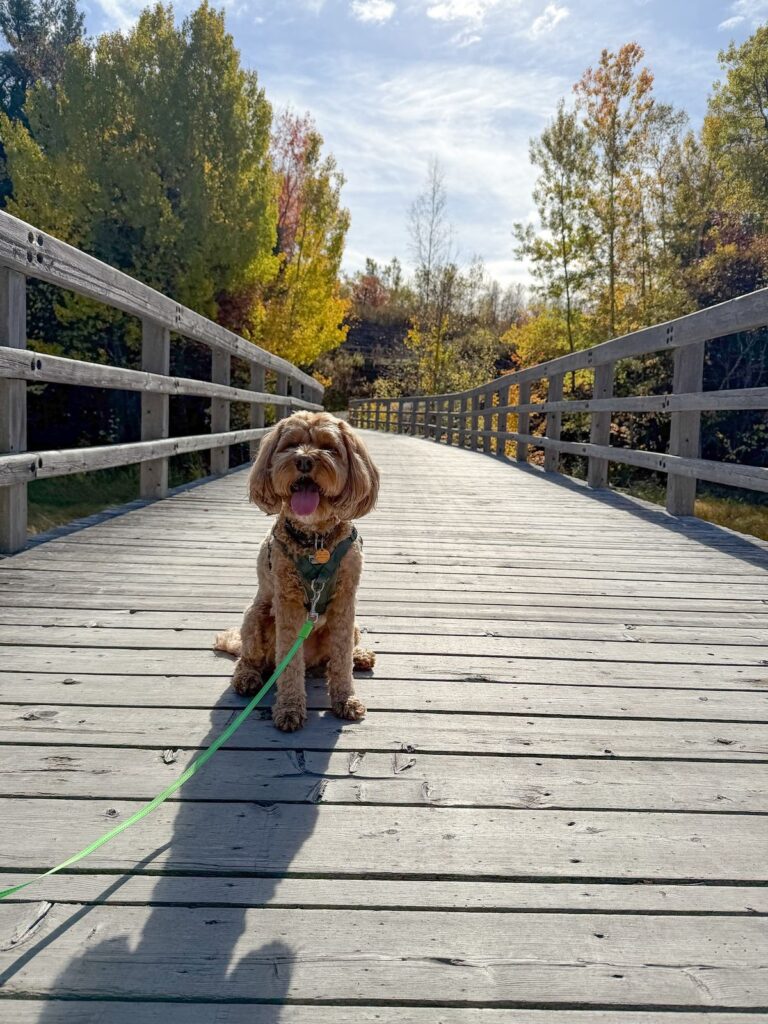
For the right owner and the right trail, a Cavapoo can make a wonderful hiking companion.
Cavapoo hiking can be a rewarding way to combine exercise, training, exploration and quality time together.
Cavapoos are often adaptable companion dogs that enjoy spending time with their families. A healthy adult Cavapoo who has gradually developed appropriate fitness may enjoy exploring nature, walking through wooded paths and joining the family on outdoor adventures.
This makes the Cavapoo a potentially enjoyable Cavapoo hiking companion for owners who choose trails that match their dog’s abilities.
But your Cavapoo does not need to compete with a Husky or Border Collie.
The goal should be safe enjoyment, not endurance records.
Start with easier walks and gradually increase the challenge if your dog handles the activity comfortably.
Watch your dog’s body language and behavior throughout the hike.
If your Cavapoo begins slowing down substantially, repeatedly stopping, struggling to keep pace, showing excessive panting or otherwise appearing uncomfortable, it is time to reduce the activity or turn back.
Cavapoo Puppies Should Not Be Treated Like Adult Hiking Dogs
This is especially important for new Cavapoo owners.
A puppy may appear energetic and enthusiastic, but enthusiasm does not mean the puppy is ready for a long hike.
Growing puppies have developing bones and joints, and their exercise needs differ from those of adult dogs.
The American Kennel Club specifically cautions that young puppies may not be able to handle long, challenging hikes and that the demands placed on growing bodies need to be considered.
Instead of planning a long trail adventure for a young puppy, focus on age-appropriate walks, controlled exploration, training and safe socialization.
Your puppy’s veterinarian can help you determine when your individual Cavapoo is ready for longer outdoor activities.
Start With Short Trails
If your Cavapoo has never hiked before, don’t begin with a difficult mountain route.
Start with a relatively easy trail where you can control the duration.
Pay attention to how your dog responds.
If everything goes well, you can gradually introduce longer or more challenging walks.
This approach also helps your Cavapoo become comfortable with:
- uneven ground
- different surfaces
- bridges
- roots and rocks
- water sounds
- other hikers
- other dogs
- wildlife smells
- changes in elevation
A hiking dog needs more than physical fitness. It needs experience.
Gradually increasing activity is also a practical way to support healthy Cavapoo exercise without suddenly demanding too much from your dog.
Train Your Cavapoo Before Hitting the Trail
One of the biggest mistakes people can make is focusing on physical exercise while ignoring trail behavior.
Your dog should have a foundation of basic training before you introduce challenging environments.
Useful skills include:
Loose-leash walking: Your Cavapoo should be able to walk without constantly pulling.
Come: A reliable recall is valuable if your dog ever gets separated from you, although local trail rules may require your dog to remain leashed.
Leave it: This can help prevent your dog from investigating dangerous objects, animal waste or wildlife.
Drop it: Useful if your dog picks up something inappropriate.
Stay: Helpful when you need your dog to remain in position while you manage a situation.
The American Kennel Club specifically recommends loose-leash walking, focus work, safety cues and reliable recall as important hiking skills.
Training is one of the most important parts of hiking with a Cavapoo because a physically capable dog still needs to behave safely around people, animals and trail hazards.
Keep Your Cavapoo on a Leash When Required
Never assume that your dog should be off leash simply because you are hiking in nature.
Many trails require dogs to remain leashed.
Even where off-leash hiking is permitted, your dog should only have that freedom if you can reliably control them, keep them within sight and prevent them from disturbing wildlife or approaching other people or dogs.
A leash also helps protect your Cavapoo from hazards such as steep drops, wildlife, unsafe plants and unknown objects.
For many Cavapoo owners, a sturdy standard leash and properly fitted harness provide useful control on the trail.
The AKC recommends following leash requirements and emphasizes that keeping dogs under control helps protect both the dog and other trail users.
Watch the Weather
A beautiful summer day can become dangerous for a dog surprisingly quickly.
Dogs rely heavily on panting to release body heat and are more vulnerable to overheating than humans during strenuous activity. Puppies are also among the dogs that require additional caution in hot conditions.
For a Cavapoo hike, consider:
Temperature: Avoid strenuous hiking during excessive heat.
Humidity: High humidity can make cooling more difficult.
Sun exposure: Shaded trails may be more comfortable than exposed paths.
Time of day: Early morning or later evening may be preferable during hot weather.
Water: Carry enough fresh water for both you and your dog.
If your Cavapoo shows excessive panting, weakness, vomiting, diarrhea, disorientation or collapse, treat it as an emergency and seek veterinary assistance. ASPCA guidance identifies excessive panting, breathing difficulty, weakness and collapse among signs of overheating.
Weather should always be part of your dog hiking safety plan.
Bring Fresh Water
Do not assume that a stream or pond is a safe water source.
Unknown water can contain contaminants, parasites or organisms capable of making dogs sick.
The American Kennel Club recommends carrying water for your dog rather than relying on water sources encountered along the trail.
A collapsible travel bowl makes drinking during breaks simple.
Offer water regularly, especially when the weather is warm or the activity is demanding.
Protect Your Cavapoo’s Paws
Trail surfaces can be rough.
Your Cavapoo may encounter:
- sharp rocks
- rough gravel
- hot surfaces
- sticks
- thorns
- plant debris
- uneven terrain
Paw protection may be useful on certain trails and surfaces.
If you want your Cavapoo to wear hiking boots, introduce them gradually at home before expecting your dog to walk comfortably in them outdoors.
Never make the first boot experience happen halfway up a difficult trail.
Check Your Cavapoo for Ticks After Hiking
Trails can expose dogs to ticks and other parasites.
After every hike, inspect your Cavapoo carefully.
Run your hands through the coat and check areas such as:
- ears
- around the collar
- between toes
- legs
- belly
- armpits
- around the face
- other areas where ticks may attach
A Cavapoo’s coat can make a careful post-hike inspection particularly important.
Talk with your veterinarian about appropriate flea and tick prevention for your dog’s age, weight, health and geographic risk.
The American Kennel Club recommends checking dogs for ticks after hikes and discussing appropriate preventive medication with a veterinarian.
Groom Your Cavapoo After a Trail Adventure
Hiking can leave more than ticks behind.
Your Cavapoo may return with:
- burrs
- leaves
- mud
- grass seeds
- dirt
- small pieces of debris
Give your dog a quick post-hike inspection before settling back into the house.
Check the paws, ears, coat and between the toes.
If you find something embedded in the skin, ear or paw that you cannot safely remove, contact your veterinarian rather than digging at it yourself.
These simple post-hike habits can make Cavapoo outdoor activities safer and more comfortable.
Don’t Let Your Cavapoo Chase Wildlife
A forest trail can be full of fascinating smells and movement.
Your dog may encounter squirrels, rabbits, birds, deer and other wildlife.
That is one reason “leave it” and reliable recall are so valuable.
Your Cavapoo should not be allowed to chase wildlife simply because the trail is quiet.
Chasing can place your dog at risk of getting lost, injured or encountering an animal that can defend itself.
It can also disturb wildlife and violate trail rules.
The AKC’s hiking guidance similarly recommends respecting wildlife and keeping dogs under appropriate control.
Hiking Is About More Than Distance
A successful hike isn’t necessarily the longest hike.
For a Cavapoo, a shorter trail with interesting smells, safe exploration and plenty of breaks may provide excellent enrichment.
Mental stimulation matters too.
A dog that gets to stop and investigate appropriate scents, experience new surfaces and practice training behaviors is doing more than simply counting miles.
This is especially useful for companion breeds.
You don’t need to turn every outing into an endurance test.
The right Cavapoo exercise routine can include hiking, neighborhood walks, play, training and other appropriate forms of enrichment.
Choosing the Right Trail for Your Cavapoo
When deciding where to hike, research the trail first.
The trail should match your dog’s age, health, conditioning and experience.
Look at:
Trail length: Start conservatively.
Elevation: Steep climbs require more effort.
Terrain: Rocky or technical trails may be unsuitable for some dogs.
Shade: Important in warm conditions.
Water availability: Bring your own regardless.
Dog regulations: Check leash requirements and restrictions.
Wildlife: Know what animals are common in the area.
Crowds: A busy trail may be stressful for some dogs.
Emergency access: Consider what you would do if your dog became injured.
Choosing an appropriate route is one of the easiest ways to make hiking with dogs more enjoyable.
The Best Hiking Dog Is the Dog That Can Hike Safely
When comparing the best dog breeds for hiking, it is tempting to create a simple ranking.
But breed alone does not determine whether a dog will be a good hiking partner.
A healthy, well-conditioned dog with good leash manners and a suitable temperament can be a much better hiking companion than an athletic breed that is poorly trained, unfit or uncomfortable in the environment.
That is why the right question is not simply:
“Which breed can hike the farthest?”
A better question is:
“Which dog fits my lifestyle, and can I safely adapt our outdoor activities to that individual dog’s needs?”
For some families, that answer may be a Labrador Retriever, Australian Shepherd, Border Collie or another highly active breed.
For another family, it may be a Cavapoo.
Looking for Cavapoo Puppies For Sale Near Me?
If hiking and outdoor adventures are part of the lifestyle you want to share with your future dog, consider those plans before choosing a puppy.
When searching for Cavapoo Puppies For Sale Near Me, think about the lifestyle you expect to provide rather than choosing a puppy based only on appearance.
Ask questions about the puppy’s current routine, socialization, veterinary care and temperament.
Then consider whether the breed and individual puppy are a realistic match for the amount and type of activity your family expects.
You can explore our Available Cavapoo Puppies page when you’re ready to learn more about currently available puppies.
Cavapoo Puppies For Sale In Tennessee and Outdoor Adventures
Families searching for Cavapoo Puppies For Sale In Tennessee may have plenty of opportunities to enjoy outdoor activities with their dogs.
But having access to trails does not mean a puppy should immediately be taken on long hikes.
Start with age-appropriate activity and basic training. As your Cavapoo matures and develops fitness, you can gradually introduce longer and more varied outdoor adventures.
Always consider the weather and trail conditions before setting out.
Cavapoo Puppies For Sale In Ohio: Preparing for Trail Life
If you’re researching Cavapoo Puppies For Sale In Ohio, think about how your future dog will fit into your daily routine.
A Cavapoo can enjoy walks and appropriately selected outdoor adventures, but preparation matters.
Teach leash manners early, introduce new environments gradually and build physical activity at an appropriate pace.
When your dog is ready for longer adventures, hiking can become a rewarding way to spend time together.
Cavapoo Puppies For Sale In Florida: Hiking in Warm Weather
Families searching for Cavapoo Puppies For Sale In Florida need to pay particular attention to heat when planning outdoor activities.
Florida’s warm and humid conditions can make strenuous hiking challenging for dogs.
Choose cooler times of day, favor shaded routes, carry fresh water and monitor your dog carefully.
Never assume that because your dog appears enthusiastic they are safe to continue exercising in excessive heat. Dogs can continue trying to please their owners even when they are becoming overheated.
ASPCA guidance recommends fresh water, shade and avoiding over-exercising pets during hot or humid conditions.
A Cavapoo Hiking Checklist
Before heading out with your Cavapoo, consider bringing:
- A sturdy leash
- A properly fitted harness
- Identification information
- Fresh drinking water
- A collapsible bowl
- High-value training treats
- Waste bags
- Basic first-aid supplies
- A towel
- Paw protection if appropriate
- Your phone
- Your veterinarian’s contact information
For longer or remote hikes, consider what additional emergency supplies may be appropriate for the trail and your dog’s needs.
The American Kennel Club similarly recommends carrying water, waste bags, identification, a leash, treats and a pet first-aid kit when hiking with dogs.
10 Tips for Your First Cavapoo Hike
1. Start short
Your first hike should not be your most difficult hike.
2. Choose easy terrain
Give your dog time to learn how different trail surfaces feel.
3. Bring fresh water
Never depend entirely on natural water sources.
4. Keep your dog under control
Follow leash rules and use a harness or leash setup that gives you reliable control.
5. Watch the weather
Avoid strenuous activity during excessive heat.
6. Take breaks
Your dog may need more recovery time than you expect.
7. Watch the paws
Inspect the feet during and after difficult hikes.
8. Check for ticks
Inspect the coat carefully after returning home.
9. Practice trail manners
Teach your Cavapoo to pass people and dogs calmly.
10. Know when to turn around
Turning back early is better than pushing your dog beyond their comfortable limits.
These simple steps support safer Cavapoo hiking while helping your dog build positive trail experiences.
Final Thoughts: Can a Cavapoo Be a Hiking Dog?
Absolutely—but with an important qualification.
A Cavapoo should not be expected to perform like a Siberian Husky, Border Collie or Australian Cattle Dog simply because those breeds are known for endurance.
Instead, look at your individual Cavapoo.
A healthy adult with appropriate conditioning may enjoy hiking, nature walks and other outdoor activities. The key is choosing suitable trails, building endurance gradually, watching the weather, carrying water, using appropriate equipment and paying attention to your dog’s behavior.
The best dog breeds for hiking are not simply the breeds capable of covering the greatest distance.
The best hiking companion for your family is an individual dog whose health, temperament, fitness and exercise needs fit the adventures you want to share.
For many families, a Cavapoo can be exactly that kind of companion—especially when hiking is approached as a shared experience rather than an endurance competition.
Frequently Asked Questions About Hiking With a Cavapoo
Are Cavapoos good hiking dogs?
Healthy adult Cavapoos can enjoy appropriately selected hikes. Their suitability depends on the individual dog’s age, health, conditioning, temperament, weather and trail difficulty.
How far can a Cavapoo hike?
There is no single safe distance for every Cavapoo. Age, fitness, health, terrain, temperature and individual endurance all matter. Start with shorter walks and gradually build activity.
Can a Cavapoo puppy go hiking?
Young puppies should not be treated like adult hiking dogs. Their developing bodies need age-appropriate exercise, and your veterinarian can help determine when longer activities are appropriate.
What are the best dog breeds for hiking?
Breeds commonly associated with hiking include Labrador Retrievers, Siberian Huskies, Australian Shepherds, Border Collies and Australian Cattle Dogs. However, breed alone does not determine hiking suitability.
Should my Cavapoo wear a harness while hiking?
A properly fitted harness can provide useful control for many dogs, particularly on uneven terrain. Choose equipment that fits correctly and introduce it gradually.
Should I let my Cavapoo off leash while hiking?
Only where permitted and only if your dog has reliable verbal control and recall. Many trails require dogs to remain leashed.
What should I bring when hiking with my Cavapoo?
Bring fresh water, a travel bowl, leash, identification, waste bags, treats and basic first-aid supplies. Additional gear may be appropriate depending on the trail and weather.
How can I protect my Cavapoo from ticks?
Discuss veterinarian-approved flea and tick prevention for your dog, and inspect your Cavapoo carefully after hikes.
Can Cavapoos hike in hot weather?
Extra caution is necessary in hot or humid conditions. Avoid strenuous activity during excessive heat, provide water and shade, and monitor your dog closely for signs of overheating.
Should I hike with my Cavapoo in summer?
You can enjoy outdoor activities in summer, but timing and conditions matter. Cooler morning or evening periods and shaded routes may be safer than strenuous midday hiking.
How do I train my Cavapoo for hiking?
Begin with basic leash walking and obedience, then gradually introduce different surfaces, distractions and longer walks. Practice cues such as “come,” “leave it,” “drop it” and “stay.”
Can hiking replace all of my Cavapoo’s exercise?
Not necessarily. Your Cavapoo’s overall routine can include walks, play, training, enrichment and other appropriate activities. Exercise needs vary by individual.
What should I do if my Cavapoo becomes tired during a hike?
Stop and allow your dog to rest in a safe location. If your dog appears unusually weak, overheated, disoriented or otherwise unwell, end the activity and seek veterinary advice.
Can hiking help mentally stimulate a Cavapoo?
Yes. Hiking can expose dogs to new sights, sounds and appropriate smells while providing physical activity and environmental enrichment.
Continue Learning About Cavapoos
If you’re preparing for life with a Cavapoo, continue learning with our guides on Available Cavapoo Puppies, the Cavapoo Breed Guide, Cavapoo Care Guide, Cavapoo Buying Guide, Cavapoo Puppies by State, Puppy Buying Checklist, Questions to Ask Before Buying a Cavapoo Puppy, Health Guarantee, Shipping & Delivery, Adoption Process, and Frequently Asked Questions.
