
Cavapoo Health & Wellness, Cavapoo Care Guide
Puppy First Vet Visit: How to Prepare Your Puppy for the Vet
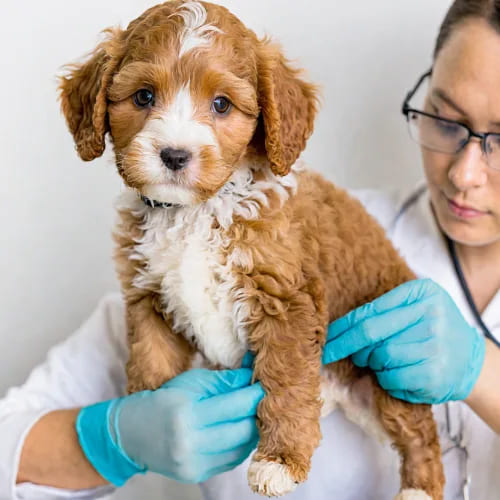
Aug
Bringing home a new puppy is an exciting experience, but responsible puppy ownership involves more than food, toys, training, and cuddles (Puppy First Vet Visit). Your puppy also needs regular veterinary care throughout life.
For a young Cavapoo, the first veterinary appointment is especially important. It gives your veterinarian an opportunity to evaluate your puppy’s overall health, review vaccination needs, discuss parasite prevention, and answer questions about nutrition, behavior, grooming, and development.
However, there is another important reason to prepare for the first vet visit.
Your puppy is learning what the world means.
A veterinary clinic introduces your puppy to unfamiliar people, new smells, strange sounds, different surfaces, physical handling, and potentially unfamiliar equipment. A thoughtfully planned first experience can help your puppy become more comfortable with future veterinary visits.
The goal is not necessarily to make your puppy love going to the veterinarian.
The goal is to help your puppy learn that veterinary care is a normal and manageable part of life.
This guide explains how to prepare your puppy before the appointment, what you can practice at home, what to bring, and how to make future visits easier.
Why Your Puppy’s First Vet Visit Matters
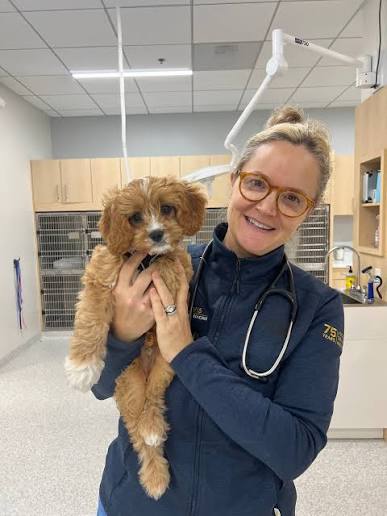
Puppies change rapidly during their first year.
Their immune systems, teeth, bones, behavior, coat, and overall development are all changing. Regular veterinary appointments allow your veterinarian to monitor that development and identify potential concerns early.
Your veterinarian can also help you create an appropriate preventive-care plan for your individual puppy (puppy first vet visit checklist).
That plan may involve:
- Vaccinations
- Parasite prevention
- Fecal testing
- Nutrition
- Weight monitoring
- Dental care
- Grooming and coat care
- Spay or neuter discussions
- Microchipping
- Exercise recommendations
- Training and behavior questions
For a Cavapoo puppy, routine veterinary care can be particularly useful because Cavapoos combine traits from Cavalier King Charles Spaniels and Poodles.
Every Cavapoo is an individual, so your veterinarian should evaluate your puppy rather than relying only on breed averages.
Your puppy’s breeder should also provide you with the health records and veterinary information you need when you bring your puppy home.
If you are preparing to bring home a Cavapoo, you can also review our Cavapoo Puppies for Sale page to learn more about starting your puppy journey.
When Should a Puppy Have Its First Vet Visit?
The appropriate timing depends on your puppy’s age, health history, vaccination status, breeder recommendations, and veterinarian’s guidance (preparing a puppy for the vet).
Many puppies have their first veterinary examination shortly after going to their new homes.
Rather than waiting until your puppy appears sick, schedule veterinary care proactively.
Before bringing your puppy home, ask for:
- Previous veterinary records
- Vaccination records
- Deworming or parasite-treatment records
- Microchip information, if applicable
- Health examination documentation
- Current food information
- Medication information
- Any available health guarantee documentation
Take these records to your veterinarian.
They provide valuable background information and help the veterinarian determine what care your puppy needs next.
Your veterinarian can then establish an individualized schedule for future appointments.
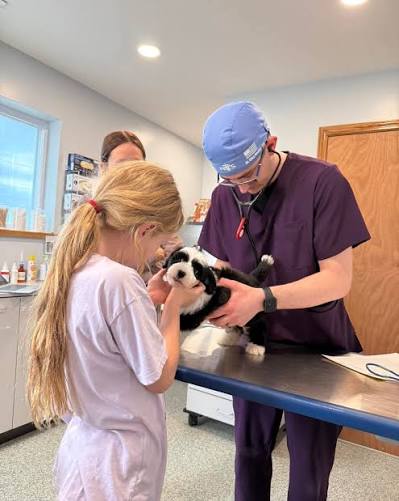
What Happens During a Puppy First Vet Visit?
Every veterinary clinic operates somewhat differently.
Your puppy’s appointment may include a general physical examination and a discussion about preventive care.
Your veterinarian may evaluate areas such as:
- Body weight
- Body condition
- Heart and lungs
- Eyes
- Ears
- Mouth and teeth
- Skin and coat
- Abdomen
- Joints and movement
- Overall physical development
Your veterinarian may also discuss vaccinations, parasite prevention, nutrition, dental care, grooming, and behavior.
Do not be afraid to ask questions.
In fact, writing your questions down before the appointment can make the visit much more productive (Cavapoo first vet visit).
Questions Worth Asking Your Veterinarian
Consider asking:
How much should my puppy eat each day?
Puppies need appropriate nutrition for growth, but feeding amounts depend on factors such as size, age, food type, activity, and body condition.
How often should my puppy receive vaccinations?
Your veterinarian can explain which vaccines are appropriate and when boosters should be administered.
What parasite prevention does my puppy need?
Your veterinarian can recommend prevention based on your puppy’s age, lifestyle, geographic location, and exposure risks.
How should I care for my puppy’s teeth?
Starting dental-care habits early can make future maintenance easier.
When should I begin professional grooming?
Cavapoos typically need regular coat maintenance. Ask your veterinarian and groomer how to introduce grooming gradually and safely.
How much exercise is appropriate?
Young puppies need activity, but they also require substantial sleep and recovery time.
Is my puppy’s behavior normal?
Puppies may mouth, chew, jump, bark, become overexcited, and have periods of intense activity. Your veterinarian can help determine when behavior is typical and when additional guidance would be useful.
How to Prepare Your Puppy Before the Vet Appointment
One of the best ways to make a veterinary visit easier is to prepare before you ever enter the clinic.
You can teach your puppy that handling, short car rides, new environments, and calm interactions are normal parts of life.
Practice Gentle Handling at Home
Veterinary examinations require physical handling.
Your puppy may eventually need to have their ears examined, paws handled, mouth checked, body palpated, and temperature taken.
You can gradually introduce your puppy to these sensations at home.
Start when your puppy is relaxed.
Gently touch one paw.
Reward calm behavior.
Then release the paw.
Repeat later.
You can gradually practice:
- Touching paws
- Looking at ears
- Briefly lifting the lips
- Touching the tail
- Gently touching the legs
- Stroking the chest
- Handling the collar or harness
- Brushing the coat
- Looking at the teeth
Keep these sessions short.
The objective is not to restrain your puppy for long periods.
Instead, you want your puppy to learn that gentle handling predicts calm interactions and rewards.
Never Force Your Puppy Through Fear
If your puppy pulls away, freezes, growls, or shows other signs of distress, slow down.
Do not punish your puppy for communicating discomfort.
Increase distance or reduce the intensity of the handling.
Then try again later at an easier level.
This approach can help prevent handling from becoming something your puppy actively fears.
Practice Paw Handling
Paw handling deserves special attention.
Cavapoos need regular grooming and nail maintenance, so comfortable paw handling can benefit them throughout life.
Touch your puppy’s paw briefly.
Reward.
Release.
Repeat.
Eventually, you can introduce a nail-trimming tool without actually trimming anything.
Let your puppy see it.
Reward calm behavior.
This creates a gradual association between grooming equipment and positive experiences.
Practice Looking Inside the Mouth
Dental care begins long before a professional dental cleaning.
Your puppy should gradually become comfortable with gentle mouth handling.
Lift the lip briefly.
Look at the teeth.
Reward.
Then stop.
Do not turn this into a wrestling match.
Your goal is cooperation.
As your puppy becomes comfortable, you can gradually build toward regular tooth-brushing routines recommended by your veterinarian.
Make the Veterinary Clinic Familiar
Some veterinary clinics allow short social visits.
Ask your clinic whether you can bring your puppy in simply to meet the staff and experience the environment.
A short visit might involve walking through the lobby, meeting a staff member, receiving a treat, and leaving.
This can be valuable because the puppy learns that entering the clinic does not automatically mean something unpleasant happens.
However, always follow the clinic’s disease-control policies for young puppies.
Your veterinarian may recommend limiting exposure to certain environments until your puppy has received appropriate vaccinations.
That does not mean your puppy cannot experience safe socialization.
It means socialization should be planned carefully.
Let Your Puppy Meet Veterinary Staff Positively
If your clinic permits it, allow friendly staff members to interact with your puppy calmly.
A few treats and a gentle interaction can make a significant difference.
Avoid overwhelming your puppy with too many people at once.
One calm interaction may be better than a crowd of enthusiastic strangers.
Your puppy should have the opportunity to observe, process, and relax.
Help Your Puppy Become Comfortable With the Car
For many puppies, the veterinary experience starts before they reach the clinic.
It starts in the car.
If every car ride ends at the veterinarian, your puppy may eventually learn that getting into the car predicts something stressful.
Instead, create a variety of positive experiences.
Start with very short rides.
Your puppy can sit safely in an appropriate crate or restraint.
Begin with a few minutes.
Gradually increase the duration as your puppy becomes comfortable.
Keep safety a priority.
Never allow a puppy to ride loose in the vehicle.
You can also make sure your puppy has opportunities to experience car rides that do not end at the veterinary clinic.
This helps prevent the car from becoming a predictor of veterinary appointments.
Use Your Puppy’s Crate as a Safe Space
Crate training can be helpful for veterinary care, travel, recovery, and everyday management.
Your puppy should learn that the crate is a comfortable place rather than a punishment area.
Place the crate in an appropriate area of your home.
Make it comfortable.
Allow your puppy to enter voluntarily.
Reward calm behavior.
Gradually build duration.
If your puppy eventually needs to stay at a veterinary hospital, familiarity with a crate can make the experience less unfamiliar.
You can learn more about preparing for life with a new puppy through our Puppy Adoption Process resources.
Should You Practice Muzzle Training?
A muzzle should never be treated as a punishment.
Some veterinary procedures may require additional safety measures if a dog is frightened, painful, or likely to bite.
However, many dogs can be gradually introduced to a properly fitted basket muzzle through positive reinforcement.
If your veterinarian recommends muzzle training, ask them to show you how the muzzle should fit and how to introduce it safely.
Never force a muzzle onto a frightened puppy simply to “get them used to it.”
Instead, the process should be gradual.
Your puppy should learn that seeing the muzzle can predict something positive.
How to Reduce Puppy Anxiety at the Vet
Some puppies become nervous at veterinary clinics.
That does not mean you have failed as an owner.
The environment is unfamiliar, and puppies have different personalities and experiences.
Watch your puppy’s body language.
Possible signs of stress include:
- Excessive panting
- Trembling
- Hiding
- Avoiding eye contact
- Lip licking
- Yawning
- Freezing
- Trying to escape
- Whining
- Excessive vocalization
Some puppies become unusually still when frightened.
That does not necessarily mean they are relaxed.
If your puppy appears uncomfortable, tell the veterinary team.
They may be able to change the pace of the examination or modify the environment.
Bring Familiar Items
Depending on the clinic’s policies, consider bringing something familiar from home.
This could include:
- A small blanket
- A familiar towel
- A favorite toy
- High-value treats
A familiar scent can provide additional comfort.
For puppies, familiar routines can also help.
Avoid making the appointment unnecessarily chaotic.
Give yourself enough time to arrive without rushing.
Use Positive Reinforcement During Veterinary Visits
Positive reinforcement can help your puppy develop better associations with veterinary handling.
For example, your puppy might receive a small treat after calmly allowing a paw to be touched.
The same principle can be applied during veterinary care when appropriate.
Your veterinarian may use treats during:
- Examination
- Handling
- Vaccination
- Nail checks
- Ear examinations
- Weighing
Ask your veterinarian whether treats are appropriate during your puppy’s appointment.
If your puppy is highly food motivated, small rewards can become a powerful part of the experience.
What Should You Bring to the First Vet Visit?
Preparing a small puppy-care folder can save time.
Bring:
Veterinary Records
Include vaccination and previous examination records.
Breeder Information
Bring relevant health and care documentation provided when you received your puppy.
Food Information
Know the brand, formula, feeding schedule, and approximate amount your puppy currently eats.
Medication and Parasite Information
Bring records of any medications, deworming treatments, or parasite prevention.
Your Questions
Write them down.
It is surprisingly easy to forget questions during an appointment.
A Fresh Stool Sample
Your veterinary clinic may request one for parasite testing.
Ask the clinic beforehand whether a sample is needed and how it should be collected.
A Secure Carrier or Crate
For a small Cavapoo puppy, a secure carrier or crate can provide safer transportation and a familiar resting space.
Puppy Vet Visit Checklist
Before leaving home, use this simple checklist.
Health records
☐ Vaccination records
☐ Previous veterinary records
☐ Breeder health information
☐ Microchip information, if applicable
Daily-care information
☐ Current puppy food
☐ Feeding schedule
☐ Current medications
☐ Parasite-prevention information
Questions
☐ Vaccination schedule
☐ Nutrition
☐ Parasite prevention
☐ Dental care
☐ Grooming
☐ Exercise
☐ Training
☐ Behavior
Travel
☐ Secure crate or carrier
☐ Leash and harness
☐ Familiar blanket
☐ Small training treats
Being prepared means you can focus more attention on your puppy rather than trying to remember everything during the appointment.
Common Mistakes New Puppy Owners Make
Waiting Until the Puppy Is Sick
Routine veterinary care should not begin only when something goes wrong.
Establishing veterinary care early gives you an opportunity to discuss prevention and development.
Making Every Car Ride a Vet Trip
If possible, give your puppy positive car experiences that end somewhere other than the veterinary clinic.
Forcing Handling
Forcing a puppy through frightening handling can create stronger negative associations.
Use gradual exposure instead.
Ignoring Early Fear
A puppy that repeatedly shows fear deserves attention.
Do not assume the behavior will automatically disappear.
Discuss persistent fear with your veterinarian or a qualified behavior professional.
Using Punishment
Punishing a frightened puppy can increase fear.
Instead, work toward changing the puppy’s emotional response through gradual exposure and positive reinforcement.
Forgetting About Grooming
Cavapoos have coats that require regular maintenance.
Veterinary handling and grooming preparation should therefore be part of your puppy’s early routine.
You can also connect this preparation with your Cavapoo breed guide to learn more about the breed’s general care needs.
Preparing a Cavapoo Specifically for Veterinary Care
Cavapoos are often chosen as companion dogs because of their affectionate nature and manageable size.
But every Cavapoo has an individual temperament.
Your puppy may be confident, cautious, energetic, sensitive, curious, or somewhere in between.
That individual personality should guide your approach.
A confident puppy may quickly accept new environments.
A cautious puppy may need more time.
Do not compare your puppy with another Cavapoo.
Instead, look for gradual progress.
A puppy that initially needs several short sessions to accept paw handling may eventually become completely comfortable with the routine.
That is success.
Grooming and Veterinary Handling Can Work Together
Cavapoo owners can combine everyday grooming preparation with veterinary handling practice.
For example:
Brush the coat gently.
Touch the paws.
Look at the ears.
Briefly check the mouth.
Reward calm behavior.
Then finish.
These small sessions can become part of normal life.
They also teach your puppy that being handled does not always mean something unpleasant is about to happen.
What If My Puppy Is Extremely Afraid of the Vet?
Some dogs experience significant veterinary fear.
If your puppy trembles, attempts to escape, becomes aggressive, or cannot tolerate routine handling, tell your veterinarian.
Do not simply try to “push through” the fear.
Your veterinarian may recommend changes to appointment procedures, handling techniques, scheduling, or additional behavioral support.
In some cases, veterinary professionals may recommend medication or other strategies to reduce severe anxiety.
These decisions should be made with your veterinarian.
The important point is that veterinary fear is a problem that can be addressed.
You do not have to accept extreme distress as unavoidable.
Building a Lifetime of Better Veterinary Experiences
The first vet visit is only the beginning.
Your puppy will likely have many veterinary appointments throughout life.
Each experience contributes to what your dog learns about veterinary care.
That is why consistency matters.
Continue practicing gentle handling.
Continue rewarding calm behavior.
Continue making veterinary appointments as predictable and positive as possible.
And continue communicating with your veterinarian when something is not working.
Your puppy does not need to be perfectly calm at every appointment.
Instead, aim for steady improvement.
A puppy that learns to tolerate handling, recover from mild stress, and trust familiar people has valuable skills that can benefit them throughout adulthood.
Puppy First Vet Visit FAQ
How soon should I take my new puppy to the vet?
Schedule your puppy’s first appointment according to your veterinarian’s recommendation and the puppy’s age, health history, and previous veterinary care. Ask your breeder for complete records so your veterinarian can determine what care is needed next.
What should I bring to my puppy’s first vet appointment?
Bring vaccination and veterinary records, breeder health information, current food details, medication or parasite-prevention information, and a list of questions. Your clinic may also request a fresh stool sample.
How can I prepare my puppy for being examined?
Practice gentle handling at home. Briefly touch your puppy’s paws, ears, mouth, legs, and body while rewarding calm behavior. Keep sessions short and avoid forcing your puppy through fear.
What if my puppy is afraid of the veterinarian?
Tell the veterinary team. They can often adjust the pace and handling approach. For persistent or severe fear, ask your veterinarian about additional behavioral support.
Should I crate train my puppy before the first vet visit?
Crate training can be very useful. A familiar crate can provide a secure transportation method and a predictable resting place during stressful situations.
Should I bring treats to the vet?
Small, high-value treats can be useful for positive reinforcement if your veterinarian says they are appropriate. They can help your puppy associate calm behavior and handling with positive experiences.
How do I prepare my Cavapoo for grooming and veterinary handling?
Start with short, gentle handling sessions. Practice touching paws, ears, mouth, and coat. Gradually introduce brushing and other grooming tools while rewarding calm behavior.
Can a puppy become less afraid of the vet?
Yes. Many dogs can become more comfortable with veterinary care through gradual exposure, positive reinforcement, appropriate handling, and consistent experiences. Some dogs need additional behavioral or veterinary support.
Final Thoughts: Making Veterinary Care Easier for Your Puppy
Your puppy’s first veterinary visit is an important milestone.
It is an opportunity to establish a relationship with your veterinarian and create a preventive-care plan for your new companion.
It is also an opportunity to teach your puppy that unfamiliar handling and new environments can be approached calmly.
Start preparing before the appointment.
Practice gentle handling at home.
Make car rides positive.
Create a comfortable relationship with the crate.
Use rewards when appropriate.
Listen to your puppy’s body language.
And never hesitate to ask your veterinarian for help if your puppy becomes frightened.
For a Cavapoo puppy, these early experiences can become part of a larger foundation for grooming, training, healthcare, and everyday life.
Responsible puppy ownership is not about making every experience perfect.
It is about giving your puppy the guidance, patience, and support they need to become a confident companion.
If you are preparing to welcome a Cavapoo into your family, explore our Cavapoo Puppies for Sale page and learn more about bringing home your new companion.
You can also explore our Health Guarantee information and Contact Us page as you prepare for your puppy journey.

Pingback: First Time Puppy Parent Guide: How to Prepare for Your Cavapoo