
Cavapoo Care Guide, Grooming Guide
How to Care for No-Shed Puppies: Cavapoo Grooming & Coat Guide
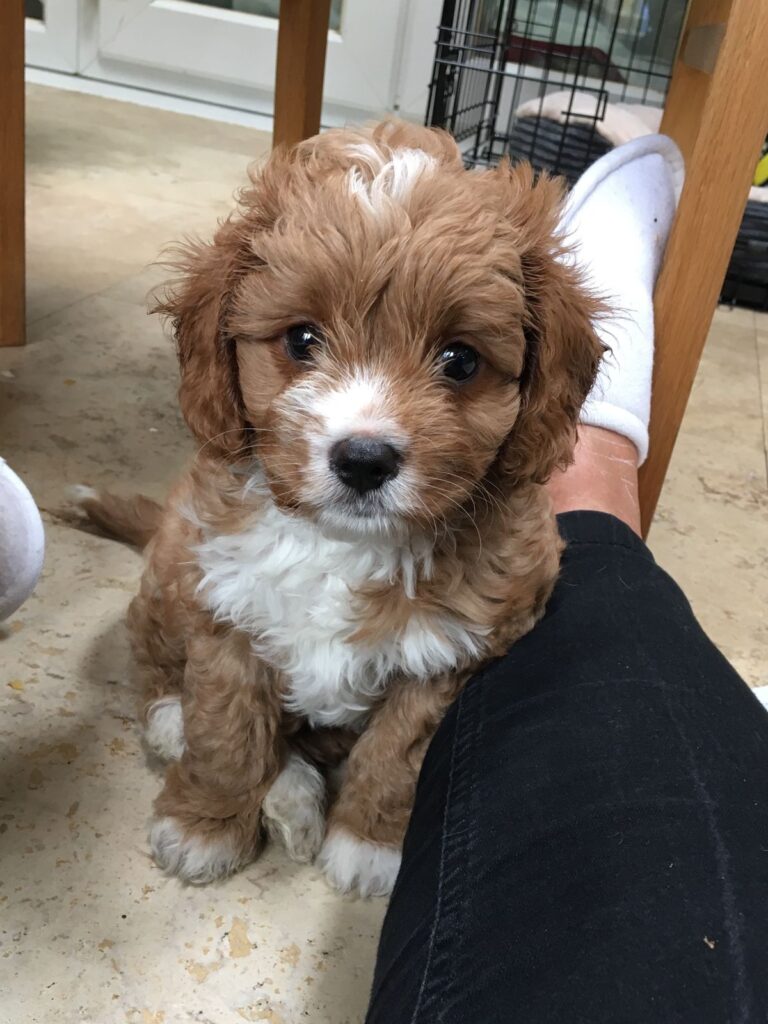
Sep
When people search for no-shed puppies, they are often looking for a dog that leaves less hair around the house and may be easier to manage in a home where someone is sensitive to pet allergens (how to care for no-shed puppies). Cavapoos are frequently considered by families looking for a lower-shedding companion because their coats can range from wavy to curly and may shed less than many traditional shedding breeds.
However, it is important to understand what “no-shed” really means before bringing a puppy home.
There is no dog that is completely non-shedding or guaranteed to be hypoallergenic. Dogs produce allergens through sources such as dander and saliva, and individual people can react differently to individual dogs. A lower-shedding coat may reduce the amount of loose hair around the home, but it does not guarantee that an allergy sufferer will have no symptoms.
The American Kennel Club emphasizes that no dog, including dogs commonly described as hypoallergenic, can guarantee an allergy-free experience.
For Cavapoo owners, the goal should therefore be more practical: maintain the coat, prevent painful mats, introduce grooming early, keep the skin healthy, and establish a grooming routine that your puppy can comfortably accept.
How To Care For No-Shed Puppies: What Does “No-Shed Puppy” Actually Mean?
The term no-shed puppy is commonly used to describe dogs that shed very little compared with breeds that release large amounts of loose fur.
It does not mean that every strand of hair stays permanently attached to the dog.
A Cavapoo may shed some hair, and the amount can vary considerably depending on the individual puppy’s coat genetics. Some Cavapoos have more Poodle-like curly coats, while others have softer, wavier coats influenced by their Cavalier King Charles Spaniel heritage.
This variation is one reason it is better to describe Cavapoos as potentially low-shedding rather than promising that every Cavapoo is completely non-shedding.
Families sometimes use the term low-shedding puppies when searching for a companion that leaves less loose hair around the home. However, lower shedding does not mean zero maintenance.
In lower-shedding coats, loose hair may remain caught within the surrounding coat instead of immediately falling onto floors, furniture, and clothing. That can make the dog appear to shed very little, but it also creates another responsibility: regular brushing becomes extremely important.
Why Low-Shedding Coats Still Need Grooming
A common misconception is that a puppy that does not shed much does not require much grooming.
The opposite can sometimes be true.
When loose hair remains within a longer or curly coat, it can become tangled with surrounding hair. Small tangles can gradually become larger mats, particularly in areas where there is friction or moisture.
For a Cavapoo, these areas can include behind the ears, under the legs, around the collar or harness area, the armpits, and along the back of the legs.
Regular brushing helps remove loose hair, dirt, and debris while allowing owners to identify tangles or skin abnormalities early. Veterinary guidance from VCA notes that long, silky, and curly coats can require frequent brushing to prevent tangling and matting.
This is why low shedding should never be confused with low maintenance.
In fact, Cavapoo coat care is one of the most important parts of keeping a lower-shedding puppy comfortable.
Cavapoo Puppies Need Grooming Training From an Early Age
One of the best things you can do for a Cavapoo puppy is teach them that grooming is a normal and positive part of life.
A puppy that learns early that brushing, touching paws, examining ears, handling the face, and standing calmly for grooming are safe experiences is generally easier to care for as an adult.
Start with very short sessions.
Let your puppy investigate the brush before using it. Give a small reward for calm behavior. Touch the puppy gently, brush a few strokes, and then stop before the puppy becomes overwhelmed.
Over time, gradually increase the amount of handling.
This is an important part of Cavapoo puppy grooming and general puppy grooming.
It is not simply about making future grooming appointments easier. Comfortable handling can also make routine veterinary examinations and other necessary care less stressful.
Reward-based handling exercises are recommended by veterinary behavior resources, including VCA guidance on helping puppies become comfortable with grooming and physical handling.
Choose the Right Brush for Your Cavapoo’s Coat
There is no single brush that is automatically perfect for every Cavapoo.
The appropriate grooming tool depends on the individual coat’s texture, length, density, and tendency to tangle.
A slicker brush is commonly useful for curly or longer coats because its fine pins can work through loose hair and help prevent mats. A suitable comb can also be valuable for checking whether the coat is actually tangle-free down toward the skin.
If you are wondering about the best brush for Cavapoo puppies, a suitable slicker brush is often a useful starting point for curly or non-shedding coats. VCA specifically identifies slicker brushes as useful for curly, non-shedding coats while emphasizing that the right tool depends on the individual dog’s coat.
The American Kennel Club likewise explains that brush selection should take the dog’s coat type into account.
If you are unsure which brush or comb to use, ask your professional groomer or veterinarian for advice based on your puppy’s actual coat.
Brushing a Cavapoo Correctly
Brushing should be gentle rather than forceful.
Instead of repeatedly pulling through a knot, separate small tangles carefully and work gradually. Pay particular attention to areas where mats commonly develop.
Move methodically through the coat rather than brushing only the visible top layer.
A dog can look beautifully brushed on the surface while still having tangles underneath.
This is why Cavapoo brushing should reach through the coat carefully rather than simply smoothing the hair on top.
A professional groomer can demonstrate the correct technique for your puppy and show you how to recognize the difference between a loose coat and a developing mat.
The purpose of brushing is not simply cosmetic. It helps maintain coat condition and gives you an opportunity to inspect your puppy’s skin for unusual areas, parasites, irritation, lumps, cuts, or other changes.
VCA recommends gentle brushing and cautions against excessive pulling when working through tangles.
How Often Should You Brush a Cavapoo?
There is no single brushing schedule that works for every Cavapoo.
A puppy with a shorter, easier-care coat may need less brushing than an adult Cavapoo with a longer, curlier coat. Lifestyle also matters. A puppy that spends time outdoors may collect more grass, burrs, dirt, and debris than a mostly indoor dog.
Many Cavapoos benefit from brushing several times a week, while some coats may need daily attention to remain free of tangles.
Rather than relying only on a calendar, check the coat regularly.
If your comb or brush cannot move comfortably through the hair, your puppy probably needs more frequent grooming.
Pay Special Attention to the Ears
Cavapoo ears deserve particular attention because longer hair and the shape of the ear can make the area prone to trapping moisture and debris.
During grooming, gently inspect the visible ear area and watch for signs such as redness, unusual odor, discharge, persistent scratching, or frequent head shaking.
Do not put household solutions or objects deep into the ear canal.
If the ear appears painful, inflamed, or abnormal, contact your veterinarian rather than trying to solve the problem through more aggressive cleaning.
Keep the Area Behind the Ears Free of Mats
The hair behind a Cavapoo’s ears can tangle surprisingly quickly.
The area experiences friction when the puppy moves its head, scratches, plays, or wears a collar or harness.
Make this one of the first areas you check during a grooming session.
Run your fingers gently through the hair and use an appropriate comb to identify developing tangles.
If a mat has become tight against the skin, do not aggressively pull on it. Severe or extensive mats are best handled by a professional groomer or veterinarian.
Don’t Ignore the Armpits and Legs
The armpits are another common trouble spot because movement creates friction between the coat and the body.
The hair around the legs can also collect grass, dirt, small twigs, and other outdoor debris.
After walks or outdoor play, take a moment to inspect these areas.
Regular coat checks are particularly valuable for Cavapoos because preventing a small tangle is much easier than dealing with a large, compacted mat.
This is especially important for curly coat puppy care, since curly and longer coats can hold loose hair and debris within the coat.
What Happens When a Cavapoo Becomes Matted?
Mats are more than an appearance problem.
A tight mat can pull on the skin and make grooming uncomfortable. Large mats can also conceal skin irritation or parasites.
If you discover a small developing tangle, you may be able to carefully work it apart with the appropriate grooming tools.
If the coat has become severely matted, professional assistance is safer.
VCA recommends professional care when tangles or mats are extensive and warns owners to avoid accidentally cutting the skin when attempting to remove mats. It also recommends removing tangles before bathing because water can make them much harder to deal with.
Never assume that scissors are a safe solution simply because the mat appears easy to cut.
The best approach is to prevent Cavapoo mats before they become painful or difficult to remove.
Professional Grooming Is Part of Cavapoo Care
Even if you enjoy grooming your puppy at home, professional grooming can be an important part of maintaining a Cavapoo’s coat.
A professional groomer can help with bathing, drying, trimming, coat maintenance, nails, and difficult areas that are hard for inexperienced owners to manage safely.
Your groomer can also help you establish an appropriate schedule based on your Cavapoo’s coat and the length you prefer to maintain.
Some families prefer a shorter practical trim because it makes everyday maintenance easier. Others prefer a longer coat and are prepared to brush more frequently.
Neither approach is automatically right for every dog.
The important thing is that the coat remains comfortable, clean, manageable, and free from painful matting.
How Often Should a Cavapoo Be Professionally Groomed?
The appropriate grooming interval varies.
Factors include coat length, coat texture, how quickly your puppy’s hair grows, how often you brush at home, outdoor activity, and whether the puppy is prone to tangling.
If you are wondering how often to groom a Cavapoo, there is no universal answer. Your groomer can recommend an appropriate interval after seeing the puppy’s coat in person.
A practical Cavapoo grooming schedule should be based on your dog’s coat rather than an arbitrary calendar.
Rather than waiting until the coat is badly tangled, establish a predictable grooming routine.
Regular appointments also help your puppy become familiar with the sights, sounds, handling, and procedures associated with professional grooming.
Bathing Your Cavapoo
Bathing should be based on your dog’s coat, lifestyle, and skin condition rather than following an unnecessarily frequent schedule.
A Cavapoo that spends a lot of time outdoors may become dirty more quickly than a puppy that spends most of its time indoors.
Use a shampoo specifically formulated for dogs.
Avoid using human shampoos or household products on your puppy.
The American Kennel Club notes that dog coats vary considerably and recommends choosing shampoo according to coat type and individual needs.
If your puppy has persistent itching, redness, odor, flaky skin, or recurring skin problems, talk to your veterinarian rather than simply bathing more frequently.
Brush Before Bathing
One useful rule for Cavapoo owners is to deal with tangles before getting the coat wet.
Water can make existing tangles more difficult to work through.
VCA recommends removing burrs and tangles before bathing because they can become significantly harder to remove afterward.
A quick coat inspection before every bath can therefore save you and your puppy considerable discomfort.
Grooming Should Be a Positive Experience
A puppy does not automatically understand that brushing is beneficial.
They may initially try to chew the brush, move away, paw at your hands, or become restless.
Avoid turning grooming into a wrestling match.
Instead, use short sessions, calm handling, rewards, and gradual exposure.
Brush for a few seconds, reward calm behavior, and stop. Repeat later.
As your puppy becomes comfortable, increase the duration.
This approach helps create cooperation rather than fear.
Make Grooming Part of Your Puppy’s Routine
Dogs tend to do well with predictable routines.
You can establish a simple weekly coat-care routine that includes brushing, checking the ears, looking at the paws, checking the skin, and examining areas where mats commonly form.
You do not need to turn every grooming session into a major event.
Consistency is more important than making each session long.
Five calm minutes several times a week can be much more useful than one stressful grooming session after several weeks of neglect.
Don’t Forget Nail Care
Coat maintenance is only one part of grooming.
Your Cavapoo’s nails also need regular attention.
Overgrown nails can become uncomfortable and may affect the way a dog stands or walks.
Introduce nail handling gradually when your puppy is young.
Touch the paws, reward calm behavior, and gradually introduce the sound and sensation of nail trimming.
If you are uncomfortable trimming nails yourself, ask your groomer or veterinary team to help.
Dental Care Belongs in the Grooming Routine Too
Grooming is also a convenient time to build other health-care habits.
Introduce your puppy to gentle mouth handling and regular tooth brushing using products made specifically for dogs.
Never use human toothpaste unless your veterinarian specifically directs you to use a particular product.
Starting dental care when your Cavapoo is young can make the routine much easier to maintain throughout adulthood.
Can No-Shed Puppies Be Good for People With Allergies?
This is one of the most important questions surrounding low-shedding dogs.
The answer is: possibly, but there is no guarantee.
Dog allergies are not simply caused by loose hair.
Allergens can come from proteins associated with dander, saliva, and other biological sources. Because every person has a different sensitivity, one dog may cause fewer symptoms for one individual while another person reacts strongly to the same dog.
That means you should never buy a Cavapoo solely because someone described the breed as “hypoallergenic.”
If allergies are a serious concern in your household, spend time around dogs before making a long-term commitment and discuss allergy management with an appropriate medical professional.
The AKC states that no dog breed or mixed breed is completely hypoallergenic, although some low-shedding dogs may be better tolerated by certain people with dog allergies.
How Grooming Can Help Keep the Home Cleaner
Regular grooming can help reduce the amount of loose hair, dirt, and debris accumulating around the home.
Keeping your puppy’s bedding clean, vacuuming regularly, washing fabrics, and maintaining the coat can all contribute to a cleaner living environment.
The goal should not be to eliminate every allergen. That is not realistic.
Instead, consistent grooming and household cleaning can help reduce the amount of hair and debris circulating through the home.
The AKC recommends regular grooming and household cleaning measures as part of managing dog allergens.
What If Your Cavapoo Suddenly Starts Shedding More?
A change in Cavapoo shedding does not automatically mean something is wrong.
Coat changes can occur as puppies mature, and individual dogs naturally differ in how much hair they release.
However, sudden or excessive hair loss accompanied by bald patches, redness, intense itching, sores, odor, or other skin changes deserves veterinary attention.
Dogs can experience allergies and other skin conditions for many reasons, including environmental triggers, food-related problems, and parasites.
If something about your puppy’s coat or skin has changed significantly, do not assume it is simply seasonal shedding.
A Simple Cavapoo Grooming Routine
A practical routine can make coat care much easier.
Several times each week: gently brush the coat and check behind the ears, under the legs, around the collar or harness, and along the back of the legs.
Regularly: inspect the skin, paws, ears, nails, and coat for abnormalities.
As needed: bathe your Cavapoo when the coat becomes dirty or your veterinarian recommends bathing for a specific skin condition.
Regularly: schedule professional grooming based on your dog’s coat length and growth rate.
Every day: reinforce calm handling in very short sessions when your puppy is learning to accept grooming.
This routine can be adjusted as your Cavapoo grows.
Choosing a Cavapoo With Grooming Needs You Can Manage
Before bringing a puppy home, think honestly about the time you can dedicate to coat care.
A lower-shedding Cavapoo can be an appealing companion for families that prefer less loose hair around the home, but the tradeoff may be more brushing and professional grooming.
This is an important part of responsible puppy ownership.
If you are searching for Cavapoo Puppies For Sale Near Me, don’t evaluate puppies only by appearance. Ask questions about their coat, expected grooming needs, health history, socialization, veterinary care, and what support is available after adoption.
The right puppy is one whose needs fit your household and whose long-term care you are prepared to provide.
Finding Cavapoo Puppies for Families in Tennessee
Families searching for Cavapoo Puppies For Sale In Tennessee should consider more than simply finding a puppy with a low-shedding coat.
Ask how the puppy has been introduced to handling, grooming, household sounds, people, and other age-appropriate experiences.
A puppy that has already experienced gentle handling can have a valuable foundation for future grooming sessions.
Before making a decision, review the puppy’s available health information, ask about veterinary care, understand the adoption process, and make sure you know what will be required once the puppy arrives home.
Cavapoo Puppies for Families in Ohio
For families searching for Cavapoo Puppies For Sale In Ohio, grooming preparation is particularly important because coat care will continue long after the puppy arrives home.
Ask what type of coat the puppy is expected to develop and what grooming routine the breeder or caregiver recommends.
Remember that a puppy’s coat can change as it matures, so there may be some variation between the puppy coat and the adult coat.
Preparing the correct brush, comb, puppy-safe grooming products, and a professional groomer before the puppy comes home can make the transition much easier.
Cavapoo Puppies for Families in Florida
Families looking for Cavapoo Puppies For Sale In Florida should also think about the local climate and outdoor lifestyle.
Warm, humid conditions can make coat maintenance especially important. After outdoor activities, inspect the coat for moisture, grass, burrs, dirt, and other debris.
A consistently maintained coat is easier to keep comfortable than one that has been allowed to become heavily tangled.
Your veterinarian and professional groomer can help you establish a grooming routine that fits your puppy’s coat and lifestyle.
Grooming Is More Than Making Your Cavapoo Look Good
One of the biggest mistakes new owners make is thinking of grooming as something purely cosmetic.
It isn’t.
Regular coat care gives you opportunities to identify changes in your puppy’s skin, notice parasites, find small tangles before they become mats, check paws, handle ears, practice calm cooperation, and build trust.
For a Cavapoo, grooming should become part of normal life rather than something that happens only when the coat looks untidy.
That mindset can make grooming easier for both you and your dog.
Final Thoughts: Caring for a Low-Shedding Cavapoo Puppy
“No-shed” is a convenient term, but responsible dog ownership requires a more realistic understanding of what it means.
Cavapoos can be lower-shedding dogs, but they are not guaranteed to be completely non-shedding or hypoallergenic. Their coats can require consistent brushing, professional grooming, bathing when appropriate, and regular inspection.
The most important habits are simple: introduce grooming early, choose appropriate tools, brush gently and consistently, prevent mats, maintain professional grooming appointments, and pay attention to changes in the skin or coat.
If allergies are a concern, remember that individual reactions vary and no breed can guarantee an allergy-free home.
With the right preparation and routine, coat care can become more than a chore. It can be a calm bonding experience that helps your Cavapoo stay comfortable, clean, and well cared for throughout life.
Frequently Asked Questions About No-Shed Puppies and Cavapoo Grooming
Are Cavapoos no-shed puppies?
Cavapoos can be low-shedding, but they should not be described as completely non-shedding. Their shedding can vary depending on their individual coat and genetics.
Are Cavapoos hypoallergenic?
No dog is completely hypoallergenic. Some Cavapoos may be better tolerated by certain allergy-sensitive individuals, but no Cavapoo can guarantee an allergy-free experience.
Do Cavapoos shed hair?
Yes. Cavapoos can shed some hair, although many shed less than heavily shedding breeds. The amount varies between individual dogs.
How often should I brush my Cavapoo?
Many Cavapoos benefit from brushing several times per week, while some curlier or longer coats may require daily brushing to prevent tangles and mats.
What is the best brush for a Cavapoo?
A suitable slicker brush is often useful for curly or longer Cavapoo coats, while a comb can help you check for tangles closer to the skin. The best combination depends on the individual coat.
Can I use a human hairbrush on my Cavapoo?
It is better to use grooming tools designed for dogs and appropriate for your puppy’s coat. A groomer can recommend suitable tools for your individual Cavapoo.
How do I prevent Cavapoo mats?
Consistent brushing, regular professional grooming, checking friction areas such as behind the ears and under the legs, and removing debris promptly can help prevent mats.
What should I do if my Cavapoo has a severe mat?
Do not aggressively pull at a tight mat or attempt to cut it out with household scissors. Severe matting should be handled by an experienced groomer or veterinarian.
Can I shave my Cavapoo?
Cavapoo grooming styles vary, but clipping should be performed safely and appropriately for the individual dog’s coat and lifestyle. Ask a professional groomer about the best length for your dog.
How often should a Cavapoo be professionally groomed?
The schedule depends on coat type, coat length, growth rate, lifestyle, and home brushing. Your professional groomer can recommend an appropriate interval.
When should I start grooming my Cavapoo puppy?
Begin gentle grooming and handling exercises while your puppy is young. Keep early sessions short, calm, positive, and reward-based.
How can I teach my Cavapoo to enjoy brushing?
Start with brief sessions, allow your puppy to investigate the brush, use rewards for calm behavior, and gradually increase the amount of brushing.
Why does my Cavapoo suddenly shed more?
Coat changes can occur as puppies mature, but sudden hair loss accompanied by itching, redness, bald areas, sores, or other changes should be discussed with your veterinarian.
Can grooming help with dog allergies?
Regular grooming may help reduce loose hair and debris in the environment, but it cannot eliminate dog allergens or guarantee that an allergy sufferer will have no symptoms.
Are Cavapoos good for people with dog allergies?
Some allergy-sensitive people may tolerate certain Cavapoos better than heavily shedding dogs, but individual reactions vary and no Cavapoo is guaranteed to be hypoallergenic.
Should I meet a Cavapoo before buying one if I have allergies?
Yes. If allergies are a significant concern, spending time around dogs before making a long-term commitment can help you understand your individual reaction.
How often should I bathe my Cavapoo?
Bathing frequency depends on your puppy’s coat, lifestyle, cleanliness, and skin health. Avoid unnecessary over-bathing and ask your veterinarian about bathing if your dog has a skin condition.
Should I brush my Cavapoo before a bath?
Yes. Removing tangles and debris before bathing can help prevent existing mats from becoming more difficult to remove.
Can grooming help me notice health problems?
Yes. Regular coat care gives you opportunities to notice skin irritation, unusual lumps, parasites, wounds, mats, and other changes that may require veterinary attention.
Is a low-shedding Cavapoo low maintenance?
Not necessarily. Lower shedding can mean less loose hair around the home, but Cavapoos may require significant brushing and professional grooming to keep their coats healthy and mat-free.
Continue Learning About Cavapoos
If you are preparing to bring a Cavapoo into your home, continue learning about the breed, puppy care, health, adoption, and responsible ownership.
Explore our Available Cavapoo Puppies, Cavapoo Breed Guide, Cavapoo Care Guide, Cavapoo Buying Guide, and Cavapoo Puppies by State resources.
You can also learn more through our Puppy Buying Checklist, Questions to Ask Before Buying a Cavapoo Puppy, Health Guarantee, Shipping & Delivery, Adoption Process, and Frequently Asked Questions resources.
For training and everyday care, continue exploring our Cavapoo training, grooming, health, socialization, and puppy-care articles throughout the Atlantic Cavapoo Puppies resource library.
