Cavapoo Temperament Guide, Grooming Guide
Cavapoo Puppy Behavioral Development Stages: A Complete Socialization Guide
Aug
Bringing home a Cavapoo puppy is an exciting experience, but the first year is also one of the most important periods in your puppy’s behavioral development.
Cavapoos are a popular companion breed because they are often affectionate, intelligent, playful, and highly people-oriented. However, every Cavapoo is an individual. Genetics, early experiences, socialization, training, environment, and daily interactions all influence how a puppy develops.
Understanding the different Cavapoo puppy behavioral development stages can help you know what to expect and how to support your puppy as they grow.
Socialization does not begin when your Cavapoo arrives home. Important developmental experiences begin while the puppy is still with the breeder. This makes choosing a responsible breeder an important part of bringing home a confident and well-adjusted puppy.
If you are currently searching for a puppy, take time to review our [Cavapoo Buying Guide] and [Questions to Ask Before Buying a Cavapoo Puppy] before making a decision.
Cavapoo Puppy Behavioral Development Stages: Why Cavapoo Puppy Socialization Matters
Puppy socialization is the process of gradually introducing a young dog to people, animals, environments, sounds, objects, handling, and everyday experiences.
The goal is not to expose a puppy to as many things as possible as quickly as possible.
Instead, good socialization should create positive, controlled, age-appropriate experiences.
A properly socialized Cavapoo puppy can become more comfortable with ordinary situations such as:
- Meeting unfamiliar people
- Walking through different environments
- Hearing household noises
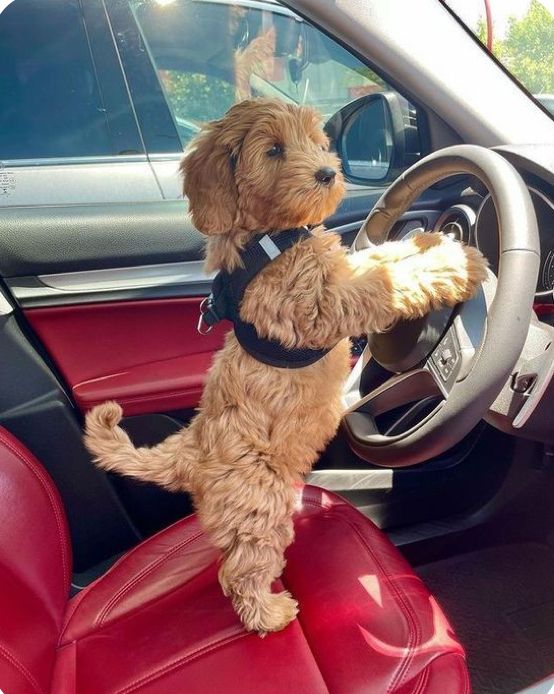
- Riding in a car
- Being handled and groomed
- Seeing other dogs
- Visiting new places
- Wearing a collar or harness
- Walking on different surfaces
- Being separated briefly from family members
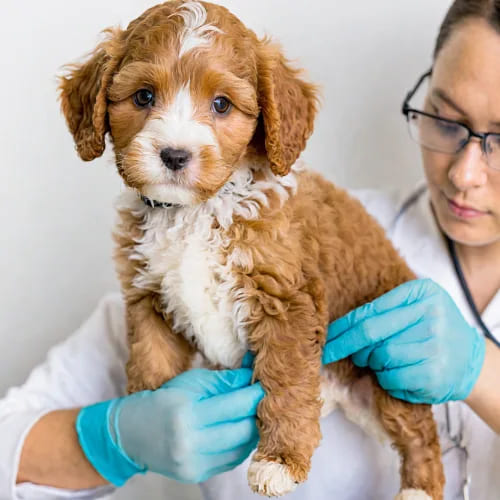
- Visiting a veterinarian or groomer
Research has associated inadequate early socialization with increased social fearfulness in dogs. This is one reason early experiences deserve careful attention.
However, socialization is only one part of development.
Your Cavapoo’s genetics, breeding decisions, health, temperament, environment, training, and experiences all contribute to the adult dog you eventually see.
Cavapoo Puppy Development Stages
There is no single calendar that perfectly predicts how every puppy will behave.
Development varies between individual dogs and breeds. However, understanding the broad developmental periods can help you make better decisions.
Let’s look at what each stage can mean for your Cavapoo puppy.
0–3 Weeks: Early Sensory and Environmental Development
During the first weeks of life, puppies are highly dependent on their mother and littermates.
Their eyes and ears develop during this period, while other senses are already providing information about their environment.
Although puppies this young are not ready for traditional training, their early environment still matters.
A responsible Cavapoo breeder should provide appropriate care, handling, cleanliness, nutrition, and age-appropriate experiences.
As puppies become more mobile and begin interacting with littermates, they start developing important social behaviors.
They may begin:
- Playing with littermates
- Pawing at siblings
- Mouthing
- Wrestling
- Exploring their surroundings
- Responding to different sounds
- Becoming more aware of people
This is one reason your choice of breeder matters.
When you are researching Cavapoo puppies for sale, don’t focus only on coat color, size, or price. Ask questions about how puppies are raised and what experiences they receive before going home.
A responsible breeder should be able to explain their socialization practices clearly.
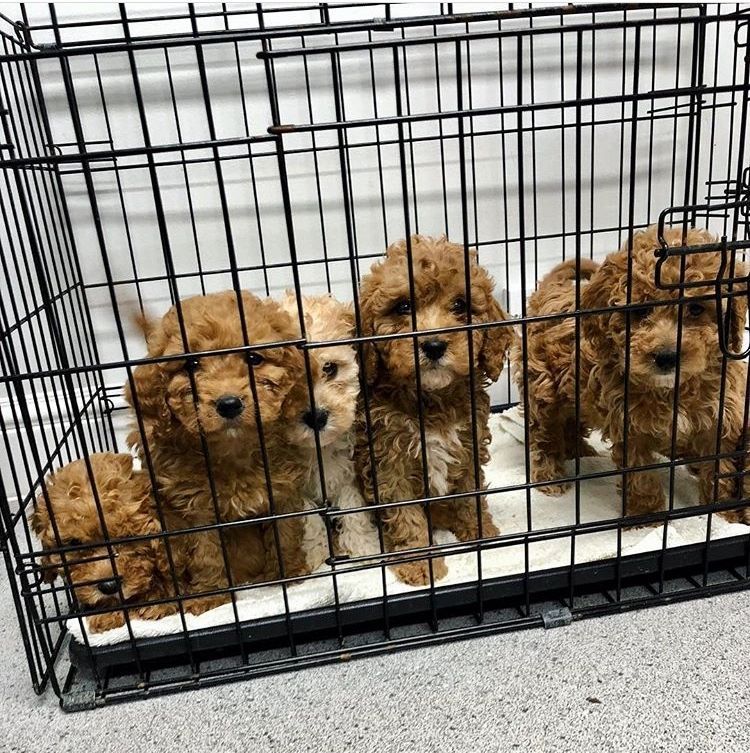
3–8 Weeks: The Critical Socialization Period
The period between approximately three and eight weeks is especially important for puppy behavioral development.
Cavapoo puppies are becoming more active, curious, social, and independent.
They are also learning important lessons from their mother, littermates, humans, and surroundings.
Puppies may begin experimenting with:
- Play behavior
- Mouthing
- Chasing
- Problem-solving
- Communication
- Social boundaries
- Appropriate interaction with people
- Appropriate interaction with littermates
Their interactions with littermates can teach valuable lessons about bite inhibition and communication.
For example, if one puppy bites another too hard during play, the other puppy may stop playing or respond appropriately. These interactions can provide experiences that are difficult to reproduce after a puppy leaves the litter.
This is why puppies should not be separated from their mother and littermates unnecessarily early.
What Should a Cavapoo Breeder Work On?
A responsible breeder can introduce puppies to carefully selected experiences appropriate for their age.
These may include:
- Gentle human handling
- Different household sounds
- Different safe surfaces
- Age-appropriate toys
- Short periods of exploration
- Appropriate interaction with littermates
- Gentle grooming preparation
- Normal household activity
- Safe exposure to different people
The objective is not to overwhelm puppies.
Instead, experiences should be introduced gradually and positively.
This is particularly important for Cavapoos because they are companion dogs that commonly live closely with people.
The puppy’s early experiences can influence how they respond to everyday household situations later.
8–16 Weeks: Bringing Your Cavapoo Puppy Home
Many Cavapoo puppies go to their new homes during this period.
This is an exciting transition.
Your puppy is leaving the environment they know and entering a completely new world.
They may suddenly encounter:
- New people
- New smells
- New sounds
- New rooms
- New sleeping arrangements
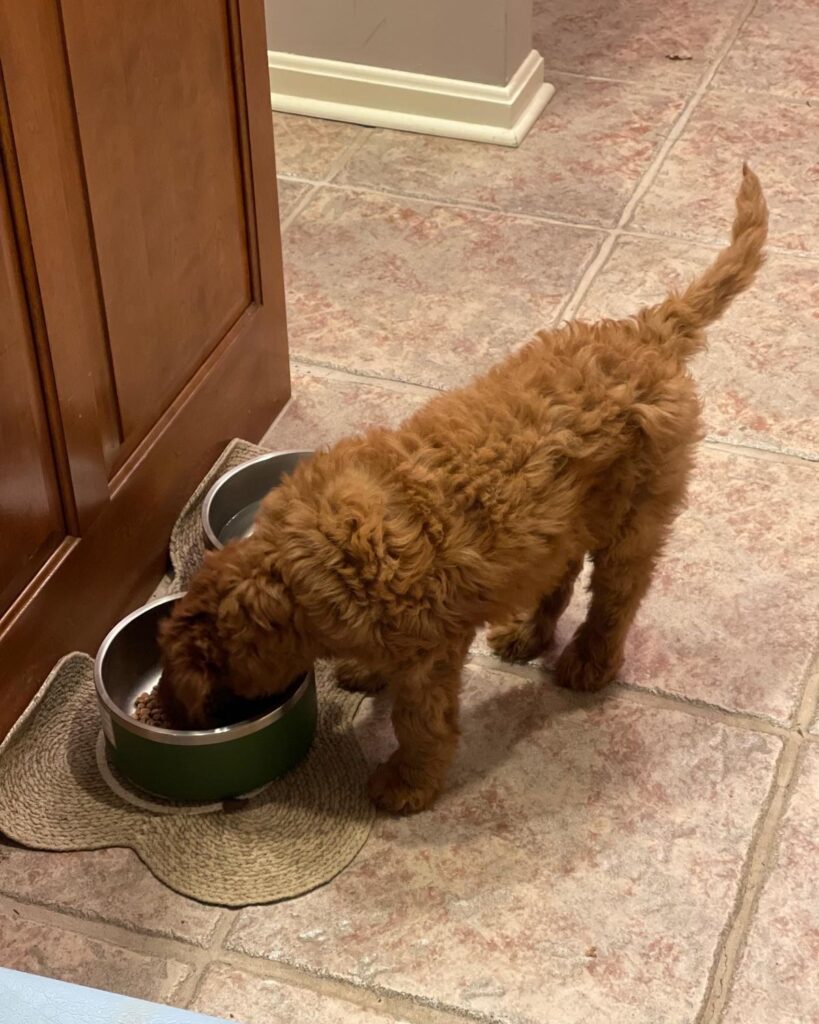
- New food routines
- New potty routines
- New training expectations
- New handling experiences
It is normal for a puppy to need time to adjust.
Your goal should not be to expose your Cavapoo to everything immediately.
Instead, create a predictable environment and introduce new experiences gradually.
Continue Your Cavapoo’s Socialization at Home
The work performed by the breeder should continue after your puppy arrives.
Introduce your Cavapoo to new experiences in short, positive sessions.
For example, you might gradually introduce your puppy to:
- Different household sounds
- Gentle brushing
- Nail-handling exercises
- Car rides
- New rooms
- Friendly visitors
- Different surfaces
- Household appliances
- New toys
- Appropriate and healthy dogs
- Safe outdoor environments
Always consider your veterinarian’s recommendations regarding vaccinations and disease exposure before taking a young puppy into public areas.
Your veterinarian can help you determine which experiences are appropriate for your puppy’s age and health status.
Don’t Overstimulate Your Cavapoo Puppy
One common mistake is assuming that a tired puppy is always a well-exercised puppy.
Young puppies need significant amounts of sleep.
When a Cavapoo becomes overtired, you may notice behaviors such as:
- Zoomies
- Excessive barking
- Jumping
- Increased mouthing
- Difficulty settling
- Humping
- Irritability
- Difficulty listening
Sometimes the puppy does not need more exercise.
They need a nap.
A predictable routine that includes eating, potty breaks, play, training, exploration, and rest can help your puppy learn how to settle.
This is also where a [Cavapoo Care Guide] can become a valuable resource for new owners.
8–16 Weeks: Begin Positive Training
Your Cavapoo puppy’s early training should focus on building good habits rather than demanding perfection.
Start with simple behaviors such as:
- Responding to their name
- Coming when called
- Sitting
- Walking calmly
- Accepting gentle handling
- Going to their crate or resting area
- Potty training
- Appropriate chewing
- Drop-it training
- Basic impulse control
Positive reinforcement is an effective approach for teaching puppies.
Reward behaviors you want to see more often with appropriate treats, praise, toys, attention, or play.
Avoid relying on intimidation or punishment.
Your goal is to help your Cavapoo understand what you want them to do.
For a complete training strategy, explore our [How to Train a Cavapoo Puppy] guide.
12 Weeks–12 Months: Juvenile Cavapoo Behavioral Development
As your Cavapoo grows, their body and brain continue developing.
The puppy that once followed you everywhere may suddenly become more curious and independent.
You may notice changes in:
- Confidence
- Attention span
- Energy levels
- Social behavior
- Chewing
- Mouthing
- Independence
- Reactions to unfamiliar people
- Reactions to unfamiliar environments
This does not necessarily mean your puppy is becoming “bad.”
Development is not always a straight line.
A puppy may appear to master something one week and struggle with it again later.
Consistency matters.
Continue Training During Adolescence
Do not stop training simply because your Cavapoo knows the basics.
Continue practicing:
- Recall
- Loose-leash walking
- Calm greetings
- Handling
- Grooming preparation
- Settling
- Appropriate play
- Impulse control
- Being alone for appropriate periods
- Household manners
Short training sessions are often more productive than long sessions.
Keep training positive and achievable.
Your Cavapoo should learn that listening to you is rewarding.
Understanding Fear and Behavioral Changes
Some puppies become more cautious about unfamiliar people, objects, or situations as they mature.
You may notice your Cavapoo suddenly hesitating around something they previously ignored.
Do not force your puppy toward something that frightens them.
Instead:
- Increase distance from the scary object or situation.
- Allow your puppy to observe.
- Reward calm behavior.
- Let your puppy approach voluntarily when appropriate.
- Keep sessions short.
- Stop before your puppy becomes overwhelmed.
If fear, aggression, severe anxiety, or other concerning behavior appears, consult your veterinarian and consider working with a qualified positive-reinforcement trainer or veterinary behavior professional.
Early assistance can be valuable.
Cavapoo Socialization Should Continue Beyond Puppyhood
Socialization is not something you complete once.
Your Cavapoo will continue encountering new experiences throughout life.
A well-adjusted adult dog still benefits from appropriate exposure to:
- New people
- New environments
- New sounds
- New surfaces
- New activities
- Car travel
- Grooming
- Veterinary handling
- Different household situations
Think of socialization as an ongoing process.
The goal is to help your Cavapoo remain comfortable and adaptable as life changes.
Why Your Cavapoo Breeder Matters
Your puppy’s development begins before you ever meet them.
That makes the breeder an important part of your puppy’s early behavioral foundation.
When speaking with a breeder, ask specific questions.
For example:
How are the puppies socialized?
Ask what experiences the puppies receive and how frequently they interact with people.
Are the puppies exposed to normal household sounds?
Everyday noises can include vacuum cleaners, doors, household appliances, conversations, and other normal sounds.
How are the puppies handled?
Ask whether puppies are gently handled and introduced to appropriate grooming and body-touch experiences.
How do you evaluate temperament?
Responsible breeders should understand that individual puppies can differ even within the same litter.
What support do you provide after adoption?
A good breeder should be willing to answer reasonable questions after your puppy goes home.
Can I review health records?
Health documentation is an important part of responsible puppy purchasing.
When comparing [Cavapoo puppies for sale], look beyond photographs.
A cute face is important, but it should never be the only factor guiding your decision.
How Genetics Influence Cavapoo Temperament
Socialization is extremely important, but it cannot completely determine adult behavior.
Genetics also play a role.
Cavapoos are a cross between the Cavalier King Charles Spaniel and Poodle. Individual puppies can inherit different characteristics from their parents.
This means two puppies from the same litter may develop somewhat differently.
One may be outgoing and energetic.
Another may be more cautious and relaxed.
Another may be particularly food motivated and eager to learn.
Good breeding practices should consider temperament alongside health and other important characteristics.
When researching a puppy, ask about the temperament of the parents and how the breeder makes breeding decisions.
Creating a Development-Friendly Home for Your Cavapoo
Your home environment can make training and socialization easier.
Before your puppy arrives, establish a safe area where they can rest.
You should also prepare:
- A comfortable crate or puppy-safe sleeping area
- Puppy-safe toys
- Food and water bowls
- A collar and identification
- A leash
- Grooming supplies
- Appropriate puppy food
- Cleaning supplies
- Baby gates when needed
- Safe chew items
Preparing your home before arrival can make the transition much easier.
If you are still preparing for your puppy, review our [Puppy Buying Checklist] and [Cavapoo Buying Guide] before bringing your new companion home.
Cavapoo Grooming Should Be Part of Early Socialization
Cavapoos commonly require regular grooming, making grooming preparation especially important.
Your puppy should gradually learn that routine handling is normal.
Start with very short, positive experiences involving:
- Touching the paws
- Looking at the ears
- Gently handling the face
- Brushing
- Touching the tail
- Examining the teeth
- Handling the legs
- Wearing a collar or harness
Reward calm behavior.
Never turn grooming practice into a stressful wrestling match.
The goal is to teach your Cavapoo that being handled is safe and predictable.
This can make future grooming appointments much easier.
Socialization for Cavapoos in Families With Children
If your Cavapoo will live with children, socialization should include appropriate experiences around children.
However, children should also be taught how to interact safely with puppies.
Children should learn:
- Not to pull ears or tails
- Not to disturb a sleeping puppy
- Not to take food away
- Not to climb on the puppy
- Not to chase a puppy
- Not to force physical interaction
- How to recognize when the puppy needs space
Young children should always be supervised around puppies.
Remember that socialization is a two-way responsibility.
You are teaching the puppy how to behave around children while teaching children how to behave around the puppy.
For families preparing for their new companion, our [Cavapoo Puppies for Families] resources can help you plan a smoother transition.
Signs Your Cavapoo Puppy May Need Additional Help
Some puppy behaviors are normal parts of development.
Others deserve professional attention.
Consider seeking help if your Cavapoo regularly displays:
- Extreme fear
- Persistent aggression
- Severe separation distress
- Repeated attempts to bite people
- Intense reactions to ordinary household situations
- Inability to settle
- Significant resource guarding
- Severe anxiety
- Sudden behavioral changes
A veterinarian should be consulted when behavior changes suddenly or when medical problems could contribute to the behavior.
For training concerns, a qualified positive-reinforcement professional can help create a plan appropriate for your puppy.
A Simple Cavapoo Puppy Socialization Checklist
Use this checklist as a starting point.
People
Introduce your puppy gradually to different appropriate people, including people wearing different clothing and moving in different ways.
Sounds
Expose your puppy gradually to normal household noises while keeping the experience positive.
Surfaces
Allow safe exploration of different surfaces such as carpet, tile, grass, and other appropriate textures.
Handling
Practice gentle handling of paws, ears, mouth, body, and tail.
Grooming
Introduce brushing and grooming equipment slowly.
Transportation
Practice short, positive car rides.
Environments
Gradually introduce new safe environments appropriate for your puppy’s age and health status.
Other Dogs
Use controlled interactions with healthy, appropriate dogs rather than allowing uncontrolled encounters.
Alone Time
Teach your puppy that short periods of separation can be safe and predictable.
Training
Practice basic behaviors every day using positive reinforcement.
The Goal Is a Confident, Adaptable Cavapoo
The purpose of puppy socialization is not to create a dog that loves every person, every dog, and every environment.
The goal is to help your Cavapoo develop the ability to navigate everyday life comfortably.
A confident dog can encounter something unfamiliar and recover.
A well-trained dog can listen even when distractions are present.
A well-socialized dog can experience new situations without becoming overwhelmed.
These skills take time.
Be patient with your puppy and remember that development happens gradually.
Final Thoughts on Cavapoo Puppy Behavioral Development
The first year of a Cavapoo’s life provides countless opportunities to build positive habits.
Early experiences with the breeder matter.
Your puppy’s first weeks at home matter.
Training matters.
Rest matters.
Genetics matter.
The home environment matters.
And your relationship with your puppy matters.
When these elements work together, you give your Cavapoo a strong foundation for becoming a happy and well-adjusted companion.
If you are still searching for your new puppy, don’t rush the decision.
Take time to research breeders, understand health considerations, ask questions, and evaluate the environment in which your puppy was raised.
When you’re ready, explore our [Available Cavapoo Puppies] and take the next step toward finding the right companion for your family.
Frequently Asked Questions About Cavapoo Puppy Development
When does Cavapoo puppy socialization begin?
Social development begins very early in life, including while puppies are still with their mother and littermates. Once your Cavapoo comes home, socialization should continue through gradual and positive experiences.
What is the most important socialization period for a Cavapoo puppy?
The first several weeks of life are especially important for behavioral development. However, socialization should continue throughout puppyhood and beyond rather than stopping at a specific age.
How do I socialize my Cavapoo puppy?
Introduce your puppy gradually to appropriate people, sounds, environments, surfaces, handling, grooming, and other experiences. Keep sessions positive and avoid overwhelming your puppy.
Should I take my Cavapoo puppy everywhere?
Not necessarily. Puppies need plenty of sleep and can become overstimulated. Introduce new environments gradually and follow your veterinarian’s recommendations regarding vaccination and disease risks.
Why does my Cavapoo puppy suddenly seem scared?
Puppies can become cautious about unfamiliar experiences as they develop. Avoid forcing your puppy toward something frightening. Give them space, reward calm behavior, and seek professional assistance if fear is persistent or severe.
Is mouthing normal for Cavapoo puppies?
Mouthing is common during puppyhood. Puppies explore their environment with their mouths and learn through play. Consistent training, appropriate chew toys, redirection, and positive reinforcement can help teach acceptable behavior.
How much sleep does a Cavapoo puppy need?
Young puppies need substantial amounts of sleep throughout the day. Exact sleep requirements vary by age and individual puppy, so a predictable routine with frequent rest periods is important.
When should I start training my Cavapoo?
Basic positive-reinforcement training can begin soon after your puppy comes home. Start with simple behaviors and gradually increase difficulty as your puppy develops.
Does a Cavapoo’s personality come entirely from training?
No. Behavior is influenced by multiple factors, including genetics, early experiences, socialization, environment, learning, and health. Training is important, but it is only one part of behavioral development.
What should I ask a Cavapoo breeder about socialization?
Ask how puppies are raised, what experiences they receive, how they are handled, how they are exposed to household sounds and grooming, how temperament is evaluated, and what support the breeder provides after your puppy goes home.
Continue Learning About Cavapoos
If you’re considering bringing home a Cavapoo, these resources can help you make informed decisions throughout your journey:
- Available Cavapoo Puppies
- Cavapoo Breed Guide
- Cavapoo Care Guide
- Cavapoo Buying Guide
- Cavapoo Puppies by State
- How to Train a Cavapoo Puppy
- Puppy Buying Checklist
- Questions to Ask Before Buying a Cavapoo Puppy
- Health Guarantee
- Shipping & Delivery
- Adoption Process
- Frequently Asked Questions
- Reviews
- How Much Are Cavapoo Puppies?
- Cavapoo Grooming Guide
- Cavapoo Temperament Guide
- Cavapoo Puppy Feeding Guide
- Cavapoo Puppy Training Guide
- Cavapoo Puppy Socialization Guide
- Cavapoo Puppies for Families
- Cavapoo Puppies in Your State
Ready to Find Your Cavapoo?
Choosing a Cavapoo is about much more than finding a cute puppy.
Take your time, ask questions, research your breeder, understand the puppy’s early experiences, and prepare your home before bringing your new companion home.
When you’re ready to take the next step, explore our Available Cavapoo Puppies and discover puppies looking for their forever families.
Atlantic Cavapoo Puppies Home is committed to helping prospective Cavapoo owners make informed decisions throughout the puppy-buying journey.
