
Cavapoo Care Guide
4 Month Old Puppy Milestones: What to Expect With Your Cavapoo
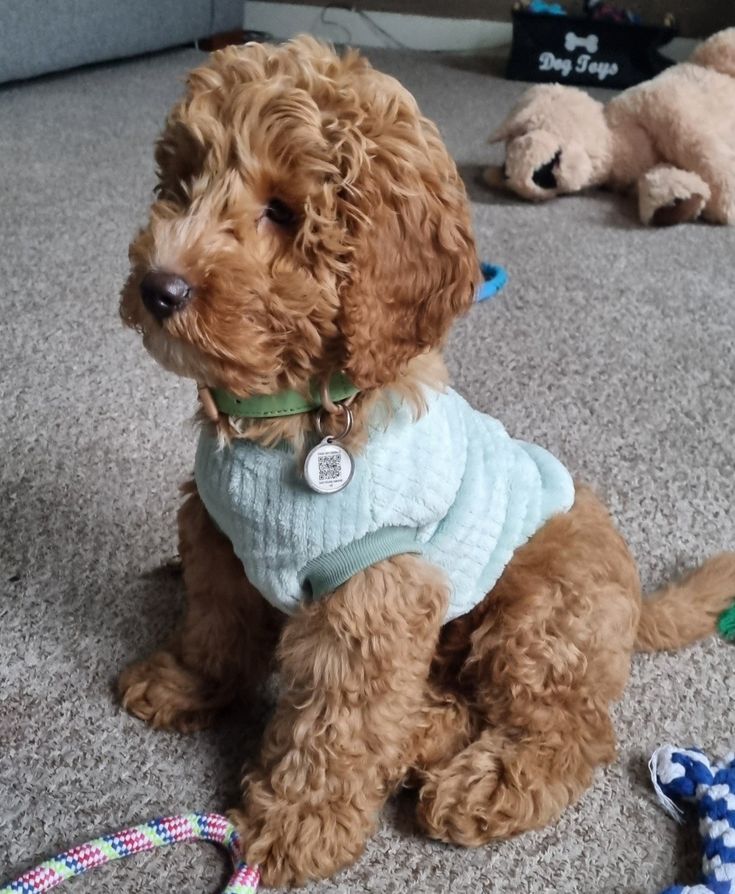
Sep
Four months old is an exciting stage in a puppy’s development.
Your 4 month old Cavapoo may still look like a tiny puppy, but important changes are happening physically, mentally and behaviorally. Your puppy is becoming more curious, more confident and increasingly interested in understanding the world around them.
At this age, you may notice new behaviors almost every week. Your puppy may become more interested in chewing, become more independent, respond better to training and begin developing stronger household habits.
But there is one important thing to remember about 4 month old puppy milestones:
There is no exact checklist that every puppy will complete at exactly four months.
Some puppies will be further ahead with potty training while others still have occasional accidents. Some puppies may sleep through the night while others still need an occasional bathroom break. Some puppies will be confident in new environments while others need additional time and positive experiences.
The American Kennel Club describes four months as a stage when puppies may begin showing greater independence while also dealing with chewing and teething and continuing their behavioral development.
So instead of asking whether your Cavapoo is “ahead” or “behind,” use this stage as an opportunity to monitor development and continue building good habits.
These Cavapoo puppy milestones are useful guidelines rather than strict deadlines.
What Happens Around Four Months?
At approximately four months, your puppy is transitioning through an important period of development.
You may see:
- Baby teeth beginning to fall out
- Permanent teeth beginning to emerge
- Increased chewing
- More interest in exploring
- Continued improvement with potty training
- Longer periods of nighttime sleep
- Better response to basic cues
- Increasing ability to settle
- More independence
- Continued socialization needs
- More opportunities for positive training
This is an important period of 4 month old puppy development.
It is also a stage where consistency becomes increasingly important.
Your Cavapoo is learning not only what behaviors earn rewards, but also what is considered normal within your household.
That means the routines you establish now can help shape the habits you want your dog to carry into adulthood.
1. Teething Becomes a Major Milestone
One of the biggest changes around four months is teething.
Your Cavapoo’s baby teeth will begin being replaced by permanent adult teeth. The exact timing varies between individual dogs, but puppies commonly begin losing their baby teeth around this age.
You may find tiny teeth around your home—or you may never see them because puppies can swallow them while eating or chewing.
Don’t be alarmed if you don’t find every tooth.
What you will probably notice is more chewing.
Your puppy may suddenly become interested in:
- Furniture
- Shoes
- Blankets
- Toys
- Cardboard
- Clothing
- Hands
- Table legs
- Anything else within reach
This is not your puppy deliberately trying to misbehave.
Chewing is a normal part of Cavapoo puppy teething and can help puppies cope with the discomfort associated with developing adult teeth.
Give your Cavapoo appropriate things to chew
Rather than trying to eliminate chewing completely, redirect it.
Keep appropriate puppy-safe chew toys available and reward your Cavapoo for choosing them.
If your puppy grabs something they shouldn’t have, calmly redirect them toward an appropriate toy.
Avoid turning the interaction into an exciting game of chase.
Your puppy should gradually learn:
Household objects are not chew toys. Puppy toys are.
The AKC recommends teaching puppies appropriate chewing habits during teething and providing suitable outlets for their need to chew.
2. Your Cavapoo Should Be Learning Better Potty Habits
By four months, many puppies have made significant progress with house training.
However, being four months old does not guarantee perfect potty training.
Your puppy’s progress depends on their individual development, your routine, supervision and how consistently you reinforce the desired behavior.
You should be seeing fewer accidents if training has been consistent.
Your puppy may also become better at communicating that they need to go outside.
But occasional accidents can still happen.
The AKC specifically notes that there is no universal age when every puppy suddenly stops having accidents. Individual development and consistent housetraining matter.
Continue the routine
Keep taking your Cavapoo outside regularly rather than assuming they are suddenly capable of holding their bladder for long periods.
Potty breaks are especially important:
- After waking
- After eating
- After drinking
- After play
- After naps
- Before bedtime
- After periods of excitement
A predictable routine can make puppy potty training easier because your puppy begins to understand when and where elimination should happen.
When your puppy eliminates in the correct location, reward the behavior promptly.
Consistency is much more effective than punishment for accidents.
3. Crate Training May Be Getting Easier
By four months, many puppies are becoming more comfortable with their crates if the crate has been introduced positively.
Your Cavapoo may be able to settle down more easily and spend short periods relaxing in the crate.
But puppy crate training is not a competition.
Some puppies adapt quickly, while others need more time.
The purpose of crate training is to create a safe, comfortable space—not to punish your dog or keep them confined for excessive periods.
Continue making the crate positive
Give your puppy appropriate toys or enrichment items in the crate and allow them to associate the space with calm, positive experiences.
Avoid using the crate exclusively when you leave the house or when your puppy has done something wrong.
The AKC recommends creating positive associations with the crate and gradually teaching puppies to enter, relax and spend appropriate periods inside.
4. Your Puppy May Sleep Longer at Night
Some puppies around this age begin sleeping for longer periods overnight.
That can be a welcome change for new puppy owners.
However, don’t treat “four months” as a guarantee that every puppy should sleep through the entire night.
Individual puppies develop at different rates.
Your puppy’s size, routine, bladder development and individual needs all matter.
If your Cavapoo still occasionally wakes you to go outside, that does not automatically mean something is wrong.
Continue building a predictable bedtime routine.
A calm evening, final potty break and consistent sleeping environment can help your puppy understand when it is time to settle down.
5. Your Cavapoo Is Still Learning How to Behave in the House
The original source describes four-month-old puppies as having good house manners and staying off furniture.
Those are useful goals—but they are training goals, not universal four-month milestones.
Your puppy may still jump on furniture.
They may steal socks.
They may investigate the trash.
They may bark when something interesting happens.
They may occasionally forget everything they have apparently learned.
That is normal puppy behavior.
Instead of expecting perfection, continue reinforcing the behaviors you want.
If your family does not want your Cavapoo on the furniture, establish that rule consistently.
If you want your puppy to wait before eating, practice it.
If you want your puppy to greet people calmly, reward calm greetings.
Everyone in the household should follow the same rules.
Consistent expectations are an important part of Cavapoo puppy development because puppies learn through repetition and predictable responses.
6. Basic Training Should Be Developing
Four months is an excellent time to continue strengthening basic behaviors.
Your Cavapoo may already understand cues such as:
Sit
Down
Come
Wait
Leave it
Drop it
Name recognition
Loose-leash walking
The goal isn’t simply getting your puppy to perform tricks.
Training teaches your puppy how to communicate with you and how to make appropriate choices.
This stage can be especially valuable for Cavapoo puppy training because your puppy is becoming more independent while still being highly responsive to positive learning experiences.
Use positive reinforcement
Reward your Cavapoo when they perform the behavior you want.
Food rewards, praise, toys and access to something enjoyable can all be useful depending on the individual puppy.
Keep training sessions short and engaging.
Several short sessions throughout the day are often more useful for a puppy than one long session.
The AKC recommends positive training approaches and emphasizes building good habits early.
7. Your Puppy May Be More Independent
Four-month-old puppies aren’t necessarily going to behave like the tiny puppy you brought home several weeks earlier.
They may become more curious and confident.
Your Cavapoo may wander farther away while exploring the house or yard.
They may become more interested in investigating new sounds and smells.
They may also start testing whether certain behaviors earn attention or rewards.
This is exactly why consistent training matters.
Independence isn’t something you should punish.
Instead, teach your puppy that exploring safely, responding to cues and settling independently are all rewarding behaviors.
These changes are a normal part of 4 month old puppy development.
8. Socialization Should Continue
Socialization does not end simply because your puppy reaches four months.
Your Cavapoo should continue having positive, controlled experiences with appropriate people, environments, sounds, surfaces and situations.
The key word is positive.
Socialization does not mean forcing your puppy to interact with everything.
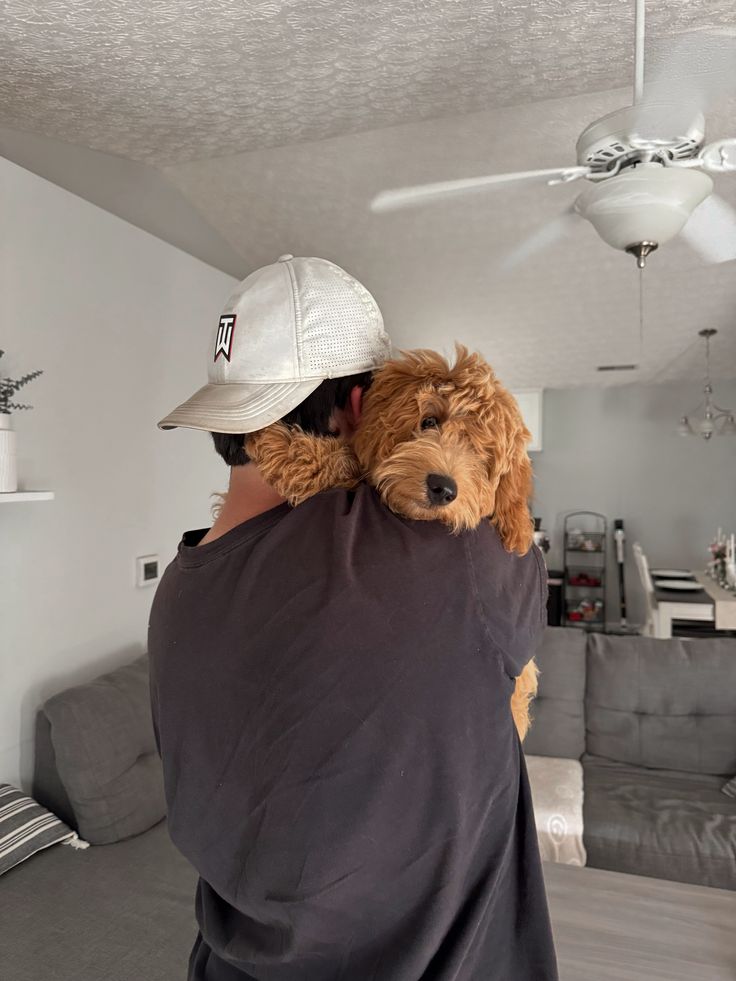
If your puppy is nervous about a new person, dog, sound or environment, give them distance and allow them to become comfortable gradually.
The AKC explains that puppy socialization involves positive exposure to people, places and situations and can help support a confident, well-adjusted adult dog.
Build confidence gradually
You might expose your Cavapoo to:
- Different floor surfaces
- Car rides
- Household sounds
- New people
- Calm, appropriate dogs
- Grooming handling
- Veterinary handling
- Different environments
- Short walks
- New sights and smells
Your puppy should be able to retreat from situations that make them uncomfortable.
A confident puppy isn’t created by overwhelming them.
Confidence is built through repeated experiences where the puppy feels safe.
Continuing puppy socialization at this stage helps your Cavapoo keep learning how to respond appropriately to the world around them.
9. Vaccinations and Veterinary Care Are Still Important
The original article suggests that receiving a rabies vaccination means a puppy’s immune system is now “well developed.”
That is too broad.
Vaccination schedules vary according to the vaccine, local requirements, your veterinarian’s recommendations and your puppy’s individual circumstances.
Being vaccinated also does not mean a puppy suddenly has zero risk of infectious disease.
Your veterinarian should guide you on which vaccines your Cavapoo needs, when they should be administered and when your puppy can safely participate in particular activities.
Continue veterinary appointments and follow the recommended vaccination schedule.
Watch for signs of illness
A young puppy can become sick quickly.
Contact your veterinarian if your puppy develops concerning symptoms such as persistent vomiting, diarrhea, significant lethargy, difficulty breathing, refusal to eat or other unusual behavior.
When in doubt, ask your veterinarian.
10. Your Cavapoo Is Still Growing
Four months old is still puppyhood.
Your Cavapoo is nowhere near finished developing.
That means exercise should remain age-appropriate.
Avoid assuming that because your puppy has more energy they need long runs or strenuous exercise.
Instead, combine:
- Short walks
- Play
- Training
- Sniffing
- Puzzle toys
- Appropriate chewing
- Calm exploration
- Rest
Puppies need plenty of sleep and recovery time.
A puppy who becomes wild, mouthy or unable to settle may sometimes be overtired rather than in need of more exercise.
The AKC recommends appropriate activity and avoiding strenuous exercise while puppies are still growing.
11. Feeding Needs Are Changing
The source article recommends exactly one cup of food three times per day.
That should not be treated as a universal feeding recommendation.
Your Cavapoo’s food requirements depend on factors such as:
- Current weight
- Expected adult size
- Body condition
- Food’s calorie density
- Growth rate
- Activity
- Health
- Veterinary recommendations
This is why 4 month old puppy feeding should be based on the individual puppy rather than a single universal food measurement.
PetMD notes that puppy calorie needs vary according to age, weight and body condition. It also notes that puppies between three and six months may transition toward fewer meals, depending on their individual needs.
Monitor body condition
Don’t judge feeding solely by how much your puppy seems to want.
Some puppies act hungry even after eating an appropriate amount.
Your veterinarian can help you monitor growth and body condition and adjust feeding when necessary.
Always provide access to clean, fresh water.
12. Bitey Behavior May Still Be Very Much Alive
One of the biggest mistakes new puppy owners make is expecting teething to immediately eliminate mouthing.
Your four-month-old Cavapoo may still be very mouthy.
In fact, teething can increase the desire to chew.
The goal at this stage is not necessarily “my puppy never puts their mouth on anything.”
The goal is:
Teach your puppy what is appropriate to put their mouth on.
Redirect hands toward toys.
End play calmly when biting becomes too intense.
Reward gentle interactions.
Avoid encouraging your puppy to bite human hands as a game.
The AKC explains that puppies may mouth because of teething, play and exploration, and recommends redirecting them toward appropriate chew items.
13. Grooming Handling Should Be Becoming Routine
This is particularly important for Cavapoos.
Your puppy’s coat requires regular grooming, and grooming becomes much easier when your dog learns from an early age that handling is normal.
At four months, continue practicing brief, positive handling of:
- Paws
- Ears
- Mouth
- Tail
- Face
- Coat
- Legs
- Collar or harness
Reward calm behavior.
Don’t turn grooming into a wrestling match.
If your puppy becomes uncomfortable, take a break and gradually build tolerance.
Your Cavapoo will eventually need regular brushing and professional grooming, so early positive handling can make future grooming appointments easier.
14. Your Puppy May Be Ready for More Freedom—But Not Unlimited Freedom
The original article suggests that four-month-old puppies can usually have more freedom around the house.
That can be true if your puppy has earned it.
But don’t interpret four months as a magical age when puppy-proofing is no longer necessary.
Your Cavapoo is still teething, curious and capable of getting into trouble.
A better approach is gradual freedom.
For example, if your puppy consistently behaves appropriately in one room, you might allow supervised access to another area.
If your puppy begins chewing inappropriate objects or having accidents, reduce freedom temporarily and return to more supervision.
Freedom should increase with reliability.
15. Your Puppy Can Practice Waiting for Meals
Teaching your Cavapoo to wait politely for food can be a useful household behavior.
Instead of expecting a long, perfect stay, begin with a short pause.
Ask for a simple behavior such as sitting.
Place the food down.
Wait briefly.
Then release your puppy to eat.
As your puppy becomes more successful, you can gradually increase the duration.
The purpose is not to create an obedience contest.
It teaches your puppy that calm behavior can lead to something rewarding.
This can become a useful part of both Cavapoo puppy training and daily feeding routines.
16. Alone-Time Training Should Continue
Your Cavapoo should gradually learn that being away from you for short periods is normal.
This is especially important for companion breeds that enjoy being close to their families.
Start with short, manageable periods in a safe area.
Provide an appropriate activity and return before the puppy becomes overwhelmed.
Gradually build duration.
Do not suddenly expect a puppy that has never been alone to tolerate hours of isolation.
The AKC recommends starting alone-time training early and using a crate or safe area with appropriate enrichment.
A 4 Month Old Cavapoo Puppy Checklist
Rather than asking whether your puppy has completed every milestone, use this checklist to identify areas you are currently working on.
Training
Your puppy is learning to:
- Respond to their name
- Sit
- Down
- Come
- Wait
- Leave it
- Drop it
- Walk politely on leash
- Settle
- Follow household rules
These are practical Cavapoo puppy milestones that can develop at different rates.
Potty Training
Your puppy is:
- Having fewer accidents
- Learning a predictable potty routine
- Being rewarded for going in the correct location
- Increasing their ability to hold it appropriately
Crate Training
Your puppy is:
- Entering the crate willingly
- Relaxing inside
- Sleeping comfortably in the crate
- Gradually tolerating short periods alone
Socialization
Your puppy is:
- Meeting appropriate people
- Experiencing new environments
- Learning about different sounds and surfaces
- Practicing calm behavior around appropriate dogs
- Building confidence without being overwhelmed
Teething
Your puppy is:
- Losing baby teeth
- Developing adult teeth
- Chewing more
- Learning appropriate chewing habits
Home Manners
Your puppy is learning:
- What is allowed
- What is off-limits
- Where to sleep
- Where to eliminate
- How to greet people
- How to settle
- What objects are appropriate to chew
What If My 4-Month-Old Cavapoo Hasn’t Reached These Milestones?
Don’t panic.
Milestones are useful reference points, not deadlines.
One four-month-old Cavapoo may be nearly accident-free while another still needs frequent potty breaks.
One puppy may happily enter their crate while another needs more gradual training.
One puppy may confidently greet visitors while another prefers to observe from a distance.
Development isn’t perfectly linear.
The most important question is whether your puppy is making progress.
If your puppy has suddenly lost a skill they previously had, appears unusually fearful, shows significant behavioral changes or has concerning physical symptoms, speak with your veterinarian or a qualified positive-reinforcement trainer.
Looking for Cavapoo Puppies For Sale Near Me?
If you’re researching Cavapoo Puppies For Sale Near Me, remember that choosing a puppy is only the beginning.
Before bringing a Cavapoo home, learn about puppy development, veterinary care, socialization, grooming, nutrition, training and the responsibilities that come with raising a young dog.
Look for information about the puppy’s current routine, veterinary care, socialization and health history.
Our Available Cavapoo Puppies page is a useful place to begin if you are ready to explore currently available puppies.
Cavapoo Puppies For Sale In Tennessee: What to Prepare For
Families researching Cavapoo Puppies For Sale In Tennessee should prepare for the realities of puppyhood—not just the excitement of bringing the puppy home.
At four months, your Cavapoo may be entering a particularly active teething and learning period.
Prepare your home with safe chew toys, a crate or designated resting area, grooming supplies and a consistent training routine.
If you have children, make sure everyone understands how to interact calmly and safely with the puppy.
Cavapoo Puppies For Sale In Ohio: Four-Month Development
If you’re searching for Cavapoo Puppies For Sale In Ohio, understanding puppy milestones can help you prepare for what comes after bringing your puppy home.
Four months is still very much a developmental stage.
Your Cavapoo will need continued training, socialization, appropriate exercise, veterinary care and supervision.
Don’t become frustrated if your puppy still behaves like a puppy.
That is exactly what they are.
Cavapoo Puppies For Sale In Florida: Puppy Development and Routine
Families researching Cavapoo Puppies For Sale In Florida should also think about how climate and daily routines affect puppy care.
A four-month-old Cavapoo still needs age-appropriate activity and plenty of rest.
During hot weather, avoid strenuous outdoor activity during excessive heat and provide appropriate access to shade and water.
A consistent indoor training and enrichment routine can be particularly useful when outdoor conditions are uncomfortable.
When Should You Be Concerned About Your Puppy?
Milestones vary, but certain changes should prompt a conversation with your veterinarian.
Contact your veterinarian if you notice:
- Sudden loss of previously learned abilities
- Significant lethargy
- Persistent vomiting
- Persistent diarrhea
- Difficulty eating
- Difficulty breathing
- Severe pain
- Sudden major behavior changes
- Poor growth
- Other symptoms that concern you
Your veterinarian knows your puppy’s medical history and can determine whether a behavior or developmental difference is normal for your individual dog.
Final Thoughts on 4 Month Old Puppy Milestones
Four months can be one of the most rewarding—and sometimes challenging—stages of raising a Cavapoo.
Your puppy is becoming more independent while still needing plenty of guidance.
Teething is underway.
Training is becoming more important.
Socialization should continue.
Potty habits should be improving.
Crate training can become easier.
Your puppy may be able to handle more freedom, but they still need supervision.
Most importantly, don’t compare your Cavapoo to another puppy.
The goal isn’t to have a puppy that completes every milestone on a specific date.
The goal is to raise a healthy, confident dog through consistent routines, positive reinforcement, appropriate veterinary care and plenty of patience.
Four months is not the end of puppyhood.
It is another important step toward the adult companion your Cavapoo will eventually become.
Understanding Cavapoo puppy development as a gradual process can help you focus on progress instead of perfection.
Frequently Asked Questions About 4-Month-Old Cavapoo Puppies
What should a 4-month-old Cavapoo be doing?
A four-month-old Cavapoo may be developing better potty habits, learning basic cues, becoming more comfortable with crate training, continuing socialization and beginning the teething process. Individual development varies.
Is a 4-month-old puppy fully potty trained?
Not necessarily. Many puppies make substantial progress by this age, but occasional accidents can still occur. Continue consistent potty breaks and positive reinforcement.
Are Cavapoos still teething at four months?
Yes. Four months is commonly around the beginning of the period when puppies lose baby teeth and adult teeth begin emerging. Increased chewing is common during this stage.
Why is my 4-month-old Cavapoo chewing everything?
Teething, exploration and normal puppy behavior can all contribute to increased chewing. Provide appropriate chew toys and redirect your puppy away from household objects.
Should my 4-month-old Cavapoo sleep through the night?
Some puppies can sleep through the night at this age, but not every puppy will. Continue a consistent bedtime and potty routine.
How much should a 4-month-old Cavapoo eat?
There is no universal amount. 4 month old puppy feeding depends on your puppy’s food, weight, growth, body condition and individual needs. Follow the food manufacturer’s guidance and your veterinarian’s recommendations. PetMD also recommends considering age, weight and body condition when determining calorie needs.
Can my 4-month-old Cavapoo have more freedom in the house?
Possibly, if your puppy has demonstrated reliable behavior. Increase freedom gradually and continue supervision because a four-month-old puppy can still chew, explore and have accidents.
Should I continue socializing my Cavapoo at four months?
Yes. Puppy socialization should continue through puppyhood using positive, controlled experiences. Do not force a puppy into situations that cause significant fear or distress.
How much training should I do with a 4-month-old Cavapoo?
Short, positive sessions throughout the day are a good approach. Focus on practical behaviors such as name recognition, sit, down, come, leave it, drop it, leash skills and settling.
Is crate training still necessary at four months?
Crate training can remain useful for safety, rest, travel and gradual alone-time training. The crate should remain a positive space rather than a punishment.
Why is my Cavapoo suddenly more independent?
Four months can be a period when puppies begin showing greater independence and exploring more confidently. Continue reinforcing good behavior and providing appropriate structure.
When do Cavapoos stop biting?
Mouthing and chewing can continue while your puppy is teething. Consistent redirection and teaching appropriate chewing habits can help reduce the behavior as your puppy matures.
Should my 4-month-old Cavapoo go on long walks?
Avoid treating a four-month-old puppy like an adult endurance dog. Exercise should be age-appropriate and balanced with play, training, enrichment and rest.
Does every puppy develop at exactly the same rate?
No. Individual puppies develop at different rates. Use 4 month old puppy milestones as general guidance rather than rigid deadlines.
What is the most important thing to focus on at four months?
Continue building positive habits: socialization, basic training, potty training, appropriate chewing, safe independence, grooming handling and a predictable daily routine.
Continue Learning About Cavapoos
If you’re raising or preparing for a Cavapoo puppy, continue learning with our guides on Available Cavapoo Puppies, Cavapoo Breed Guide, Cavapoo Care Guide, Cavapoo Buying Guide, Cavapoo Puppies by State, Puppy Buying Checklist, Questions to Ask Before Buying a Cavapoo Puppy, Health Guarantee, Shipping & Delivery, Adoption Process, and Frequently Asked Questions.
