Cavapoo Care Guide, Cavapoo Exercise
Puppy Dog Park Tips: When Can a Cavapoo Puppy Visit a Dog Park?
Sep
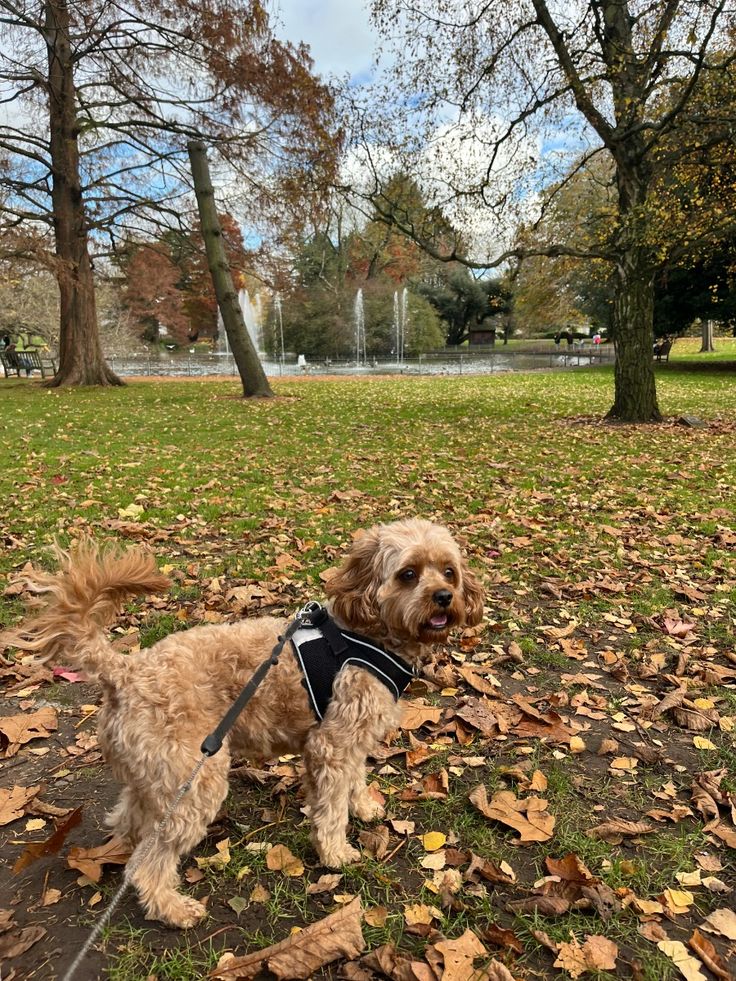
Dog parks can look like the perfect place for a playful puppy.
There is space to run.
There are other dogs to meet.
There are new smells to investigate.
There are plenty of opportunities for physical and mental stimulation.
But taking a young puppy to a dog park requires more thought than simply opening the gate.
Puppies have developing immune systems.
They are still learning how to communicate with other dogs.
They may not have reliable recall yet.
They can also become overwhelmed by a busy environment.
Cavapoo puppies can be particularly curious and social.
That does not mean every Cavapoo puppy will enjoy a crowded dog park.
The right experience depends on the individual puppy, the environment, and your veterinarian’s recommendations.
So, when can a puppy visit a dog park?
The answer is not simply a specific number of weeks.
Instead, you need to consider vaccination protection, disease risk, socialization history, training, temperament, and the quality of the dog park.
Let’s look at the most important dog park tips for new puppy owners.
When Can a Puppy Go to a Dog Park?
There is no universal age at which every puppy is ready for a dog park.
Your veterinarian should help determine when your puppy has sufficient protection based on vaccination history and local disease risks.
This is important because dog parks bring many unfamiliar dogs together.
You may not know their vaccination status or health history.
You also cannot control what they have encountered before entering the park.
That makes a public dog park different from a carefully arranged puppy playdate.
Socialization Should Not Wait Until Vaccinations Are Finished
This is one of the most important points for new puppy owners.
Socialization and dog-park attendance are not the same thing.
A puppy can begin safe, controlled socialization before completing its entire vaccination series.
The American Veterinary Society of Animal Behavior states that puppies should receive socialization before they are fully vaccinated, provided exposure is managed appropriately. (avsab.org)
That could include meeting healthy, vaccinated dogs you know.
It could include experiencing different household sounds.
It could include visiting safe environments.
It could include calmly observing people and dogs from a safe distance.
Your veterinarian can help you determine which experiences are appropriate for your puppy.
Dog Parks Are Different
A dog park is a higher-exposure environment.
Many dogs may enter and leave throughout the day.
You may encounter unknown health histories.
There may also be unfamiliar parasites, pathogens, stressful interactions, or poorly managed play.
Therefore, early socialization does not mean putting a young puppy into a crowded dog park.
The goal is safe exposure, not maximum exposure.
Puppy Dog Park Tips
1. Talk to Your Veterinarian First
Before taking your puppy to a public dog park, speak with your veterinarian.
Your veterinarian knows your puppy’s vaccination history.
They can also consider local disease risks, your puppy’s health, age, and lifestyle.
Ask questions such as:
Is my puppy adequately protected for this environment?
Are there local disease risks I should know about?
Would you recommend a dog park for my puppy?
Would a controlled puppy class or playdate be better right now?
These questions are more useful than relying on a universal internet rule.
Your veterinarian can also discuss parasite prevention.
This may include protection against fleas, ticks, intestinal parasites, and heartworm disease depending on your location and your dog’s lifestyle.
2. Start Socialization in Controlled Environments
Your puppy does not need a dog park to learn social skills.
In fact, controlled environments can be better for young puppies.
Start with calm experiences.
Introduce your puppy to people you trust.
Arrange carefully selected interactions with healthy, vaccinated dogs.
Visit new environments when your veterinarian says it is appropriate.
Expose your puppy to everyday sounds.
Introduce different surfaces.
Practice gentle handling.
Teach your puppy that new experiences can be safe and rewarding.
Puppy Playdates Can Be Better Than a Crowded Dog Park
A carefully selected playmate can provide valuable experience.
Choose a dog with an appropriate temperament and compatible play style.
Avoid pairing a timid puppy with an overwhelming adult dog.
Watch the interaction closely.
Allow breaks.
Keep sessions short.
End the interaction while both dogs are still comfortable.
This can teach your puppy that playing with another dog does not mean constant wrestling.
3. Learn to Recognize Healthy Dog Play
One of the biggest mistakes new owners make is assuming that all rough-looking play is dangerous.
Play can involve chasing.
Dogs may wrestle.
They may mouth each other.
They may growl.
They may suddenly stop.
They may run away and then return.
These behaviors can be normal parts of play.
However, healthy play generally includes appropriate pauses and opportunities for both dogs to disengage.
Look for Reciprocity
A good play interaction should not involve one dog constantly trying to escape.
Watch for signs such as:
- Both dogs taking turns chasing.
- Both dogs voluntarily returning to play.
- Loose, relaxed body movements.
- Frequent pauses.
- Play bows.
- Temporary separation followed by voluntary re-engagement.
Be cautious when one dog repeatedly tries to escape.
Other warning signs include persistent pinning, stiff body language, cornering, repeated attempts to hide, or escalating conflict.
If your puppy looks frightened, intervene calmly.
4. Learn Your Cavapoo’s Body Language
Your puppy cannot tell you, “This is too much.”
They communicate through body language.
A relaxed puppy may have a loose body and natural movements.
A stressed puppy may behave differently.
Possible stress signals include:
- Turning away
- Moving behind you
- Lip licking
- Yawning
- Flattened ears
- Tucked tail
- Freezing
- Avoiding another dog
- Trying to leave
- Hiding
- Stiffening
One signal does not tell the entire story.
Always consider the context.
For example, yawning can mean tiredness.
It can also occur during stressful situations.
Your job is to look at the overall pattern.
Never Force Your Puppy to Interact
This is especially important with young Cavapoos.
If your puppy wants to move away from another dog, allow space.
Do not drag the puppy toward the other dog.
Do not hold the puppy in place while another dog investigates.
Do not assume that every interaction is good socialization.
Positive socialization should build confidence.
5. Teach Reliable Recall Before Off-Leash Play
Recall means teaching your dog to return to you when called.
It is one of the most valuable behaviors you can teach.
A fenced dog park may seem like the perfect place to practice recall.
It usually is not.
There are too many distractions.
Your puppy may be chasing another dog.
They may be investigating an exciting smell.
They may be greeting another person.
Your voice may suddenly become less interesting.
Build recall in controlled environments first.
Start at Home
Say your puppy’s name.
When they look toward you, reward them.
Then gradually increase the distance.
Move to a quiet outdoor area.
Use a secure long line when appropriate.
Reward your puppy generously for returning.
Gradually introduce distractions.
The goal is to build a strong history of coming back.
Fun Recall Games
Try simple games such as:
Catch Me:
Move away from your puppy and encourage them to follow.
Find Me:
Hide behind a safe object and call your puppy.
Hot Potato:
Two people take turns calling the puppy and rewarding the return.
Keep these games positive.
Do not repeatedly call your puppy for something unpleasant.
You want your puppy to learn that coming to you is rewarding.
6. Do Not Use a Busy Dog Park as Your First Social Experience
Imagine entering a room filled with dozens of strangers.
Everyone is moving quickly.
Some people are running.
Some are shouting.
Some are approaching you.
You do not know who is friendly.
You do not know who will invade your personal space.
That can be what a crowded dog park feels like to an inexperienced puppy.
Start smaller.
One calm dog can provide a much more manageable experience.
Then gradually increase the complexity of your puppy’s environment.
Quality Matters More Than Quantity
Your puppy does not need to meet hundreds of dogs.
A few positive experiences can be more valuable than overwhelming your puppy with constant interactions.
The goal is confidence.
Not simply exposure.
7. Scout the Dog Park Before Taking Your Puppy
Visit the park without your puppy first.
This gives you an opportunity to observe the environment.
Look at the fencing.
Check whether gates appear secure.
Observe how owners supervise their dogs.
Notice whether dogs are relaxed or constantly fighting.
Check whether there are separate areas for different sizes or play styles.
Look at the cleanliness of the area.
Pay attention to whether owners pick up after their dogs.
Consider These Questions
Is the fence secure?
Are there double-gate entry areas?
Are there separate spaces for different dogs?
Is there shade?
Is fresh water available?
Is there enough space for dogs to move away from one another?
Do owners actively supervise their dogs?
Are aggressive or uncontrolled interactions common?
Does the park appear overcrowded?
These observations can tell you more than a five-star online review.
8. Choose the Right Time
A dog park can be completely different at different times of day.
A quiet morning may be manageable.
A busy afternoon may be overwhelming.
If you decide that the park is appropriate for your puppy, consider visiting during a quieter period.
Start with a short session.
Watch your puppy carefully.
If they remain relaxed and engaged, you can gradually build experience.
If they become overwhelmed, leave.
There is no prize for staying longer.
9. Keep Initial Visits Short
Your puppy does not need to spend an hour running around.
A first visit can be brief.
Give your puppy time to observe.
Allow sniffing.
Watch the other dogs.
Let your puppy choose whether to approach appropriate dogs.
Take breaks.
Then go home.
Short positive experiences can be more useful than long stressful ones.
Watch for Overstimulation
A puppy can become overstimulated without immediately appearing frightened.
They may become excessively excited.
They may stop responding to cues.
They may bark repeatedly.
They may jump constantly.
They may chase everything.
They may struggle to settle.
These can be signs that the environment is too intense.
Give your puppy a break.
10. Never Assume Every Dog Is Friendly
A dog park contains dogs with different personalities.
Some love playing with strangers.
Some prefer their owners.
Some enjoy only certain play styles.
Some become uncomfortable around puppies.
Some dogs may be poorly supervised.
You cannot control every dog that enters the park.
That is why supervision is essential.
Stay Close
Do not sit on your phone while your puppy interacts with unfamiliar dogs.
Watch the interaction.
Pay attention to body language.
Be ready to intervene.
If a situation looks uncomfortable, move your puppy away.
Your responsibility is not to prove that your puppy can handle every dog.
Your responsibility is to keep your puppy safe.
Cavapoo Puppies For-Sale Near Me: Think About Socialization Before Bringing Your Puppy Home
If you are searching for Cavapoo Puppies For-Sale Near Me, remember that socialization starts before your puppy’s first dog-park visit.
Ask how the puppies are exposed to normal household experiences.
Ask about handling.
Ask about interactions with people.
Ask about the puppy’s routine.
Ask what the puppy has experienced before going home.
A responsible puppy source should be willing to discuss basic care and early development.
Our [Puppy Buying Checklist] can help you prepare important questions.
You can also explore our [Available Cavapoo Puppies] page if you are researching Cavapoos.
After bringing your puppy home, continue socialization gradually.
Cavapoo Puppies For Sale In Tennessee: Plan Around Weather and Health
Families researching Cavapoo Puppies For Sale In Tennessee should consider local weather and outdoor conditions.
Hot, humid days can make exercise more difficult.
Wet conditions can also change how comfortable a dog park feels.
Do not force outdoor activity during dangerous weather.
Make sure your puppy has access to water.
Choose safer times when temperatures are more comfortable.
You should also discuss local disease and parasite risks with your veterinarian.
A veterinarian familiar with your area can help determine appropriate preventive care.
For general Cavapoo care, visit our [Cavapoo Care Guide].
Cavapoo Puppies For-Sale In Ohio: Build Confidence Before the Dog Park
If you are researching Cavapoo Puppies For-Sale In Ohio, remember that your puppy does not need immediate access to a busy dog park.
Ohio weather can create periods when indoor enrichment becomes especially useful.
Use those opportunities for training.
Practice recall.
Teach your puppy to focus on you.
Introduce appropriate household sounds.
Practice calm handling.
Arrange controlled interactions with suitable dogs when your veterinarian says they are appropriate.
By the time your puppy eventually encounters a dog park, they can have a stronger foundation.
Cavapoo Puppies For-Sale In Florida: Consider Heat and Humidity
Families searching for Cavapoo Puppies For-Sale In Florida need to take heat seriously.
A dog park may become uncomfortable quickly during hot weather.
Young puppies are still developing.
They can become overheated during excessive activity.
Choose cooler periods when appropriate.
Provide access to water.
Watch for excessive panting, weakness, confusion, or other concerning signs.
Heatstroke is an emergency.
If you suspect heatstroke, move your dog away from the heat and seek emergency veterinary care immediately.
Do not delay professional care while trying home remedies.
Dog Park Safety Rules Every Puppy Owner Should Follow
Once your puppy is ready for an appropriate dog park, establish some basic rules.
Keep Identification Current
Your dog should have appropriate identification.
Check that your contact information is current.
A secure collar or harness can also help with management.
Bring Water
Do not assume a park’s water source will always be available or clean.
Bring your own water when practical.
Pick Up Waste
Always clean up after your puppy.
Dog waste can spread parasites and pathogens.
Avoid Sharing Toys Without Thinking
Some dogs become possessive around toys.
A toy that seems harmless can trigger conflict.
Observe the environment before introducing toys.
Do Not Bring a Sick Dog
If your puppy has vomiting, diarrhea, coughing, unusual lethargy, or another potentially contagious illness, skip the dog park.
Contact your veterinarian when appropriate.
Avoid Overcrowded Parks
More dogs do not automatically mean more socialization.
Crowding increases complexity and can make interactions harder to manage.
What to Do If Another Dog Is Bullying Your Puppy
Do not wait for a serious fight.
If another dog repeatedly chases, pins, corners, or overwhelms your puppy, create distance.
Call your puppy away.
Move behind a barrier if possible.
Leave the park if necessary.
You do not need to argue with another owner.
Your puppy’s safety comes first.
If your puppy repeatedly has negative interactions, reconsider whether that dog park is appropriate.
A different park, controlled playdate, or structured training class may be a better option.
Dog Parks Are Not Right for Every Cavapoo
This is an important point.
Some dogs love dog parks.
Others do not.
Your Cavapoo may prefer walking with you.
They may enjoy one-on-one playdates.
They may prefer training classes.
They may become overstimulated around groups of unfamiliar dogs.
They may have a history of fear or negative experiences.
None of these things make your dog “bad.”
A dog park is only one possible enrichment environment.
You should choose activities based on your individual dog’s needs.
Better Alternatives to a Public Dog Park
If your puppy is not ready for a dog park, you have many alternatives.
Controlled Puppy Playdates
Arrange play with a healthy, vaccinated dog whose temperament matches your puppy.
Puppy Training Classes
A well-managed puppy class can provide structured socialization and training.
Choose a reputable class with appropriate hygiene and vaccination policies.
Quiet Walks
Walking in calm environments allows your puppy to experience new sights and smells.
Scent Games
Hide treats or toys in safe locations.
Let your puppy investigate.
Training Games
Practice recall, sit, touch, down, leave it, and other useful behaviors.
Enrichment Toys
Use appropriate food puzzles and interactive toys under supervision.
These activities can provide valuable stimulation without requiring a crowded dog park.
Dog Park Etiquette for New Puppy Owners
Good dog-park etiquette protects everyone.
Keep your dog under control.
Watch their behavior.
Clean up waste.
Respect other dogs’ space.
Do not allow your puppy to repeatedly harass another dog.
Leave if your dog becomes overwhelmed.
Do not bring a sick dog.
Do not assume another dog wants to play.
Ask before approaching unfamiliar dogs outside the designated off-leash environment.
And never stop supervising simply because the park is fenced.
A fence prevents your dog from leaving.
It does not prevent every interaction from becoming unsafe.
Building Reliable Recall Before Off-Leash Freedom
Recall deserves special attention.
Even a fenced dog park can have an open gate.
A gate can be left unsecured.
A dog can escape during an unexpected situation.
A strong recall provides another layer of safety.
Practice every day.
Make coming to you rewarding.
Avoid calling your dog repeatedly when they are unlikely to respond.
Instead, gradually increase distractions.
Reward successful returns.
You can also practice an emergency recall cue with especially valuable rewards.
If recall is unreliable, continue training before relying on it in challenging environments.
How to Know When Your Puppy Is Having a Good Time
A happy puppy is not necessarily the puppy running the fastest.
Look for relaxed body language.
Your puppy may sniff.
They may explore.
They may play.
They may pause.
They may check in with you.
They may return to you voluntarily.
They may rest briefly and then continue exploring.
These are useful signs that your puppy is coping with the environment.
If your puppy constantly tries to escape, hides, freezes, or becomes extremely frantic, the environment may be too much.
Listen to what your puppy is communicating.
Frequently Asked Questions About Puppy Dog Parks
What age can a puppy go to a dog park?
There is no single age that works for every puppy.
Your veterinarian should consider vaccination status, local disease risks, health, and the specific environment.
Should puppies wait until all vaccinations are complete before socializing?
No.
Safe socialization can begin before the entire vaccination series is completed.
AVSAB recommends appropriate early socialization while managing health risks. (avsab.org)
However, that does not mean taking an incompletely vaccinated puppy into a crowded public dog park.
Is a dog park good for puppy socialization?
It can be appropriate for some dogs later in development.
However, it is not necessary for socialization.
Controlled puppy classes, carefully selected playmates, and supervised exposure can also provide valuable experiences.
Should my puppy meet every dog at the park?
No.
Your puppy does not need to greet every dog.
Allow your puppy to disengage when appropriate.
How long should a puppy stay at a dog park?
There is no universal time limit.
Start with short visits and watch your puppy’s behavior.
Leave before your puppy becomes overwhelmed.
Should I keep my puppy on a leash inside the dog park?
Follow the park’s rules.
More importantly, do not use a leash as a substitute for training and environmental management.
A leash can create complicated interactions in crowded off-leash areas.
If the park is not safe for your puppy without relying on a leash, it may not be the right environment yet.
What should I do if another dog plays too roughly?
Call your puppy away if possible.
Create distance.
If the behavior continues, leave the area or park.
Do not wait for the interaction to escalate into a fight.
How do I teach my Cavapoo reliable recall?
Start in low-distraction environments.
Reward your puppy every time they return.
Gradually increase distance and distractions.
Use games to make coming to you rewarding.
Can a shy Cavapoo go to a dog park?
Maybe, but a busy dog park may not be the best starting point.
A controlled environment with calm dogs may be more appropriate.
What should I bring to a dog park?
Consider bringing water, identification, waste bags, and any other items allowed by the park.
Check the park’s rules before visiting.
Can my puppy go to the dog park if they have diarrhea?
No.
Keep a puppy with diarrhea away from public dog areas.
Contact your veterinarian if the diarrhea is persistent, severe, or accompanied by other concerning symptoms.
What if my Cavapoo simply does not like dog parks?
That is completely acceptable.
Your dog does not need to enjoy dog parks.
Use walks, training, scent games, enrichment, and carefully selected playdates instead.
Helpful Cavapoo Resources
If you are raising a Cavapoo puppy, these resources can help:
- [Cavapoo Breed Guide]
- [Cavapoo Care Guide]
- [How to Train a Cavapoo Puppy]
- [Puppy Buying Checklist]
- [Questions to Ask Before Buying a Cavapoo Puppy]
- [Cavapoo Veterinarian]
- [Available Cavapoo Puppies]
- [How Much Do Cavapoo Puppies Cost in 2026?]
- [Are Cavapoo Puppies Worth the Price?]
- [Pet First Aid]
- [Outdoor Dog Safety]
- [Walking Your Dog]
Final Thoughts
A dog park can be a fun environment for the right dog.
But it is not automatically the best place for every puppy.
Before visiting, consider your puppy’s health, vaccination protection, training, temperament, and socialization history.
Talk with your veterinarian.
Start socialization in controlled environments.
Choose suitable playmates.
Teach reliable recall.
Visit potential dog parks without your puppy first.
Look at fencing, supervision, cleanliness, crowding, and the behavior of the dogs using the park.
When your puppy eventually visits, keep the first sessions short.
Watch their body language.
Allow breaks.
Leave when they become overwhelmed.
And remember that your Cavapoo does not need to love dog parks.
The goal of socialization is not to make your puppy interact with everyone.
The goal is to help your puppy become confident and comfortable navigating the world.
Sometimes the best socialization experience is a calm walk.
Sometimes it is a carefully selected playmate.
Sometimes it is simply watching other dogs from a comfortable distance.
Your puppy’s individual personality should guide the process.
A thoughtful approach today can help create a confident, well-adjusted Cavapoo for years to come.
