Cavapoo Training Guide, Grooming Guide
Essential Tips for Walking Your Dog: A Complete Cavapoo Walking Guide
Sep
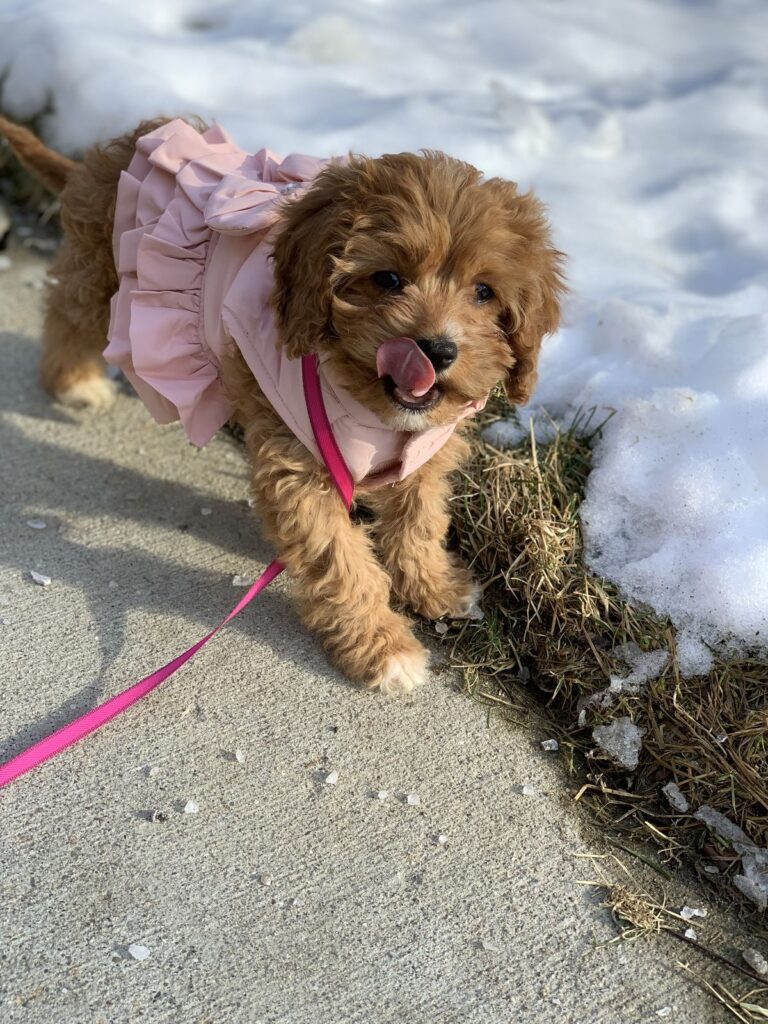
Walking your dog is about much more than getting from one place to another.
A good walk gives your dog opportunities to exercise, explore, sniff, practice skills, and experience the world.
For Cavapoos, regular walks can be especially valuable because they combine physical activity with mental enrichment.
However, every dog has different exercise needs. Your Cavapoo’s age, size, health, temperament, fitness level, weather, and walking environment should all influence the routine.
A successful dog walk should leave your puppy or adult dog comfortable and engaged, not exhausted or overwhelmed (walking your dog).
Here are the essential tips every Cavapoo owner should know before heading outside.
1. Let Your Dog Stop and Sniff
One of the biggest mistakes owners make is treating every walk like a race.
Dogs experience their surroundings primarily through their powerful sense of smell.
A simple patch of grass can contain information about other animals, people, food, plants, and countless environmental scents.
Sniffing gives dogs an opportunity to investigate this information.
It can also provide mental stimulation.
That is why your Cavapoo does not need to walk continuously from beginning to end.
Allowing appropriate sniffing breaks can make walks more interesting and enriching (dog walking tips).
Sniffing Is Part of the Walk
Imagine walking through your neighborhood while someone constantly pulls you away from anything interesting.
That is similar to what a dog can experience when every sniff is interrupted.
You do not need to let your dog investigate everything.
Avoid allowing your Cavapoo to sniff dangerous substances, animal waste, unknown objects, or private property.
Instead, choose safe areas where your dog can investigate at their own pace.
You can also teach a release cue such as “let’s go” when it is time to continue.
This creates a balance between exploration and walking politely.
Try a Sniff Walk
A sniff walk does not have to cover a long distance.
The goal is to give your dog opportunities to investigate safe smells rather than maximizing the number of blocks covered.
For some dogs, a shorter walk with plenty of exploration can be more enriching than a longer walk with constant leash pressure.
This can be especially useful for puppies who are still learning how to behave outdoors.
2. Teach Loose-Leash Walking
Pulling on the leash can make walks frustrating for both you and your dog.
Instead of constantly pulling your Cavapoo backward, teach your dog that staying near you produces rewards.
Loose-leash walking is a training skill.
It does not happen automatically for every puppy.
Reward the Behavior You Want
Start in a relatively quiet environment.
When your Cavapoo walks beside you with a loose leash, reward them.
You can use small treats, praise, or access to something your dog enjoys.
For example, if your puppy pulls toward an interesting smell, wait for the leash to loosen.
Once your dog returns attention toward you, reward and continue.
Over time, your puppy learns that pulling is not the fastest way to reach interesting things (how to walk a dog).
Change Direction When Necessary
If your Cavapoo repeatedly moves too far ahead, calmly change direction.
Avoid turning the walk into a constant battle.
Reward your dog when they follow.
With consistent practice, your puppy can learn that staying connected to you makes the walk more rewarding.
Avoid Constant Leash Corrections
Repeatedly jerking or snapping the leash is not necessary for teaching good walking behavior.
Reward-based training gives your dog a clear reason to choose the behavior you want (dog walking guide).
It also helps preserve the walk as a positive experience.
For more training guidance, visit our How to Train a Cavapoo Puppy guide.
3. Choose Walking Equipment Carefully
The right equipment can make walking safer and more comfortable.
A collar can be useful for identification, while a properly fitted harness can provide another option for walking (puppy walking tips).
There is no single piece of equipment that is perfect for every dog.
Your Cavapoo’s size, body shape, behavior, and individual needs should guide your choice.
Consider a Well-Fitted Harness
A properly fitted harness can be a useful option for puppies and dogs that tend to pull.
It can also give owners more control without relying on pressure around the neck.
However, harnesses must fit correctly.
A harness that is too loose may allow a dog to escape.
One that is too tight can cause discomfort or restrict movement.
Check the fit regularly, especially during puppyhood when your Cavapoo is growing quickly.
Avoid Punishment-Based Equipment
Slip collars, choke chains, and prong collars rely on physical pressure.
These tools can create discomfort and may introduce additional risks when used incorrectly.
For most family dogs, reward-based training and appropriate walking equipment provide a better foundation.
If your dog has serious leash-reactivity or pulling problems, consider working with a qualified positive-reinforcement trainer.
Identification Still Matters
Even if your dog wears a harness, identification should not be overlooked.
Your Cavapoo should have appropriate identification according to local requirements and your veterinarian’s recommendations.
Microchipping can also provide an important permanent form of identification.
Before every walk, check that the leash and walking equipment are securely attached.
4. Do Not Assume Your Dog Is Ready for Off-Leash Walking
Off-leash freedom can be enjoyable in appropriate areas.
However, simply teaching a dog to respond to their name does not automatically make them ready to walk off leash.
Your Cavapoo should have a reliable recall before you consider off-leash environments (Cavapoo walking).
Even then, only use off-leash freedom where it is legally permitted and genuinely safe.
Use Safe Enclosed Areas
A securely fenced dog park or designated off-leash area can provide a safer environment than an open neighborhood.
Roads, unfamiliar dogs, wildlife, bicycles, and other hazards can appear unexpectedly.
A dog that normally has an excellent recall may still run when frightened or highly excited.
Never assume your dog will automatically return in an emergency.
Practice Recall Before You Need It
Recall training should begin in controlled environments.
Start indoors.
Then progress to a secure outdoor area.
Gradually introduce distractions while rewarding your dog for returning.
A long line can also provide controlled practice while maintaining physical safety.
Your goal should be a strong, reliable response rather than simply hoping your dog follows you (Cavapoo exercise).
5. Always Carry Water When Appropriate
Water becomes increasingly important during longer walks, active outings, and warm weather.
Dogs can become overheated when environmental conditions are too hot or humid.
Cavapoos can also vary considerably in coat type, size, fitness, and heat tolerance.
Do not rely on a fixed rule such as “every walk longer than 30 minutes needs water.”
Instead, consider the actual conditions.
Watch the Weather
Before walking your Cavapoo, consider:
- Air temperature
- Humidity
- Direct sunlight
- Walking surface temperature
- Your dog’s age
- Coat condition
- Exercise intensity
- Access to shade
- Your dog’s health
On hot days, walk during cooler parts of the day whenever possible.
Avoid strenuous exercise during peak heat.
Carry Water on Longer Outings
For longer walks, hikes, or warm-weather adventures, bring fresh drinking water and a suitable portable bowl.
Do not rely on puddles or standing water.
Outdoor water sources can contain contaminants or microorganisms that may make your dog sick.
Learn the Signs of Overheating
Stop exercising and seek veterinary advice if your dog shows concerning signs such as:
- Excessive or abnormal panting
- Weakness
- Confusion
- Loss of coordination
- Vomiting
- Collapse
- Very dark or abnormal gums
Heatstroke can become a medical emergency.
If you suspect heatstroke, seek veterinary care immediately.
6. Check the Pavement Before Walking
The weather is not the only outdoor factor that matters.
The ground beneath your dog’s feet can also become dangerous.
Asphalt and other surfaces can become extremely hot in direct sunlight.
Before taking your Cavapoo outside on a hot day, check the walking surface.
If it is uncomfortable for your hand, it may also be too hot for your dog’s paws.
Choose grass, shaded routes, or cooler walking times when appropriate.
After the walk, inspect the paw pads for redness, cracks, or injuries (Cavapoo puppy exercise).
7. Pick Up Your Dog’s Waste
Picking up after your dog is one of the simplest responsibilities of dog ownership.
Dog waste can contain organisms and parasites that may pose risks to other animals and people (dog sniffing).
Leaving feces on sidewalks, lawns, parks, or trails can also contaminate the environment.
Always carry waste bags when walking your Cavapoo.
Dispose of waste appropriately according to local rules.
This small habit helps keep shared spaces cleaner and more pleasant for everyone (loose leash walking).
8. Pay Attention to Your Dog’s Body Language
Your dog communicates constantly during a walk.
Learning to recognize body language can help you understand whether your Cavapoo is comfortable, excited, frightened, overwhelmed, or frustrated.
Watch the entire body rather than focusing on one feature.
For example, a wagging tail does not automatically mean a dog is happy.
Look at:
- Tail position and movement
- Ear position
- Facial expression
- Body tension
- Posture
- Movement
- Vocalizations
- Attention toward the environment
If your puppy becomes overwhelmed, give them more distance from the trigger.
Do not force your dog to approach something frightening (dog leash training).
Give Your Cavapoo Space
Not every dog wants to greet every person or dog.
If another dog approaches and your Cavapoo becomes uncomfortable, create distance (Cavapoo Ppuppies For Sale Near Me).
Ask before allowing your dog to interact with unfamiliar dogs.
Respecting boundaries can prevent unnecessary stress and conflict.
9. Keep Walks Appropriate for Your Dog’s Age
A young puppy does not have the same exercise needs as an adult Cavapoo.
Puppies are still developing physically and mentally.
Their exercise should be appropriate for their age and development.
Avoid turning every outing into a long-distance workout.
Instead, combine short walks with exploration, play, training, and rest.
Puppies Need More Than Physical Exercise
A puppy’s walk can also be a learning experience.
Your Cavapoo can practice:
- Responding to their name
- Walking beside you
- Ignoring distractions
- Sitting calmly
- Watching traffic from a safe distance
- Encountering different surfaces
- Hearing everyday sounds
- Exploring new environments
The goal is not simply to tire your puppy out.
The goal is to help them become confident and adaptable (dog leash training).
10. Adjust Walks as Your Dog Ages
Your dog’s exercise needs can change throughout life.
A young adult Cavapoo may enjoy longer walks than a senior dog.
An older dog may need shorter, gentler outings.
Dogs recovering from illness or injury may require an individualized exercise plan.
If your dog’s stamina suddenly changes, speak with your veterinarian.
A sudden reluctance to walk can sometimes indicate pain or another health problem.
11. Choose Safe Walking Routes
The route you choose matters.
Whenever possible, select areas that allow you to control your dog’s environment.
Be cautious around:
- Heavy traffic
- Broken glass
- Aggressive or uncontrolled dogs
- Poisonous plants
- Sharp objects
- Construction areas
- Extreme weather
- Standing water
- Wildlife
Keep your Cavapoo on a leash where required.
Even friendly dogs can run toward unexpected distractions (dog walking safety).
12. Avoid Forcing Your Dog to Keep Going
More exercise is not always better.
If your Cavapoo is slowing down significantly, repeatedly sitting, struggling to keep up, or showing signs of exhaustion, take a break.
Puppies can become tired quickly.
Small dogs may also have different endurance levels than larger athletic breeds.
Pay attention to your individual dog rather than comparing them with another dog.
Your veterinarian can help you determine an appropriate exercise routine if you are unsure.
Walking Your Dog: A Simple Cavapoo Walking Routine
A balanced walk might look something like this:
Begin with a calm few minutes of walking.
Allow your Cavapoo to sniff and investigate appropriate areas.
Practice loose-leash walking for short periods.
Reward good behavior.
Give your dog opportunities to explore.
Avoid unnecessary distractions when possible.
Finish with a calm return home.
After the walk, provide access to fresh water and allow your dog to rest (dog walking routine).
For puppies, keep the experience positive rather than focusing on distance (Cavapoo Ppuppies For Sale Near Me).
What Should You Bring on a Dog Walk?
A basic walking kit can include:
- Properly fitted collar or harness
- Standard leash
- Identification
- Waste bags
- Fresh water
- Portable bowl
- Small training treats
- Your phone
- Extra supplies for longer outings
For hikes or extended adventures, you may need additional supplies.
The more remote the location, the more important preparation becomes (walking a puppy).
How Often Should You Walk a Cavapoo?
There is no universal number of walks that every Cavapoo needs.
Exercise requirements depend on age, health, energy level, size, lifestyle, and individual temperament.
Some Cavapoos enjoy multiple shorter walks.
Others may benefit from a combination of walking, play, training, and indoor enrichment.
Your goal should be a balanced routine that meets your dog’s needs without creating excessive fatigue.
If your Cavapoo has a medical condition or your exercise plan is unusually demanding, ask your veterinarian for individualized guidance (Cavapoo Ppuppies For Sale Near Me).
Walking Is Also Mental Enrichment
A walk can exercise your dog’s brain as well as their body.
Every new scent provides information.
Every new environment creates opportunities for learning.
Every training session reinforces communication between you and your dog.
This is one reason sniffing, exploration, and positive training should be part of your walking routine.
For additional ideas, read our guide to Cavapoo mental stimulation and dog intelligence.
Frequently Asked Questions About Walking Dogs
How long should I walk my Cavapoo?
There is no universal walking time for every Cavapoo. Age, health, fitness, weather, and individual energy level all matter. Start appropriately and adjust based on your dog’s response.
Should I let my Cavapoo sniff during walks?
Yes. Safe sniffing can provide valuable mental enrichment. Give your dog opportunities to investigate appropriate scents while maintaining control of the walk.
How do I stop my Cavapoo from pulling?
Use reward-based loose-leash training. Reward your dog when the leash remains loose and calmly change direction when necessary.
Is a collar or harness better for a Cavapoo?
Either can be appropriate depending on the individual dog and equipment. A properly fitted harness can be useful for dogs that pull, while a collar can serve identification purposes.
Can I walk my Cavapoo off leash?
Only in places where off-leash activity is legally permitted and safe. Your dog should also have a reliable recall and appropriate training before being considered for off-leash freedom.
Should I bring water on every dog walk?
Not necessarily. Water becomes particularly important during longer walks, strenuous activities, and warm weather. Always consider the conditions and your dog’s individual needs.
Can I walk my Cavapoo in hot weather?
Exercise during hot weather should be limited and carefully managed. Choose cooler times, provide water, avoid hot pavement, and watch for signs of overheating.
Why does my Cavapoo stop during walks?
Your dog may stop because they are tired, distracted, interested in a scent, frightened, uncomfortable, or experiencing pain. Consider the context and consult your veterinarian if the behavior is sudden or persistent.
Should puppies go on walks?
Puppies benefit from appropriate outdoor experiences, but vaccination and disease-prevention recommendations should be discussed with your veterinarian. Exercise should also match their developmental stage.
Are dog walks enough exercise for a Cavapoo?
Walking can provide important physical and mental activity, but many Cavapoos also benefit from play, training, social interaction, and enrichment.
Helpful Cavapoo Resources
Building a healthy walking routine is only one part of responsible Cavapoo ownership.
You can learn more through our:
Cavapoo Care Guide — Learn about everyday grooming, exercise, feeding, hygiene, and general care.
Cavapoo Breed Guide — Understand the characteristics, temperament, and care considerations associated with Cavapoos.
How to Train a Cavapoo Puppy — Learn how positive training can help your puppy develop good everyday habits.
Outdoor Dog Safety — Prepare your Cavapoo for safer walks, outdoor adventures, parks, and backyard activities.
Dog Hygiene Essentials — Learn how to keep paws, teeth, bedding, toys, collars, and other areas clean.
Puppy Buying Checklist — Prepare for the practical responsibilities of bringing home a new puppy.
Available Cavapoo Puppies — Explore our available Cavapoo puppies when you are ready to find your new companion.
Final Thoughts
A good dog walk is not measured only by distance.
It is measured by the quality of the experience.
Give your Cavapoo opportunities to sniff and explore.
Practice loose-leash walking with patience.
Choose safe equipment.
Carry water when conditions require it.
Pick up after your dog.
Pay attention to body language.
Adjust exercise for age, health, weather, and individual fitness.
Most importantly, make walks enjoyable.
Your Cavapoo does not need every walk to be perfect.
They need consistent opportunities to explore the world safely while building trust and good habits with you (Cavapoo Ppuppies For Sale Near Me).
That is what turns an ordinary walk into meaningful time together.
