Cavapoo Care Guide, Grooming Guide
The Top Five Dog Breeds for Families With Children
Aug
Choosing a dog for a family with children is an exciting decision, but it is also one that deserves careful consideration (best dogs for families with children). The right family dog should fit your household, activity level, living environment, and the ages of your children.
While some breeds are known for being affectionate, patient, and playful, no dog breed is automatically safe with every child or in every situation. Individual temperament, socialization, training, supervision, and the way children interact with the dog all matter (best family dogs).
Children can be energetic, curious, and unpredictable. A family dog should therefore have a temperament that generally works well with a busy household (best dogs for kids).
The best family dogs are often friendly, adaptable, trainable, and comfortable being around people.
Here are five breeds that are commonly considered excellent family companions, along with what parents should know before bringing one home (family-friendly dog breeds).
1. Labrador Retriever
The Labrador Retriever has remained one of America’s most popular dog breeds for decades, and there is a good reason families continue to love them.
Labs are generally friendly, outgoing, affectionate, and eager to participate in family activities. Their playful personalities can make them excellent companions for older children who enjoy spending time outdoors.
They are also highly trainable, which is an important advantage for families.
A well-trained Labrador can learn household rules, basic obedience, and appropriate ways to interact with children. The breed is also known for its athleticism, making it a good choice for families who enjoy walking, hiking, swimming, and outdoor activities (best dog breeds for children). The American Kennel Club describes Labrador Retrievers as friendly, outgoing, and high-spirited companions.
Labrador Retriever family profile
- Personality: Friendly, outgoing, affectionate, playful
- Energy level: High
- Good with children: Generally excellent when properly trained and socialized
- Good with other dogs: Generally good
- Shedding: Moderate to heavy
- Grooming: Regular brushing
- Trainability: High
- Size: Medium to large
- Exercise needs: High
One thing parents should remember is that young Labs can be extremely energetic. A large, enthusiastic puppy can accidentally knock over a toddler simply because of its size and excitement.
Training and supervision are therefore essential.
2. French Bulldog
The French Bulldog is a very different type of family companion.
Instead of requiring hours of intense exercise, Frenchies are generally more comfortable with shorter periods of activity followed by plenty of relaxation.
Their affectionate and adaptable personalities can make them appealing to families living in apartments or homes without large yards.
French Bulldogs are generally playful and people-oriented. However, parents should understand that the breed has important health considerations, particularly because of its short muzzle (dogs good with children). The AKC notes that French Bulldogs can be prone to breathing difficulties and do not tolerate heat and strenuous exercise as well as many other breeds.
French Bulldog family profile
- Personality: Affectionate, adaptable, playful
- Energy level: Moderate
- Good with children: Often good with respectful children
- Good with other dogs: Generally good with proper socialization
- Shedding: Moderate
- Grooming: Relatively simple coat care
- Trainability: Generally responsive
- Size: Small
- Exercise needs: Moderate
Because of their physical structure, French Bulldogs are not the best choice for families looking for a dog that can accompany children on long-distance runs or strenuous outdoor adventures.
They may be better suited to families looking for a smaller companion who enjoys spending time close to the family.
3. Golden Retriever
The Golden Retriever has earned a reputation as one of America’s classic family dogs.
Golden Retrievers are generally affectionate, intelligent, social, and eager to participate in family life. Their combination of trainability and friendly temperament has made them popular with families for generations.
They are also active dogs.
A Golden Retriever is usually happiest when given regular opportunities to walk, play, retrieve, explore, and interact with its family (best puppies for families).
Golden Retriever family profile
- Personality: Friendly, intelligent, affectionate, dependable
- Energy level: High
- Good with children: Generally excellent with appropriate training and supervision
- Good with other dogs: Generally good
- Shedding: Moderate to heavy
- Grooming: Regular brushing
- Trainability: High
- Size: Medium to large
- Exercise needs: High
Their size is worth considering.
A young Golden Retriever can be energetic and excitable. Even a friendly dog can accidentally knock over a small child while running or playing.
Teaching both the dog and children how to interact appropriately is therefore important.
The AKC emphasizes that children should be taught how to properly approach and interact with dogs, regardless of breed.
4. Pug
The Pug is a much smaller option for families looking for a companion dog.
Pugs are generally affectionate, social, playful, and people-oriented. Their compact size can make them easier to manage than larger breeds in some households.
They often enjoy being involved in whatever their family is doing.
Pug family profile
- Personality: Affectionate, playful, social
- Energy level: Moderate
- Good with children: Often good with respectful children
- Good with other dogs: Generally social
- Shedding: Moderate
- Grooming: Regular brushing
- Trainability: Moderate
- Size: Small
- Exercise needs: Moderate
However, like French Bulldogs, Pugs have a short muzzle and can have difficulty regulating their body temperature during hot weather or strenuous activity.
Families should be particularly careful during warm summer months.
Their facial structure also means that choosing a dog based solely on appearance is not advisable. Prospective owners should research breed-specific health considerations and work with responsible breeders (child-friendly dog breeds).
5. Collie
The Collie is another breed with a long history as a family companion.
Collies are intelligent, responsive, affectionate, and often highly connected to their families.
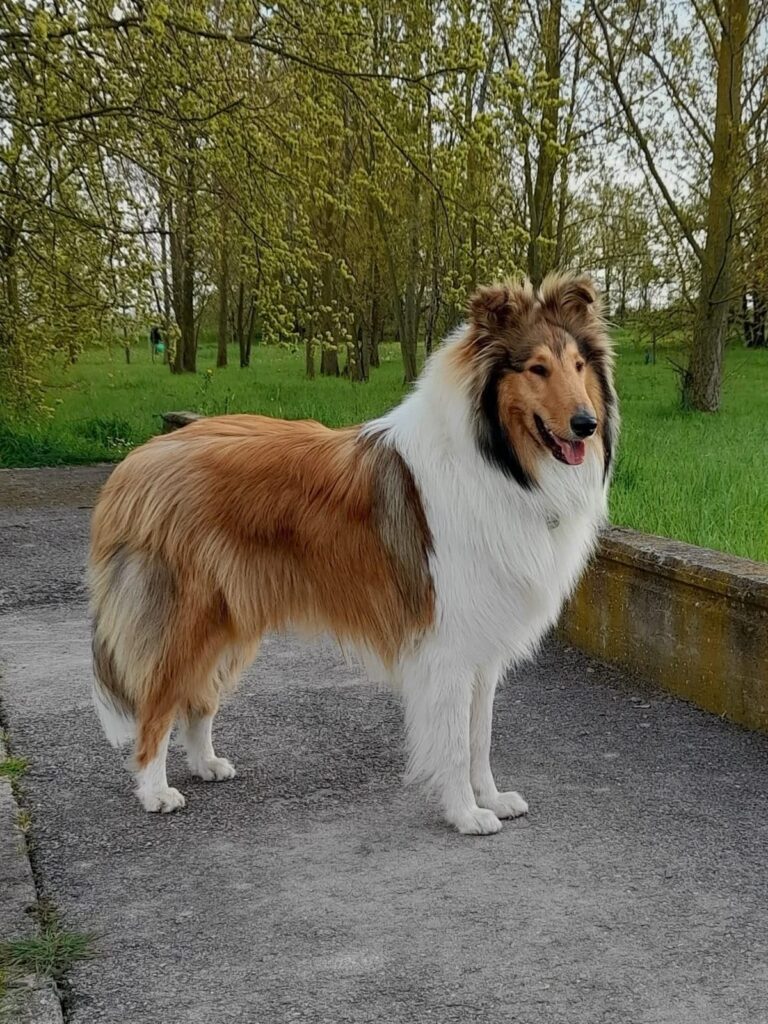
Their intelligence can make them enjoyable to train, while their active nature makes them suitable for families that enjoy outdoor activities.
Collie family profile
- Personality: Intelligent, affectionate, alert, responsive
- Energy level: Moderate to high
- Good with children: Generally excellent with proper socialization
- Good with other dogs: Generally good
- Shedding: Moderate
- Grooming: Regular brushing
- Trainability: High
- Size: Medium to large
- Exercise needs: Moderate to high
Collies also come in different coat varieties, including Rough and Smooth varieties, so grooming requirements can differ (best dog for a family).
Families should consider the coat type before choosing a puppy.
Best Dogs for Families With Children: What Makes a Good Family Dog?
Breed is only one part of the equation.
A family’s lifestyle can be just as important as the breed itself.
Before bringing home a puppy, consider the following factors.
Temperament
Look for a puppy with a stable, confident, and appropriately social temperament.
Avoid assuming that every puppy from the same breed will behave identically.
Individual personalities can vary considerably.
Energy Level
A high-energy breed may be wonderful for an active family but difficult for a household that prefers a quieter lifestyle.
For example, a Labrador or Golden Retriever may be an excellent match for a family that enjoys outdoor activities.
A smaller companion breed may be more appropriate for a family with a quieter routine.
Size
Size matters when young children are involved.
Large dogs can accidentally knock over small children during play.
Small dogs can also be vulnerable to accidental injury because young children may not understand how fragile they can be.
This is why supervision and education are important regardless of the dog’s size.
Trainability
A dog that responds well to training can be easier to manage in a busy household.
Basic commands such as:
- Sit
- Stay
- Come
- Leave it
- Drop it
- Down
can help families communicate with their dogs and establish boundaries.
Positive-reinforcement training can also help children learn appropriate ways to interact with the family dog.
Teaching Children How to Interact With Dogs
Choosing a child-friendly breed is not enough.
Children should also learn how to behave around dogs.
The American Veterinary Medical Association recommends teaching children to respect a dog’s space and avoid disturbing a dog while it is eating, sleeping, or caring for puppies.
Children should learn not to:
- Pull a dog’s ears or tail
- Ride on the dog’s back
- Take food from the dog
- Hug a dog that does not enjoy being hugged
- Disturb a sleeping dog
- Chase a dog
- Corner a dog
- Climb on the dog
- Take toys away without guidance
- Approach unfamiliar dogs without permission
These lessons can help create a safer relationship between children and dogs (Cavapoo good with children).
Always Supervise Young Children and Dogs
This is one of the most important points for any family considering a puppy.
Young children should not be left unsupervised with a dog, regardless of breed.
Even a gentle dog can become frightened, startled, overwhelmed, or defensive.
Likewise, children may unintentionally hurt or frighten a dog without understanding what they have done.
Active supervision allows parents to intervene before a situation becomes a problem.
The goal is not to make children afraid of dogs.
Instead, children should learn to understand canine body language and respect the dog’s boundaries (dogs for families with young children).
Are Cavapoos Good Family Dogs?
Cavapoos can be an appealing choice for families because they combine characteristics from the Cavalier King Charles Spaniel and Poodle.
They are generally known as affectionate companion dogs and can be intelligent, social, and eager to interact with their families.
Their smaller size can also make them attractive to families who want a companion that is easier to manage than a large breed (are Cavapoos good family dogs).
However, Cavapoos still need proper training, socialization, exercise, grooming, and supervision around children.
Their small size also means that young children need to learn how to handle them gently.


If you are considering a Cavapoo for your family, start by learning about the breed’s temperament, grooming requirements, exercise needs, and expected size.
You can read our Cavapoo Breed Guide before making your decision.
Families interested in bringing home a puppy can also explore our Available Cavapoo Puppies.
How to Prepare Your Home for a Family Puppy
Before your puppy arrives, prepare a safe area where the dog can sleep, eat, play, and relax.
Your preparation checklist should include:
- A comfortable puppy bed
- Food and water bowls
- Appropriate puppy food
- Safe chew toys
- A properly fitted collar
- Identification tag
- Puppy-safe crate
- Grooming supplies
- Waste bags
- Age-appropriate training treats
- Baby gates where necessary
Puppy-proofing is particularly important when children are present.
Keep electrical cords, medications, cleaning products, small objects, and potentially dangerous foods out of reach.
You can also establish household rules before the puppy arrives.
For example, decide whether the dog will be allowed on furniture, where the dog will sleep, and who will be responsible for feeding, training, and exercise (best small dogs for families).
The Best Family Dog Is the Right Dog for Your Family
There is no universally perfect family dog.
The Labrador Retriever, Golden Retriever, French Bulldog, Pug, and Collie can all make wonderful companions in the right homes.
But the best choice depends on your family’s individual circumstances.
Think about:
- Your children’s ages
- Your daily schedule
- Your home’s size
- Your access to outdoor space
- Your family’s activity level
- Grooming requirements
- Training commitment
- Expected adult size
- Your budget
- The dog’s health considerations
A dog should never be selected simply because a list says it is “good with children.”
The relationship between children and dogs develops through training, socialization, supervision, patience, and respect.
Frequently Asked Questions About Dogs for Families With Children
What is the best dog breed for a family with children?
There is no single best breed for every family. Labrador Retrievers, Golden Retrievers, Collies, and several companion breeds can be excellent choices when their needs match the family’s lifestyle.
Are Cavapoos good with children?
Cavapoos can make affectionate family companions, but individual temperament varies. Children should always be taught to interact gently with dogs, and young children should be supervised.
What is the safest dog breed for children?
There is no breed that can be guaranteed to be completely safe in every situation. Responsible ownership, socialization, training, supervision, and teaching children appropriate behavior are essential.
Are small dogs better for young children?
Not necessarily. Small dogs can be easier to physically manage, but they can also be more vulnerable to accidental injury from rough handling. Size alone does not determine whether a dog is suitable for children.
Are Labrador Retrievers good family dogs?
Labrador Retrievers are widely regarded as friendly, outgoing, trainable family companions. Their high energy and adult size mean they still require appropriate exercise, training, and supervision.
Are Golden Retrievers good with children?
Golden Retrievers are known for their friendly and affectionate personalities and are popular family dogs. Proper training, socialization, and supervision are still important.
Should children help train the family dog?
Yes, older children can participate in age-appropriate training under adult supervision. This can help children learn communication, patience, and responsibility.
Should a child hug a dog?
Not every dog enjoys being hugged. Children should learn to respect a dog’s body language and avoid forcing physical contact.
Can a puppy and toddler play together?
They can interact, but an adult should supervise them closely. Puppies and toddlers are both still learning boundaries and can unintentionally hurt or frighten one another.
What should I teach my child before bringing home a puppy?
Teach children to respect the puppy’s food, toys, sleeping area, body, and personal space. They should also learn never to pull the puppy’s ears or tail or disturb the puppy while eating or sleeping.
Final Thoughts
Bringing a dog into a family with children can create years of wonderful memories.
The right dog can become a child’s playmate, walking companion, comforter, and lifelong friend.
But choosing the right breed is only the beginning.
A successful relationship requires responsible ownership, proper training, early socialization, veterinary care, exercise, and constant respect for the dog’s boundaries.
If you are considering a Cavapoo, take time to understand the breed before bringing a puppy home. Read our Cavapoo Breed Guide, review our Puppy Buying Checklist, and learn more about our Adoption Process.
When you are ready to see currently available puppies, visit Available Cavapoo Puppies.
