Grooming Guide, Full Grown Cavapoo Guide
How to Bathe a Puppy: First Bath Tips for New Puppy Owners
Aug
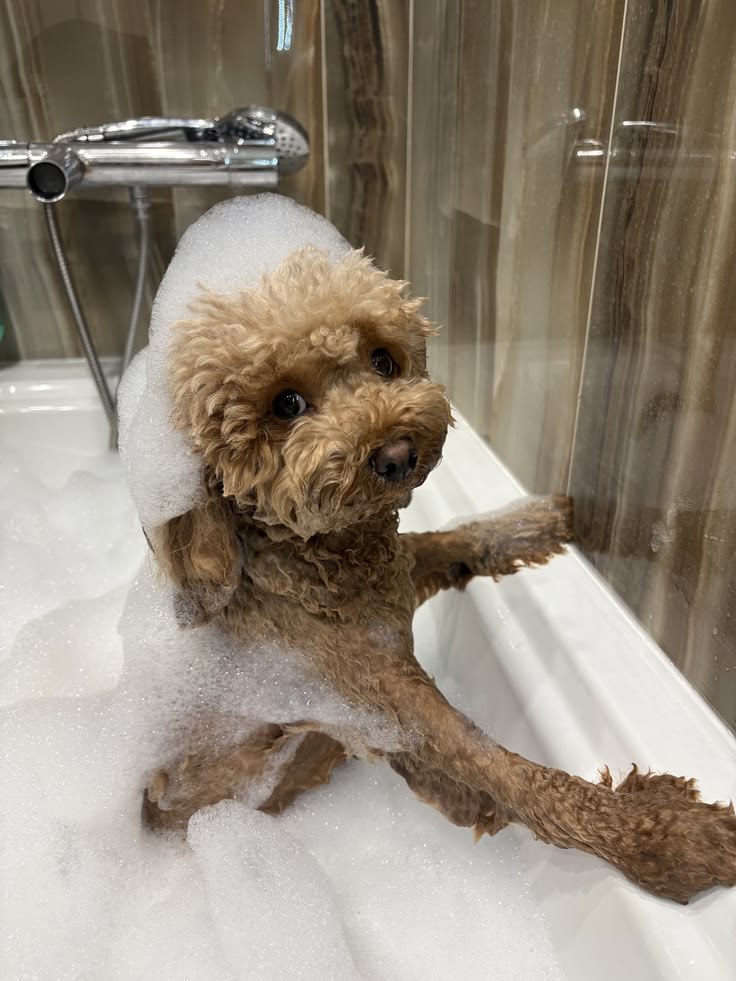
Bringing home a puppy means learning many new routines, including feeding, training, brushing, and grooming. One question many new puppy owners have is how to bathe a puppy safely.
Puppies naturally become dirty as they explore their surroundings. They may step in mud, play outside, roll around, or get food and debris caught in their coats.
Fortunately, giving your puppy a bath does not have to be stressful.
With the right preparation, gentle handling, and puppy-safe shampoo, bath time can become a positive part of your puppy’s grooming routine.
This is especially important for breeds with soft, growing coats, such as the Cavapoo. Regular brushing and appropriate bathing can help keep a Cavapoo puppy’s coat clean, comfortable, and easier to maintain.
If you are preparing for a new puppy, you can also learn more about choosing and caring for your puppy through our Available Cavapoo Puppies and puppy care resources.
When Can You Bathe a Puppy?
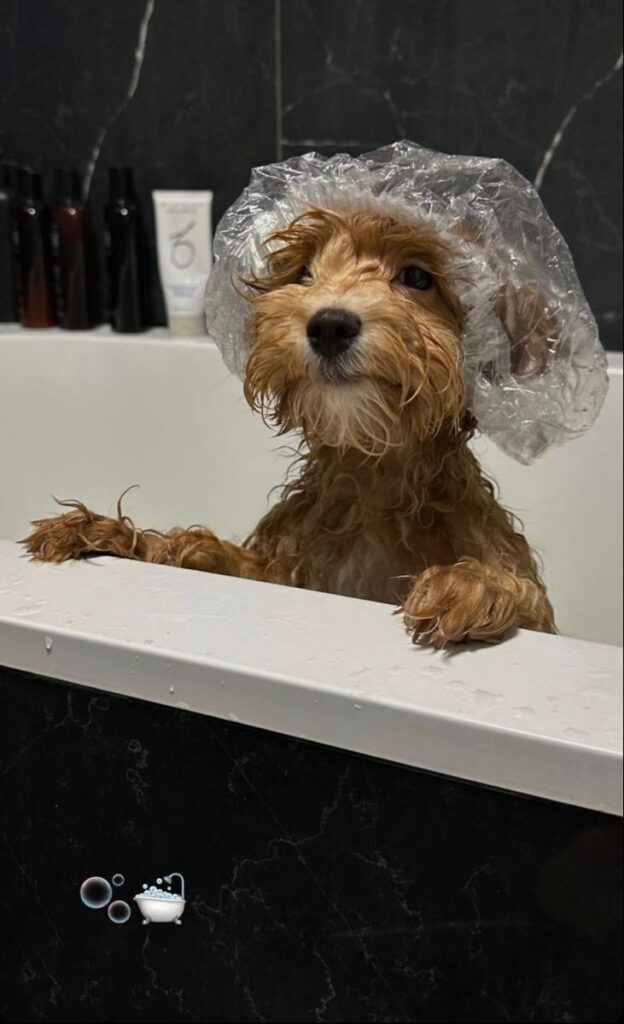
Most puppies do not need a full bath during their first few weeks of life.
Very young puppies have difficulty regulating their body temperature. Getting wet and becoming chilled can therefore be dangerous, particularly for very young puppies.
If a puppy becomes dirty before it is ready for a full bath, gently clean the affected area with a warm, damp washcloth.
Puppy-safe wipes can also be useful for small messes.
Once a puppy is around 8 weeks old and healthy, a careful bath can generally be introduced. However, the exact timing can depend on the puppy’s health, vaccination schedule, environment, and individual needs.
If your puppy has a medical condition, skin problem, or unusually sensitive skin, speak with your veterinarian before bathing.
The First Bath Should Be a Positive Experience
A puppy’s first bath is about more than getting clean.
It is also an opportunity to teach your puppy that grooming is safe.
Keep the first bath short and calm. Avoid rushing your puppy through the process.
Use a gentle voice and reward calm behavior with praise and small treats.
This early experience can make future baths, brushing sessions, nail trims, and professional grooming much easier.
What Do You Need for a Puppy Bath?
Before putting your puppy into the water, prepare everything you need.
Leaving your puppy unattended while you search for supplies can create a serious safety risk.
Have these items within reach:
- Puppy-safe shampoo
- Soft washcloth
- Puppy brush
- Wide-tooth comb if needed
- Non-slip bath mat
- Plastic cup for rinsing
- Several clean towels
- Small puppy-safe treats
- Optional pet-safe hair dryer
- Warm water
For a Cavapoo puppy, brushing supplies are particularly important because the coat can develop tangles and mats.
You can also review our puppy care information for additional guidance as your puppy grows.
Brush Your Puppy Before the Bath
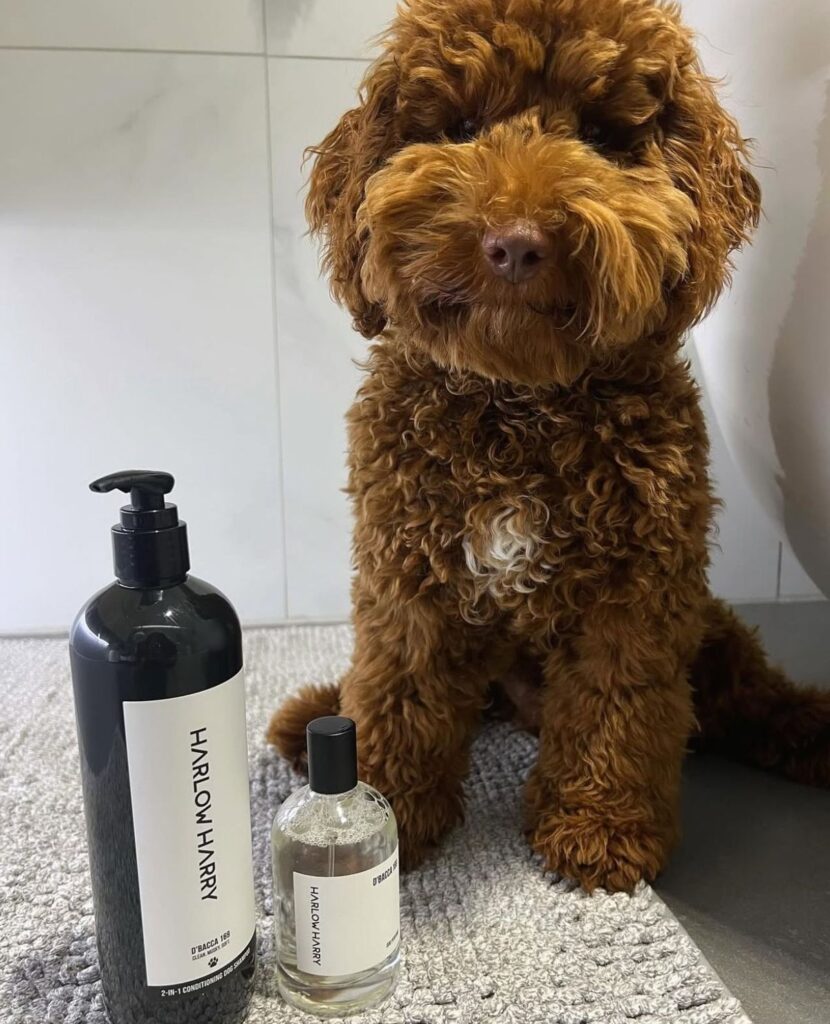
One of the most important steps when learning how to bathe a puppy is brushing before getting the coat wet.
Water can make existing tangles and mats tighter.
Trying to remove those tangles after the bath can be uncomfortable for your puppy.
For a Cavapoo puppy, gently brush through the coat before bathing.
Pay particular attention to areas where tangles commonly develop, including:
- Behind the ears
- Around the neck
- Under the legs
- Around the chest
- Behind the front legs
- Around the tail
- Around the collar area
Never pull aggressively through a mat.
If a severe mat cannot be safely brushed out, ask a professional groomer for help.
Prepare a Safe Bathing Area
Choose a warm, draft-free room before starting the bath.
A kitchen sink, laundry sink, puppy tub, or bathtub can work depending on the puppy’s size.
The most important consideration is preventing your puppy from slipping.
Place a non-slip mat underneath your puppy.
Never leave a puppy alone on a countertop, inside a sink, or in a bathtub.
Even a few seconds can be enough for a frightened puppy to jump and become injured.
Prepare the towels, shampoo, brush, and other supplies before turning on the water.
Keep the Water Lukewarm
The water should feel comfortably warm rather than hot.
Very hot water can burn or irritate your puppy’s sensitive skin.
Cold water can make a young puppy uncomfortable and may cause unnecessary stress.
Test the water with your hand before placing your puppy into the bathing area.
You generally do not need a deep tub of water.
A small amount of water is enough to wet the coat while allowing you to control the puppy safely.
Introduce Your Puppy to the Water Slowly
Do not immediately spray your puppy with a strong stream of water.
This can frighten a puppy that has never experienced a bath.
Instead, introduce the water gradually.
Start around the body and legs before moving toward the neck.
Use a gentle stream or a cup to wet the coat.
Talk calmly to your puppy throughout the process.
If your puppy becomes frightened, slow down.
The goal is to create a positive association with bathing rather than simply finishing the bath as quickly as possible.
Use a Puppy-Safe Shampoo
Always choose a shampoo formulated specifically for puppies or dogs.
Human shampoos can have different formulations and pH characteristics from products designed for canine skin.
A puppy-safe shampoo should be gentle and appropriate for your puppy’s age and skin condition.
Avoid getting shampoo directly into your puppy’s eyes or ear canals.
You should also avoid using strong fragrances or products designed for humans unless your veterinarian specifically recommends them.
For puppies with allergies, itching, unusual odors, or skin problems, ask your veterinarian which shampoo is appropriate.
Can You Use Baby Shampoo on a Puppy?
This is a common question from new puppy owners.
Baby shampoo may seem gentle, but a puppy-specific shampoo is generally the better choice because it is formulated specifically for canine skin and coats.
We have also covered this topic in our guide about using human shampoo on dogs.
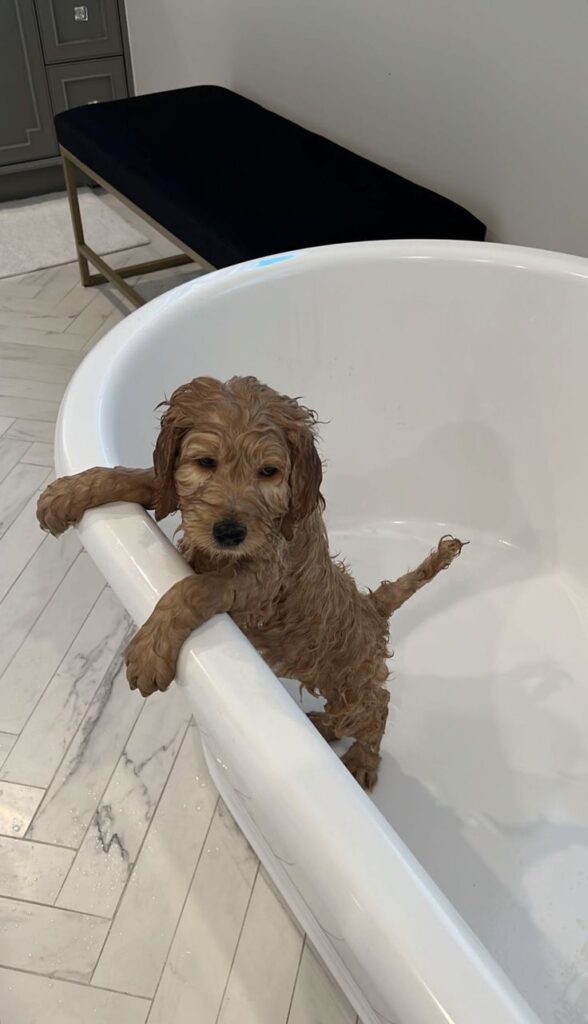
How to Bathe a Puppy Step by Step
Once everything is ready, you can begin the bath.
Step 1: Wet the Coat
Gently wet your puppy’s body with lukewarm water.
Start from the body and work toward the neck.
Avoid spraying water directly into the face.
Step 2: Apply Puppy Shampoo
Apply a small amount of puppy-safe shampoo to your hands (first puppy bath).
Gently massage the shampoo through the coat.
Use your fingertips rather than aggressively scrubbing.
Be particularly gentle around the face, ears, belly, and sensitive areas.
Step 3: Clean the Face Carefully
The face requires special attention.
Instead of pouring shampoo over your puppy’s head, use a damp washcloth.
Gently wipe around the face while avoiding the eyes, nose, and ear openings.
This approach can also make the first bath less frightening.
Step 4: Rinse Thoroughly
Rinsing is one of the most important parts of a puppy bath.
Leftover shampoo can irritate the skin and cause itching or dryness.
Use clean lukewarm water until the coat is completely free of shampoo.
Pay attention to areas with thicker or longer fur because shampoo can remain trapped there.
Step 5: Towel Dry
Once the bath is finished, gently lift your puppy from the bathing area.
Wrap your puppy in a clean, soft towel.
Pat and gently squeeze the coat rather than rubbing aggressively.
Young puppies can become cold quickly, so begin drying immediately.
Step 6: Reward Your Puppy
After the bath, offer praise, cuddles, and a small puppy-safe treat.
This teaches your puppy that bathing leads to positive experiences.
Over time, this can make future grooming sessions much easier.
Should You Use a Hair Dryer on a Puppy?
A hair dryer can help dry a puppy’s coat, but it must be used carefully.
If you use one, select a low or warm setting, never an extremely hot setting.
Keep the dryer moving instead of concentrating warm air on one spot.
Keep the dryer away from your puppy’s face and ears.
Some puppies are frightened by the noise, so do not force the dryer if it causes severe anxiety.
For a young Cavapoo, gently towel drying followed by careful brushing may be enough in many situations.
How Often Should You Bathe a Puppy?
There is no single bathing schedule that works for every puppy.
How often you bathe your puppy depends on several factors, including:
- Coat type
- Activity level
- Outdoor exposure
- Skin condition
- Lifestyle
- Whether the puppy becomes dirty
- Recommendations from your veterinarian or groomer
Bathing too frequently can potentially remove natural oils from the skin.
On the other hand, puppies that regularly get dirty may require more frequent cleaning.
For a Cavapoo puppy, regular brushing between baths is particularly important.
Brushing helps remove loose hair, dirt, and debris while reducing the chance of mats developing.
How Often Should You Bathe a Cavapoo Puppy?
Cavapoos have coats that can range from wavy to curly, depending on their genetics.
Because their coats can trap dirt and develop tangles, grooming should be part of their regular care routine.
However, that does not mean your Cavapoo needs constant bathing.
Instead, focus on keeping the coat brushed and bathing when your puppy genuinely needs it.
If your Cavapoo gets muddy after playing outside, a localized clean-up may sometimes be enough.
A full bath can be reserved for when the coat is noticeably dirty or your grooming routine calls for one.
What If My Puppy Gets Dirty Between Baths?
Your puppy does not necessarily need a complete bath every time one part of the coat becomes dirty.
For small messes, try cleaning the affected area with:
- A warm damp washcloth
- Puppy-safe grooming wipes
- A soft towel
- A gentle brushing session
For example, if your puppy gets mud on one paw, clean the paw rather than bathing the entire puppy.
This can help prevent unnecessary bathing.
What If My Puppy Has Fleas?
If you discover fleas on your puppy, do not automatically use an adult flea product.
Many flea and tick products have specific age and weight requirements.
Some products are not appropriate for very young puppies.
Speak with your veterinarian about the safest flea-control option for your puppy.
Your veterinarian can help determine an appropriate treatment based on your puppy’s age, weight, health, and existing medications.
You should also wash bedding and clean areas where your puppy spends time because flea control involves more than simply bathing the puppy.
Common Puppy Bathing Mistakes to Avoid
Learning how to bathe a puppy is easier when you know what not to do.
Using Human Shampoo
Human shampoo is not designed specifically for canine skin.
Choose a puppy or dog shampoo instead.
Using Very Hot Water
Puppy skin is sensitive.
Always use comfortably lukewarm water.
Leaving Your Puppy Unattended
Never leave a puppy unattended in a sink, tub, or elevated surface.
Scrubbing Too Hard
Gentle massage is enough.
Aggressive scrubbing can irritate the skin and make your puppy dislike bathing.
Failing to Rinse Completely
Shampoo residue can cause irritation.
Take your time and rinse the entire coat thoroughly.
Getting Water Inside the Ears
Avoid spraying water directly into the ear canals.
Using a Hot Hair Dryer
Hot air can burn sensitive skin.
Use a low or warm setting and keep the dryer moving.
Making the First Bath Too Long
A puppy’s first bath should be simple.
You do not need to turn the first experience into a complete grooming session.
Keep it short and positive.
How to Make Puppy Bath Time Easier
Some puppies immediately accept bathing.
Others need several sessions before they feel comfortable.
You can make the process easier by introducing grooming gradually.
Before the first bath, allow your puppy to investigate the tub while it is dry.
Give your puppy treats for calmly standing near the bathing area.
You can also practice touching your puppy’s paws, ears, legs, and tail.
These small exercises can help your puppy become comfortable with handling.
When bath day arrives, your puppy will already be familiar with some of the sensations involved in grooming.
When Should a Professional Groomer Bathe Your Puppy?
Professional grooming can be helpful as your puppy grows.
This is especially true for breeds with coats that require regular maintenance.
Cavapoos can benefit from professional grooming because their coats may become tangled without regular brushing and trimming.
Before taking your puppy to a professional groomer, ask about:
- Puppy grooming experience
- Vaccination requirements
- Bathing products
- Drying methods
- Grooming procedures
- How they handle nervous puppies
A good groomer should prioritize your puppy’s safety and comfort.
You can also discuss your puppy’s grooming routine with your veterinarian.
Puppy Bathing and Cavapoo Grooming
If you are bringing home a Cavapoo puppy, grooming should become part of your normal puppy-care routine.
Bathing is only one part of maintaining a healthy coat.
Your Cavapoo puppy will also need regular brushing, nail care, ear care, dental care, and routine veterinary attention.
Starting these habits while your puppy is young can make grooming much easier as your dog matures.
If you’re preparing for your new Cavapoo, our Available Cavapoo Puppies page can help you learn more about the puppies currently available.
You can also explore our FAQ for answers to common questions from prospective puppy owners.
Puppy Bathing FAQs
When can you bathe a puppy for the first time?
A healthy puppy can generally have its first careful bath at around eight weeks of age. Very young puppies should usually be cleaned with a warm, damp cloth instead of being fully immersed in water.
Can I bathe my puppy at 6 weeks old?
A six-week-old puppy generally does not need a routine full bath unless there is a specific reason. Use a warm, damp cloth for small messes and speak with your veterinarian if the puppy needs more extensive cleaning.
What shampoo should I use on my puppy?
Use a shampoo specifically formulated for puppies or dogs. Choose a gentle product appropriate for your puppy’s age and skin condition.
Can I use human shampoo on my puppy?
It is better to avoid human shampoo. Puppy and dog shampoos are specifically formulated for canine skin and coats.
Can I use baby shampoo on my puppy?
Baby shampoo may appear gentle, but a puppy-specific shampoo is generally the better choice. You can read our detailed guide on whether baby shampoo is safe for dogs.
How often should I bathe my puppy?
There is no universal schedule. Bathing frequency depends on your puppy’s coat, lifestyle, activity level, skin condition, and how dirty the puppy becomes.
Should I brush my puppy before or after bathing?
For puppies with longer or curly coats, brushing before bathing is important because water can make existing mats tighter.
Can I use a hair dryer after bathing my puppy?
Yes, but use a low or warm setting and keep the dryer moving. Never use very hot air or point the dryer directly at your puppy’s face or ears.
How do I keep my puppy calm during a bath?
Keep the bath short, use lukewarm water, speak calmly, and reward your puppy with praise and treats. Gradual exposure can help your puppy become comfortable with bathing.
How often should I bathe my Cavapoo puppy?
Cavapoos generally do not need constant bathing. Regular brushing and bathing when the coat becomes dirty can help maintain a clean and healthy coat.
Final Thoughts: Making Bath Time Positive
Knowing how to bathe a puppy is an important part of becoming a confident dog owner.
The first bath does not need to be perfect.
Your priority should be keeping your puppy warm, safe, comfortable, and calm.
Use lukewarm water, puppy-safe shampoo, gentle handling, thorough rinsing, and plenty of positive reinforcement.
As your puppy becomes familiar with bathing, the process should become easier.
For Cavapoo owners, remember that bathing is only one part of grooming. Regular brushing is equally important because the breed’s soft, wavy or curly coat can become tangled.
Most importantly, pay attention to your individual puppy.
If you notice persistent itching, redness, unusual odor, hair loss, sores, or other skin problems, speak with your veterinarian rather than trying to solve the problem with repeated baths.
A clean puppy is wonderful, but a comfortable and healthy puppy is the real goal.
If you’re getting ready for a new Cavapoo, explore our Cavapoo puppies for sale and learn more about preparing your home for your new companion.
