
Cavapoo Care Guide, Cavapoo Training Guide, Grooming Guide
Cavapoo Puppy Body Language: How to Communicate With Your Puppy
Aug
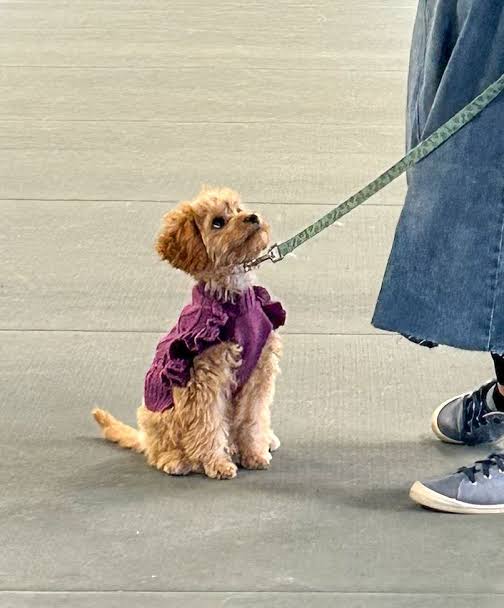
Building a strong relationship with your Cavapoo puppy starts with good communication (How to Communicate With Your Puppy).
Your puppy cannot explain when they are happy, nervous, uncomfortable, excited, or ready to play. Instead, they communicate through body language, sounds, movement, and learned behaviors.
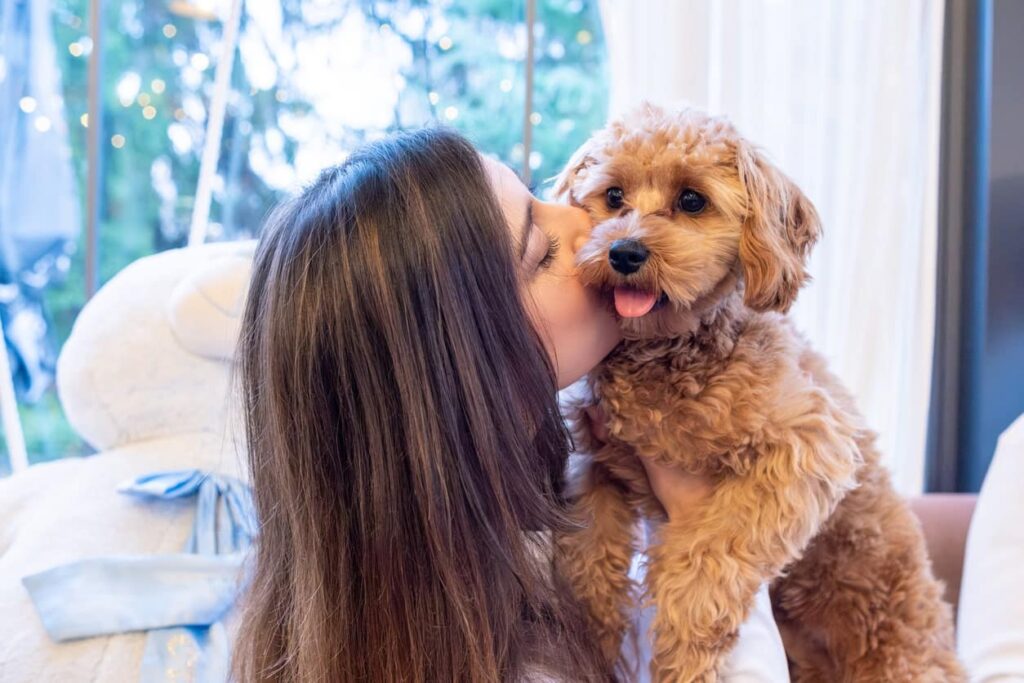
Learning to understand these signals can make life with your Cavapoo easier and more rewarding.
A relaxed body, loose tail, playful movement, or gentle approach can tell you that your puppy is comfortable. On the other hand, lip licking, turning away, yawning, hiding, or suddenly becoming still may indicate that your puppy needs more space.
Understanding these signals is especially important during the first few months at home.
If you are preparing to bring home a Cavapoo, our guide to bringing home a new puppy can help you prepare for those important first days.
Why Communication Matters With a Cavapoo Puppy
Cavapoos are generally affectionate, social, and people-oriented dogs. Their desire to interact with their families can make them wonderful companions.
However, being social does not mean that every Cavapoo wants interaction at every moment.
Your puppy may want to play one minute and sleep quietly the next. They may happily greet one visitor but become uncomfortable when several unfamiliar people approach them at once.
Good communication helps you recognize these differences.
When you understand what your puppy is communicating, you can respond before small problems become larger ones.
For example, a puppy that repeatedly turns away when someone tries to pet them may be asking for space. A puppy that brings you a toy and sits nearby may be asking you to play.
Instead of guessing what your Cavapoo wants, learn to watch for the signals.
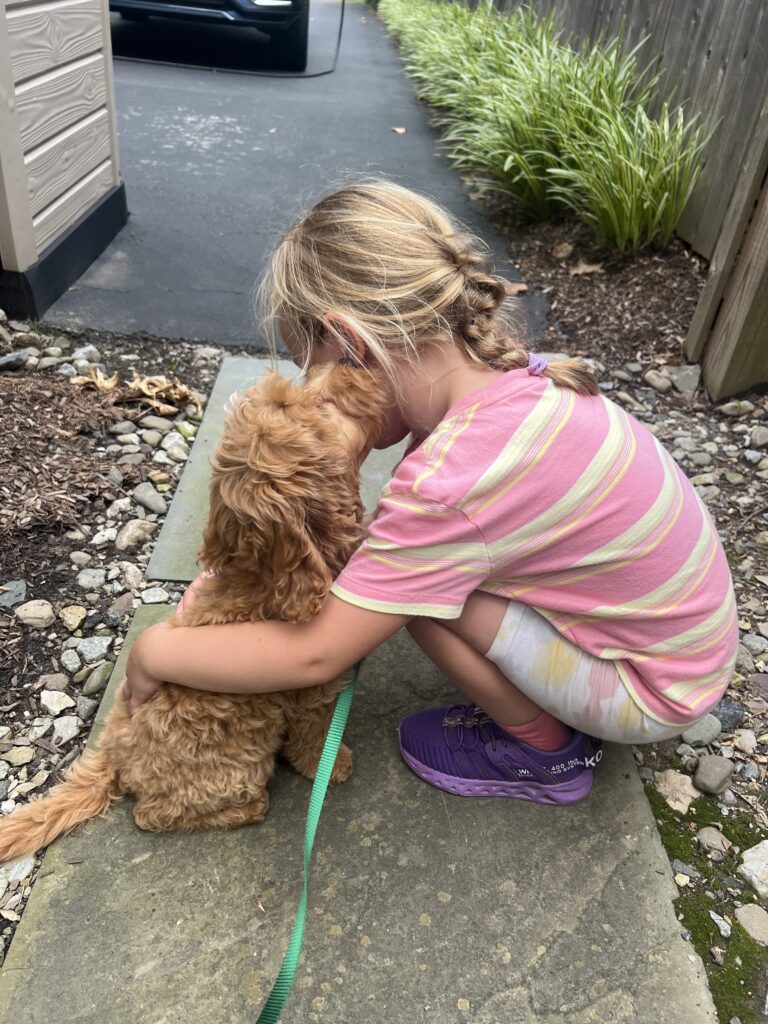
The Three Ways You Can Communicate With Your Puppy
There are three particularly useful ways to improve communication with your Cavapoo.
1. Learn to read natural body language
Your puppy is constantly communicating through their body.
Their ears, eyes, mouth, tail, posture, and movement can provide important clues about their emotional state.
2. Teach your puppy useful communication behaviors
You can teach your Cavapoo specific behaviors that help them communicate their needs.
For example, your puppy can learn to sit by the door when they need to go outside. They can also learn to bring you a toy when they want to play.
3. Give your puppy appropriate choices
Whenever possible, give your puppy an opportunity to choose whether they want to interact.
This is particularly useful when it comes to petting, handling, play, and interactions with visitors.
These three approaches work together to create a much stronger relationship between you and your Cavapoo.
How to Read Your Cavapoo Puppy’s Body Language
One of the most important skills you can develop as a puppy owner is learning to recognize changes in your dog’s normal behavior.
There is no single body-language signal that always means the same thing.
A wagging tail does not automatically mean a dog is happy. Similarly, a dog showing their teeth does not always mean exactly the same thing in every situation.
Look at the entire body and consider what is happening around your puppy.
Signs Your Cavapoo Puppy Is Comfortable
A relaxed Cavapoo will often have a loose, wiggly body.
You may notice:
- Relaxed eyes
- Loose ears
- A naturally positioned tail
- A slightly open and relaxed mouth
- Loose facial muscles
- Even weight distribution across the legs
- Wiggly movements
- Voluntary approaches toward people
- Playful behavior
- Relaxed resting
When several of these signals appear together, your puppy is likely comfortable with what is happening.
For example, if your Cavapoo approaches you with a loose body, relaxed eyes, and a gently wagging tail, they are probably happy to interact.
Signs Your Cavapoo May Be Uncomfortable
Dogs often communicate discomfort long before they become visibly distressed.
Some early signs can include:
- Lip licking
- Yawning when they are not tired
- Turning their head away
- Turning their entire body away
- Moving away
- Scratching unexpectedly
- Shaking off
- Becoming unusually still
- Closing their mouth suddenly
- Showing unusually wide eyes
- Lowering or tightening their ears
- Shifting their body weight away
- Avoiding eye contact
- Hiding behind you or furniture
One signal by itself does not necessarily mean that something is wrong.
Instead, look for changes from your puppy’s normal behavior and consider the situation.
If your Cavapoo repeatedly moves away when someone tries to touch them, for example, that is valuable information.
Give the puppy some space rather than forcing the interaction.
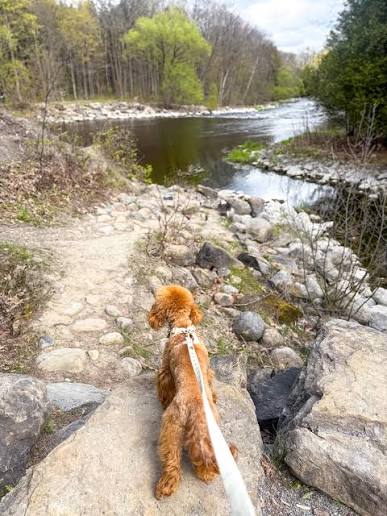
A Wagging Tail Does Not Always Mean a Happy Dog
This is one of the most important lessons for new puppy owners.
Many people assume that a wagging tail means a dog is happy.
That is not always true.
Dogs can wag their tails when they are excited, nervous, uncertain, frustrated, or uncomfortable.
The important question is not simply, “Is the tail wagging?”
Instead, ask:
What does the entire body look like?
A relaxed, loose body combined with a loose, natural tail movement is very different from a stiff body with a rapidly moving or unusually positioned tail.
Children should learn this distinction too.
Teach children to look at the entire dog rather than assuming that a wagging tail means they can approach and touch the puppy.
This is especially important when your Cavapoo is eating, sleeping, resting, hiding, or trying to move away.
Every Cavapoo Communicates Differently: How to Communicate With Your Puppy
Dogs do not all communicate in exactly the same way.
Your Cavapoo’s body structure, personality, previous experiences, environment, and learning history can all influence their behavior.
For this reason, learn what is normal for your individual puppy.
Pay attention to how your puppy behaves when they are relaxed.
Then compare future situations with that baseline.
If your normally playful Cavapoo suddenly becomes very quiet when visitors arrive, that change is worth noticing.
If your normally relaxed puppy suddenly becomes stiff when someone reaches toward them, pay attention.
Changes in behavior can provide valuable information.
Teach Your Cavapoo How to Communicate With You
Communication does not have to be one-way.
Your Cavapoo can learn specific behaviors that make it easier for you to understand what they want.
For example, imagine that your puppy needs to go outside.
They may walk around, sniff the floor, circle, or sit near the door.
Unfortunately, these signals can be easy to miss.
You can teach a clearer communication behavior instead.
Teaching Your Puppy to Ask to Go Outside
Some owners teach their puppies to touch a bell near the door.
Others teach the puppy to sit beside the door.
The specific method matters less than consistency.
When your puppy needs to go outside, help them perform the communication behavior before taking them outside.
Over time, your puppy can learn that the behavior communicates an important need.
This can make potty training easier because your puppy has a clearer way to get your attention.
For more help, see our guide to Cavapoo puppy potty training.
Teach Your Cavapoo to Ask for Play
Puppies often use their mouths to interact with people.
Mouthing, jumping, pawing, and grabbing clothing can sometimes become ways for a puppy to get attention.
Instead of simply correcting the behavior, consider teaching your Cavapoo a better way to communicate.
For example, teach your puppy to:
- Pick up a toy
- Bring the toy toward you
- Sit
- Wait for you to initiate play
Your puppy then has a clear alternative to jumping or mouthing.
The behavior becomes a form of communication.
Your puppy learns:
“When I want to play, I can bring my toy to my person.”
That is much more useful than learning that biting hands is the best way to start a game.
Our Cavapoo puppy training guide can help you build more positive behaviors like these.
Give Your Cavapoo Choices
Another powerful way to improve communication is to give your puppy appropriate choices.
This is particularly useful with physical interaction.
Many people automatically reach down and pet their dogs because they assume the dog wants affection.
Sometimes they do.
Sometimes they do not.
Your puppy may be tired, overwhelmed, distracted, or simply interested in something else.
How to Ask Your Puppy if They Want to Be Petted
Try offering your hand without immediately touching your puppy.
Give your Cavapoo a moment to decide whether they want to approach.
If they move toward you and appear relaxed, you can gently pet them.
After several seconds, stop.
Then observe what happens.
If your puppy leans toward you or moves closer, they may be asking for more interaction.
If they turns away, walks away, or remains distant, allow them to leave.
This simple habit teaches your puppy that you listen to their communication.
It can also help build trust.
Teach Visitors to Respect Your Cavapoo’s Signals
Communication becomes even more important when other people interact with your puppy.
Visitors should not assume that a puppy wants to be touched.
Instead, encourage guests to let your Cavapoo approach them.
This is particularly important with children.
Teach children to:
- Avoid chasing the puppy
- Avoid hugging the puppy
- Avoid disturbing the puppy while sleeping
- Avoid taking food or toys from the puppy
- Allow the puppy to move away
- Ask an adult before interacting with the puppy
A puppy should always have somewhere safe to retreat.
Your Cavapoo does not need to greet every person who enters your home.
Sometimes the best socialization experience is simply watching people from a comfortable distance.
Communication Makes Training Easier
Training is essentially a two-way communication system.
You teach your Cavapoo what a cue means.
Your puppy responds with a behavior.
You provide appropriate reinforcement.
Over time, both of you become better at understanding each other.
Short, positive training sessions can be especially effective for young puppies.
Instead of expecting your Cavapoo to concentrate for a long period, practice for a few minutes at a time.
You can practice:
- Their name
- Sit
- Come
- Leave it
- Touch
- Wait
- Drop it
- Recall
- Crate entry
- Calm settling
Training should be enjoyable rather than overwhelming.
For a complete routine, see our guide to Cavapoo puppy training.
Body Handling Is Another Form of Communication
Your Cavapoo will need to tolerate handling throughout life.
Veterinary examinations, grooming, nail trimming, ear cleaning, bathing, brushing, and health checks all involve physical contact.
Teaching your puppy that handling predicts positive experiences can make these situations much easier.
Start slowly.
Touch one area briefly.
Reward your puppy.
Then stop.
Gradually build up the duration and variety of handling.
Never assume that a puppy must simply tolerate everything because they are young.
Instead, teach them that handling can be safe and predictable.
This is particularly important for Cavapoos because their coat requires regular grooming.
If your puppy learns to cooperate with brushing and handling early, grooming can become much easier as they mature.
Communication Can Prevent Many Puppy Problems
Understanding your Cavapoo’s communication can help you identify problems before they escalate.
For example, a puppy that keeps turning away from a child may be communicating discomfort.
A puppy that repeatedly jumps toward a toy may be communicating that they want to play.
A puppy pacing around the room and sniffing may need a bathroom break.
A puppy hiding under furniture may need space.
When you respond appropriately to these signals, your puppy learns that communicating with you works.
That can reduce the need for louder or more frustrating behaviors.
Instead of escalating from a quiet signal to barking, jumping, mouthing, or running away, your puppy can learn that you listen early.
How to Build Better Communication With Your Cavapoo
Building good communication does not require complicated techniques.
Start with a few simple habits.
Watch before you react.
Take a moment to observe what your puppy’s entire body is telling you.
Reward useful communication.
When your puppy communicates appropriately, respond when possible.
Avoid forcing interactions.
Give your puppy opportunities to move away from situations they find uncomfortable.
Teach alternative behaviors.
If your puppy jumps for attention, teach them to sit.
If they mouth during play, teach them to bring a toy.
Keep training positive.
Reward the behaviors you want to see more often.
Learn your individual puppy.
Your Cavapoo will develop their own unique ways of communicating with you.
Final Thoughts: Listen to Your Cavapoo
Great relationships require great communication.
Your Cavapoo cannot speak to you with words, but they are communicating constantly.
Their posture, eyes, ears, tail, movement, sounds, and learned behaviors can all provide valuable information.
The more you learn to recognize these signals, the easier it becomes to understand your puppy.
You can also teach your Cavapoo appropriate ways to communicate their needs.
Most importantly, remember that communication works both ways.
Your puppy learns your words, routines, gestures, and expectations.
You learn their signals, preferences, fears, and needs.
That ongoing conversation is one of the most rewarding parts of living with a Cavapoo.
If you are still preparing for your new puppy, start with our Cavapoo breed guide and learn more about what to expect from this affectionate and intelligent companion.
And when you’re ready to find your next family member, explore our Available Cavapoo Puppies to see the puppies currently looking for loving homes.
Frequently Asked Questions About Cavapoo Puppy Communication
How do I know if my Cavapoo puppy is happy?
A happy Cavapoo often has a loose body, relaxed facial expression, natural ear position, and relaxed tail movement. They may also approach you willingly and engage in playful behavior.
Does a wagging tail always mean my Cavapoo is happy?
No. Dogs can wag their tails when they are excited, nervous, uncertain, or uncomfortable. Always consider the entire body rather than the tail alone.
How can I tell if my Cavapoo wants to be left alone?
Your puppy may turn away, move away, hide, become still, lick their lips, yawn, or avoid interaction. Give them space when these signals appear.
Can I teach my Cavapoo to communicate when they need to potty?
Yes. You can teach a puppy a consistent signal, such as sitting near the door or touching a bell. The important part is consistently connecting the signal with going outside.
Why does my Cavapoo puppy mouth me?
Puppies commonly use their mouths during play and social interaction. Your puppy may also discover that mouthing gets attention. Teaching them to bring a toy or perform another appropriate behavior can provide a better way to request interaction.
Should children learn dog body language?
Absolutely. Children should understand that dogs communicate through their entire body. They should never assume that a wagging tail means a puppy wants to be touched.
How can I build trust with my Cavapoo?
Listen to your puppy’s signals, avoid forcing unwanted interactions, use positive reinforcement, provide safe choices, and create predictable routines. These habits can help your Cavapoo learn that you are safe and responsive.
