
Cavapoo Care Guide, Grooming Guide
Why Do Dogs Shed? Cavapoo Shedding & Grooming Guide
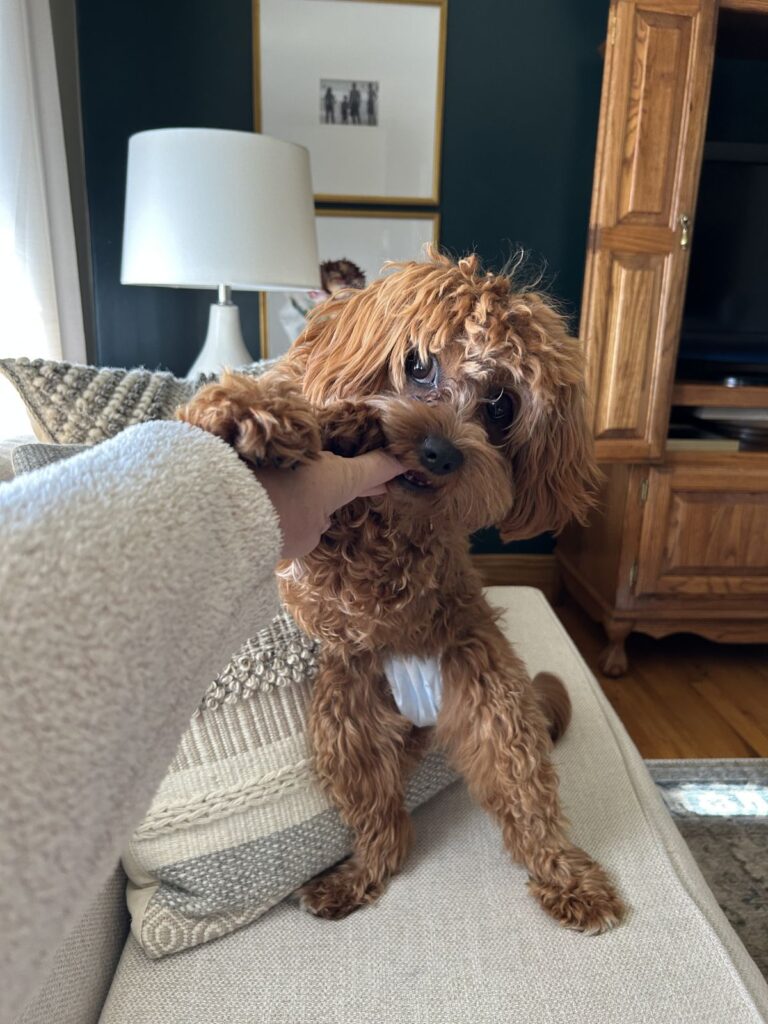
Sep
If you have ever found dog hair on your clothes, furniture, bedding, or car seats, you have probably wondered: why do dogs shed?
Shedding is one of the most normal parts of having a dog. Hair grows, reaches different stages of its growth cycle, rests, and eventually falls out so new hair can take its place. The amount of dog shedding, however, can vary dramatically from one dog to another.
Breed, coat type, genetics, age, environment, season, grooming routine, and overall skin and coat health can all influence what you see around your home.
For prospective Cavapoo owners, shedding is an especially common question. Because the Cavapoo combines Cavalier King Charles Spaniel and Poodle ancestry, individual Cavapoos can have different coat textures and different shedding patterns.
So, do Cavapoos shed?
Yes, Cavapoos can shed. However, many have coats that shed relatively lightly compared with heavily shedding breeds, particularly when they inherit more of the Poodle’s coat characteristics. There is no guarantee that every Cavapoo will be low-shedding.
Understanding how shedding works can help you choose the right dog for your household and establish a Cavapoo grooming routine that keeps your Cavapoo’s coat healthy.
Why Do Dogs Shed?
Dogs shed because hair has a natural growth cycle.
Individual hairs do not grow forever. Instead, follicles move through stages of growth, transition, rest, and shedding. Once an individual hair reaches the end of its cycle, it is released and eventually replaced.
That means shedding is not necessarily a sign that something is wrong.
In fact, shedding is part of maintaining the coat.
The amount of visible hair can be very different between dogs because different breeds have different coat characteristics and hair-growth patterns. Some dogs release large amounts of loose undercoat, while others retain hair for much longer and require regular trimming and brushing.
So, why do dogs shed so much compared with other dogs?
Coat type and genetics are major factors. Dogs with dense undercoats can release considerably more visible hair than dogs whose hair grows for longer periods before being released.
Shedding Helps Replace Old or Damaged Hair
One simple way to understand shedding is to think of it as coat maintenance.
As hair becomes old, damaged, or reaches the end of its growth cycle, the body releases it. New hair can then grow through the normal follicle cycle.
That means ordinary dog hair shedding is not automatically something to worry about.
This is why finding some loose hair around your home is not necessarily cause for concern.
The important question is whether the amount and pattern of shedding are normal for your individual dog.
A dog that normally leaves very little hair around the house but suddenly develops large amounts of loose hair may deserve closer attention, particularly if other symptoms appear.
Do Dogs Shed More When the Seasons Change?
Many dogs experience increased shedding during seasonal changes.
Dogs with undercoats may experience particularly noticeable seasonal dog shedding in spring and fall as their coats transition. In spring, some dogs lose part of their heavier winter coat. In fall, another coat transition can occur as the body prepares for colder weather.
The exact pattern varies from dog to dog.
Indoor dogs can also shed throughout the year because modern homes provide relatively consistent temperatures and artificial lighting. Therefore, you should not assume that every dog will follow a perfectly predictable spring-and-fall shedding schedule.
According to the American Animal Hospital Association, seasonal changes, environment, breed, and overall health can all affect shedding patterns.
Why Do Some Dogs Shed More Than Others?
Not all dogs shed the same amount.
Coat genetics are a major reason.
Some breeds have dense double coats with substantial undercoats. These dogs can release large quantities of loose hair, especially during seasonal coat changes.
Other breeds have hair that grows for longer periods before being shed. Poodles are a well-known example of a breed with a continuously growing coat that generally sheds less visibly but requires regular grooming.
This is one reason you should not judge a dog’s grooming requirements solely by how much hair you see on the floor.
A dog that leaves very little hair around your home may still require frequent brushing and professional grooming because its hair continues growing and can become tangled or matted.
This is also why Poodle mix shedding can be difficult to predict. A mixed-breed dog can inherit different coat characteristics from each parent.
Do Cavapoos Shed?
Cavapoos can shed, but their shedding varies considerably.
The Cavapoo is a cross between a Cavalier King Charles Spaniel and a Poodle. Because individual puppies inherit different combinations of traits from their parents, one Cavapoo may have a curlier, more Poodle-like coat while another may have a softer, straighter, or more spaniel-influenced coat.
This variation matters when considering the Cavapoo shedding level you may experience.
A curlier coat may trap loose hairs within the coat instead of allowing them to fall freely around the home. That can make the dog appear to shed very little, even though loose hair is still being released.
The hair may simply remain in the coat until brushing removes it.
For this reason, “low shedding” should never be interpreted as “no grooming required.”
Are Cavapoos Hypoallergenic?
No dog is completely hypoallergenic.
This is an important distinction for anyone considering a Cavapoo because of allergies.
Some people find that they tolerate certain lower-shedding dogs better than heavily shedding breeds, but allergic reactions can involve proteins associated with dog dander, saliva, urine, and other materials, not simply the amount of visible hair in the home.
A lower-shedding Cavapoo may therefore work better for some allergy-sensitive households, but there is no guarantee.
This is why dog allergies and shedding should be considered separately. A home with less visible hair can still contain allergens.
If allergies are an important concern, spend time around dogs before making a long-term commitment and discuss significant allergy concerns with an appropriate healthcare professional.
You should also remember that a dog with less visible shedding can still require substantial grooming.
Cavapoo Hair vs. Fur: Does It Matter?
People often use the words “hair” and “fur” interchangeably, but coat growth patterns can differ.
The American Kennel Club explains that dogs have different coat characteristics and growth cycles, and that these differences influence how long individual hairs remain in the coat and how much visible shedding occurs.
So, when discussing Cavapoo hair vs fur, the more useful question is not simply which word describes the coat. It is how that individual coat grows, sheds, tangles, and needs to be maintained.
Cavapoos can inherit different coat textures because they have two different breeds in their ancestry.
You may see:
- Loose, wavy coats
- Soft, wavy coats
- Curlier Poodle-influenced coats
- Straighter coats
- Different combinations of texture and density
These differences can influence grooming requirements and how noticeable shedding is.
That is why two Cavapoos can live in similar environments but leave very different amounts of hair around the house.
Do Cavapoo Puppies Shed?
Yes, puppies can shed as they develop.
A puppy’s coat does not necessarily remain identical throughout its life. As a puppy matures, its puppy coat can transition toward an adult coat, and the texture, density, curl pattern, and grooming requirements may change.
The timing of this transition varies between dogs.
This is one reason prospective owners should avoid choosing a puppy based solely on how its coat looks at a very young age.
A puppy that appears exceptionally fluffy may develop a different adult coat as it matures.
The American Kennel Club notes that puppies naturally transition from puppy coats to adult coats, with the resulting coat differing according to breed and coat type.
This normal puppy shedding process should not automatically be confused with illness or abnormal hair loss.
How Much Do Cavapoos Shed?
There is no single amount of shedding that applies to every Cavapoo.
A Cavapoo with a curlier Poodle-influenced coat may release relatively little visible hair, while another Cavapoo may shed more noticeably.
Genetics, coat texture, grooming, season, age, and individual health can all affect the amount of hair you notice.
Rather than asking whether Cavapoos shed “a lot” or “not at all,” it is more useful to think of them as variable, often lower-shedding companion dogs that still require regular coat care.
So, do Cavapoos shed a lot? Some may shed more than others, but there is no universal shedding level for the breed.
That is a more realistic expectation.
If you are researching Cavapoo Puppies For Sale Near Me, ask questions about the puppy’s parents, coat characteristics, expected grooming needs, and what the breeder has observed about the puppy’s development.
Regular Brushing Can Help Manage Loose Hair
You cannot stop a healthy dog from shedding completely.
However, regular brushing can help capture loose hair before it ends up on your furniture and clothing. AKC and AAHA both recommend regular grooming as an important way to manage loose hair and maintain coat health.
Brushing also helps prevent tangles and mats, particularly in Cavapoos with longer or curlier coats.
The right brush depends on the individual coat.
A slicker brush can be useful for many longer or curly coats, while a metal comb can help check whether you have reached through the coat and removed tangles close to the skin.
The key is gentle, consistent grooming rather than aggressive brushing.
Your Cavapoo should learn that grooming is a normal and rewarding part of life.
Start Grooming Habits While Your Cavapoo Is Young
Puppyhood is an excellent time to introduce grooming gradually.
A young Cavapoo should learn that having its paws, ears, face, tail, and coat handled can be a normal experience.
Begin with very short sessions.
You might touch the puppy gently, reward calm behavior, and stop before the puppy becomes overwhelmed. Gradually introduce a brush, allowing the puppy to investigate it before you begin brushing.
The goal is not to finish an entire grooming session on day one.
The goal is to create positive associations.
As the puppy grows, gradually increase the amount of handling and brushing it can comfortably tolerate.
These are some of the most useful dog grooming tips for establishing a positive lifelong routine.
This approach can make future grooming appointments, baths, nail trims, and veterinary examinations easier.
How Often Should I Brush a Cavapoo?
The ideal brushing frequency depends on your Cavapoo’s coat length, texture, density, and tendency to tangle.
A short, recently groomed coat may require less brushing than a long, curly coat.
Longer Cavapoo coats can develop mats quickly, particularly around areas such as the ears, legs, armpits, collar area, and tail.
Rather than following a rigid schedule for every Cavapoo, check the coat regularly.
Run a comb through the coat and pay attention to areas where tangles develop.
If the comb cannot pass comfortably through the coat, your grooming routine may need adjustment.
Professional grooming can also be useful for maintaining a manageable coat.
Bathing Can Help Remove Loose Hair, But More Is Not Always Better
Bathing can remove dirt and some loose hair, but bathing too frequently can contribute to dry or irritated skin.
Your Cavapoo’s bathing routine should therefore be based on its coat, lifestyle, skin condition, and veterinary or grooming needs.
Use products specifically designed for dogs rather than household or human shampoos.
If your dog develops persistent itching, redness, odor, dandruff, greasy skin, or other changes, do not assume that another bath will solve the problem.
The underlying cause may need veterinary evaluation.
Can Nutrition Affect Shedding?
Nutrition and general health can influence skin and coat condition.
A nutritionally appropriate diet helps provide the nutrients required for normal body function and healthy skin and hair.
However, supplements should not automatically be added whenever a dog sheds.
If your Cavapoo’s coat suddenly changes or shedding becomes unusual, discuss the situation with your veterinarian before adding supplements or making major dietary changes.
A dull coat, excessive shedding, thinning hair, or other changes can sometimes accompany an underlying health problem.
When Is Shedding Not Normal?
Normal shedding should not be confused with abnormal dog hair loss.
Contact your veterinarian if you notice signs such as:
- Bald patches
- Significant thinning of the coat
- Red or inflamed skin
- Persistent itching
- Repeated scratching or licking
- Crusting or sores
- Major dandruff or scaling
- A sudden dramatic change in shedding
- Unusual odor associated with the skin
- Hair loss accompanied by other changes in your dog’s health
Conditions including allergies, parasites, skin infections, hormonal disorders, nutritional problems, and other illnesses can contribute to abnormal hair loss.
The American Kennel Club and AAHA both emphasize the importance of distinguishing ordinary shedding from excessive shedding in dogs or hair loss associated with health problems.
Shedding and Dog Allergies Are Not the Same Thing
It is easy to assume that more dog hair automatically means more allergies.
The relationship is more complicated.
People who are allergic to dogs can react to proteins associated with dog dander and other materials rather than simply to the hair itself.
That means vacuuming visible hair may help keep your home cleaner, but it does not eliminate every potential allergen.
If someone in your household experiences persistent allergy symptoms around dogs, discuss the issue with a qualified healthcare professional.
Similarly, if your Cavapoo develops persistent itching, licking, ear problems, or skin inflammation, allergies are one possibility among several and should be evaluated by a veterinarian rather than diagnosed at home.
How to Reduce Dog Hair Around Your Home
Although you cannot completely eliminate normal shedding, you can make it easier to manage.
So, how to reduce dog shedding in practical terms?
Brush your Cavapoo regularly and remove loose hair before it accumulates around the house.
Keep grooming tools where you are most likely to use them.
Wash bedding and blankets regularly.
Vacuum areas where your dog spends the most time.
Use washable covers on favorite furniture if necessary.
Keep your Cavapoo’s coat at a practical length that you can maintain.
And establish a grooming routine before the loose hair becomes a major problem.
Regular brushing and appropriate grooming are among the simplest ways to manage loose hair.
The goal is not to create a completely hair-free home.
The goal is to manage normal shedding while keeping your dog comfortable and its coat healthy.
Should You Shave a Dog to Stop Shedding?
Shaving is not a universal solution to shedding.
For dogs with double coats, shaving can interfere with the natural protective function of the coat and is generally not recommended simply as a way to reduce shedding.
Cavapoos have different coat types, so grooming decisions should be based on the individual coat rather than applying one rule to every dog.
A professional groomer can help determine an appropriate trim.
If your Cavapoo’s coat is becoming difficult to maintain, reducing its length through an appropriate professional grooming routine may be more practical than trying to eliminate shedding entirely.
Grooming Your Cavapoo Is More Than Removing Hair
Grooming is not just about keeping your home cleaner.
Regular coat care gives you an opportunity to notice changes in your dog’s skin and body.
While brushing, you may notice a new lump, irritated area, mat, parasite, sore, or unusual skin change.
This makes grooming a useful part of routine care.
It also gives your Cavapoo regular positive handling experiences.
When grooming is introduced gradually and maintained consistently, it can become a normal part of the relationship between you and your dog.
What to Consider When Choosing a Cavapoo
If shedding is one of your main concerns, do not choose a puppy based on the assumption that every Cavapoo has the same coat.
Ask about the parents’ coats and shedding characteristics.
Ask what grooming the puppy will likely need.
Ask how the puppy has been socialized and handled.
Ask what health information is available.
And ask what support is provided after the puppy joins your family.
For someone searching for Cavapoo Puppies For Sale In Tennessee, understanding the dog’s future grooming needs is just as important as considering location.
The same applies to families looking at Cavapoo Puppies For Sale In Ohio. Seasonal weather can change how often a dog spends outdoors, but the basic need for regular coat maintenance remains.
For families researching Cavapoo Puppies For Sale In Florida, the warm and humid climate can make practical grooming, skin care, parasite prevention, and heat management particularly important considerations.
Regardless of location, the right question is not simply, “Will this puppy shed?”
Instead, ask, “What kind of coat is this puppy likely to have, and am I prepared to maintain it?”
A Cavapoo Is Not a Zero-Shedding Dog
One of the most important expectations to set before bringing home a Cavapoo is that no responsible breeder should promise that a puppy will never shed.
Cavapoos can be lower-shedding than many breeds, but individual coat genetics vary.
Even a Cavapoo that leaves very little hair on your furniture will still need regular brushing and grooming.
In other words, low shedding does not mean low maintenance.
This is especially important for people choosing a dog because of allergies. Spending time with the individual dog before committing can be helpful, but it still cannot guarantee how a person’s allergies will respond over the long term.
Final Thoughts: Why Do Dogs Shed?
So, why do dogs shed?
Because shedding is a normal part of the hair-growth cycle.
Dogs naturally lose old hair as new hair develops, and the amount they shed depends on genetics, breed, coat type, season, environment, age, and health.
Some dogs leave large amounts of fur around the home. Others shed very little visibly but require frequent grooming because their hair continues growing and can become tangled.
Cavapoos generally fall toward the lower-shedding end for many households, particularly when they inherit a more Poodle-like coat, but there is significant individual variation.
The best approach is to understand the specific Cavapoo coat your dog has, establish regular grooming habits, feed an appropriate diet, monitor skin and coat health, and contact your veterinarian when shedding changes dramatically or is accompanied by other concerning signs.
If you are considering bringing a Cavapoo into your home, shedding should be one factor in your decision—not the only one.
Temperament, health, grooming requirements, exercise needs, training, lifestyle compatibility, and the long-term commitment of responsible dog ownership all matter.
Frequently Asked Questions About Dog Shedding
Why do dogs shed?
Dogs shed as part of their normal hair-growth cycle. Old or damaged hairs eventually fall out and are replaced as the coat continues its natural growth process.
Why do dogs shed so much?
Some dogs shed more because of their breed, coat type, genetics, seasonal changes, environment, or individual hair-growth cycle. Dogs with dense undercoats can produce particularly noticeable shedding.
Do all dogs shed?
Most dogs shed to some degree, but the amount varies significantly according to breed, coat type, genetics, environment, and individual health.
Do Cavapoos shed?
Yes. Cavapoos can shed, although many have relatively low visible shedding compared with heavily shedding breeds. Individual Cavapoos can differ substantially.
Do Cavapoos shed a lot?
Usually not compared with breeds known for heavy shedding, but there is no guaranteed shedding level for every Cavapoo. Coat genetics have a major influence.
What is the Cavapoo shedding level?
The Cavapoo shedding level can range from very light to more noticeable depending on the individual dog’s inherited coat traits. Poodle-influenced coats may produce less visible shedding, but no Cavapoo should be assumed to be completely non-shedding.
Are Cavapoos hypoallergenic?
No dog is completely hypoallergenic. Some people may tolerate lower-shedding dogs better, but allergies vary between individuals.
Why is my Cavapoo shedding more than usual?
Seasonal changes, coat development, grooming, stress, nutrition, skin problems, parasites, allergies, and other health conditions can affect shedding. Sudden or unusual hair loss should be discussed with a veterinarian.
Do Cavapoo puppies shed their puppy coat?
Yes. Puppies can gradually transition from their soft puppy coat to an adult coat, and the adult coat may have a different texture and grooming requirement.
When do dogs shed the most?
Many dogs with seasonal shedding patterns shed more heavily during spring and fall. Indoor dogs may shed more consistently throughout the year.
Can I stop my Cavapoo from shedding?
No. Normal shedding cannot be eliminated completely. Regular brushing and appropriate grooming can help manage loose hair.
Does brushing reduce shedding?
Brushing does not stop the biological shedding process, but it helps collect loose hair before it falls around your home and can also reduce tangles.
How often should I brush my Cavapoo?
The ideal frequency depends on the coat. Longer, curlier coats generally require more frequent brushing to prevent mats and tangles.
Can bathing reduce dog shedding?
Bathing can help remove loose hair, but it should not replace regular brushing. Over-bathing can also dry the skin.
Can poor nutrition cause excessive shedding?
Poor nutrition can affect skin and coat quality. If your dog’s coat suddenly changes or shedding becomes excessive, consult your veterinarian rather than assuming a supplement is needed.
Why does my dog have bald spots?
Bald spots are different from ordinary shedding and can have several causes, including allergies, parasites, infections, hormonal disorders, trauma, or other health conditions. Veterinary evaluation is appropriate.
Does dog shedding mean my dog is unhealthy?
Not necessarily. Normal shedding is expected in dogs. Concern is warranted when shedding is sudden, extreme, patchy, or accompanied by skin irritation or other signs of illness.
Do Poodles shed?
Poodles are generally considered low-shedding dogs, but their continuously growing hair requires regular grooming to prevent tangles and mats.
Are Cavapoos easier to keep clean than heavy-shedding breeds?
Many owners find lower-shedding Cavapoos easier to manage in terms of visible hair, but their coats can require substantial brushing and professional grooming.
Should I shave my Cavapoo to stop shedding?
Not simply for shedding control. The appropriate grooming length depends on the individual coat, and shaving is not a universal solution to shedding.
Does dog shedding cause dog allergies?
Visible hair is not the only factor involved in dog allergies. Allergic reactions can involve proteins associated with dander, saliva, and other materials.
What is the difference between dog hair shedding and dog hair loss?
Shedding is part of a normal hair-growth cycle. Dog hair loss, particularly bald spots or significant thinning, can indicate an underlying problem and may require veterinary evaluation.
Where can I learn more about Cavapoo grooming?
Our Cavapoo Care Guide provides additional information about maintaining your dog’s coat, grooming routine, health, and everyday care.
Continue Learning About Cavapoos
If you are preparing to welcome a Cavapoo into your home, continue learning before making your decision. Explore our Available Cavapoo Puppies, Cavapoo Breed Guide, Cavapoo Care Guide, Cavapoo Buying Guide, Cavapoo Puppies by State, Puppy Buying Checklist, Questions to Ask Before Buying a Cavapoo Puppy, Health Guarantee, Shipping & Delivery, Adoption Process, and Frequently Asked Questions resources.
These resources can help you understand Cavapoo temperament, grooming, health, puppy preparation, purchasing considerations, and the responsibilities involved in raising a healthy companion.
