Cavapoo Breed Information
Gentle Giant Dog Breeds: Benefits, Costs & What to Know Before Buying
Sep
There is something special about living with a giant dog.
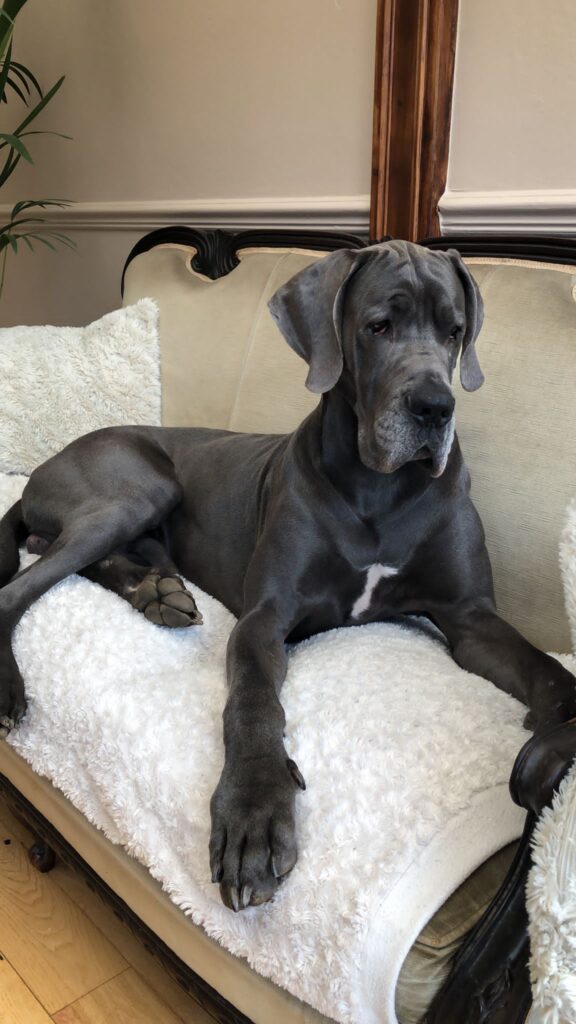
A Great Dane stretching across the living room, a Newfoundland happily following the family around the house, or a Saint Bernard calmly resting beside the sofa can make an enormous impression—literally.
Many gentle giant dog breeds are known for affectionate, calm, patient, or family-oriented temperaments. Their size may look intimidating, but some of these dogs are remarkably gentle with the people they love.
That said, choosing a giant dog should never be based on appearance or the idea that every large dog will automatically have a gentle personality.
Giant breeds come with equally giant responsibilities.
Their food, beds, crates, collars, transportation needs, veterinary expenses, training requirements, grooming equipment, and physical strength all have to be considered before bringing one home. The American Kennel Club notes that giant dogs have unique developmental, housing, care, training, and cost considerations, and many mature more slowly than smaller dogs.
This guide explains the benefits of gentle giant dogs, what to consider before choosing one, and why a smaller companion such as the Cavapoo may be a better fit for families who love affectionate dogs but do not necessarily want the responsibilities that come with a giant breed.
What Is a Gentle Giant Dog?
“Gentle giant” is a common description rather than an official breed classification.
There is no single universally accepted weight or height requirement that determines whether a dog qualifies as a giant breed. Instead, the term is generally used for exceptionally large dogs that are known, individually or as a breed, for calm, affectionate, patient, or easygoing qualities.
The Irish Wolfhound is recognized by the AKC as the tallest AKC breed, while breeds such as the Great Dane, Newfoundland, Saint Bernard, and Mastiff are also commonly included when people talk about giant dog breeds.
The important point is that size does not determine personality.
A large dog still needs appropriate socialization, training, responsible breeding, enrichment, and veterinary care. Likewise, not every individual dog within a traditionally gentle breed will have exactly the same temperament.
When researching the best gentle giant dog breeds, focus on the individual breed’s history, temperament, exercise needs, grooming requirements, training needs, health considerations, and suitability for your household.
Why Do People Love Gentle Giant Dog Breeds?
One of the biggest attractions of giant dogs is the combination of impressive physical size with an affectionate family temperament.
A well-socialized giant dog may enjoy relaxing near its family, participating in everyday household activities, going for walks, and receiving attention from the people it trusts.
For some owners, the appeal is simple:
They want a dog that feels substantial and imposing but behaves like a loving companion at home.
The experience can be wonderfully unique.
A giant dog may occupy an enormous amount of physical space while still wanting nothing more than to lie beside you and be part of the family.
These qualities help explain why gentle large dog breeds and giant breeds remain popular with people looking for affectionate companions.
1. They Can Be Affectionate Family Companions
Several giant breeds have long histories as working dogs that developed close relationships with people.
Newfoundlands, for example, were developed as working dogs in and around water and are widely known for their sweet temperament. AKC describes the breed as a large, powerful working dog with a reputation for being a patient and watchful companion.
Saint Bernards are another famous example. They were developed in the Swiss Alps for rescue work and are known for their patient and watchful nature.
This does not mean every individual giant dog will behave identically, but responsible breeding and appropriate early socialization can help support desirable temperament traits.
For families researching family friendly giant dogs, this distinction matters. Breed reputation can provide useful background, but it should never replace evaluating the individual dog and the family’s ability to meet its needs.
2. Their Size Can Be Impressive
For some dog lovers, part of the attraction is simply having a truly enormous dog.
Great Danes can tower over many other dogs and even stand close to their owners’ height when on their hind legs.
Irish Wolfhounds are especially notable for their height and are recognized as the tallest AKC breed.
For people who enjoy large working and companion breeds, that physical presence is part of the appeal.
However, impressive size also means you need to be prepared for impressive responsibilities.
Large dog breeds and giant breeds require owners to think about physical management, equipment, transportation, housing, training, and veterinary care before making a commitment.
3. Many Giant Dogs Enjoy Being With Their Families
Some giant breeds were developed for work alongside humans, and many retain a strong desire to remain involved with their family.
A giant dog may follow you around the house, rest near your desk, watch television beside you, or accompany you on appropriate walks.
That can make the dog feel less like a separate household pet and more like a constant family companion.
However, individual temperament varies, and some giant breeds have strong guarding, hunting, or independent tendencies.
Researching the specific breed is therefore essential.
This is particularly important when comparing giant dogs for families because a family’s lifestyle needs to match the dog’s natural tendencies.
4. Their Calm Presence Can Be Appealing
Some giant breeds are known for being relatively calm once mature.
Great Danes, for example, are often described as friendly and easygoing, although their size and strength make early training especially important.
A calm giant dog can be wonderful to live with.
But remember that a calm adult dog still started life as a giant breed puppy.
And giant puppies can be clumsy, energetic, curious, and surprisingly destructive.
Early training and appropriate management are therefore important parts of giant breed dog care.
5. They Can Be Wonderful Walking Companions
Many giant breeds benefit from regular, appropriate exercise.
Walking provides physical activity, opportunities to explore, and mental stimulation.
However, exercise requirements vary considerably between breeds and individual dogs.
A giant breed puppy should not simply be treated like an adult dog with smaller legs. Growth and development need to be considered carefully, and owners should follow appropriate veterinary and breed-specific guidance.
Great Dane guidance from AKC, for example, specifically notes that owners should wait until the dog is mature before certain high-impact activities because of growing joints.
The goal is not to exercise a giant puppy as much as possible.
Instead, owners should provide age-appropriate movement, enrichment, training, and rest.
6. Some Giant Breeds Are Excellent Family Dogs
Several giant breeds have reputations as family companions.
Newfoundlands and Saint Bernards are commonly associated with patient family temperaments, while Great Danes can also make affectionate family companions when appropriately socialized and trained.
However, family suitability should never be based on breed reputation alone.
A giant dog can unintentionally knock over a toddler simply because of its size.
Young children also need to learn how to interact appropriately with dogs.
Children should be supervised around any dog, particularly when the dog’s size creates a significant difference in physical strength.
For that reason, the phrase family friendly giant dogs should be viewed as a starting point for research rather than a guarantee.
Things to Consider Before Buying a Gentle Giant Dog
The affectionate side of giant-dog ownership is only half the story.
Before choosing a giant breed, think about the practical realities of sharing your home with a very large animal.
Good giant breed dog care involves more than providing food and affection. Owners need to plan for nutrition, training, exercise, grooming, transportation, veterinary care, equipment, and the dog’s long-term development.
Food Costs Can Be Higher
A 150-pound dog naturally has different nutritional requirements from a 15-pound dog.
That can mean larger food bills, although the exact amount depends on the individual dog’s size, activity, age, health, and diet.
The source article’s suggestion that giant dogs automatically need “low-carbohydrate” foods and supplements is too broad.
Instead, choose an appropriate complete and balanced diet and work with your veterinarian if your dog has specific nutritional needs.
AAHA recommends individualized nutritional assessment that considers factors such as body weight, body condition, muscle condition, activity, life stage, and diet.
Supplements should be used when there is a reason to use them, not simply because a dog is large.
Giant Dogs Need Giant Equipment
Everything becomes bigger.
A giant dog may need:
A large crate.
A large bed.
A strong, properly fitted collar or harness.
Appropriately sized food and water bowls.
Durable toys.
A vehicle capable of safely transporting the dog.
A grooming setup that can accommodate the dog’s body.
Even routine equipment can become significantly more expensive when you move from a small dog to a giant breed.
These practical expenses are easy to overlook when someone first falls in love with the appearance of a giant dog.
Veterinary Costs Can Be Higher
A larger dog can cost more to treat because medication doses, anesthesia considerations, equipment requirements, and other veterinary resources may be affected by body size.
This does not mean giant breeds should receive less preventive care.
In fact, preventive veterinary care becomes especially important because large dogs have their own health and developmental considerations.
Owners should budget for routine veterinary visits as well as unexpected expenses.
Giant Dogs Mature More Slowly
One of the most important differences between giant breeds and small companion dogs is development.
A giant dog may remain physically immature for much longer than owners expect.
That means training, socialization, exercise, nutrition, and household management need to be considered over a longer puppy-development period.
AKC specifically notes that giant dogs take longer to mature and that early socialization and training are particularly important because of their eventual strength and size.
This is one reason bringing home a giant breed puppy requires careful planning.
The puppy may look adorable, but its future size needs to be considered from the beginning.
Training Is Not Optional
Training is important for every dog.
With a giant breed, however, poor manners can become a much bigger practical problem.
A 10-pound puppy jumping on someone is inconvenient.
A 150-pound adult dog jumping on someone can knock them over.
A small dog pulling on a leash may be manageable.
A giant dog that has never learned loose-leash walking can be extremely difficult to control.
This is why basic manners should be taught early.
Useful skills include:
Sit.
Down.
Stay.
Come.
Leave it.
Drop it.
Loose-leash walking.
Calm greetings.
Settling on a bed.
Handling and grooming cooperation.
Early training is one of the most important parts of responsible giant breed dog care.
Grooming Can Be a Serious Commitment
Grooming needs vary dramatically among giant breeds.
A short-coated Great Dane has very different grooming requirements from a heavily coated Newfoundland.
Longer coats require more brushing and can require significantly more time to bathe, dry, and maintain.
Professional grooming can also become more expensive because groomers are working with a much larger dog.
Before buying a giant breed, look at the breed’s coat rather than assuming all large dogs have similar grooming requirements.
Do Giant Dogs Need Huge Houses?
Not necessarily.
A giant dog does not automatically require a mansion.
Some large dogs can adapt to smaller homes when their exercise, enrichment, and daily needs are appropriately met.
AKC notes that some giant breeds can adapt to smaller living spaces, although owners still need to provide enough room for the dog to move comfortably and meet its exercise and enrichment needs.
The bigger concern is often not the square footage alone.
Think about hallways, stairs, elevators, outdoor access, flooring, furniture, vehicle space, and whether the dog can comfortably move around the home.
Giant Dogs and Small Children
A gentle temperament does not eliminate the physical risks associated with size.
A giant dog can accidentally knock over a child while turning around, playing, running, or greeting someone.
Likewise, young children can unintentionally hurt or frighten a dog.
Children should be taught to respect the dog’s space, avoid climbing on the dog, avoid disturbing the dog while eating or sleeping, and interact under appropriate adult supervision.
Breed temperament is only one factor in family compatibility.
Giant Breed Lifespans Can Be Shorter
One difficult reality of giant-dog ownership is longevity.
AKC notes that giant breeds generally have shorter average lifespans than smaller dogs. Many giant breeds average around 8–10 years, although individual breeds and individual dogs vary.
For prospective owners, this is worth considering emotionally as well as practically.
Choosing a dog is a long-term commitment, and understanding the typical lifespan and health considerations of the specific breed can help families prepare realistically.
Some Gentle Giant Breeds to Consider
There are many large and giant breeds, each with its own history, temperament, grooming requirements, activity level, and health considerations.
Here are several well-known examples of gentle giant dog breeds to research.
Great Dane
The Great Dane is one of the most recognizable giant breeds.
AKC describes the breed as friendly, dependable, and easygoing, while emphasizing that its size, weight, and strength make responsible ownership a serious commitment.
Great Danes have short coats and are often admired for combining an imposing appearance with an affectionate personality.
Newfoundland
The Newfoundland is a powerful working dog with a history connected to water work and fishing.
The breed is famous for its sweet temperament and reputation as a patient family companion.
However, owners should be prepared for the grooming, food, space, and general care associated with a very large, heavily coated dog. AKC also highlights the breed’s gentle nature and trainability.
Saint Bernard
Saint Bernards are famous for their history as rescue dogs in the Swiss Alps.
They are often described as patient and watchful and can make devoted family companions when appropriately trained and socialized.
Their size means owners need to be prepared for significant equipment, food, transportation, and veterinary requirements.
Irish Wolfhound
The Irish Wolfhound is particularly famous for its height.
Despite its imposing appearance, AKC describes the breed as calm, dignified, and kindly.
The breed’s enormous size and relatively short average lifespan are important considerations for anyone thinking about ownership. AKC recognizes the Irish Wolfhound as the tallest AKC breed.
Mastiff
Mastiffs are powerful dogs with substantial physical strength.
Individual temperament varies, but responsible breeding, socialization, and training are especially important with a dog capable of weighing well over 100 pounds.
Some Mastiff varieties are included among the giant breeds commonly discussed by AKC.
Great Pyrenees
Great Pyrenees dogs were developed as livestock guardians.
They can be patient and devoted but also retain independent guardian instincts.
That means the breed may require a different training and management approach from a highly people-oriented companion dog.
Scottish Deerhound
Scottish Deerhounds are tall, athletic hounds with a history as coursing dogs.
Their size may make them look imposing, but they are known for forming close bonds with their families.
Their exercise and prey-drive considerations should be researched before choosing one.
Gentle Giant vs. Small Companion Dog
Not everyone who loves the idea of a gentle giant actually wants to own a giant dog.
Some people are attracted to the temperament rather than the size.
They want an affectionate, social, family-oriented dog that enjoys being close to people.
This is where a smaller companion dog such as the Cavapoo may be worth considering.
A Cavapoo is not a giant breed.
It is a relatively small cross between a Cavalier King Charles Spaniel and a Toy or Miniature Poodle. PetMD currently describes Cavapoos as generally weighing around 8–25 pounds and having a friendly, playful, people-oriented nature.
That creates a very different ownership experience.
Instead of a giant dog requiring extra-large equipment and substantial physical strength management, a Cavapoo is small enough to fit comfortably into many homes and lifestyles.
This is an important part of understanding Cavapoo vs giant dog ownership.
The question is not simply whether one dog is large and the other is small.
The difference affects equipment, transportation, physical management, food requirements, grooming, housing, and daily routines.
Why Some Families Prefer a Cavapoo
If you like the idea of a gentle family companion but do not want a giant dog, the Cavapoo offers a very different set of characteristics.
Cavapoos are generally:
Affectionate.
People-oriented.
Playful.
Adaptable.
Small enough for many different living environments.
Moderate in exercise needs.
Responsive to positive-reinforcement training.
PetMD describes Cavapoos as small, friendly companion dogs that can adapt to different homes and family situations when their needs are met.
However, they are not maintenance-free.
Their coats require regular grooming, and their strong attachment to people means owners should take independence training seriously. PetMD notes that Cavapoos can experience separation-related problems because of their strong attachment to their families.
Cavapoo vs. Giant Dog: Size Is Only One Difference
The biggest difference is obviously physical size.
But size affects almost every part of ownership.
A giant dog may need an enormous bed.
A Cavapoo can usually use a much smaller one.
A giant dog may require special transportation planning.
A Cavapoo is considerably easier to accommodate in most vehicles.
A giant dog may physically overpower an inexperienced owner if poorly trained.
A Cavapoo is much easier for most adults to physically manage.
A giant dog’s food and equipment costs can be substantial.
A Cavapoo’s smaller size can make routine supplies easier to manage.
Neither option is automatically right for every family.
The better question is:
Which dog’s needs fit your household?
That is the most useful way to approach a Cavapoo vs giant dog comparison.
Are Cavapoos Gentle Dogs?
Cavapoos are often described as friendly, affectionate, playful, and gentle companion dogs, but no breed or mix guarantees a specific personality.
Genetics, early experiences, socialization, training, environment, and individual temperament all matter.
PetMD describes Cavapoos as friendly and playful and notes that they can be adaptable family companions when their needs are met.
This makes the Cavapoo appealing to people who want the companionship and affectionate nature often associated with gentle giant breeds without actually wanting a giant dog.
Cavapoos and Families With Children
A Cavapoo can be a wonderful family companion, but small dogs still need protection from rough handling.
Young children should learn how to interact gently with dogs.
They should not pull ears or tails, climb on the dog, chase the dog, disturb the dog while sleeping, or take food and toys away.
Because Cavapoos are smaller than giant breeds, accidental physical interactions can work differently, but supervision and teaching children appropriate dog-handling behavior remain important.
Cavapoos and Apartment Living
One potential advantage of a smaller companion dog is flexibility.
A Cavapoo can live successfully in many types of homes when given appropriate exercise, enrichment, training, grooming, and companionship.
PetMD notes that Cavapoos can adapt to environments ranging from apartments to larger houses with yards, although they still need regular activity and mental stimulation.
That does not mean a Cavapoo can be ignored in an apartment.
Daily walks, play, training, enrichment, and social interaction still matter.
What Both Giant Dogs and Cavapoos Have in Common
Despite their huge difference in size, responsible ownership has several things in common.
Both need appropriate nutrition.
Both need preventive veterinary care.
Both benefit from positive training.
Both need socialization.
Both need mental stimulation.
Both require grooming appropriate to their coat.
Both need exercise suited to their age and individual condition.
Both need human companionship.
And both need owners who understand the specific needs of the dog they choose.
The biggest mistake is selecting a dog based entirely on appearance.
How to Choose the Right Dog for Your Lifestyle
Before choosing any breed or mix, ask yourself several questions.
How much time can I spend with my dog each day?
How much exercise can I realistically provide?
How much grooming am I prepared to do?
Can I afford routine and unexpected veterinary care?
What size dog can I safely manage?
How much space is available?
Do I have young children?
Do I have other pets?
How often will the dog be left alone?
Am I comfortable with a dog that may be independent?
Would I prefer a highly people-oriented companion?
Do I want a dog that can travel easily with me?
Do I have the budget for giant-breed food and equipment?
Answering these questions can help you move beyond the simple question of which breed looks appealing.
Cavapoo Puppies For Sale Near Me: Choosing the Right Size for Your Lifestyle
People searching for Cavapoo Puppies For Sale Near Me may initially be attracted to Cavapoos because of their appearance, but size and lifestyle compatibility are equally important.
If you love gentle, affectionate dogs but do not want the physical and financial responsibilities of a giant breed, a Cavapoo may be worth researching.
Cavapoos are much smaller than Great Danes, Newfoundlands, Saint Bernards, and Mastiffs, making their equipment, transportation, and day-to-day physical management considerably different.
Before choosing your puppy, learn about the breed, ask questions about the parents, review available health information, and understand the responsibilities involved in puppy ownership.
Cavapoo Puppies For Sale In Tennessee
If you are researching Cavapoo Puppies For Sale In Tennessee, consider how a smaller companion dog fits your home, schedule, and family.
A Cavapoo can offer an affectionate, people-oriented companion without the physical scale of a giant breed.
You should still prepare for regular grooming, daily activity, training, socialization, veterinary care, and companionship.
Choosing a smaller dog does not eliminate responsibility. It simply changes the practical requirements.
Cavapoo Puppies For Sale In Ohio
Families searching for Cavapoo Puppies For Sale In Ohio may also be comparing different dog sizes and temperaments.
If you are deciding between a giant breed and a smaller companion, consider transportation, housing, food, equipment, grooming, exercise, and veterinary expenses.
Weather should also be part of your planning.
A Cavapoo still needs daily activity and bathroom opportunities during cold or snowy weather, but its smaller size can make indoor enrichment and management easier when outdoor conditions are inconvenient.
Cavapoo Puppies For Sale In Florida
If you are researching Cavapoo Puppies For Sale In Florida, consider how your local climate and lifestyle affect the type of dog you choose.
Florida’s heat and humidity can influence outdoor activity, especially during the hottest parts of the day.
A Cavapoo’s moderate exercise needs can make it easier to combine outdoor walks with indoor play, training, food puzzles, and enrichment.
Regardless of breed, dogs should have access to fresh water, shade, and appropriate temperature management, and owners should avoid strenuous activity during dangerous heat.
Questions to Ask Before Buying a Gentle Giant or Cavapoo
Before bringing any dog home, ask the breeder or seller questions about the puppy’s parents, health history, temperament, early socialization, veterinary care, and available records.
For a giant breed, also ask about expected adult size and breed-specific health considerations.
For a Cavapoo, learn about both parent breeds because a crossbreed can inherit traits from either side.
Do not assume that a mixed breed automatically avoids inherited health problems.
Responsible puppy selection should involve research, transparency, and appropriate veterinary information.
The Biggest Benefit Is Finding the Right Match
The real benefit of choosing a gentle giant is not simply having a large dog.
And the real benefit of choosing a Cavapoo is not simply having a small dog.
The goal is finding a companion whose temperament, activity needs, grooming requirements, size, and lifestyle fit your family.
A Newfoundland may be wonderful for one household.
A Great Dane may be ideal for another.
An Irish Wolfhound may suit an experienced owner looking for a unique giant breed.
And a Cavapoo may be the better fit for a family looking for a much smaller, affectionate companion.
There is no universal “best” dog.
There is only the dog whose needs you can responsibly meet.
Frequently Asked Questions About Gentle Giant Dog Breeds
What is a gentle giant dog?
“Gentle giant” is an informal term commonly used for very large dogs known for calm, affectionate, patient, or family-oriented qualities. It is not an official breed classification.
What are the best gentle giant dog breeds?
There is no scientifically established ranking of the best gentle giant dog breeds. Great Danes, Newfoundlands, Saint Bernards, Irish Wolfhounds, Mastiffs, and other large breeds are often discussed as gentle or family-oriented dogs, but individual temperament and household compatibility matter.
What are gentle giant dogs?
Gentle giant dogs are exceptionally large dogs that are often associated with calm, affectionate, patient, or easygoing temperaments. The term is informal and does not guarantee that every individual dog will have the same personality.
Are giant dogs good family pets?
Many giant breeds can make excellent family companions, but suitability depends on the individual dog, breed characteristics, training, socialization, household environment, and the ages and behavior of children.
Are giant dogs expensive to own?
They can be. Food, beds, crates, collars, medications, veterinary care, transportation, grooming, and boarding can all cost more when a dog is very large.
Do giant dogs need a large house?
Not necessarily. Some giant dogs can adapt to smaller homes if they receive appropriate exercise and enrichment, but the home must still provide enough room for the dog to move comfortably.
Do giant dogs need more food?
Generally, larger dogs require more calories than smaller dogs, but feeding should be based on the individual dog’s nutritional needs, body condition, activity, age, and veterinary guidance. AAHA recommends individualized nutritional assessment rather than using size alone to determine feeding needs.
Do giant dogs need supplements?
Not automatically. A complete and balanced diet may provide the nutrients a healthy dog needs. Supplements should be discussed with a veterinarian rather than added simply because a dog is large.
How long do giant dogs live?
Lifespan varies by breed and individual. AKC notes that many giant breeds have average lifespans around 8–10 years, although some individuals live longer.
Are Great Danes gentle?
Great Danes are commonly described as friendly, dependable, and easygoing, but individual temperament varies. Their size makes early training and socialization particularly important.
Are Newfoundlands gentle?
Newfoundlands are widely known for their sweet and gentle temperament and are often regarded as family companions. AKC also highlights their gentle nature and trainability.
Are Saint Bernards good with children?
Saint Bernards have a reputation for being patient and watchful around children, but any dog should be supervised around young children and taught appropriate interactions.
Is an Irish Wolfhound a gentle giant?
Irish Wolfhounds are commonly described as calm, dignified, and kindly, and the breed is the tallest recognized by the AKC.
Is a Cavapoo a giant breed?
No. Cavapoos are relatively small companion dogs. PetMD describes them as generally weighing about 8–25 pounds, depending in part on the Poodle parent.
Are Cavapoos gentle dogs?
Cavapoos are often friendly, affectionate, and people-oriented, but individual temperament varies. Training, socialization, genetics, and environment all influence behavior. PetMD describes Cavapoos as small, friendly, playful, and gentle companion dogs.
Is a Cavapoo easier to manage than a giant dog?
For many households, a smaller dog is physically easier to manage and requires smaller equipment and less food. However, Cavapoos still require grooming, training, exercise, companionship, and veterinary care.
Are Cavapoos good family dogs?
Cavapoos can be adaptable family companions, particularly when children are taught appropriate dog-handling skills and the puppy receives socialization and training. PetMD notes that Cavapoos can adapt to different household environments and family situations.
Should I choose a giant dog or a Cavapoo?
Consider your household rather than choosing based solely on appearance. Compare size, exercise, grooming, training, food, veterinary costs, transportation, living environment, and temperament before making your decision.
The Cavapoo vs giant dog comparison should ultimately focus on which dog’s needs and characteristics fit your household.
Final Thoughts
Gentle giant dog breeds have a unique appeal.
Their enormous bodies can contain remarkably affectionate personalities, and many have histories that connect them closely with people and family life.
But giant-dog ownership requires preparation.
You need to be ready for the size, strength, equipment, food, training, grooming, transportation, veterinary care, and developmental needs that come with owning a very large dog.
And if you love the idea of an affectionate, gentle family companion but do not actually want a 100-plus-pound dog, you have other options.
The Cavapoo offers a very different experience.
Rather than being a giant breed, the Cavapoo is a small companion cross known for its friendly, playful, people-oriented nature.
That can make it appealing to families who want a loving dog that is easier to physically accommodate in many homes.
Ultimately, choosing a dog should be about more than size.
Research the breed.
Understand the temperament.
Consider your lifestyle.
Prepare your home.
Budget realistically.
Ask responsible questions.
And choose a companion whose needs you can meet for the entirety of its life.
Continue Learning About Cavapoos
Available Cavapoo Puppies
Explore Available Cavapoo Puppies and learn more about preparing to welcome a Cavapoo into your family.
Cavapoo Breed Guide
Learn more about Cavapoo temperament, size, grooming, exercise, personality, and general care.
Cavapoo Care Guide
Explore practical information for raising and caring for a Cavapoo puppy and adult dog.
Cavapoo Buying Guide
Learn what to consider before choosing a Cavapoo puppy and what questions to ask during the buying process.
Cavapoo Puppies by State
Explore state-specific Cavapoo information for families searching for puppies across the United States.
Puppy Buying Checklist
Use a practical checklist to prepare for choosing and bringing home a new puppy.
Questions to Ask Before Buying a Cavapoo Puppy
Learn which questions can help you evaluate puppy health, parent information, temperament, and the buying process.
Health Guarantee
Review Atlantic’s health-related information and commitments.
Shipping & Delivery
Learn more about available puppy delivery and transportation information.
Adoption Process
Review the steps involved in bringing an Atlantic Cavapoo puppy home.
Frequently Asked Questions
Find answers to common questions about Cavapoos, puppy care, training, health, and ownership.
