Cavapoo Care Guide, Full Grown Cavapoo Guide
Essential Puppy Checklist: Everything You Need for Your New Cavapoo Puppy
Aug
Bringing home a new puppy is an exciting experience.
It can also feel overwhelming if you are unsure what your puppy actually needs.
Before your Cavapoo arrives, preparing the right supplies can make the transition easier for both of you. A comfortable sleeping area, appropriate food, grooming supplies, training equipment, and basic safety items will help you create a puppy-friendly environment from day one.
Cavapoo puppies are intelligent, social, and affectionate companions. They also require patience, consistent routines, proper grooming, veterinary care, training, and plenty of attention.
Whether you are preparing for your first puppy or adding another dog to your family, this new puppy checklist will help you get organized before your puppy comes home.
If you are still choosing your puppy, you can also explore our Cavapoo puppies for sale and learn more about what to expect during the puppy adoption process.
New Puppy Checklist at a Glance
Before bringing your Cavapoo home, try to have these essentials ready:
- Adjustable puppy collar
- Lightweight leash
- Identification tag
- Food and water bowls
- Appropriate puppy food
- Training treats
- Comfortable bed
- Puppy crate
- Playpen or puppy-safe area
- Puppy pads or outdoor potty supplies
- Puppy brush and comb
- Puppy shampoo
- Nail clippers
- Puppy toothbrush and toothpaste
- Safe chew toys
- Age-appropriate toys
- Poop bags
- Pet waste supplies
- Pet gates
- Basic first-aid supplies
- Veterinary contact information
- Flea and tick prevention plan
- Vaccination and deworming plan
- Emergency contact information
You do not need to purchase every puppy product available.
Start with the essentials and add items as you learn your puppy’s individual needs (puppy essentials).
1. Puppy Collar
Your puppy will need a properly fitted collar.
Choose a lightweight collar designed specifically for puppies. It should fit securely without being excessively tight.
As your Cavapoo grows, check the collar regularly.
A puppy’s neck can change size quickly, so a collar that fits perfectly today may become uncomfortable later.
You should be able to comfortably place a couple of fingers between the collar and your puppy’s neck without the collar slipping over their head.
Never leave your puppy unsupervised with accessories that could become caught or tangled.
2. Puppy Leash
A lightweight leash is another important item for your new puppy checklist.
Choose a leash that is comfortable to hold and appropriate for your puppy’s size.
A shorter leash can provide better control during early training and neighborhood walks.
Your puppy may initially dislike wearing a leash.
Introduce it gradually indoors before expecting your puppy to walk comfortably outside.
Reward calm behavior with praise and appropriate treats (puppy supplies checklist).
3. Identification Tag
An identification tag provides another way for someone to contact you if your puppy becomes lost.
Include information such as:
- Puppy name
- Your phone number
- Your preferred contact information
You may also want to discuss microchipping with your veterinarian.
The American Veterinary Medical Association explains that microchips can help identify pets and increase the likelihood of reunification if a pet becomes lost. American Veterinary Medical Association
Keep your contact information updated whenever your phone number or address changes.
4. Food and Water Bowls
Your puppy needs dedicated food and water bowls.
Choose bowls that are:
- Easy to clean
- Stable
- Appropriate for your puppy’s size
- Made from pet-safe materials
Stainless-steel bowls are a popular option because they are durable and easy to clean.
Avoid choosing an oversized bowl simply because your puppy will eventually grow.
A smaller puppy may find a large, deep bowl difficult to use comfortably.
Provide fresh drinking water throughout the day unless your veterinarian gives you different instructions (Cavapoo puppy checklist).
5. Puppy Food
Choosing the right puppy food is one of the most important decisions you will make.
Puppies have different nutritional requirements from adult dogs because they are growing rapidly.
Your puppy’s food should be appropriate for their life stage, size, and individual needs.
When bringing your Cavapoo home, ask what food your puppy has already been eating.
Changing food suddenly can sometimes cause digestive upset.
If you want to change your puppy’s diet, discuss the transition with your veterinarian and introduce the new food gradually.
The Association of American Feed Control Officials (AAFCO) provides information about nutritional adequacy statements and pet-food standards. AAFCO Pet Food Information
6. Puppy Training Treats
Small training treats can make early puppy training much easier.
Choose treats that are appropriate for puppies and keep portions small.
Your puppy does not need large treats for every successful behavior.
A tiny reward combined with praise can be enough.
Remember that treats contribute to your puppy’s overall calorie intake.
Your veterinarian can help you determine how treats should fit into your puppy’s diet.
7. Comfortable Puppy Bed
Your puppy needs a comfortable place to sleep.
Choose a bed that is:
- Soft
- Washable
- Appropriately sized
- Easy to clean
- Free from loose pieces that could become choking hazards
Your puppy may not immediately sleep in the bed you purchased.
That is normal.
Some puppies prefer sleeping beside you, inside their crate, or on another safe surface.
Give your puppy time to discover their preferred comfortable sleeping area.
8. Puppy Crate
A properly sized crate can become a valuable part of your puppy’s routine.
A crate should never be used as punishment.
Instead, make it a comfortable and safe place where your puppy can relax.
Place comfortable bedding inside and introduce the crate gradually.
You can use treats, praise, and meals to create positive associations.
The crate should provide enough space for your puppy to stand, turn around, lie down, and rest comfortably.
9. Puppy Playpen or Safe Area
A playpen can provide another useful option when you cannot supervise your puppy continuously.
Create a puppy-safe area containing appropriate:
- Toys
- Bedding
- Water
- Safe chew items
- Potty supplies when appropriate
Remove electrical cords, toxic plants, medications, cleaning products, small objects, and anything else your puppy could chew or swallow.
Puppies explore the world with their mouths.
Puppy-proofing your home before arrival is therefore essential.
10. Potty Training Supplies
Your puppy will need a consistent bathroom routine.
Depending on your preferred training method, you may need:
- Puppy pads
- Poop bags
- Outdoor waste supplies
- Enzymatic cleaning products
- A designated potty area
Consistency is more important than perfection.
Take your puppy outside frequently and reward successful bathroom trips.
Accidents will happen.
Avoid punishing your puppy.
Instead, clean accidents thoroughly and continue reinforcing the desired behavior.
11. Puppy Brush and Comb
Cavapoos require regular coat care.
Their soft, often curly or wavy coats can develop tangles and mats if they are not brushed regularly.
Your puppy grooming kit should include an appropriate brush and comb.
Introduce grooming gradually.
Start by allowing your puppy to sniff the brush.
Then gently brush a small section of fur.
Reward calm behavior.
As your puppy becomes comfortable, gradually increase grooming time.
This early preparation can make professional grooming much easier later.
For more puppy-care information, visit our Cavapoo blog and puppy care resources.
12. Puppy Shampoo
Your puppy will eventually need baths.
Choose a gentle shampoo formulated specifically for dogs or puppies.
Avoid using human shampoo unless your veterinarian specifically recommends it.
Human skin and canine skin have different characteristics, so products formulated for people may not be appropriate for dogs.
You can also read our guide on tips for bathing your puppy as you prepare your grooming supplies.
13. Puppy Nail Clippers
Nail care should become part of your puppy’s routine.
Long nails can affect comfort and may interfere with normal movement.
Introduce nail clippers gradually before attempting to trim your puppy’s nails.
Let your puppy inspect the clippers.
Touch their paws gently.
Reward calm behavior.
Then gradually work toward trimming individual nails.
If you are uncomfortable doing this yourself, ask your veterinarian or professional groomer to demonstrate the correct technique.
14. Puppy Toothbrush and Toothpaste
Dental care should begin early.
Use a toothbrush and toothpaste specifically designed for dogs.
Never use human toothpaste unless your veterinarian specifically tells you to, because some human dental products may contain ingredients that are unsafe for dogs.
Start slowly.
Let your puppy become familiar with having their mouth and teeth handled.
The goal is to make dental care a normal part of your puppy’s routine rather than something frightening.
The American Veterinary Medical Association provides additional information about maintaining good dental health in dogs and cats. AVMA: Pet Dental Care
15. Puppy Toys
Puppies need opportunities to play and explore.
Keep several different types of toys available, including:
- Soft toys
- Interactive toys
- Fetch toys
- Food puzzles
- Age-appropriate chew toys
Rotate toys rather than leaving everything available at once.
This can make familiar toys feel interesting again.
Always inspect toys regularly.
Discard damaged toys that could break apart or create a choking hazard.
16. Safe Chew Toys
Chewing is a normal puppy behavior.
During teething, your puppy may be particularly interested in chewing household objects.
Providing appropriate chew toys can help redirect that behavior.
Avoid toys that are too small for your puppy or products that can easily splinter or break into dangerous pieces.
If you are uncertain about a particular chew product, ask your veterinarian.
17. Training Supplies
You do not need an enormous collection of training equipment.
A few basic supplies can be enough:
- Training treats
- Clicker, if desired
- Leash
- Collar or harness
- Interactive toys
- Puppy-safe barriers
The most important training tools are consistency, patience, timing, and positive reinforcement.
Your puppy is learning how to live in your world.
Give them time.
18. Flea and Tick Prevention
Fleas and ticks can cause discomfort and may transmit diseases.
Your puppy’s prevention plan should be based on their age, weight, lifestyle, location, and veterinary recommendations.
Do not automatically use a flea or tick product simply because it is available.
Some products have minimum age or weight requirements.
Ask your veterinarian which preventive option is appropriate for your puppy.
You can also read our guide to protecting dogs from fleas and ticks for additional information.
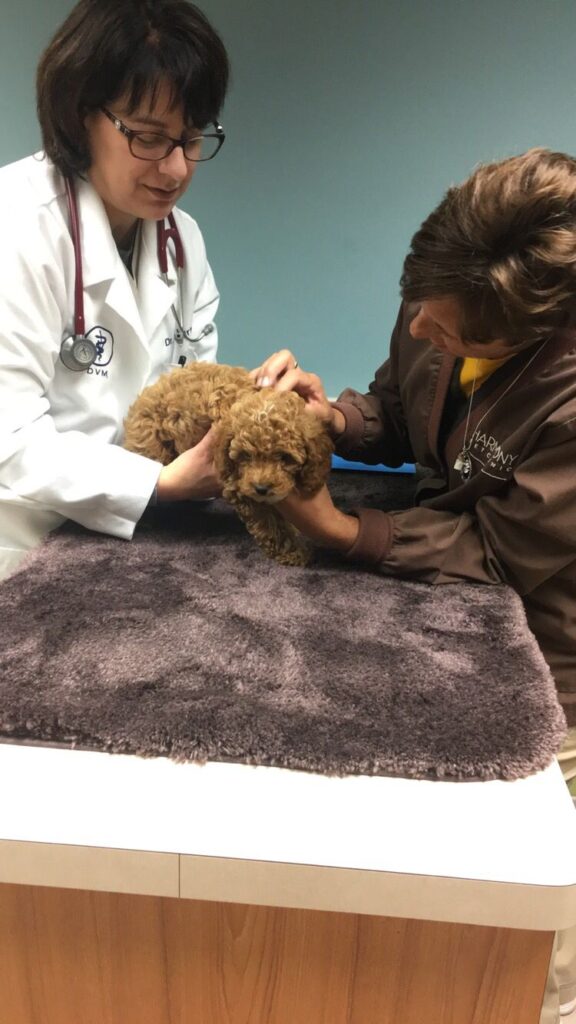
19. Puppy Vaccination Records
Before bringing your puppy home, make sure you receive their available veterinary and vaccination records.
Keep these documents somewhere safe.
Your records may include information about:
- Vaccinations
- Deworming
- Veterinary examinations
- Medications
- Microchip information
- Health testing
Your veterinarian can then review the records and determine what preventive care your puppy needs next.
Our Puppy Health Guarantee page also explains why responsible health documentation and clear health policies are important when bringing a puppy home.
20. Deworming and Parasite Care
Puppies commonly require parasite prevention and monitoring.
Internal parasites can affect a puppy’s health, growth, and development.
Your veterinarian can recommend an appropriate deworming schedule based on your puppy’s age, history, lifestyle, and examination results.
Do not assume that a puppy is parasite-free simply because they appear healthy.
Routine veterinary care is an important part of responsible puppy ownership.
21. First-Aid Supplies
A basic pet first-aid kit can be useful.
Depending on your veterinarian’s recommendations, you may keep items such as:
- Gauze
- Bandages
- Disposable gloves
- Saline solution
- Pet-safe cleaning supplies
- Digital thermometer
- Tweezers
- Emergency contact information
A first-aid kit does not replace veterinary treatment.
If your puppy experiences a serious injury, poisoning, difficulty breathing, severe vomiting, collapse, or another emergency, seek veterinary care immediately.
22. Pet Gates
Pet gates can make puppy-proofing much easier.
Use them to restrict access to areas such as:
- Kitchens
- Staircases
- Laundry rooms
- Garages
- Home offices
- Rooms containing fragile objects
Gates allow you to create safe boundaries without constantly carrying your puppy from one room to another.
23. Stair Gates
Stairs can be particularly challenging for young puppies.
Depending on the design of your home, use a secure gate to restrict access until your puppy can safely navigate the area.
Remember that Cavapoos are small dogs.
A staircase that seems harmless to an adult dog can present a greater challenge for a young puppy.
24. Puppy-Proofing Supplies
Before your puppy arrives, walk through your home at puppy level.
Look for anything your puppy could:
- Chew
- Swallow
- Knock over
- Pull down
- Climb onto
- Become trapped behind
Secure electrical cords.
Move medications out of reach.
Keep cleaning products behind closed doors.
Remove toxic plants.
Secure trash cans.
Keep small household objects away from the floor.
Think like a curious puppy.
If something looks interesting, assume your puppy will investigate it.
25. Cleaning Supplies
Puppies have accidents.
That is part of raising a puppy.
Keep cleaning products designed for pet accidents readily available.
Enzymatic cleaners can help break down organic residue and odors.
Avoid relying only on ordinary household cleaners.
If your puppy can still smell a previous accident, they may be more likely to return to that location.
26. Poop Bags and Waste Supplies
You will need waste bags from the first day.
Keep a supply near the door, in your car, and anywhere else you regularly take your puppy.
If you have a yard, consider keeping a dedicated waste-disposal system nearby.
Good waste management is part of responsible pet ownership and helps maintain a clean environment.
27. Pet Insurance
Pet insurance is optional, but some families choose it to help manage unexpected veterinary expenses.
Policies vary considerably.
Before purchasing coverage, carefully review:
- Deductibles
- Reimbursement rates
- Annual limits
- Waiting periods
- Exclusions
- Pre-existing condition policies
- Wellness coverage
Do not choose a policy based solely on the monthly price.
Understand exactly what the policy covers before enrolling your puppy.
28. Veterinarian Contact Information
One of the most important items on your new puppy checklist is not something you can put in a shopping cart.
It is your veterinarian’s contact information.
Ideally, identify a veterinary practice before your puppy arrives.
Save the clinic’s:
- Phone number
- Address
- Regular hours
- Emergency instructions
Ask the clinic when they recommend your puppy’s first examination.
Having this information ready means you will not have to search for a veterinarian during a stressful situation.
29. Emergency Veterinary Information
Your regular veterinarian may not be open 24 hours a day.
Find out which emergency veterinary hospital serves your area.
Save the information in your phone and keep it somewhere accessible at home.
You should know where to go before an emergency occurs.
30. A Puppy Schedule
Finally, prepare a basic schedule before your puppy arrives.
Your routine might include:
Morning: potty break, breakfast, play, training
Late morning: potty break and nap
Afternoon: meal, play, training, potty break
Evening: dinner, play, potty break, quiet time
Night: final potty break and sleep
Your puppy’s exact schedule will depend on age, feeding requirements, sleep needs, veterinary recommendations, and your household.
The goal is not to create a perfect timetable.
The goal is to establish consistency.
What Should You Buy Before Bringing Home a Cavapoo?
If you want to keep your shopping list simple, prioritize these items first:
Must-Have Items
- Puppy food
- Food and water bowls
- Collar
- Leash
- Identification tag
- Crate
- Comfortable bedding
- Puppy-safe toys
- Chew toys
- Potty supplies
- Poop bags
- Brush and comb
- Puppy shampoo
- Nail-care supplies
- Puppy toothbrush
- Training treats
- Pet gates
Health and Safety Items
- Veterinary records
- Veterinarian contact information
- Flea and tick prevention plan
- Deworming information
- Vaccination schedule
- Basic first-aid supplies
- Emergency veterinary information
- Pet-proofing supplies
You can add other products once you understand your puppy’s individual preferences.
Preparing Your Home for Your New Puppy
Buying supplies is only half of the preparation.
Before your puppy arrives, establish a safe area where they can eat, sleep, play, and relax.
Remove hazards from the floor.
Secure cords.
Close cabinets.
Move cleaning products.
Protect fragile objects.
Set up the crate.
Wash the puppy’s bedding.
Place food and water bowls in their designated area.
Prepare your grooming supplies.
Have treats ready.
Then take a moment to relax.
Your puppy does not need a perfect home.
They need a safe home, consistent care, patience, and plenty of love.
Bringing Your Cavapoo Puppy Home
The first few days can be exciting and exhausting.
Your puppy is entering a completely new environment with unfamiliar smells, sounds, people, and routines.
Keep those first days relatively calm.
Avoid overwhelming your puppy with too many visitors or new experiences at once.
Give them time to explore their surroundings.
Establish a predictable routine.
Take them outside regularly.
Reward desirable behaviors.
Give them plenty of sleep.
And remember that accidents and mistakes are normal.
You are both learning.
If you are still preparing for your new puppy, visit our Cavapoo puppies for sale page to explore available puppies and learn more about beginning your journey.
Frequently Asked Questions About New Puppy Supplies
What do I need before bringing home a puppy?
At minimum, prepare puppy food, bowls, a collar, leash, identification tag, crate, bedding, toys, chew toys, potty supplies, grooming supplies, and basic safety equipment.
What should I buy for a Cavapoo puppy?
Cavapoo puppies need the same basic supplies as other puppies, but coat-care equipment deserves particular attention. A quality brush and comb should be part of your initial grooming kit.
Does my puppy need a crate?
A crate is not mandatory, but it can be useful for safe confinement, travel, sleeping routines, and house training when introduced properly.
What type of food should I buy for my puppy?
Choose a complete and balanced puppy food appropriate for your puppy’s life stage and individual needs. Your veterinarian can help you select an appropriate diet.
How many toys should a puppy have?
There is no specific number required. A small selection of safe, age-appropriate toys is usually enough. Rotating them can help maintain your puppy’s interest.
What grooming supplies does a Cavapoo need?
A Cavapoo puppy should have an appropriate brush, comb, puppy shampoo, nail-care supplies, and dental-care products. Regular grooming helps your puppy become comfortable with handling.
Should I buy puppy pads?
Puppy pads can be useful in some households, but they are not required for every potty-training method. Choose the approach that works best for your home and remain consistent.
When should I take my new puppy to the veterinarian?
Arrange your puppy’s first veterinary appointment according to the schedule recommended by your breeder and veterinarian. Bring all available health and vaccination records.
Does my puppy need flea and tick prevention?
Many puppies require parasite prevention, but the appropriate product depends on age, weight, location, and health status. Ask your veterinarian before using a product.
What is the most important thing to prepare for a puppy?
Beyond physical supplies, prepare your time and patience. Puppies require supervision, training, socialization, exercise, grooming, veterinary care, and plenty of sleep.
Your New Puppy Checklist Is Ready
Preparing for a new puppy does not have to be stressful.
Start with the essentials.
Create a safe space.
Prepare your food and water supplies.
Set up your crate.
Choose appropriate toys.
Organize grooming equipment.
Schedule veterinary care.
Puppy-proof your home.
Most importantly, prepare yourself for the responsibility that comes with raising a young dog.
Your Cavapoo will rely on you for safety, nutrition, training, healthcare, companionship, and guidance.
With the right preparation, those responsibilities can become some of the most rewarding parts of puppy ownership.
Ready to take the next step?
Explore our Cavapoo puppies for sale, learn about our adoption process, and explore our Cavapoo puppy care resources to continue preparing for life with your new companion.
