Cavapoo Training Guide, Grooming Guide
Dog Potty Pads: When They Help, When They Hurt, and What Cavapoo Owners Should Know
Aug
Potty training is one of the first major challenges new puppy owners face.
When you bring home a Cavapoo puppy, accidents are completely normal. Young puppies have small bladders, limited control, and very little understanding of where they are supposed to go.
That often leads new owners to consider puppy pads.
Dog potty pads can be convenient. They can protect your floors, help in certain living situations, and provide a temporary bathroom option for puppies that cannot yet hold their bladder for long.
However, potty pads are not always the best choice for every Cavapoo puppy.
In some situations, using them can make outdoor potty training more difficult because your puppy may learn that going to the bathroom inside the house is acceptable.
Understanding when potty pads help, when they can create problems, and how to use them appropriately can make the potty-training process much easier.
Can Potty Pads Make Puppy Training More Difficult?
The biggest concern with potty pads is that they can sometimes teach a puppy that indoor pottying is acceptable.
This is particularly important if your long-term goal is for your Cavapoo to always use the bathroom outside.
A young puppy does not automatically understand the difference between a potty pad and the rest of the house.
Instead, puppies learn through associations.
If your puppy repeatedly urinates on a pad in the same area of your home, they may begin to associate that location, surface, or environment with eliminating.
Eventually, you may remove the pad and discover that your puppy continues returning to the same general area.
From your perspective, the pad was the bathroom.
From your puppy’s perspective, the bathroom may have been the entire location.
That distinction can make a major difference.
Why Does a Puppy Keep Peeing Where the Potty Pad Used to Be?
Imagine that you place a potty pad near the front door.
Your Cavapoo uses it successfully every day for several weeks.
The pad eventually becomes part of the puppy’s routine.
The puppy may learn that the area near the door is an appropriate place to eliminate. The surrounding smells, flooring, furniture, doors, and daily routine can all become part of the behavior.
Then you remove the pad.
You expect your puppy to immediately understand that indoor pottying is no longer allowed.
Instead, the puppy walks to the same location and urinates on the floor.
This can be extremely frustrating for owners.
But from the puppy’s perspective, the behavior may make perfect sense.
They have been practicing the behavior in that environment repeatedly.
This is one reason why outdoor potty training from the beginning can be easier for families whose long-term goal is outdoor bathroom habits.
Are Potty Pads Bad for Puppies?
Potty pads are not inherently bad.
The problem is how they are used and what you ultimately expect your puppy to learn.
There are situations where potty pads can be genuinely useful.
For some families, indoor pottying may be a practical long-term solution.
For others, pads may be appropriate for a very temporary situation.
The important question is:
What do you want your Cavapoo to learn?
If you want your puppy to eventually eliminate exclusively outdoors, using a pad every day for months can make the transition more complicated.
If indoor pottying is an acceptable permanent option for your household, a pad may be perfectly reasonable.
When Can Potty Pads Be Helpful?
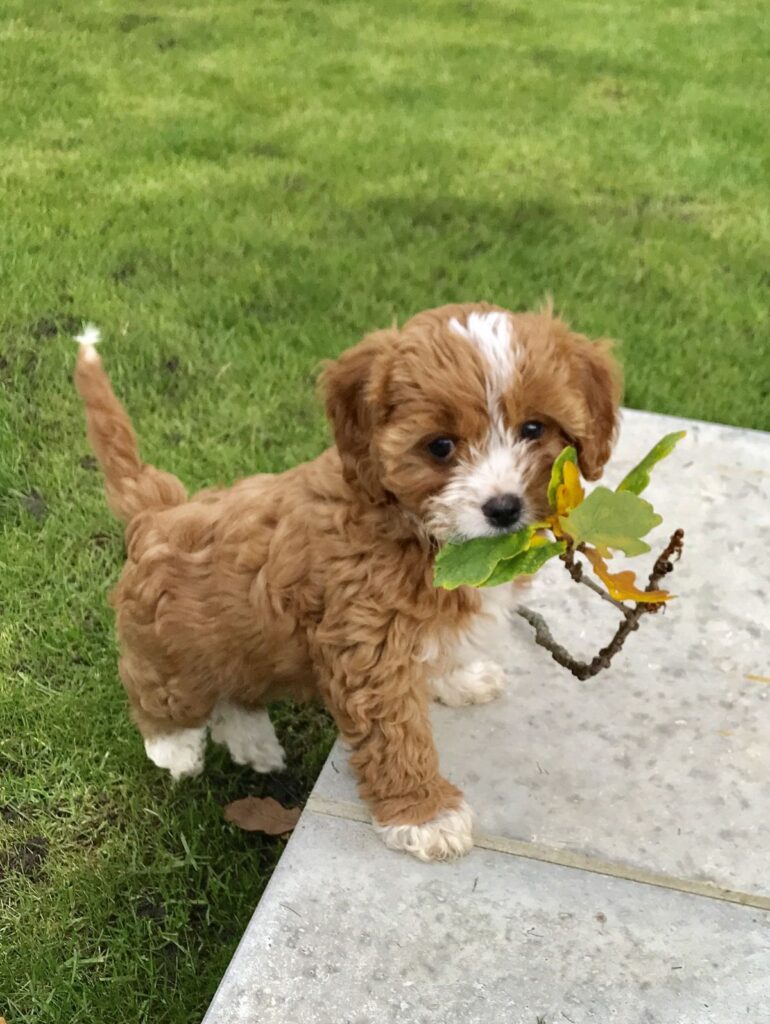
There are several circumstances where potty pads can make sense.
Very Young Puppies
Extremely young puppies have limited bladder control.
They cannot simply hold their urine until you decide it is time to go outside.
This is particularly important during the early weeks of puppy development.
A breeder raising a litter may use absorbent materials or potty pads to help keep the puppy area clean.
That does not necessarily mean the puppies should continue using pads after going to their new homes.
Once your Cavapoo comes home, you can begin teaching the bathroom routine you want them to follow long term.
Medical Problems
Potty pads can be useful for dogs with medical conditions that make normal outdoor bathroom routines difficult.
For example, a dog recovering from surgery may have temporary restrictions on movement.
Another dog may have urinary or bowel-control problems that make accidents unavoidable.
In these situations, protecting the floor may be more important than teaching a specific bathroom location.
If your dog suddenly begins having frequent accidents despite previously being reliably house-trained, talk with your veterinarian.
A change in bathroom habits can sometimes indicate an underlying medical issue.
Older Dogs
Senior dogs may eventually have difficulty holding their bladder for long periods.
Mobility problems, cognitive changes, or other age-related issues can make outdoor bathroom trips more challenging.
If indoor pottying is likely to be a permanent part of your senior dog’s routine, potty pads may provide a practical solution.
In this situation, you are not necessarily planning to remove the pads later.
That makes the behavioral concern much less significant.
Apartment Living
Some puppy owners live in high-rise apartments or buildings where getting outside quickly is difficult.
This can make outdoor potty training more challenging, particularly during the earliest puppy months.
A young Cavapoo may wake up needing to eliminate immediately.
Walking several floors down an elevator and across a building may take longer than the puppy can reasonably wait.
Some owners therefore choose an indoor potty area as part of their long-term routine.
If that is your plan, consistency is important.
Choose one designated bathroom area rather than allowing your puppy to eliminate anywhere inside the home.
Long Workdays
Many puppies cannot physically hold their bladder for an entire workday.
If you are away from home for several hours, you need a realistic bathroom plan.
A young puppy may not be capable of waiting until you return.
In these circumstances, some owners use a puppy pad, indoor turf, or another designated bathroom area.
Another option is arranging for a family member, friend, dog walker, or puppy sitter to provide a midday potty break.
The right solution depends on your schedule, your puppy’s age, and your long-term goals.
Consider Indoor Turf Instead of Traditional Potty Pads
If your living situation requires a permanent indoor or balcony potty area, traditional disposable pads are not your only option.
Some owners use artificial turf systems or real-grass delivery services.
These options can provide a more defined bathroom surface and may be easier to maintain as part of a long-term routine.
A dedicated potty station can also make the bathroom location clearer.
Instead of placing disposable pads in different parts of the home, establish one consistent area.
This can help reduce confusion.
What If Your Cavapoo Is Already Peeing Inside?
If your puppy already has a habit of eliminating indoors, simply removing the potty pad may not solve the problem.
You may need to temporarily increase supervision and limit your puppy’s access to the home.
Think of potty training as a combination of management, timing, supervision, and reinforcement.
Give your Cavapoo fewer opportunities to make mistakes.
Keep them near you when they are awake.
Use a crate or puppy-safe area when you cannot supervise them appropriately.
Take them outside frequently.
Then reward them immediately when they eliminate in the correct location.
The goal is to create many successful repetitions.
Clean Previous Accident Areas Thoroughly
Dogs have powerful noses.
If your Cavapoo has repeatedly urinated in a particular area, lingering odor can make that location attractive for future accidents.
Regular household cleaners may not completely remove the odor cues that your puppy can detect.
Use an appropriate enzymatic pet-accident cleaner and follow the manufacturer’s instructions.
The objective is to remove as much of the previous odor as possible.
You should also consider temporarily blocking access to the area.
If your puppy cannot repeatedly practice the unwanted behavior, you have a much better opportunity to teach a replacement behavior.
How to Potty Train a Cavapoo Without Pads
If your goal is outdoor potty training, consistency is extremely important.
Establish a Regular Schedule
Take your puppy outside frequently.
Important times include:
- Immediately after waking
- After eating
- After drinking
- After playing
- After exciting interactions
- Before bedtime
- Whenever your puppy begins showing signs of needing to go
Very young puppies may need frequent bathroom opportunities throughout the day.
As bladder control develops, the intervals can gradually become longer.
Watch for Potty Signals
Your Cavapoo may begin showing specific behaviors before eliminating.
Look for:
- Sniffing the floor
- Circling
- Wandering away
- Suddenly stopping play
- Restlessness
- Going toward a previous accident area
- Whining or standing near the door
Not every puppy gives obvious signals.
That is why a regular schedule is so important during early potty training.
Reward Immediately
When your puppy eliminates outside, reward them immediately.
Do not wait until you are back inside.
Your puppy needs to understand what behavior earned the reward.
Use praise, a small treat, or another reward your puppy values.
You can eventually pair the behavior with a consistent verbal cue.
Stay Patient
Potty training takes time.
Your puppy is not being stubborn because they have an accident.
They are still developing physical control and learning the rules of their new environment.
Punishing accidents can create fear and confusion without teaching the behavior you actually want.
Instead, focus on prevention and reinforcement.
What About Potty Pads During the Night?
Nighttime can be one of the hardest parts of raising a young puppy.
Your Cavapoo may need to go outside during the night, particularly during the earliest weeks.
Some owners choose to place a pad inside because they do not want to wake up and take the puppy outside.
Whether this is appropriate depends on your long-term goals.
If you want your puppy to consistently potty outdoors, nighttime outdoor trips can reinforce that routine.
If indoor pottying is part of your permanent plan, a nighttime pad may be appropriate.
The important thing is to make the decision intentionally rather than using pads simply because nighttime potty breaks are inconvenient.
Should You Use a Potty Pad in a Crate?
Generally, the crate and bathroom area should serve different purposes when crate training a puppy.
A properly sized crate should provide enough room for your Cavapoo to stand, turn around, lie down, and sleep comfortably.
If a puppy is routinely encouraged to eliminate inside the crate, this can interfere with the crate’s role as a resting space.
Instead, provide frequent potty opportunities and use an appropriately sized crate.
For longer periods when you cannot provide a bathroom break, a puppy-safe pen or designated area may be more appropriate than expecting the puppy to remain in a crate beyond their physical ability to hold their bladder.
Potty Training and Your Cavapoo’s Daily Routine
Potty training becomes easier when it is connected to the rest of your puppy’s daily routine.
For example:
Wake up → outside to potty → breakfast → outside again → play → nap.
Then repeat similar patterns throughout the day.
The exact schedule will change as your Cavapoo grows.
Your puppy’s feeding schedule, sleep schedule, activity level, and bladder control will all affect how frequently they need to go outside.
The more predictable the routine becomes, the easier it is for both you and your puppy.
What If You Work Full-Time?
Working full-time does not mean you cannot successfully potty train a Cavapoo.
It simply means you need a realistic plan.
A young puppy may need more bathroom breaks than your work schedule allows.
Consider arranging help during the day.
A family member, trusted friend, dog walker, or puppy sitter may be able to provide a bathroom break.
If that is not possible, you may need to create a safe puppy area with an intentional indoor bathroom solution.
There is no single setup that works for every household.
The important thing is to choose a plan that matches your puppy’s physical abilities rather than expecting a very young puppy to hold their bladder for an unrealistic amount of time.
What If My Puppy Has an Accident?
Stay calm.
Accidents are part of puppyhood.
If you catch your Cavapoo beginning to eliminate indoors, calmly interrupt them and take them outside.
If they finish outside, reward them.
Then clean the indoor area thoroughly.
Avoid yelling, hitting, rubbing your puppy’s nose in the accident, or using frightening punishment.
These approaches do not teach your puppy where they should eliminate.
They can instead make your puppy afraid to eliminate in front of you.
Your goal is to make the correct bathroom location clear and rewarding.
Potty Pads and Puppies Coming From a Breeder
If your Cavapoo puppy has been raised using potty pads or another indoor bathroom system, ask the breeder about the routine before bringing your puppy home.
Find out:
- What surface the puppy has been using
- Where the puppies have been eliminating
- How often the puppies are given bathroom opportunities
- Whether the puppies have started experiencing outdoor environments
- What routine the breeder recommends after going home
This information can help you create a smoother transition.
You may need to gradually change the routine rather than expecting your puppy to immediately understand a completely different bathroom system.
The Goal Is Clear Communication
Potty training is essentially a communication process.
Your Cavapoo needs to learn:
Where should I go?
When should I go?
How do I communicate that I need to go?
What happens when I get it right?
The clearer your answers are, the easier the process becomes.
A consistent routine, close supervision, appropriate management, and positive reinforcement can help your puppy understand the rules much faster.
Internal Resources for Cavapoo Puppy Owners
If you are currently preparing for your Cavapoo puppy or working through the early weeks at home, these related guides can help:
- New Puppy Essentials Checklist
- Bringing Home a Brand New Baby Puppy
- New Puppy Training Routine
- Puppy Behavioral Development Stages
- Mastering Puppy Independence: Can I Leave My New Puppy Home Alone?
- Available Cavapoo Puppies
Frequently Asked Questions About Dog Potty Pads
Are potty pads good for Cavapoo puppies?
Potty pads can be useful in specific situations, but they are not ideal for every puppy. If your goal is outdoor potty training, frequent pad use can sometimes make the process more complicated.
Do puppy pads make potty training harder?
They can. A puppy may learn that a particular indoor location or surface is an appropriate bathroom area rather than understanding that the pad itself is the only acceptable place.
Should I use potty pads for my Cavapoo?
It depends on your household and your long-term goals. If your Cavapoo will eventually need to eliminate outdoors, outdoor potty training from the beginning may be preferable. If indoor pottying will be a permanent solution, pads or another designated bathroom area may be practical.
How often should I take my Cavapoo puppy outside to potty?
Young puppies need frequent opportunities because their bladder control is still developing. Take your puppy outside after sleeping, eating, drinking, playing, and whenever they show signs that they need to eliminate.
How do I stop my Cavapoo from peeing where the potty pad used to be?
Increase supervision, restrict access to the area, clean previous accidents thoroughly with an appropriate enzymatic cleaner, and establish a consistent outdoor potty routine. Reward your puppy immediately for eliminating outside.
Should I punish my puppy for having an accident?
No. Punishment can create fear and confusion. Instead, calmly interrupt accidents when possible, take your puppy outside, reward appropriate elimination, and focus on preventing future mistakes.
Can I use a potty pad if I live in an apartment?
Yes. Apartment living can make outdoor potty training more challenging, particularly with very young puppies. Some owners use pads or indoor turf as part of a permanent or temporary bathroom system.
Can older dogs use potty pads?
Yes. Potty pads can be especially useful for senior dogs who have difficulty getting outside or cannot reliably control their bladder or bowels.
Should puppies use potty pads at night?
It depends on your long-term bathroom plan. If your goal is outdoor potty training, nighttime outdoor breaks can reinforce that routine. If indoor pottying is intended to be permanent, a designated nighttime potty area may be appropriate.
How long does Cavapoo potty training take?
Every puppy develops at a different rate. Consistent routines, frequent bathroom opportunities, supervision, and positive reinforcement can help speed the process, but accidents may continue during the early puppy months.
Final Thoughts
Dog potty pads are neither universally good nor universally bad.
They are a tool.
For some families and dogs, they can provide a practical bathroom solution. For others, especially owners who want their Cavapoo to eliminate exclusively outdoors, they can introduce an additional step into the potty-training process.
Before using potty pads, think about your long-term goal.
If you want outdoor potty habits, start building that association from the beginning whenever your puppy’s age, health, environment, and safety allow it.
Give your Cavapoo frequent opportunities to succeed, reward the behavior you want, supervise closely, and be patient when accidents happen.
Your puppy is learning more than where to go to the bathroom.
They are learning how to live in your home.
With consistency and a clear routine, those early potty-training challenges eventually become one of the many small milestones you look back on with a smile.
